Did Giovanni Schiaparelli observe canals on Mars?
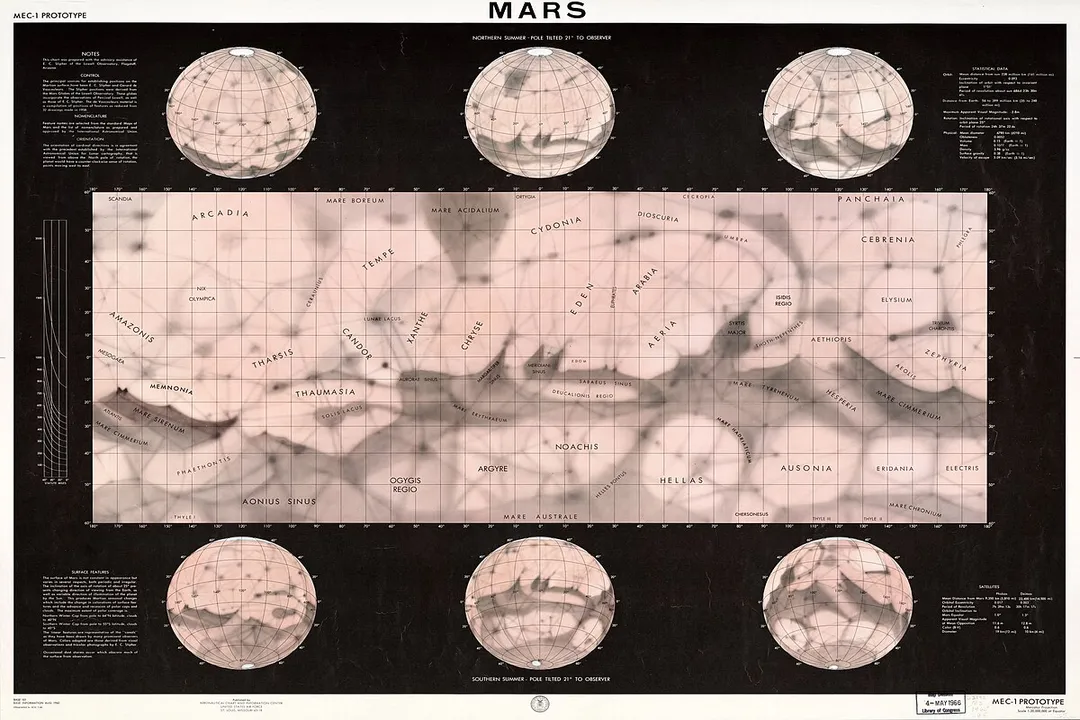
The night sky in 1877 presented a rare treat for astronomers: a close approach of Mars, an event known as a great opposition, which made the Red Planet significantly brighter and larger in the eyepiece. It was under these favorable conditions that the respected Italian astronomer, Giovanni Virginio Schiaparelli (1835–1910), turned his telescope toward Mars while working at the Brera Observatory in Milan. What he saw, or rather, what he recorded, would spark one of the most enduring and sensational astronomical controversies of the next century.
# Initial Findings
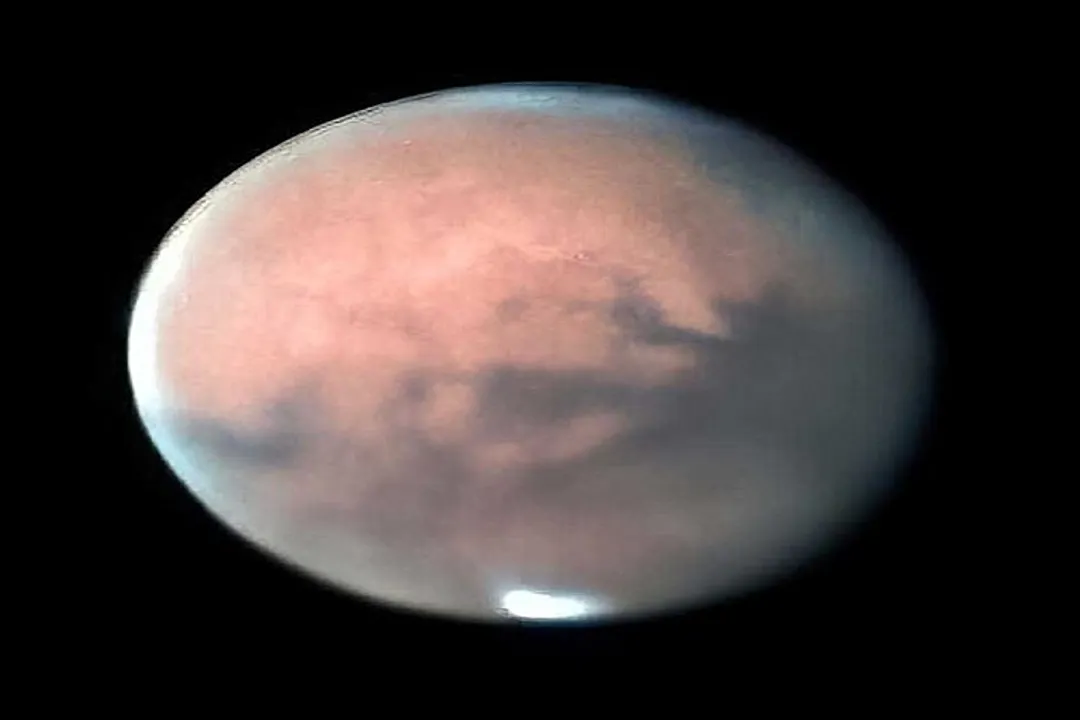
Schiaparelli was diligently mapping the planet's surface features during this opposition. He began to notice numerous dark, linear markings crisscrossing the Martian surface, which he sketched in his observatory notebooks. When documenting these observations in his formal publication, Osservazioni astronomiche sulla configurazione di Marte, he used the Italian term canali. This word, canali, literally translates to "channels" or "grooves". It suggests natural features like riverbeds, valleys, or troughs—geological structures carved by erosion or tectonic activity. Schiaparelli himself was reporting on what he perceived as real, albeit faint, surface features seen through the optical limitations of the era.
# Linguistic Misstep
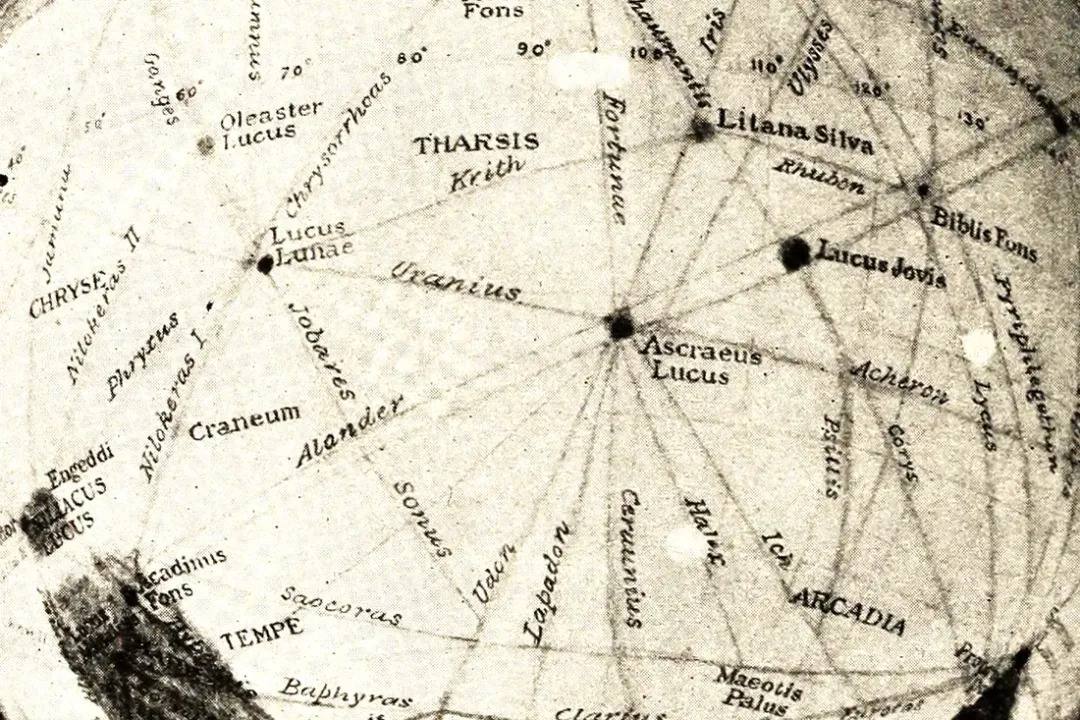
The crux of the entire Martian canal debate rests on a single linguistic translation choice that occurred shortly after Schiaparelli published his findings. When his work was translated into English, the precise Italian term canali was rendered as "canals". This change in nomenclature was profound. While a "channel" can be natural, a "canal" almost universally implies an artificial, engineered waterway constructed by intelligent beings. The shift instantly transformed an observation of dark streaks into the tantalizing suggestion of a vast, planet-spanning irrigation system built by an advanced civilization.
It is an insightful point to consider that the credibility of Schiaparelli, an established and skilled observer, lent immediate weight to these supposed features, regardless of the underlying translation error. Observers in the late 19th century, primed by the burgeoning field of comparative planetology and a general human desire to find company in the cosmos, were psychologically prepared to interpret faint markings as evidence of engineering. Schiaparelli reported grooves; the world read blueprints.
# Mapping Subjectivity
Schiaparelli continued to observe Mars in subsequent oppositions, tracking some of the features he had initially logged. His maps evolved, and he noted that some of the canali appeared to change, appearing to connect together over time, though the features remained somewhat elusive and subjective to different viewers. This inherent ambiguity in observing faint planetary features with early telescopes is a key factor in understanding the subsequent frenzy. When viewing a dim, slightly fuzzy disk of a planet through a refractor telescope, the brain often connects the dots, imposing familiar patterns onto random noise or contrast variations.
Consider the typical limitations of the 19th-century refractor telescopes used for this work. They were highly susceptible to chromatic aberration (color fringing) and atmospheric distortion. What Schiaparelli likely saw were vague dark patches and broad linear contrasts—perhaps dried-up riverbeds or geological fault lines. However, the very act of drawing them as distinct lines, rather than smudges, introduced a level of artificial precision that the actual visual data did not fully support. This inherent observer bias, where expectation influences perception, is something modern planetary scientists are acutely aware of when interpreting noisy data sets, a challenge Schiaparelli faced across the gulf of a century's technological progress.
To illustrate the difference in perception versus interpretation, one can look at the progression of Martian mapping during that era:
| Feature Type | Description | Typical Appearance to 19th Century Observer | Implication Shift |
|---|---|---|---|
| Canali (Schiaparelli) | Dark, linear markings, sometimes seemingly interconnected | Vague, low-contrast streaks | Natural channels or grooves |
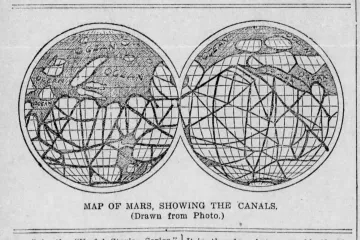
| Canals (Lowell/Public) | Fine, geometric, intersecting lines | Sharp, clear, artificial network | Engineered irrigation systems |
# The American Amplification
While Schiaparelli initiated the conversation, it was the American astronomer Percival Lowell who took the concept of Martian canals and turned it into a public obsession. Lowell, working at his private observatory in Flagstaff, Arizona, was captivated by Schiaparelli’s initial work. Lowell's instruments were arguably superior to some contemporary European telescopes, and he enthusiastically reported seeing thousands of these artificial canals, far more numerous and detailed than Schiaparelli had ever claimed.
Lowell's detailed maps, filled with intricate geometric patterns, solidified the image of Mars as a dying world whose intelligent inhabitants were desperately constructing massive waterworks to bring ice melt from the poles to their equatorial cities. This narrative—that Mars was inhabited by a sophisticated, water-conserving race—captured the public imagination like few other scientific topics of the time. It fed a cultural appetite for extraterrestrial life that even Schiaparelli’s more cautious initial naming convention had only hinted at.
# Scientific Scrutiny and Fading Evidence
As astronomical technology advanced, the supposed canals began to vanish under closer scrutiny. Other respected astronomers found it increasingly difficult, if not impossible, to replicate Schiaparelli’s and especially Lowell's detailed findings. By the early 20th century, when larger telescopes became available, the vast networks described by Lowell simply were not present. Observatories around the world, using better instruments, could not consistently verify the existence of such clearly defined, planet-wide artificial features.
This later failure to confirm the observations speaks volumes about the nature of planetary astronomy before space probes. The visibility of Martian surface features is highly dependent on two transient factors: the atmospheric clarity above the observing station and the dust levels on Mars itself. What Schiaparelli saw as faint channels during a period of relatively clear Martian viewing, others saw as nothing more than vague albedo (brightness) contrasts when atmospheric or surface conditions were different. The concept, born from a specific set of observational circumstances and compounded by a single word, proved incredibly resilient in the public mind precisely because it offered such a compelling narrative about neighbors in the solar system.
# The Modern Perspective
Today, thanks to robotic orbiters and surface rovers, we have high-resolution images of Mars that map its surface down to centimeters. There are no signs of vast, interconnected irrigation canals built by an ancient civilization. What Schiaparelli observed as canali are now understood to be large, naturally occurring geological features—vast canyons like Valles Marineris, large impact basins, and dark volcanic plains that contrast with lighter, dusty regions. These genuine Martian features, some of which are incredibly large, create the visual illusions of straight lines and large patterns when viewed through early telescopes that lack the resolution to resolve their true, irregular shapes.
Giovanni Schiaparelli's contribution remains an essential chapter in the history of planetary science, not because he discovered life, but because he precisely documented the limits of human perception when trying to find it. His careful initial report, the unfortunate translation, and the subsequent scientific fervor it generated all serve as a timeless reminder of the interplay between observation, interpretation, and expectation in the scientific endeavor. The "canals" were real as a phenomenon of observation, but they were not real as physical structures on the Martian surface.
Related Questions
#Citations
Martian canals - Wikipedia
Mars and Schiaparelli's "canals" - Educational Evidence
Giovanni Virginio Schiaparelli | Mars mapping, crater naming, canals
Alien Aqueducts: The Maps of Martian Canals
a lot of trouble - Stanford Solar Center
That Marvelous Legend: The Canals of Mars – Gould Library
A Martian Sensation: Maps, delusion, and the Mars Canals
Eerie canals. - | Lapham's Quarterly
Life on Mars? The Search for Signs Goes Back Centuries | HISTORY