Is there any scientific evidence of life on Mars?
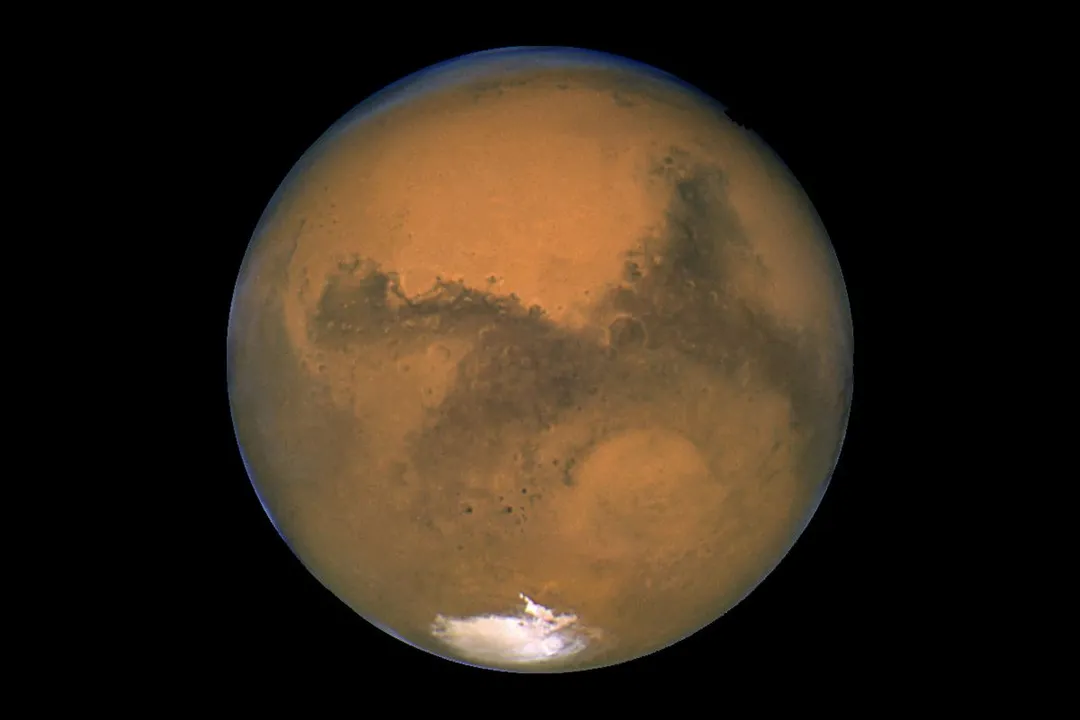
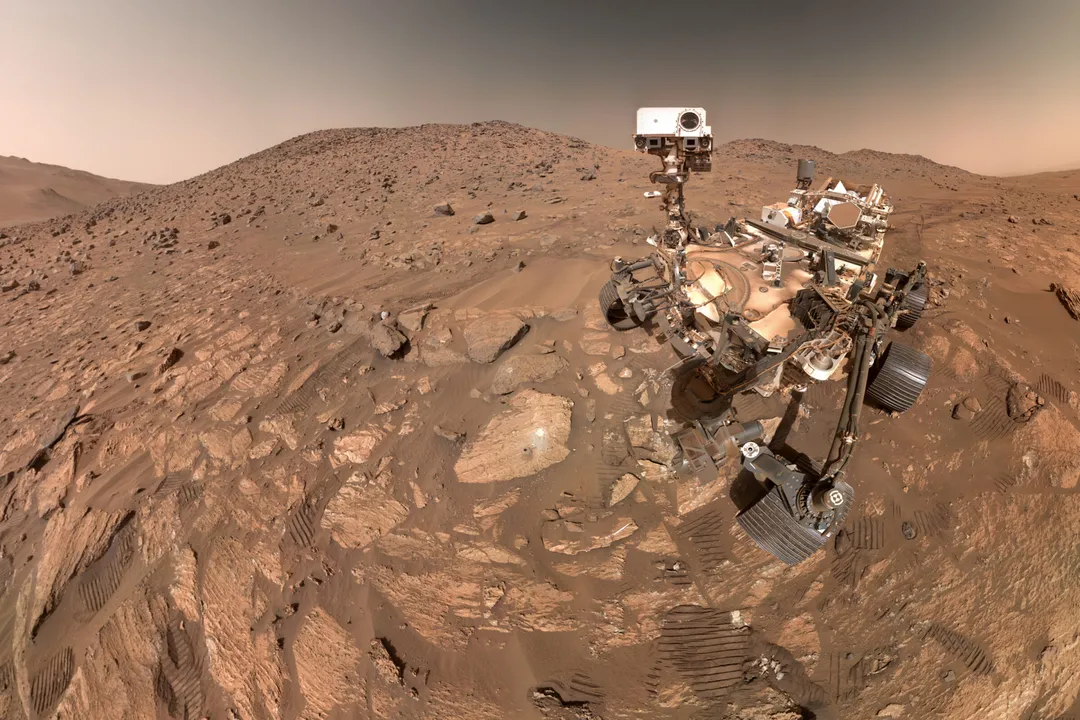
The possibility of life existing beyond Earth has captivated human curiosity for generations, and nowhere is that focus more intense than on our rusty neighbor, Mars. Recent findings from NASA's Perseverance rover have significantly heightened the excitement, presenting what many scientists regard as the strongest evidence yet hinting at ancient biology on the Red Planet. [4] This isn't a discovery of little green men or even living microbes swimming in subsurface water, but rather the detection of complex building blocks for life preserved within Martian rock formations. [1]
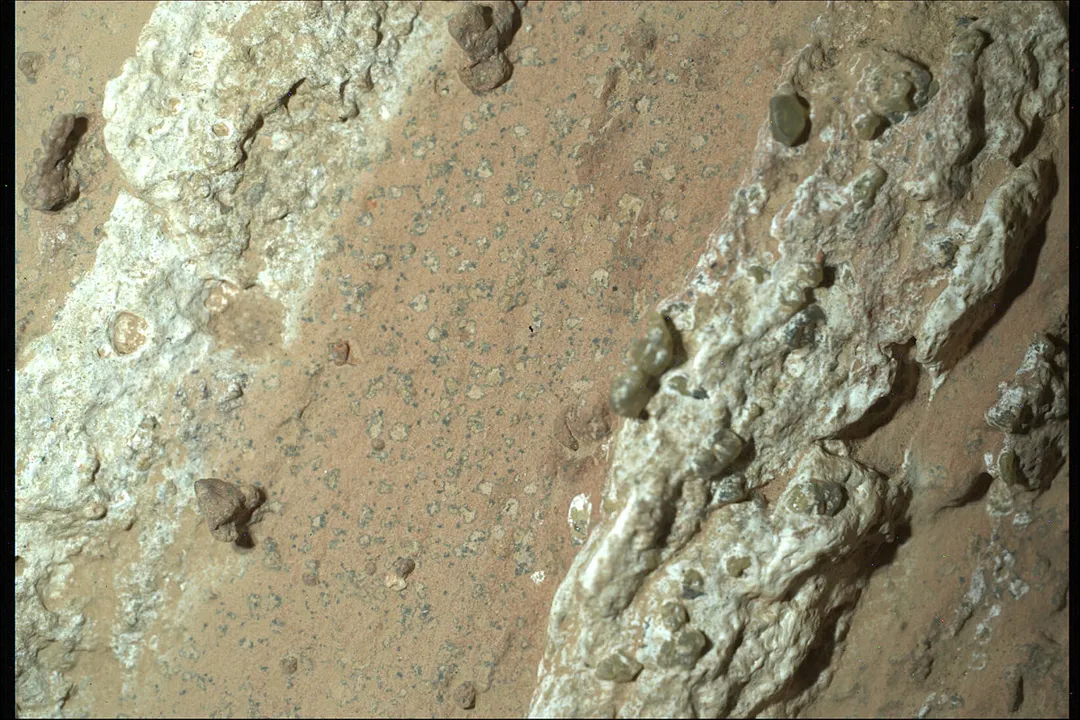
The core of the current scientific breakthrough centers on samples collected by the Perseverance rover in the Jezero Crater, an ancient river delta that once flowed into a large lake billions of years ago. [1][4] This location was chosen precisely because such ancient, wet environments on Earth are prime cradles for life. [2][8] Researchers have identified organic molecules—carbon-containing compounds—embedded within sedimentary rock samples, specifically from an area nicknamed "Wildcat Ridge". [1] Furthermore, other work focusing on the sediment at a feature called "Cheyava Falls" also revealed these carbon-based compounds, suggesting a sustained, potentially life-supporting environment existed there. [2]
# Organic Molecules
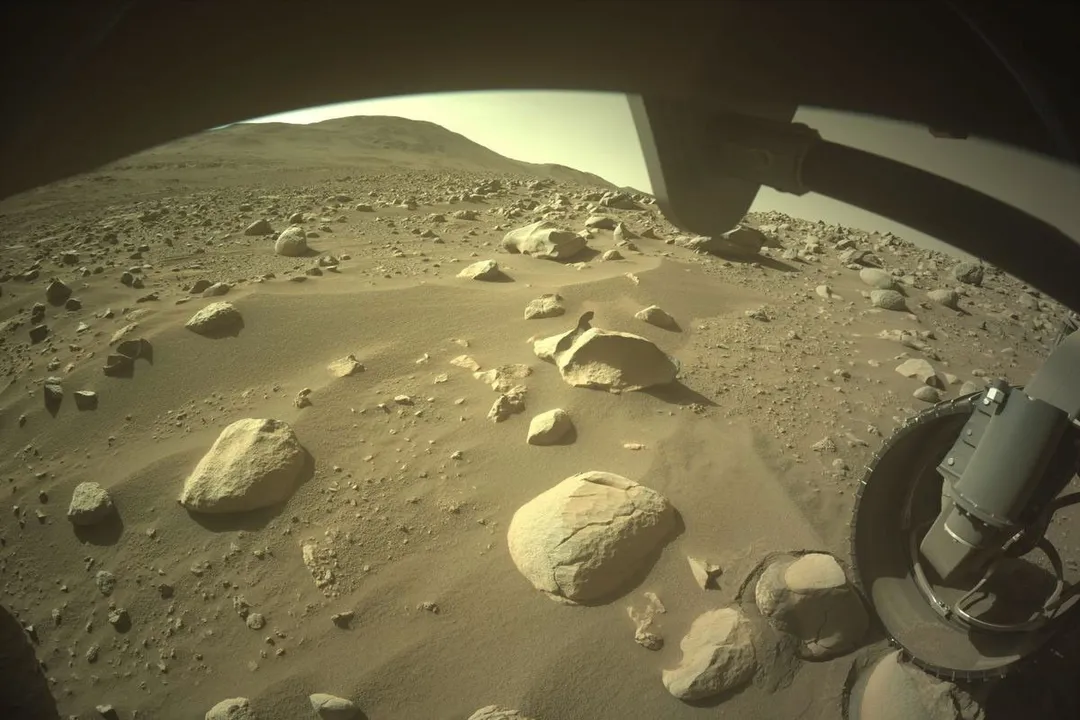
The detection of organic molecules is a major milestone in astrobiology, as these compounds form the basis of all known life. [5] When scientists report finding these materials in Martian rock, it signals that the necessary chemical precursors for life were present when Mars was much warmer and wetter. [1][2] However, it is absolutely crucial to understand that finding these molecules is not the same as finding life itself. [5][6]
On Earth, organic molecules can be formed through entirely non-biological, or abiotic, processes, such as through volcanic activity or interactions between water and rock. [5] Martian geology is quite active, and the conditions within the ancient Jezero delta—mudstone environments that once held water—are precisely where geological processes could have synthesized these complex chemicals without any living organisms involved. [6] The team has been careful to stress that while these findings are potential biosignatures, they remain "maybes" until further testing can rule out geological explanations. [6] The context of the discovery, locked away in sedimentary rock, makes it compelling, but the debate over origin continues. [5]
# Past Efforts
This current quest is not the first time scientists have searched for Martian biology. A significant historical benchmark involved NASA's Viking landers in the mid-1970s. [9] These missions conducted several experiments designed to look for active metabolism in Martian soil. [9] While some results were tantalizingly positive, indicating chemical reactions that could be biological, later analysis often suggested abiotic chemical processes were the likely cause. [5] The ambiguity surrounding Viking’s results underscores the difficulty of confirming extraterrestrial biology using instruments sent from Earth. [9] In fact, some scientists have even suggested that the sterilization procedures used on the Viking spacecraft might have inadvertently destroyed any delicate life forms present at the landing sites, an unfortunate example of how our own technology can interfere with the evidence we seek. [9]
The data from Viking provides a cautionary tale: any new evidence, no matter how strong, must survive rigorous scrutiny to overcome the high bar set by the inherent difficulties in sample analysis. [9] The organic molecules found by Perseverance are chemically interesting, but they are far less definitive than, say, finding cellular structures or isotopic signatures definitively linked to biological processes. [5]

# Defining Habitability
To better frame the current evidence, it helps to consider what constitutes a potentially habitable environment, something scientists look for on planets outside our own. Terrestrial analogues—Earth environments that mirror ancient Mars—offer clues. [2] For instance, sediments forming the layers at a feature like Cheyava Falls on Mars are chemically similar to deposits found in many ancient lakebeds on Earth where microbial life thrived. [2] These areas provide sustained access to necessary chemical ingredients and liquid water over long periods, which are essential ingredients for life as we know it. [2][8] The fact that Perseverance is sampling locations that once offered these conditions means the potential was definitely there, regardless of whether life actually took hold. [8]
Here is a simplified comparison of what we look for versus what we have found so far:
| Evidence Type | Implication for Life | Current Status on Mars | Certainty Level |
|---|---|---|---|
| Liquid Water (Past) | Essential Requirement | Confirmed (Past Lake/River) | High |
| Organic Molecules | Building Blocks Present | Detected (Jezero Mudstone) | Medium |
| Complex Cell Structures | Strong Biosignature | Not yet detected | Low |
| Isotopic Signatures | Proof of Metabolism | Requires Sample Return | Pending |
The current findings sit firmly in the "Organic Molecules" row. [1][4] They confirm habitability conditions existed, but they do not confirm biology. [5]
# Sample Return
The scientific consensus emerging from both NASA and independent planetary scientists is that definitive proof of ancient Martian life will likely require bringing the collected samples back to Earth. [4][7] The analysis tools available on a rover, however advanced, are limited compared to the suite of sophisticated laboratories scientists have access to back home. [2]
Bringing the samples back allows researchers to perform more complex, destructive tests that could uncover subtle clues—like specific ratios of carbon isotopes—that are virtually impossible to verify on Mars. [7] These isotopic ratios are powerful evidence because biological systems on Earth tend to favor lighter isotopes of certain elements in their metabolic processes, a pattern that is very difficult for purely geological processes to mimic perfectly. [5] When the Mars Sample Return mission eventually succeeds, scientists will be able to subject these meticulously sealed rock cores to analyses that may finally settle the life question. [4][7]
The process Perseverance is undergoing is itself an engineering marvel, involving the collection, sealing, and caching of these critical samples for a future retrieval mission. [1] The rover is effectively creating the first Martian geological library, setting the stage for the next phase of discovery. [1]
One interesting point often overlooked in the public discussion is the sheer volume of potential contamination, even from our own highly sterilized rovers. While current missions take extreme precautions, analyzing materials millions of miles away means that distinguishing between native Martian organics and terrestrial contamination that hitched a ride is a constant, background challenge for mission scientists. [9] Even with the strictest protocols, confirming the indigenous nature of an organic compound requires a level of certainty that only the best Earth-based mass spectrometers can currently provide. [2][7] This inherent uncertainty in in situ analysis is what drives the need for sample return.

# Analyzing the Implications
It is fascinating to consider the sheer scientific paradigm shift these findings represent, even if they only point toward past potential for life. For decades, Mars was viewed as a geologically dead world, perhaps once wet, but now inert. The discovery of complex organics in an ancient lakebed environment radically changes our understanding of the longevity of conditions suitable for life on other rocky planets. [8] If Mars could sustain the chemistry for life for a significant period in its past—long enough to form these complex molecules in sedimentary rock—then the probability of life arising on other wet, rocky exoplanets increases substantially. The preservation of these molecules in mudstone, which forms gentle layers, implies a relatively calm, stable depositional environment before it was subjected to harsh radiation and burial, offering a clear snapshot of an ancient Martian aquatic setting. [1][6]
Furthermore, the continued search on Mars is changing how we define "evidence" in planetary science. Because of the extreme difficulty in securing a "smoking gun," the community is being forced to accept a hierarchy of evidence, moving from "no evidence" to "evidence of habitability" (water/energy) to "evidence of ingredients" (organics) before ever reaching "evidence of biology". [5] This methodical, step-by-step approach, while sometimes frustrating to the public hoping for immediate answers, builds a much stronger, defensible case. [4] The current findings represent a major jump from "ingredients" to "ingredients in a promising location," which is a significant scientific step in itself. [2]
The patience required is itself a lesson in scientific exploration. We have confirmation of ancient water, now confirmation of ancient organic chemistry in that water's remnants, and the next logical step—biological proof—is physically locked away in rocks that need to travel across the solar system. This entire process, spanning decades from Viking to Perseverance to the eventual Sample Return, demonstrates that the highest standards of scientific proof demand experience with the material itself, not just remote sensing. [2][7] The sheer technical feat of sealing a rock core on Mars today, knowing it might hold the answer to life's existence, is a testament to human ingenuity that underpins the entire endeavor. [1]
# Martian Chemistry Context
To appreciate the significance of the recent findings, one must remember the fundamental difference between the search for past life versus current life on Mars. Current missions are primarily focused on fossilized evidence because the surface environment is extremely hostile today. [8] Intense ultraviolet radiation, very low temperatures, and a thin atmosphere mean that any extant life would likely have retreated deep underground. [5] Therefore, the "biosignatures" Perseverance is looking for are essentially fossils or chemical traces left behind from a time when the planet was far more hospitable. [8] The organic molecules found in the Jezero mudstone are chemical fossils, remnants of ancient processes that occurred when water was stable on the surface. [1]
The comparison between what must be present for life versus what can be formed geologically is the central tightrope walk for mission scientists. If future analysis on Earth reveals that the organics are complex amino acids with a specific handedness—a phenomenon called homochirality where life overwhelmingly prefers one mirror-image version of a molecule—that would be an almost irrefutable indicator of biology. [5] Without that level of detail, the current discovery simply confirms that the building blocks for life were available in the right place at the right time on an ancient, habitable world. [2][4] The rocks collected by Perseverance are the key to unlocking that next level of chemical detail. [7]
#Videos
Signs of Life on Mars? NASA's Discovery, Explained | NOVA | PBS
Related Questions
#Citations
NASA Says Mars Rover Discovered Potential Biosignature Last Year
Our best proof of life on Mars yet? A deep dive into Cheyava Falls
Signs of Life on Mars? NASA's Discovery, Explained | NOVA | PBS
NASA announces strongest evidence yet for ancient life on Mars
Was There Life on Mars? - NASA Science
Rock Hype: Plea for Troubled Mars Sample Return Mission
Say we confirm that the rocks on Mars found by the Mars Rover is ...
Evidence for Microbial Life on Mars: Fossilized Bacteria? | AMNH
NASA may have unknowingly found and killed alien life on Mars 50 ...