What do all stars start their life as?
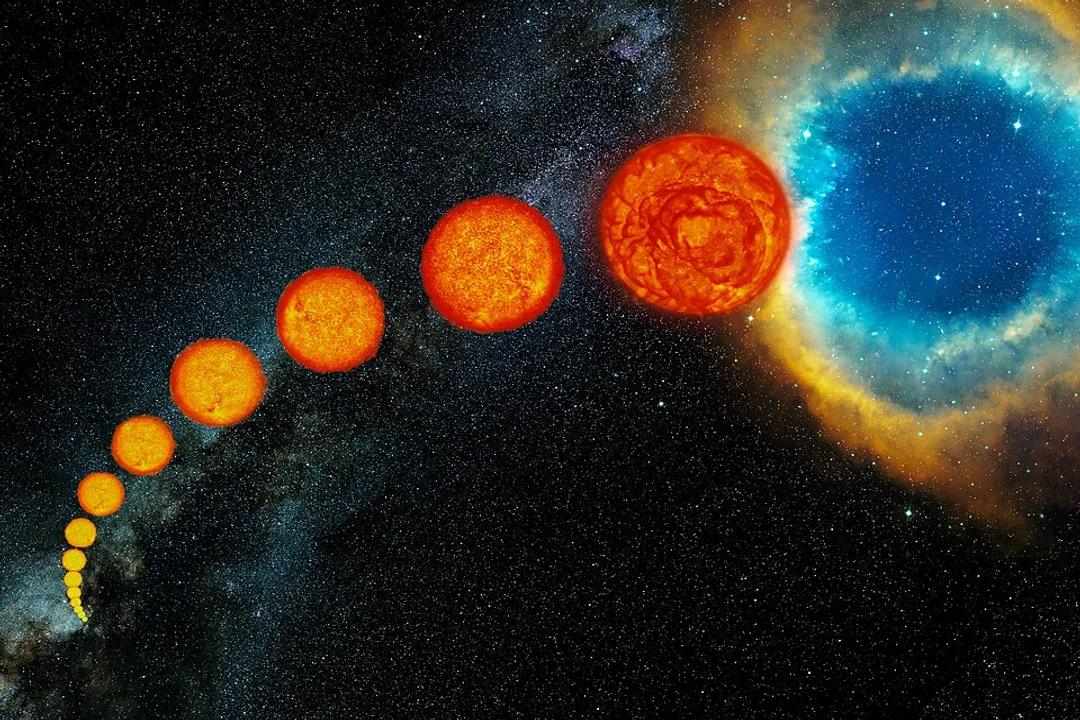
The beginning of any star, whether it is a massive blue giant or a gentle red dwarf, traces back to the same fundamental ingredient floating in the vast emptiness of space: enormous, cold clouds of gas and dust. [1][5][6] These cosmic clouds, often millions of times the mass of our Sun, are the universe’s star factories, or what astronomers scientifically refer to as nebulae. [1][5] They are not uniform swathes of light but instead vast, sprawling regions containing the raw materials for future solar systems. [9]
# Cosmic Nurseries
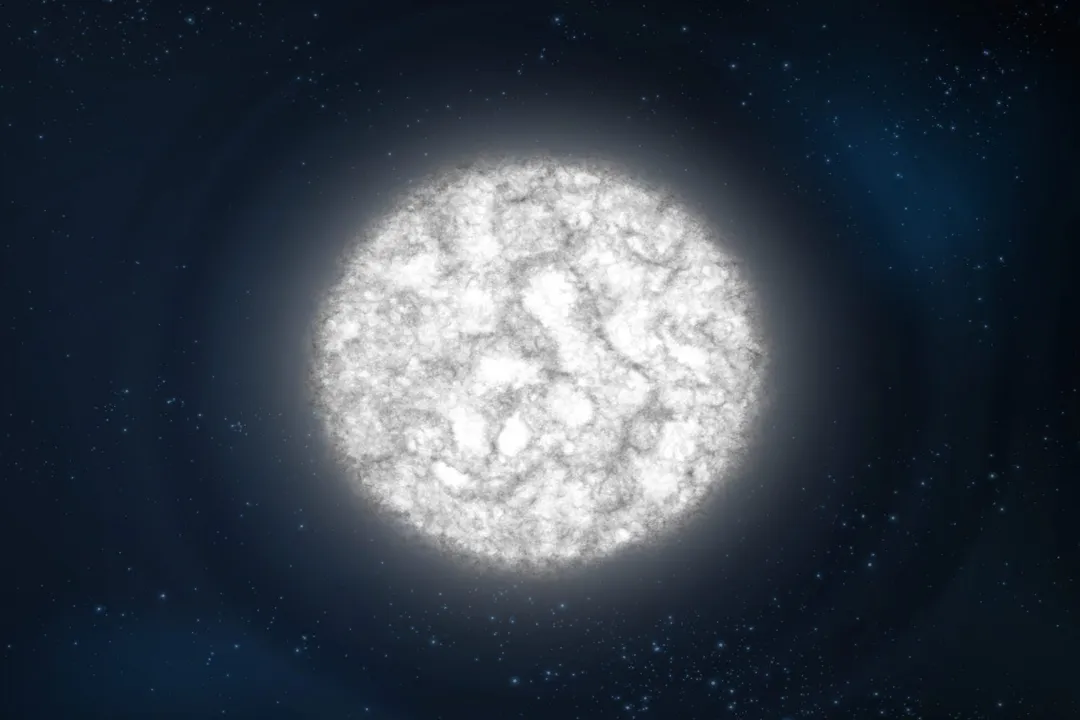
These stellar birthplaces are primarily composed of the lightest elements, predominantly hydrogen and helium, the elements forged in the Big Bang itself. [1][6] Mixed in with this gas are traces of heavier elements—the scattered remnants of previous generations of stars that lived and died. [5] When astronomers observe these regions, they often see them as dark, imposing patches against a brighter background, as the thick dust blocks visible light—these are known as dark nebulae. [5] Some of the largest of these structures are known as Giant Molecular Clouds (GMCs). [4][9] To put the sheer scale into perspective, a typical GMC can span hundreds of light-years across, holding enough mass to potentially form thousands of stars like the Sun. [4]
It is important to note that while all stars are born from nebulae, not all nebulae result in stars. A nebula is a large, diffuse region; star formation only initiates in the denser clumps within those clouds. [4] Think of the nebula as a massive grain silo; the star forms only when material piles up into a specific, concentrated mound ready to topple under its own weight. [9] The air pressure within these GMCs is extremely low, often comparable to the best vacuums created in laboratories on Earth, yet the density is just high enough in specific pockets to initiate the collapse, highlighting a delicate balance between outward thermal pressure and inward gravitational pull. [4]
# Gravitational Seeds
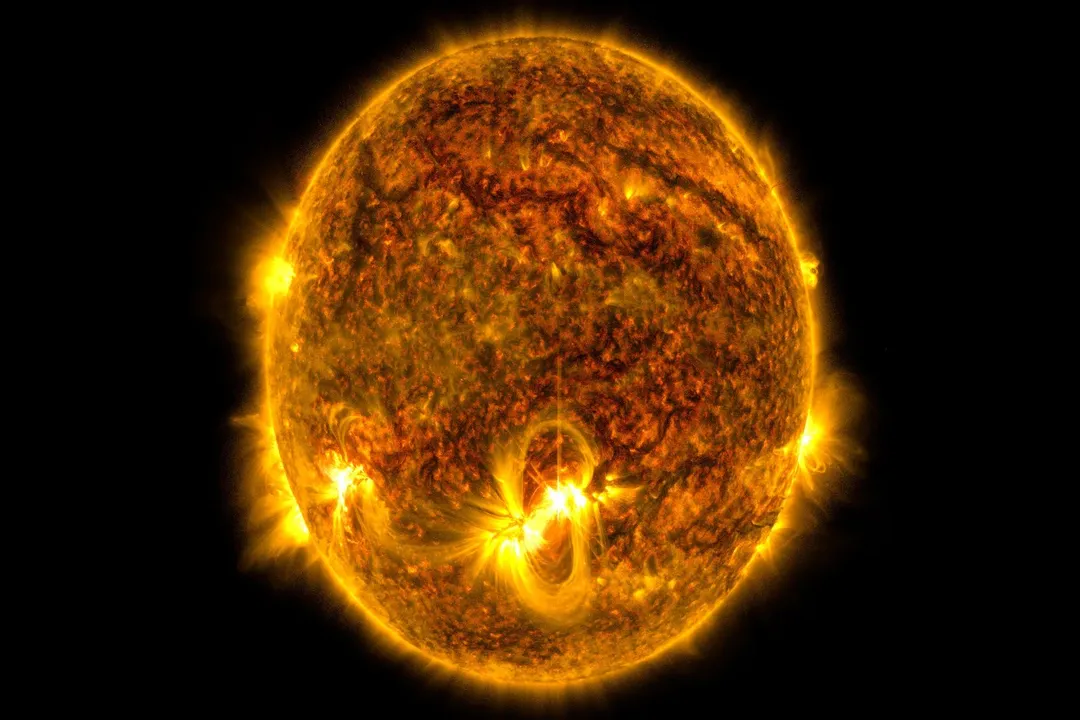
The transition from a vast, relatively stable cloud fragment to a collapsing stellar seed is the most critical first step in stellar evolution. [6] For a region within a nebula to begin forming a star, gravity must win the tug-of-war against the internal gas pressure that tries to keep the cloud expanded. [4][6] This initial win often requires a trigger. Without an external nudge, a cloud segment might remain indefinitely in equilibrium. [4]
Common triggers for this collapse involve external compression waves sweeping through the galaxy. These might be shockwaves generated by a nearby supernova explosion—the death blast of another, larger star—or perhaps even the gravitational disturbance caused by the passage of spiral arms in a galaxy. [4][5] When a dense pocket receives this sudden compression, its density increases rapidly enough that gravity takes over, starting the runaway collapse. [4] As this segment collapses, it fragments further into smaller, denser knots, each destined to become one or perhaps a few stars. [4]
This process of fragmentation is what dictates the formation of star clusters rather than isolated single stars. Imagine taking a large, half-melted blob of modeling clay and squeezing it; it doesn't necessarily compress into one sphere, but rather breaks and clumps into several smaller ones, each beginning its own collapse sequence. This is the case for many stars, including our Sun, which was likely born alongside countless siblings in a cluster environment. [5]
# Protostar Ignition
Once the gravitational collapse of a dense knot begins, the material starts to fall inward, gaining speed and generating heat due to the conversion of gravitational potential energy into thermal energy. [6] This initial, glowing, collapsing object is known as a protostar. [1][3][5] A protostar is often shrouded by the remaining envelope of the original molecular cloud material, making it difficult to see directly with traditional optical telescopes. [5] However, its intense heat radiates away in the infrared spectrum, which allows astronomers to detect these hidden beginnings. [5]
The protostar is not yet a "true" star in the sense that it doesn't generate its own energy through sustained nuclear fusion in its core. [3][6] Instead, it shines purely because of the energy released by the ongoing gravitational contraction. [3] As the infall continues, the matter doesn't just drop straight onto the center; it forms a rotating accretion disk around the protostar. [5] This spinning disk is crucial, as it feeds material onto the growing central object and eventually forms the building blocks for planets, asteroids, and comets. [5]
A fascinating phenomenon during this stage, particularly prominent in lower-mass protostars, involves powerful bipolar outflows. [5] These are jets of material ejected from the poles of the protostar, perpendicular to the accretion disk, moving at incredible speeds. These jets help clear away the surrounding gas and dust envelope, eventually allowing the protostar to become visible once it has gathered most of its mass. [5]
# Mass Matters
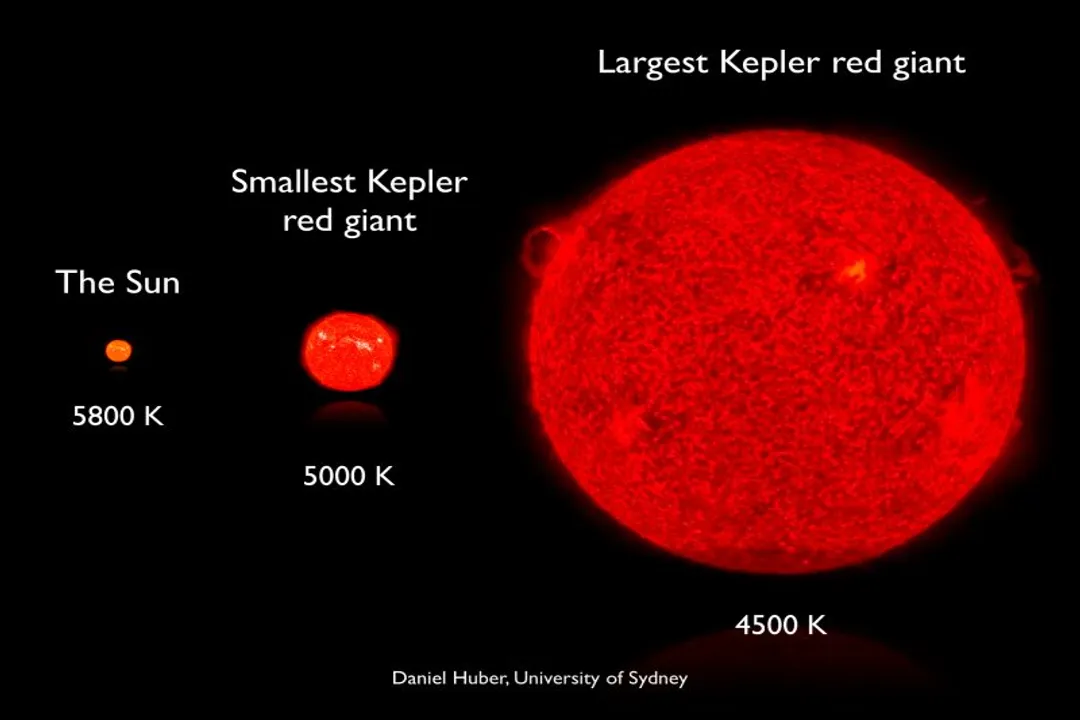
The destiny of the collapsing cloud fragment—what kind of star it will become, or if it will become a star at all—is entirely determined by the initial amount of mass it manages to accrete before fusion ignites. [6] This threshold concept is fundamental to astrophysics.
If the contracting core accumulates enough mass, the central temperature and pressure will eventually reach the critical point—about 15 million degrees Celsius—required to initiate the fusion of hydrogen into helium. [1][3] When this thermonuclear reaction begins, the outward pressure generated by the fusion energy perfectly balances the inward crush of gravity. At this moment, the object stabilizes and officially joins the main sequence, becoming a true star like our Sun. [1][3][6]
However, there is a lower limit to this mass. If the collapsing core fails to reach about $0.08$ times the mass of the Sun (or roughly 80 times the mass of Jupiter), the core will never get hot enough to start sustained hydrogen fusion. [6] Instead of becoming a main-sequence star, this failed star settles into a long, slow contraction as a brown dwarf. [6] Brown dwarfs are sometimes called "substellar objects" because they do not sustain the energy production that defines a true star. [6]
Conversely, if the initial cloud fragment is extremely massive, the resulting star will burn hot and bright, perhaps hundreds of times the Sun's mass. Such stars live incredibly fast, consuming their fuel in just a few million years before exploding violently. [1] The wide spectrum of stellar objects we observe—from faint red dwarfs to brilliant blue giants—all trace their lineage back to the same initial gas cloud, differentiated only by the quantity of matter they managed to gather during that initial collapse. [6]
# Stellar Birth Sequence
The entire process, from the initial slight over-density in the molecular cloud to the ignition of fusion, can be thought of as a short, intense sprint in cosmic terms. While the overall lifetime of a star like the Sun spans billions of years, the formation phase is remarkably brief. [3]
For a solar-mass star, the process looks like this:
- Molecular Cloud Fragment: A region within a GMC begins to collapse under its own gravity, perhaps catalyzed by an external shockwave. [4][5]
- Protostar Formation: The core heats up dramatically as gravitational energy is converted to heat, forming a dense protostar surrounded by an opaque envelope and an accretion disk. [5][6]
- Pre-Main-Sequence Contraction: The protostar sheds its surrounding cocoon via powerful bipolar outflows while continuing to contract and heat up. [5]
- Main Sequence Ignition: Core temperatures reach the critical $15$ million Kelvin mark, sustained hydrogen fusion begins, and the star achieves hydrostatic equilibrium, settling into its longest phase of life. [1][3]
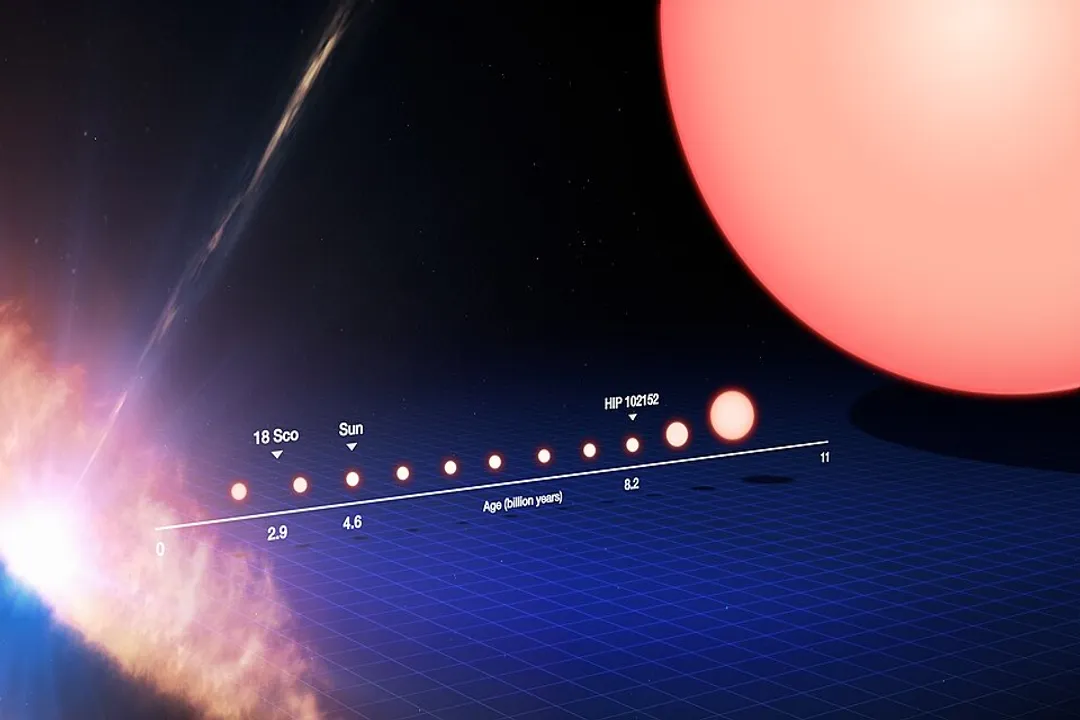
Understanding this sequence offers a unique perspective on our own Sun. The Sun has been a main-sequence star for approximately $4.6$ billion years, meaning its initial birth phase, which took it from a cold cloud fragment to a hydrogen-burning object, lasted a fraction of that time, likely only a few tens of millions of years. [3] This efficiency of transformation, turning vast, cold gas into a stable, hot fusion reactor, is perhaps the most defining characteristic of stellar evolution. [6] The fact that these cosmic processes, governed by gravity and thermodynamics, produce such a diverse array of objects from the same elemental starting material is a testament to the sheer power of physics operating on immense scales. [4][9]
#Videos
Lifecycle of a star | Astrophysics | Physics | FuseSchool
Related Questions
#Citations
Star Basics
Stellar evolution
Stellar Evolution
The formation and life cycle of stars
The Life Cycle of Stars
How Stars Form: A Star's Life Cycle in Six Stages
Life Cycle of Stars
Star Formation | Center for Astrophysics | Harvard & Smithsonian
Lifecycle of a star | Astrophysics | Physics | FuseSchool