What do stars start out as?
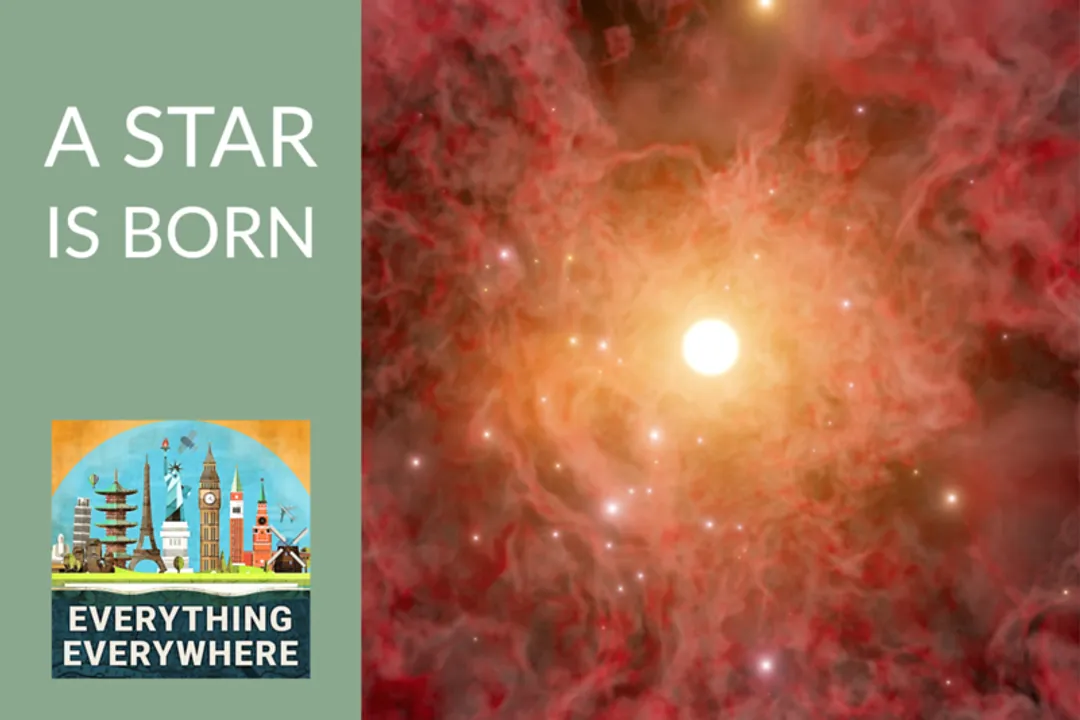
The light we see from distant suns is the product of an incredible, slow-motion demolition and construction project orchestrated by gravity across billions of years. Stars, those massive, shining balls of hot gas held together by their own self-attraction, are the universe's primary element factories, responsible for creating nearly every atom heavier than helium, including the carbon in our own bodies. [1][10] But before they become the steadfast beacons we observe, they have an origin story rooted deep within the cold, dark reaches of space.
# Cosmic Foundations
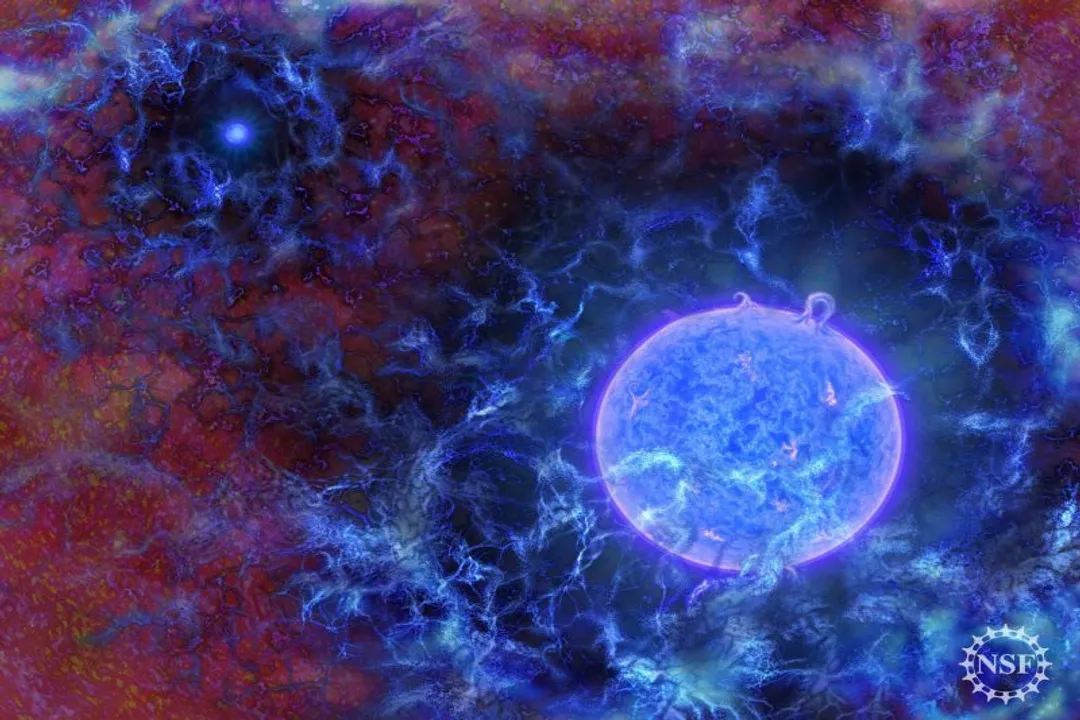
A star’s beginning is found not in empty space, but within vast clouds of interstellar gas and dust known as nebulae. [4][7] These stellar nurseries are enormous reservoirs, sometimes called Giant Molecular Clouds (GMCs), composed overwhelmingly of hydrogen, the simplest element. [3] These clouds are incredibly cold, often measuring just a few degrees above absolute zero. [3] Despite their enormous size, spanning hundreds of light-years, these nebulae are far less dense than anything we consider a vacuum on Earth. [7] For instance, a typical cubic meter of this cosmic cloud might contain only a few hundred molecules, whereas a cubic meter of air at sea level contains roughly molecules. This near-vacuum status makes the eventual clumping of material seem even more remarkable. [3]
Within these great clouds, matter is not distributed perfectly evenly. There are slightly denser regions, areas where the minuscule gravitational pull of the gas atoms is slightly stronger than in neighboring patches. [2] These slight over-densities are the seeds from which stars eventually sprout. [3] The existence of these initial imperfections is what sets the stage for the entire process, allowing gravity to eventually overcome the outward pressure exerted by the gas itself. [2]
# Gravitational Collapse
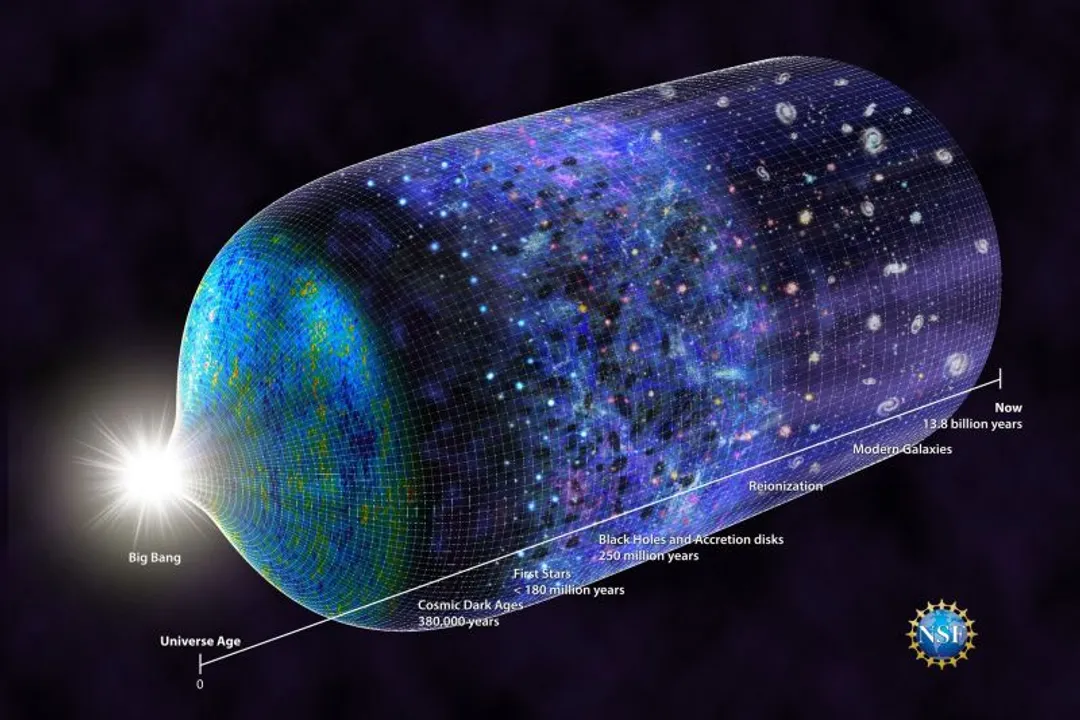
The quiet state of the molecular cloud needs a push to transition into active star formation. While the cloud might have slight internal density fluctuations, a significant external event is often required to compress a region enough for gravity to take irreversible control. [3] These triggers can be provided by energetic events elsewhere in the galaxy, such as the shockwaves generated by a nearby supernova explosion, or perhaps the pressure from the intense radiation of nearby, massive, young stars. [3]
Once a region crosses a critical density threshold—a point where its internal gravitational pull outweighs all internal and external forces pushing it apart—the collapse begins. [2] This process, known as gravitational collapse, is not a quick event; it can take millions of years for a massive clump of gas to truly condense. [5] As the material falls inward, it orbits the center of the accumulating mass, which acts as a gravitational focus. [2] If we imagine this process on a human timescale, this gravitational slimming process is comparable to watching a city-sized volume of material shrink down to the size of a marble over the course of centuries. [5] The gravitational energy released by this inward rush of material is converted into thermal energy, causing the core of the collapsing fragment to heat up significantly. [7][4]
# Protostar Ignition
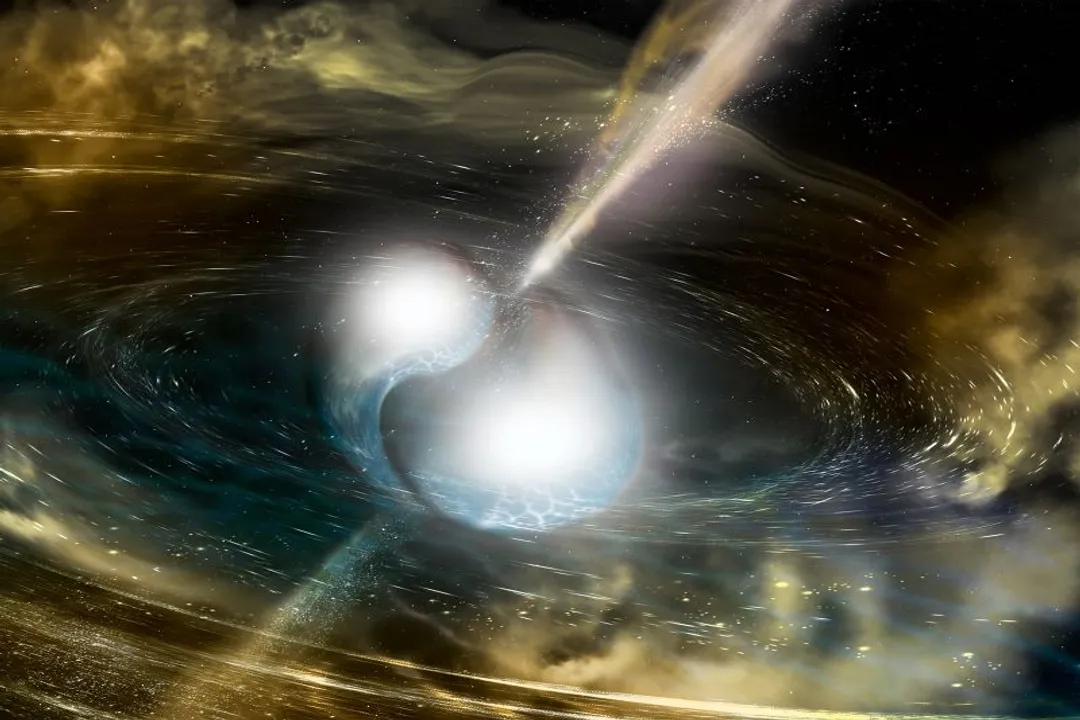
The object forming at the center of this contracting knot of gas is not yet a true star; it is a protostar. [4] During this phase, the protostar continues to gather more mass from the surrounding cloud material falling onto it, a process called accretion. [2] As the core gets denser and hotter due to the sustained gravitational contraction, it begins to glow, often visible in infrared light, though the surrounding dust envelope often hides it from direct visible light observations. [8]
Around the infant protostar, the infalling material that misses the direct center often flattens into a spinning disk, known as a circumstellar disk. [8] This disk is critically important because it serves as the raw material not only for the star itself but potentially for the formation of planets orbiting it later on. [8] The internal temperature of the protostar continues to climb steadily as more material piles on. [6]
A key moment in understanding this intermediate stage is recognizing the continuous battle between gravity, which contracts the mass, and the increasing outward pressure from the trapped heat, which resists contraction. [2] The protostar will continue to contract and heat up until the core conditions are extreme enough to initiate the next, defining stage of stellar life. [6]
# Nuclear Fire
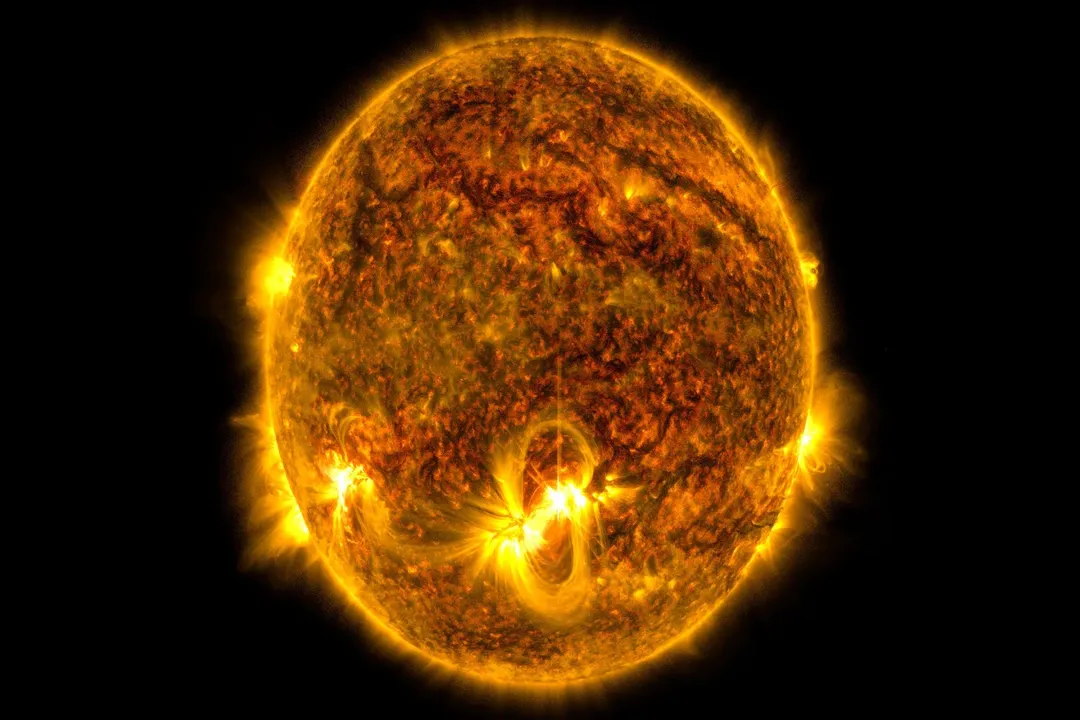
The true birth of a star occurs when the core reaches a sufficient temperature and density to ignite sustained nuclear fusion. [6][4] For hydrogen nuclei to fuse into helium nuclei, an enormous amount of energy is required to overcome the electrostatic repulsion between the positively charged protons. [6] The temperature required for this hydrogen burning to begin is staggering: the core must reach approximately 15 million Kelvin. [6] Once this temperature is achieved, the star enters the Main Sequence phase, where the outward pressure generated by fusion perfectly balances the inward crush of gravity—a state known as hydrostatic equilibrium. [9]
The energy released by this fusion is what powers the star, causing it to shine brightly across the universe. [1] Before this ignition, the object is technically a failed star, or a brown dwarf, if it never gets hot enough to sustain fusion, though these objects are still scientifically fascinating in their own right. [2] The duration a nascent star spends as a protostar depends heavily on its final mass; the most massive stars form much faster than smaller stars like our Sun. [8]
If you were monitoring a collapsing cloud, the transition from protostar to true star is a clear physical demarcation. A protostar glows because it is shrinking and hot, radiating away gravitational potential energy. A true star shines because it is fusing hydrogen, radiating away nuclear energy. This fundamental difference dictates the star's entire lifespan and eventual fate. [4][9]
# Stellar Destiny Determined
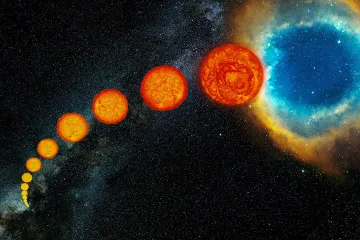
Once nuclear fusion begins, the star settles onto the Main Sequence, and the most important variable determining its entire existence—its luminosity, its color, its temperature, and its lifespan—is its initial mass. [2][9] This one factor, determined by how much material successfully accreted in the initial collapse, dictates everything that follows. [9]
Stars are categorized broadly based on this mass:
- Low-Mass Stars: Stars similar to the Sun or smaller burn their fuel slowly and live for billions or even trillions of years. [9]
- High-Mass Stars: Stars much larger than the Sun consume their fuel rapidly, leading to lives that might last only a few million years before ending dramatically. [2][9]
This concept that mass is the primary controller highlights a fascinating scale of existence. For instance, our own Sun, a G-type main-sequence star, has a lifespan calculated in the billions of years. [9] However, a truly massive star, perhaps thirty times the Sun's mass, will live fast and die young, burning through its core fuel in a stellar flash that lasts maybe only a few million years. In the grand timeline of the cosmos, this is less than a blink, but it is long enough to forge the heaviest elements required for life. [10]
The initial cloud collapse has a few potential outcomes for any given fragment of gas. If the fragment is too small, the core temperature may never reach the threshold for sustained hydrogen fusion, resulting in a brown dwarf that cools over time. [2] If the fragment is large enough, it becomes a star. If it is massive enough, it may continue to collect material until it becomes a binary or multiple star system, though the collapse itself generally favors the formation of single, dominant objects unless the initial GMC was already highly structured. [2] Essentially, what a star starts as is a specific amount of hydrogen gas, but what it becomes is entirely dependent on the gravitational efficiency of that initial accumulation.
Related Questions
#Citations
Star Basics - NASA Science
Star - Wikipedia
Star Formation | Center for Astrophysics | Harvard & Smithsonian
Stellar Evolution - | The Schools' Observatory
Eli5 How are stars made? : r/explainlikeimfive - Reddit
Stars and their life-cycle (article) | Khan Academy
A Star is Born: How Stars are Created and How They Work
The formation of stars - ESA/Hubble
Life Cycle of Stars - BYJU'S
The stars within us | NSF - U.S. National Science Foundation