What does a star begin its life as?
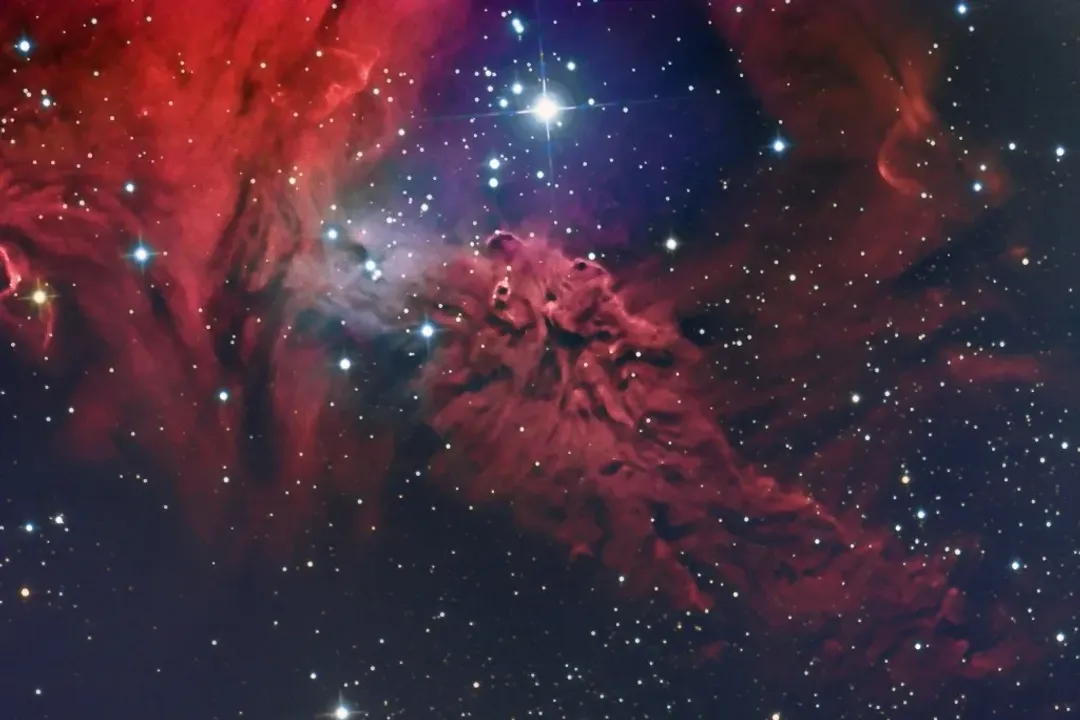
The genesis of a star is a process rooted deeply in the cold, dark expanses between existing stellar systems. Before any thermonuclear fire can ignite, there must be raw material gathered, and this material starts as immense, cold clouds of gas and dust drifting through space, known generally as nebulae or more specifically as giant molecular clouds. [1][5][10] These nurseries are composed predominantly of hydrogen, with helium making up most of the rest, along with trace amounts of heavier elements locked within dust grains. [1][5] These clouds are incredibly tenuous; if you took a volume of this interstellar gas equivalent to the Earth's atmosphere and brought it down to sea level pressure, it would still be a near-vacuum by terrestrial standards. [5]
# Cosmic Nurseries

These stellar birthplaces are massive structures, sometimes spanning hundreds of light-years across. [5] Within them, the temperature hovers near absolute zero, often just 10 to 20 Kelvin. [5] This extreme cold is essential because thermal energy opposes the force trying to pull the material together. The process requires a predominantly quiescent environment where the gas particles are moving slowly enough for gravity to begin asserting its dominance over small, localized regions within the cloud. [5]
It is fascinating to consider the sheer scale of material required just to form one star. For a star like our Sun, the initial collapsing region might occupy a volume that is trillions of times larger than the final star itself. [10] The process is not initiated uniformly across the cloud; rather, denser pockets begin to attract more material gravitationally, creating a feedback loop where growing density accelerates further collapse. [5]
# Gravitational Collapse
The initial trigger for collapse can come from several sources, demonstrating that stellar birth isn't always a gentle affair. Often, a disturbance is required to overcome the internal pressure resisting gravity in the first place. [5] This trigger might be the shockwave propagating outward from a nearby supernova explosion, which compresses the gas, or it could be the pressure exerted by the intense radiation from nearby, massive, hot stars. [5][10] Sometimes, the simple pressure from passing spiral arms in a galaxy can be enough to nudge a section of the molecular cloud past its critical stability point. [5]
Once the collapse begins, the cloud fragment spins faster and faster due to the conservation of angular momentum—the same principle that causes a spinning ice skater to pull their arms in to speed up. [5] This rotation prevents all the material from falling directly to the center, causing the cloud to flatten into a rotating structure called a circumstellar disk or accretion disk. [5] At the very heart of this rotating, contracting mass, the first recognizable stellar object begins to form. [5]

# Protostar Formation
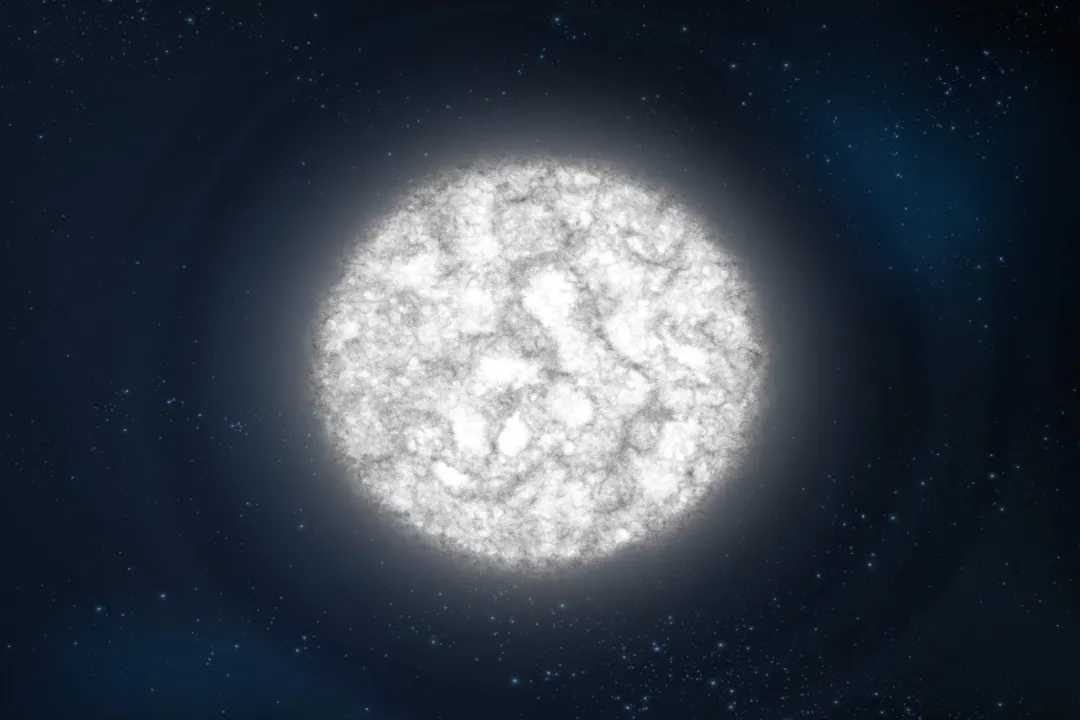
The object forming at the center, shrouded by the in-falling gas and dust of the disk, is known as a protostar. [5][1] This object is not yet a true star because it is not yet powered by nuclear fusion. Instead, its heat comes entirely from gravitational contraction. As the material falls inward, gravitational potential energy is converted into kinetic energy, which then converts into thermal energy—heat—as particles collide. [5][3]
As the protostar gathers more mass from the surrounding disk, its core density and temperature soar. This stage can last for a significant amount of time, depending heavily on the final mass the star will achieve. [2] For a Sun-like star, this phase of gathering mass and contracting can take tens of millions of years. [2] During this phase, jets of material are often ejected perpendicular to the disk from the poles of the young object, helping to shed excess angular momentum and allowing the remaining material to fall onto the core. [5]
If the collapsing mass is too small—less than about $0.08$ times the mass of the Sun—the core will never reach the critical temperature required for sustained hydrogen fusion. These failed stars become brown dwarfs, objects sometimes called "sub-stellar objects" or "failed stars," which glow dimly from residual heat rather than active fusion. [1][2]
# Core Heating
The stage immediately preceding true stardom is the pre-main sequence phase. [3] Here, the object is largely visible because of the heat generated by continued gravitational shrinking, though an internal energy source is starting to dominate. [3] The internal pressure and temperature continue to climb steadily.
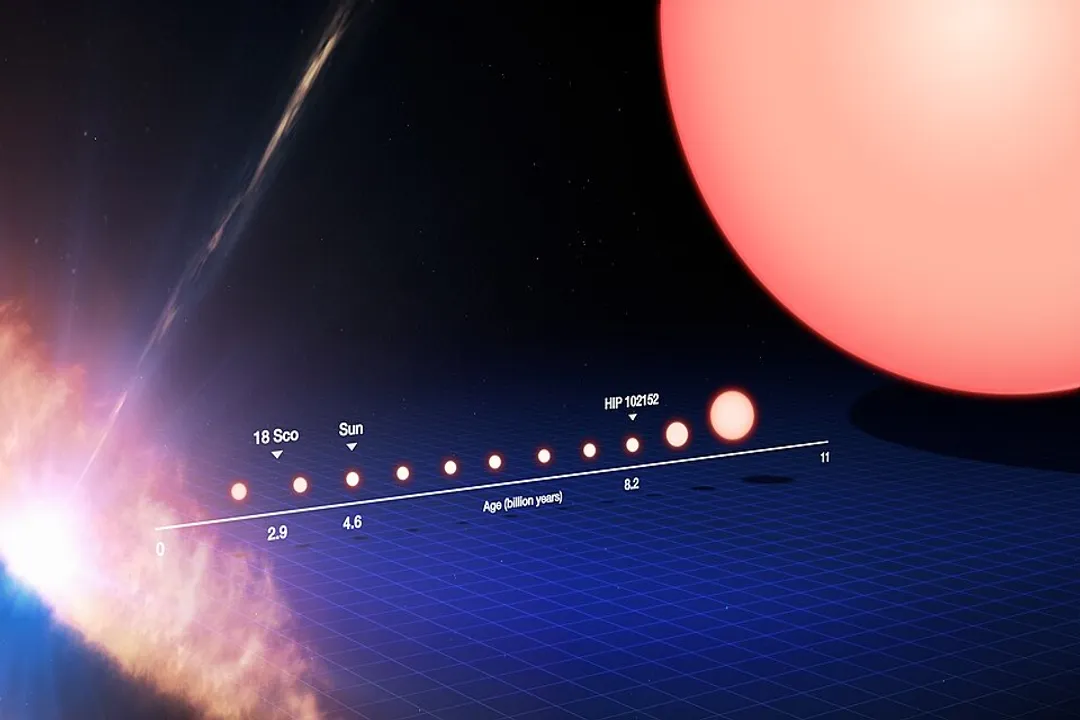
It is worth noting that the entire life of a star, from the initial cloud fragment to the ignition point, represents a relatively short burst of activity compared to its subsequent existence on the main sequence. Consider a star like the Sun: the entire gravitational collapse and pre-main sequence heating might consume maybe $50$ million years. In contrast, it will spend roughly $10$ billion years fusing hydrogen on the main sequence. [1][2] This highlights a significant energy efficiency paradox: the vast majority of the star’s luminous life is fueled by a far slower, more stable process than the rapid, dramatic collapse that began the process.
# Nuclear Ignition
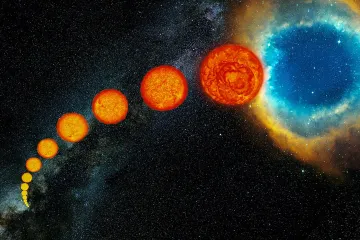
The defining moment for any true star—the moment it "turns on"—is when the core temperature and pressure become sufficiently high to initiate sustained nuclear fusion. [1][5] For hydrogen to fuse into helium, the core temperature must reach approximately $15$ million Kelvin (or $27$ million degrees Fahrenheit). [1][5]
When this threshold is crossed, the tremendous outward pressure generated by the energy released from fusion precisely balances the crushing inward force of the star's own gravity. [1] This state of hydrostatic equilibrium marks the official birth of a star and its entry onto the Main Sequence of the Hertzsprung-Russell diagram. [2][3] From this point forward, the star's energy source is stable, meaning its size and luminosity will remain relatively constant for the vast majority of its life cycle. [2] The star has successfully converted a huge, cold, diffuse cloud of gas into a self-sustaining, hot sphere of plasma powered by the conversion of mass into energy, according to Einstein's famous equation, . [3]
# Mass Matters
The single most critical factor determining a star's entire life story, from its birth to its eventual death, is its initial mass. [1][2] We have established that if the mass is too low, it never fuses hydrogen and becomes a brown dwarf. [2] Stars born with masses similar to the Sun or slightly larger (up to about eight times the Sun's mass) will have long, stable lives fueled by hydrogen fusion. [1][2]
However, massive stars—those born with more than eight solar masses—experience a much more dramatic infancy and youth. Because of their greater gravitational compression, their core temperatures reach fusion conditions much faster, leading to a significantly shorter main sequence lifetime, sometimes lasting only a few million years. [1][2]
Here is a simplified view comparing the birth requirements and immediate outcomes based on mass:
| Mass Range (Solar Masses) | Initial State Precursor | Core Ignition Temperature | Main Sequence Lifetime (Relative) |
|---|---|---|---|
| $< 0.08$ | Giant Molecular Cloud Fragment | Never Reaches Fusion | N/A (Brown Dwarf) |
| $0.08$ to | Molecular Cloud Fragment | Million K | Long (Billions of years) |
| $> 8$ | Molecular Cloud Fragment | Significantly Higher | Short (Millions of years) |
The difference in starting mass means that while low-mass stars are patiently waiting for billions of years, massive stars burn through their fuel at an astonishing rate, leading to rapid and violent deaths, such as becoming supernovae. [2] Therefore, the answer to what a star begins as is simple—a cold, dense pocket of interstellar gas—but the initial amount of that gas dictates everything that follows. [1][3]
#Videos
The Life Cycle of Stars - YouTube
Related Questions
#Citations
Star Basics - NASA Science
Stellar Evolution - | The Schools' Observatory
Stellar evolution - Wikipedia
Life Cycle of Stars - BYJU'S
A Star is Born: The Life Cycle of Stars | Wisconsin Space Grant ...
The formation and life cycle of stars - AQA - AQA - BBC Bitesize - BBC
How Stars Form: A Star's Life Cycle in Six Stages - KiwiCo
The Life Cycle of Stars - YouTube
The Life Cycles of Stars: How Supernovae Are Formed
The life cycle of stars - by Manar Bouazza - Medium