Does anything exist outside of galaxies?
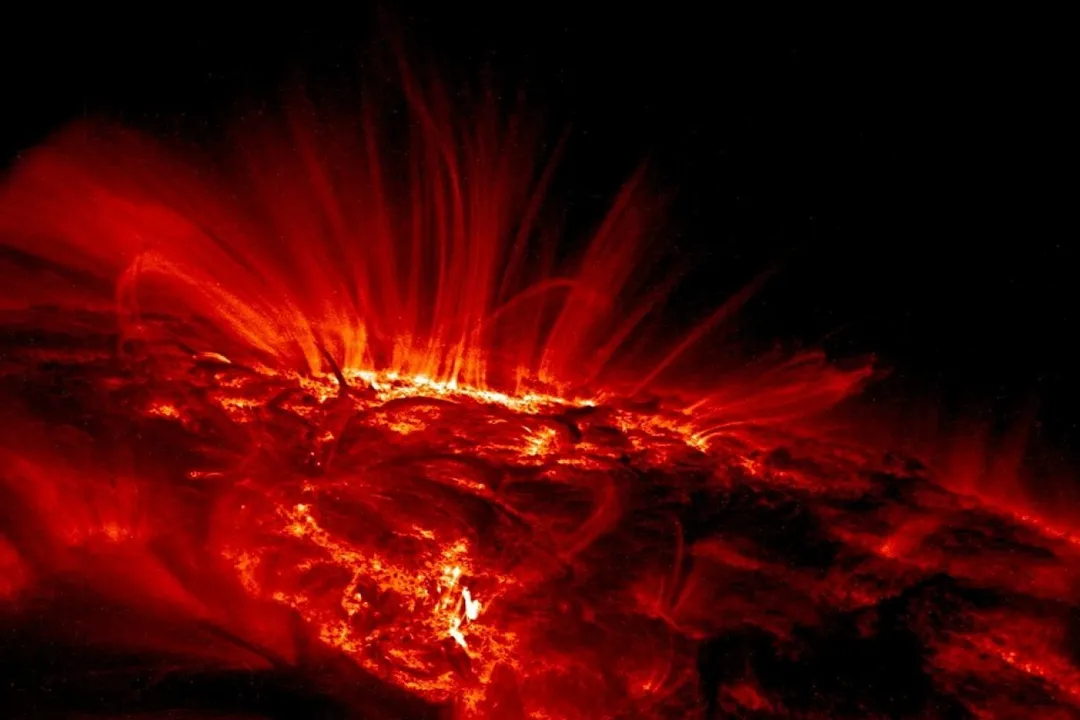
The vastness between the great islands of stars we call galaxies is not entirely empty. While it might seem like a perfect, absolute void when we look at images dominated by spiral arms and bright nebulae, the reality discovered by astrophysics is far more nuanced. The space separating one galaxy from another, known as intergalactic space, is indeed incredibly sparse, yet it is populated by a diffuse substance that permeates the entire cosmos. [2][5] To understand what exists outside galaxies, we must look at the intergalactic medium and the solitary objects that have been flung away from their galactic homes.
# Intergalactic Medium
The primary substance found in the gulf between galaxies is the intergalactic medium (IGM). [2][5] This is not a classical vacuum. Instead, it is a thin plasma composed primarily of hydrogen and helium atoms, along with traces of other elements and dust. [5] Think of it as the rarefied breath of the universe, spread thinly across unimaginable distances.
The sheer emptiness is the most striking feature. Inside a galaxy, like our own Milky Way, the density of matter is high enough for stars to form, cluster, and interact gravitationally. [1] In contrast, the IGM is exceptionally diffuse. Estimates suggest the density hovers around less than one particle per cubic meter. [2] To put this into perspective, even the best laboratory vacuum chamber on Earth manages to achieve a density far greater than the average density of the IGM. [2] This means that if you held a cubic meter of space from the depths of intergalactic space in your hand, it would contain fewer particles than the best vacuum we can create here on the ground.
This rarefied gas is critical because it represents a significant portion of the baryonic (normal) matter in the universe. Although it is spread out, when you sum up all that thin material across the immense volume of space, it accounts for a substantial reservoir of the universe's basic building blocks. [5] This gas often exists in a hot, ionized state, sometimes referred to as the Warm-Hot Intergalactic Medium (WHIM), which is a focus of current astronomical study because it is difficult to observe directly due to its low density. [5]
# Rogue Wanderers
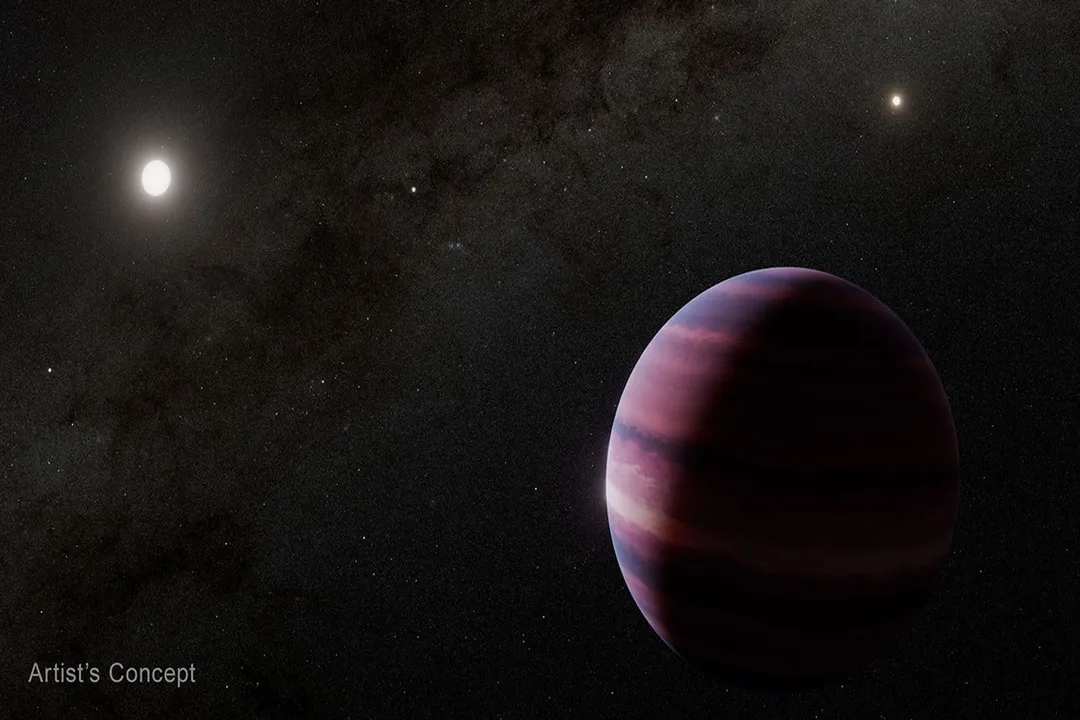
While the IGM is an invisible background medium, there are also discrete, massive objects roaming the voids: isolated stars and perhaps even planets that do not belong to any specific galaxy. [1] These are often called rogue stars or intergalactic stars. [1]
How do these stellar castaways come to be? They are typically ejected from their parent galaxies through violent gravitational encounters. [4] Picture a dense galactic center, perhaps involving a supermassive black hole or a close passage between two large star clusters. During these chaotic gravitational dances, some stars can gain enough kinetic energy to completely escape the galaxy's gravitational pull, becoming unbound wanderers of the intergalactic void. [4]
The phenomenon isn't limited to stars. While far less documented, it is theorized that planets could also be ejected alongside their parent stars, or even stripped away during stellar close encounters, finding themselves adrift in the darkness. [9] If such a rogue planet managed to retain a substantial atmosphere or an internal heat source, it might maintain conditions for subsurface liquid water, theoretically supporting life in complete isolation from any star. [9]
If we were floating near one of these intergalactic stars, the environment would be profoundly different from orbiting a sun within a galaxy. Our night sky would be dominated by the distant, hazy light of the host galaxy from which the star was ejected, punctuated perhaps by a few other nearby rogue stars, with no bright neighboring spiral arms or star-forming regions to illuminate the view. [1] The density contrast is staggering: inside a galaxy, stars are relatively close neighbors; outside, they are separated by distances that dwarf the space between stars within our own galactic plane. [1]
# Comparing the Emptiness
To better appreciate the scale, consider a comparison between the densities of two environments:
| Environment | Approximate Density | State of Matter |
|---|---|---|
| Intergalactic Medium (IGM) | $< 1$ particle / | Ionized Gas/Plasma [2][5] |
| Milky Way Galactic Disk | atom / (or $10^6$ particles / ) | Neutral/Ionized Gas/Dust [1] |
| Earth's Atmosphere (Sea Level) | molecules / | Gas/Liquid |
This table highlights that the density difference between the galaxy's disc and the IGM is roughly a factor of a million or more, which is an enormous gulf in astrophysics. This extreme sparsity means that the matter that is present in the IGM tends to be vastly separated, leading to an exceptionally long mean free path—the average distance a particle travels before interacting with another particle. [2] For a proton moving through the IGM, this distance can be millions of light-years, meaning interactions are incredibly rare events across cosmic timescales.
# The Observable Limit
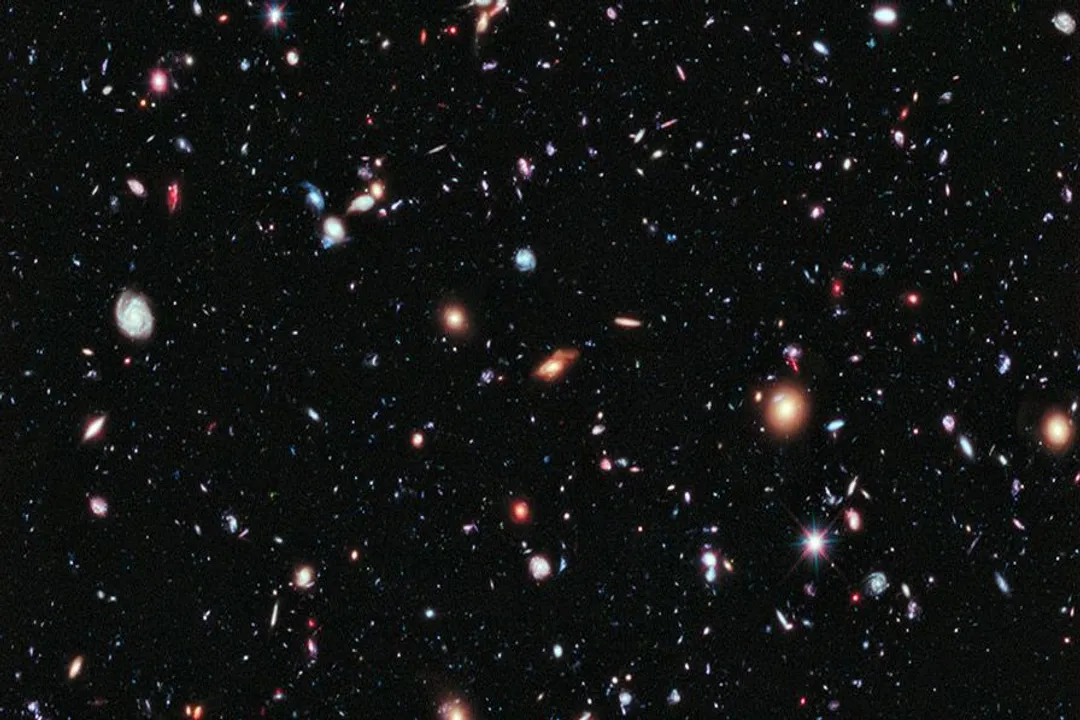
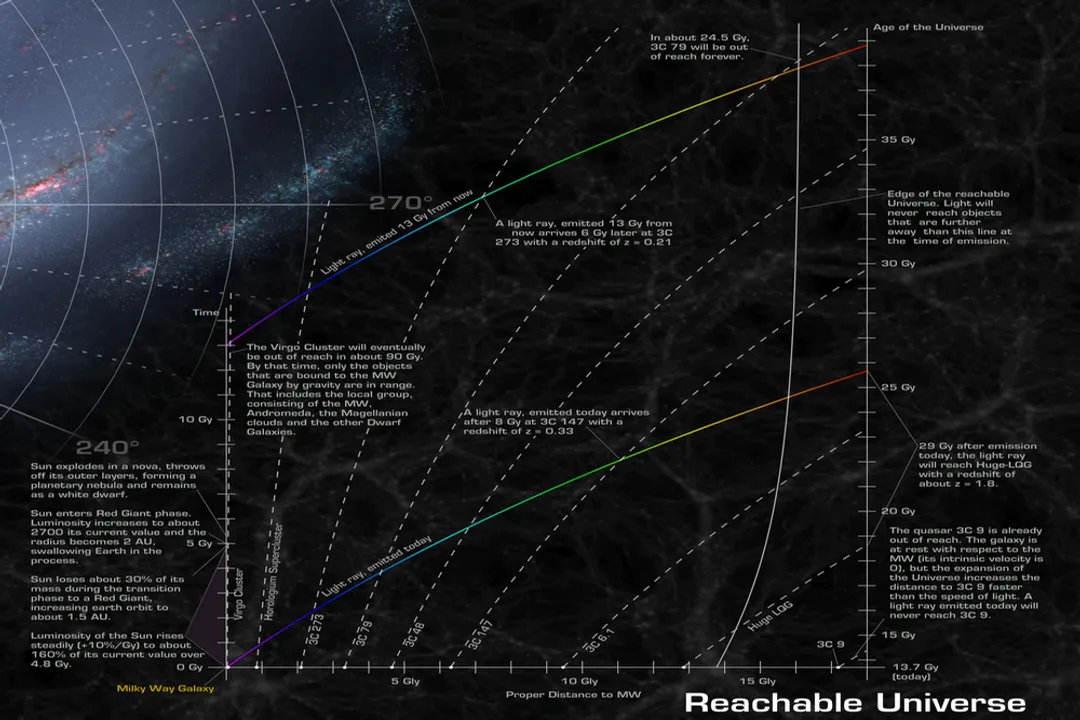
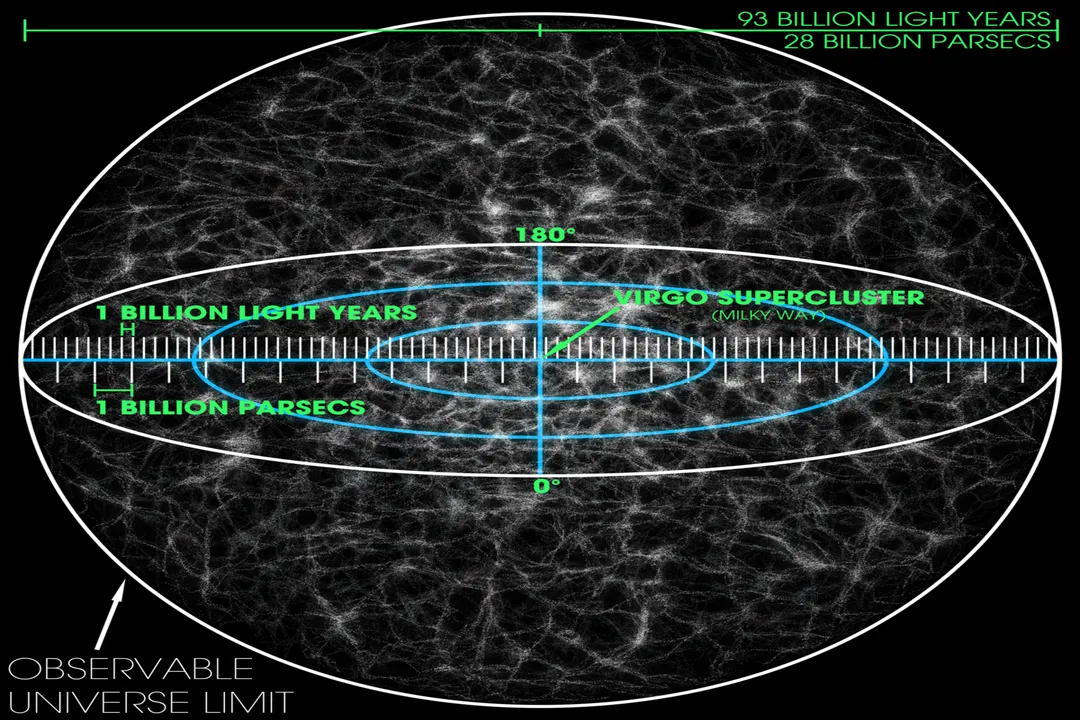
When discussing what exists "outside" galaxies, we must also consider the boundary of what we can see. The universe is not just empty space; it is also subject to the speed limit of light and the age of the cosmos. [6][8]
The observable universe is defined by the distance light has had time to travel to us since the Big Bang, roughly $13.8$ billion years ago. [8] This creates a cosmic horizon. Anything beyond that horizon exists physically, but its light has not yet reached Earth. [6][8] Therefore, the statement that "nothing exists outside the observable universe" is inaccurate; rather, we simply cannot observe what is beyond that boundary. [6] The universe as a whole is generally assumed to be much larger than the portion we can currently detect. [8]
Galaxies, including our own, are situated within this immense volume. Even the most distant galaxies we observe are still bound by this time-distance constraint. The space between our observable bubble and the theoretical, infinitely expanding cosmos is filled with the same intergalactic medium we discussed earlier, just too far away for its faint glow or absorbed light to reach us yet. [6]
It's important to distinguish between space that is not occupied by galaxies (the IGM) and space that is physically inaccessible to our current observation (beyond the cosmic horizon). Both fit the description of existing "outside of galaxies," but they operate on entirely different physical principles—one governed by local particle density, the other by the expansion of spacetime and the finite age of the cosmos. [8]
# Implications for Science
The existence of these vast, nearly empty expanses between galaxies, populated sparsely by the IGM and dotted with rogue objects, has tangible consequences for how we study cosmology and structure formation.
For instance, the properties of the IGM—its temperature, metallicity (the abundance of elements heavier than hydrogen and helium), and density distribution—act as a crucial record of the universe’s evolution. [5] By studying the light from distant quasars as it passes through the IGM, astronomers can map out the distribution of this tenuous gas, helping to verify models of how structure formed hierarchically, with matter collapsing first into filaments and sheets, and then into the dense knots we recognize as galaxies. [5]
The study of unbound stars also offers a unique window into galactic dynamics. Analyzing the velocities and paths of these intergalactic wanderers can give scientists clues about the gravitational history of the galaxy they left behind, perhaps indicating past mergers or close flybys that were otherwise difficult to detect using only the visible stars within the galaxy itself. [4] If we were to find a massive, gravitationally bound cluster of rogue stars drifting between galaxy clusters, it would suggest that gravitational binding can occur even in regions of very low overall density, providing insights into dark matter distribution on scales larger than individual galaxies. [1]
#Videos
Scientists Detect Glow of Hidden Stars Outside of Galaxies ...
Related Questions
#Citations
Do stars exist outside of galaxies? : r/astrophysics - Reddit
Does anything exist in the intergalactic space?
Exoplanets - NASA Science
Can stars exist outside a galaxy? | Science Questions
Are there any elements between galaxies, or is there just nothing?
Is there anything beyond the universe? - Space
Scientists Detect Glow of Hidden Stars Outside of Galaxies ...
Observable universe - Wikipedia