Did humans exist before the Moon?
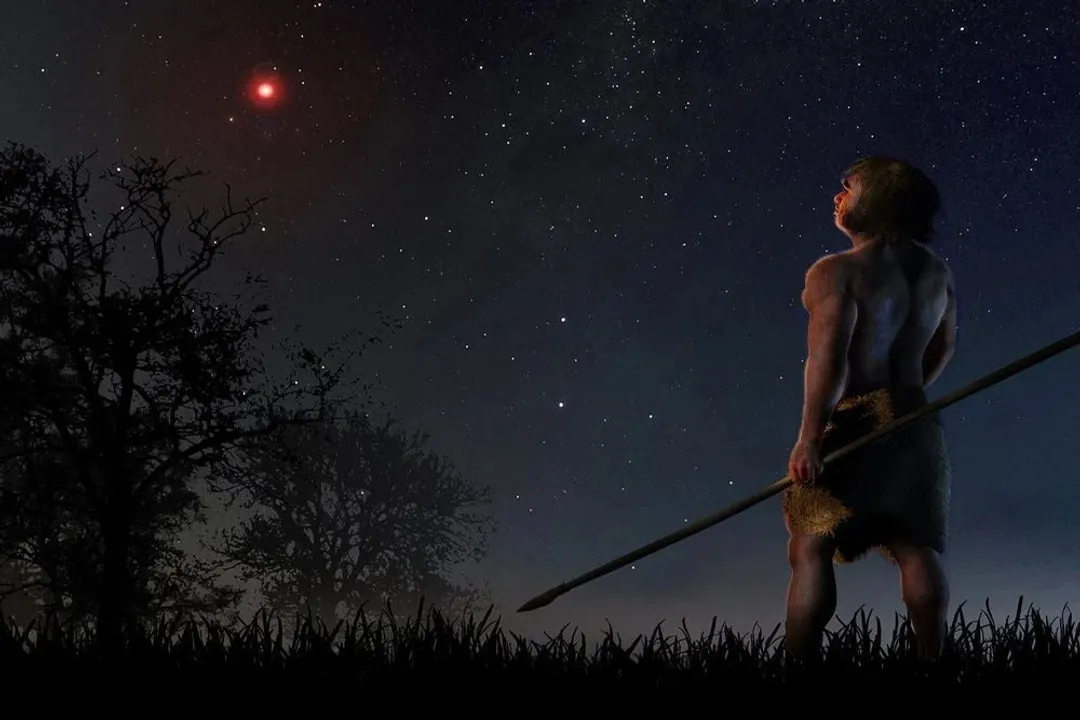
The geological record paints a picture of Earth's history measured in billions of years, a timescale so vast it almost defies human comprehension. Within that immense chronology, the appearance of our species, Homo sapiens, is a relatively recent event, occurring long after the formation of our planet's most familiar celestial neighbor, the Moon. The sequence of events is clear from the perspective of astrophysics and evolutionary biology: the Moon came first, by an enormous margin, followed eventually by humanity.
# Lunar Birth
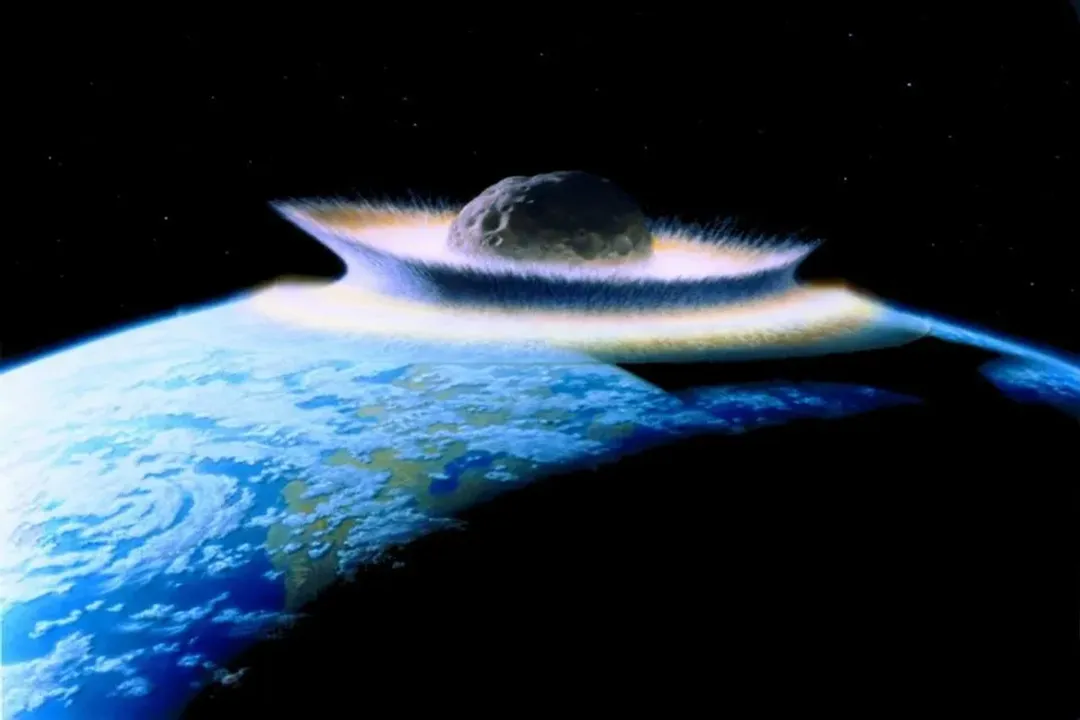
The creation of the Moon is anchored firmly in deep time, estimated to have occurred about 4.51 billion years ago. This event, widely accepted in planetary science, involved a massive collision between the proto-Earth and a Mars-sized protoplanet named Theia. The debris ejected from this cataclysmic impact coalesced into the satellite we see tonight. This places the Moon's origin near the very beginning of the Solar System's stable history. To put this into perspective, the entire span of life on Earth, as evidenced by the fossil record, is only about 3.7 billion years old—meaning the Moon was already well-established for nearly a billion years before the very first single-celled organisms began to thrive on our planet.
# Human Emergence
When we shift our focus to human history, the timeline shrinks dramatically. The genus Homo itself has been around for several million years, but the emergence of anatomically modern humans, Homo sapiens, is much more recent. Current paleontological evidence suggests that Homo sapiens first arose on Earth approximately 300,000 years ago. Some research pushes the date back further when considering older fossils that show modern traits, though the general consensus for Homo sapiens evolution centers around that third-of-a-million-year mark. Even tracing back the lineage to the first members of the genus Homo still leaves us millions of years short of the Moon's formation.
If we consider the earliest recognized hominins—the group that includes modern humans and our direct ancestors—we are still looking at figures that predate the Moon's existence by over four billion years, which highlights a fundamental disconnect in timing. Scientific perspectives on the age of humans, often focusing on the Anthropocene, confirm that our species' impact on the planet is only just beginning to register in the deep geological record, which is entirely post-lunar.

# Comparing Timelines
The comparison between the two timelines solidifies the answer to the initial query. The Moon formed roughly 4,500,000,000 years ago. The first Homo sapiens appeared around 300,000 years ago. The difference is staggering: a gap of over 4.49 billion years separates the two events.
| Event | Approximate Age (Years Ago) | Scientific Basis |
|---|---|---|
| Moon Formation | 4,510,000,000 | Giant Impact Hypothesis |
| Earliest Life | 3,700,000,000 | Fossil Record |
| Genus Homo | ~2,500,000 | Fossil Record |
| Homo sapiens | ~300,000 | Fossil Record |
This stark contrast means that any human or near-human life form, as understood by modern anthropology and paleontology, arose long after the Moon had settled into its current orbit. Any hypothetical scenario suggesting life capable of complex thought or culture existed before the Moon requires us to discard nearly all established geological and astronomical data, or to redefine "human" to mean something entirely different from our known evolutionary lineage.
# Cultural Echoes
Despite the scientific consensus, the idea of a time preceding the Moon persists in various forms of mythology and speculation. Some ancient cultures and esoteric traditions speak of a "Time Before the Moon" or refer to beings, sometimes labeled "Proselenians," who existed when the sky was different. These concepts often surface in discussions among enthusiasts of ancient mysteries or speculative cosmology.
When these cultural references are cross-referenced with the known history of Homo sapiens, a clear divergence emerges. While these narratives suggest a historical or quasi-historical period before the Moon, the biological and geological evidence does not support any known hominin—let alone Homo sapiens—existing during that epoch. It is fascinating to consider that these ancient references might be deep-seated cultural memories, perhaps stemming from events far older than human memory, or they may simply represent creative attempts to explain astronomical observations or existential queries through narrative.
For example, some theological viewpoints suggest that the biblical narrative of Adam and Eve does not describe the absolute first humans, but rather the first sapiens in a particular lineage, implying earlier, non-sapiens human forms existed. Even stretching this interpretation to its absolute limit, these earlier forms would still post-date the Moon’s formation by billions of years, demonstrating that the "pre-Moon" question, when applied to humans, remains rooted outside of scientific chronology.

# The Ghost of History
A key consideration in this debate is the fragility of the evidence for deep human history. If a very early, pre-modern form of human had existed 100,000 years ago, would we even know it for certain today? Detecting evidence of human activity from even that relatively recent past is incredibly challenging. Sites get destroyed, materials decay, and only the hardest evidence, like stone tools or rare skeletal remains, might persist.
The challenge increases exponentially when considering periods hundreds of thousands or millions of years ago. As some discussions note, the later in time we go, the more data points we have, but the further back we go, the more uncertain those data points become, especially if an event happened when the Earth's surface was radically different. If a hypothetical, intelligent species existed before the Moon, their traces would be buried under an immense thickness of subsequent geological strata, likely distorted or obliterated by plate tectonics and erosion over billions of years. The reason we know about Homo sapiens is because our presence is comparatively fresh, impacting the top layers of the Quaternary period.
Consider a hypothetical scenario: If a species with Earth-spanning civilization existed 100,000 years ago, we might find widespread, but heavily eroded, scattered traces in sedimentary layers, perhaps anomalous concentrations of certain elements in strata from that era, or distinctive, deeply buried impact markers from their technology. The fact that we do not find compelling, unambiguous evidence of a vast, pre-Moon civilization suggests that the physical conditions for complex biological evolution, let alone civilization, were not present on Earth when the Moon was forming.
# Analyzing Deep Time Gaps
One original point to consider when grappling with these timelines is the relative density of information. We have thousands of documented years of written human history, maybe a hundred thousand years of consistent tool use and art, and about three hundred thousand years of known Homo sapiens existence. Compare this to the formation window of the Moon: a single, violent event spanning perhaps a few thousand years, followed by 4.5 billion years of orbital stability. If humans existed before the Moon, their entire species history would have had to occur and vanish before the Earth even stabilized enough to host complex chemistry in a sustained way. The energy and atmospheric requirements for even the most primitive biological life as we know it would have been impossible to meet in the chaotic aftermath of the Giant Impact.
Another insight arises when evaluating the physical prerequisites for sustaining a biological population large enough to be called "human." If a population existed before the Moon, they would have experienced a radically different Earth. The Moon plays a significant role in stabilizing Earth’s axial tilt, leading to relatively stable seasons. Without the Moon, early Earth’s tilt would have wobbled chaotically, resulting in extreme, rapid climate shifts that would make the evolution and maintenance of large, complex terrestrial life forms like humans incredibly difficult, if not impossible, across deep time. The stabilization provided by the Moon allowed for the long, predictable climatic periods necessary for evolutionary specialization, including that leading to Homo sapiens.

# The Definitive Sequence
Ultimately, when viewing the question through the lens of established planetary science and evolutionary biology, the answer is definitive. Humans, in any recognizable biological or ancestral form, did not exist before the Moon. The Moon formed first, creating the stable planetary environment that eventually allowed life, and much later, humanity, to emerge and thrive. While ancient stories offer fascinating glimpses into early cultural thought about origins and voids, the scientific evidence points toward a sequence where astronomical mechanics set the stage billions of years before the first hominin took its first steps on the surface of the Earth. The very physical conditions that allow us to observe the Moon today—stable tides, predictable seasons—are the conditions that followed its formation and preceded our own appearance.
Related Questions
#Citations
How do we know there wasn't life before the proto planet collided ...
Human history - Wikipedia
If you go back into ancient cultures, they refer to a time when there ...
The Age of Humans: Evolutionary Perspectives on the Anthropocene
When did the first humans arise on planet Earth? - Medium
No. Adam and Eve were not the first humans - The BioLogos Forum
Earth's history before human existence - Facebook
How Long Have Humans Been On Earth? - Universe Today
The proselenians and the emergence of the moon - Paradox Forums
If humans colonized Earth 100000 years ago, would we know it?