How do we know dark matter exists in the halo?
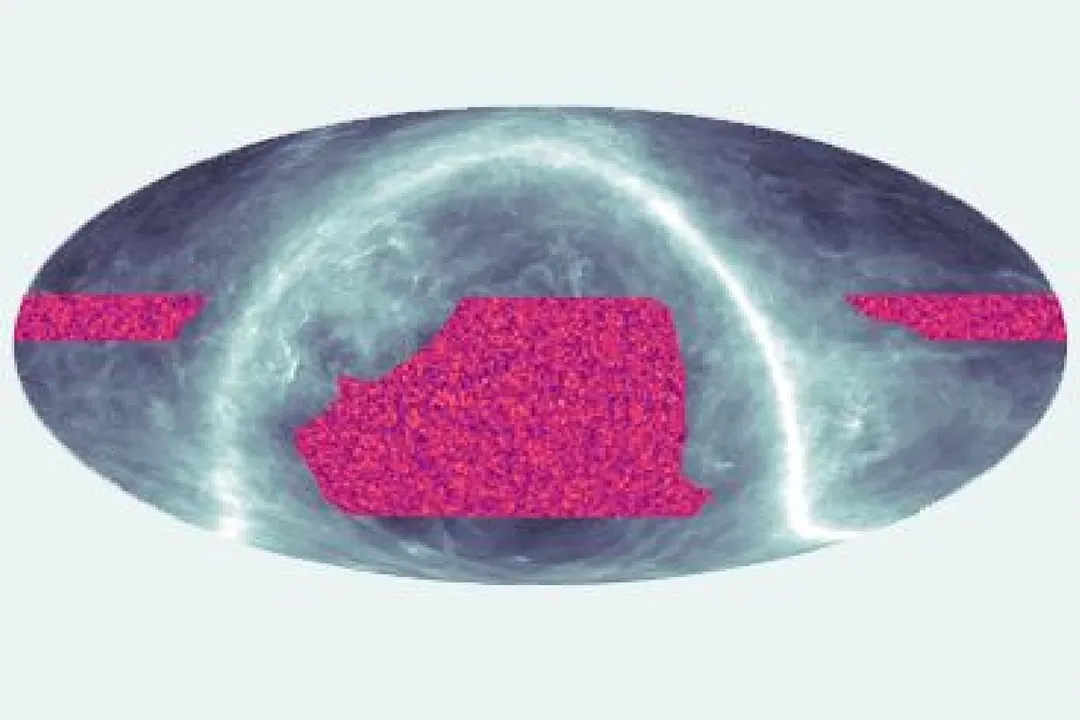
The question of how we pinpoint the existence of something we cannot see hinges entirely on its gravitational footprint. We know dark matter exists in the massive, extended structures surrounding galaxies—the dark matter halo—because its influence dictates how visible matter moves and clumps together. Without this invisible mass component, the universe as we observe it, filled with spinning galaxies and clustered superstructures, simply would not hold together according to the known laws of physics.
# Gravitational Effects
Dark matter remains elusive because it does not interact with the electromagnetic force; it neither emits nor absorbs light, which is why it remains invisible to our telescopes. Its defining characteristic is its non-baryonic nature and its pervasive gravitational pull. Astronomers infer its presence and map its distribution by observing the effects this invisible mass has on the visible components, such as stars, gas clouds, and even light rays passing through the structure. These halos are inferred to be roughly spherical and extend far beyond the visible stellar disks of galaxies.
When we calculate the mass required to hold a galaxy together based only on the light we see—the stars, dust, and gas—the numbers never add up. Galaxies spin too quickly. This discrepancy is the first and most persistent piece of evidence pointing toward an extensive, unseen gravitational scaffold upon which the visible galaxy is hung.
If the halo dominates the rotation speed, its mass must vastly exceed the visible mass. For instance, in many spiral galaxies, the dark matter contribution to the total mass within the visible edge can easily be five to ten times greater than the stars and gas combined, a dominance that dictates the galaxy's fate. This unseen component provides the necessary gravity to keep high-velocity stars from simply flying off into intergalactic space.
# Rotation Evidence
The most foundational proof comes from galactic rotation curves. When astronomers measure the orbital speed of stars at varying distances from the galactic center, they expect the speed to decrease as the distance increases, following Keplerian laws applicable to systems where most mass is centrally concentrated (like our solar system). However, observations show that the rotational velocity remains surprisingly constant, or even rises slightly, far out into the galaxy’s outer regions. This flat rotation curve proves that significant, unseen mass continues to orbit far beyond where the last stars are visible. This unseen mass is the extended dark matter halo. The halo provides the necessary gravitational mass distributed throughout the structure, not just concentrated at the center, to explain these observed speeds.
# Collision Insights
While rotation curves show the presence of dark matter, observations of merging galaxy clusters provide crucial insight into its nature—specifically, that it is collisionless. The most famous example is the Bullet Cluster, a system formed by the collision of two smaller galaxy clusters.
When these two clusters collided:
- The ordinary matter, primarily hot gas detected via X-rays, smashed into itself, creating a shockwave and slowing down in the middle of the remnant structure.
- The dark matter, however, passed right through the collision site largely unaffected, moving ahead of the slowed gas.
This observation strongly supports the dark matter hypothesis over modified gravity theories, as it clearly separates the location of the gravitational mass (traced by lensing) from the location of the ordinary, interacting mass (the gas). This behavior confirms that dark matter interacts with itself only very weakly, if at all, beyond the gravitational interaction.
# Structural Formation
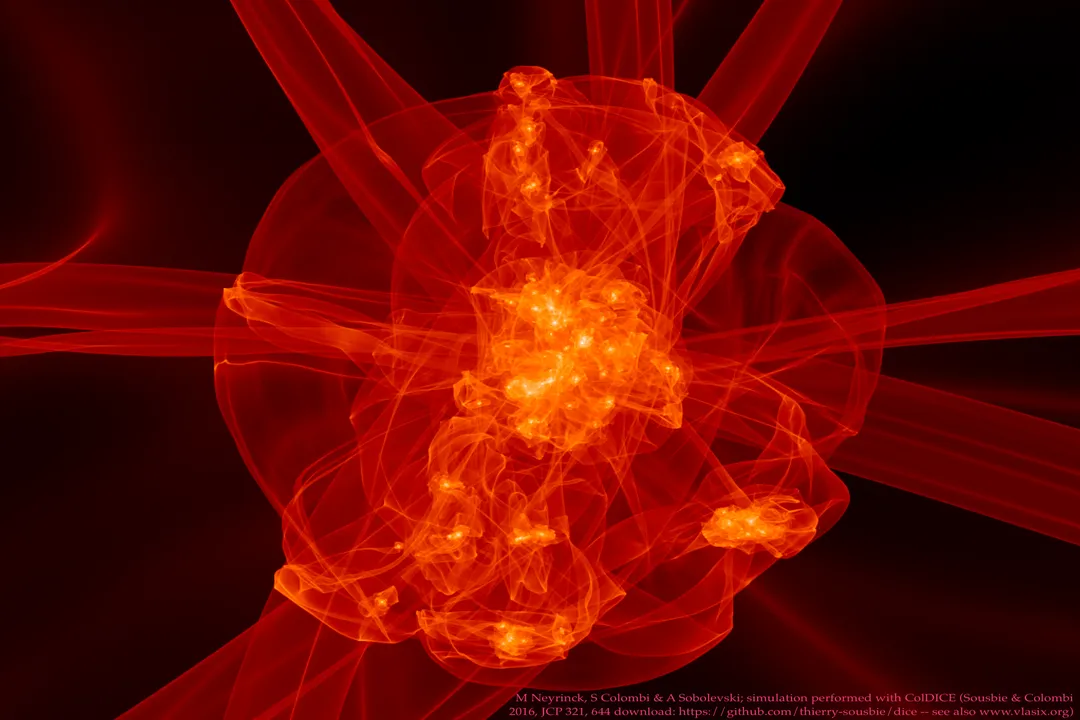
The dark matter halo isn't just an accidental feature; it is the reason galaxies exist where they do. Cosmological simulations illustrate a process of hierarchical structure formation where the universe began with slight density fluctuations in the dark matter. Because dark matter is only subject to gravity, these denser regions collapsed first, creating massive, gravitationally stable structures—the initial halos.
These halos acted as gravitational scaffolding, creating potential wells that attracted ordinary, baryonic matter (the stuff that makes stars and planets). The visible galaxy then formed and settled deep within the center of its host dark matter halo. Therefore, the shape and extent of the halo define the boundaries within which a galaxy can form and evolve. The structure is fundamental to the entire galaxy, not merely an additive component stuck onto the outside.
# Mapping Boundaries
Understanding how we know the halo exists also requires defining where it ends. Since the halo is vast and its density gradually trails off, determining its precise edge is challenging. Researchers study infalling matter that is captured by the halo's gravity but has not yet settled into a smooth distribution.
This leads to the concept of the splashback radius. When matter, perhaps gas or smaller satellite halos, falls toward the main galaxy cluster, it briefly overshoots the main gravitational center before settling into a stable orbit. The location where this 'sloshing' happens provides a measurable boundary marker for the extent of the dominant gravitational influence of the halo.
While rotation curves map the mass distribution in the inner, denser regions of the halo where the visible galaxy resides, observations of cluster mergers map the more diffuse outer regions. By combining gravitational lensing data (which maps total mass across the entire structure) with X-ray data (which maps gas) and kinematic data (which maps stellar motion), scientists piece together a three-dimensional density profile stretching from the galactic core out to the halo’s rarefied edges. This comprehensive mapping, using techniques that probe different density regimes, builds confidence that the model of a smooth, extended dark matter envelope is the only one that reconciles all observational data.
#Videos
How Do We Know Dark Matter Exists?
Related Questions
#Citations
Dark matter halo
Do “Completely Dark” Dark Matter Halos Exist?
If dark matter is 'invisible,' how do we know it exists?
Why is dark matter said to form a halo around galaxies ...
Dark Energy and Dark Matter | Center for Astrophysics
How Do We Know Dark Matter Exists?
Dark Matter
understanding the boundaries of dark matter halos