Could life exist without an atmosphere?
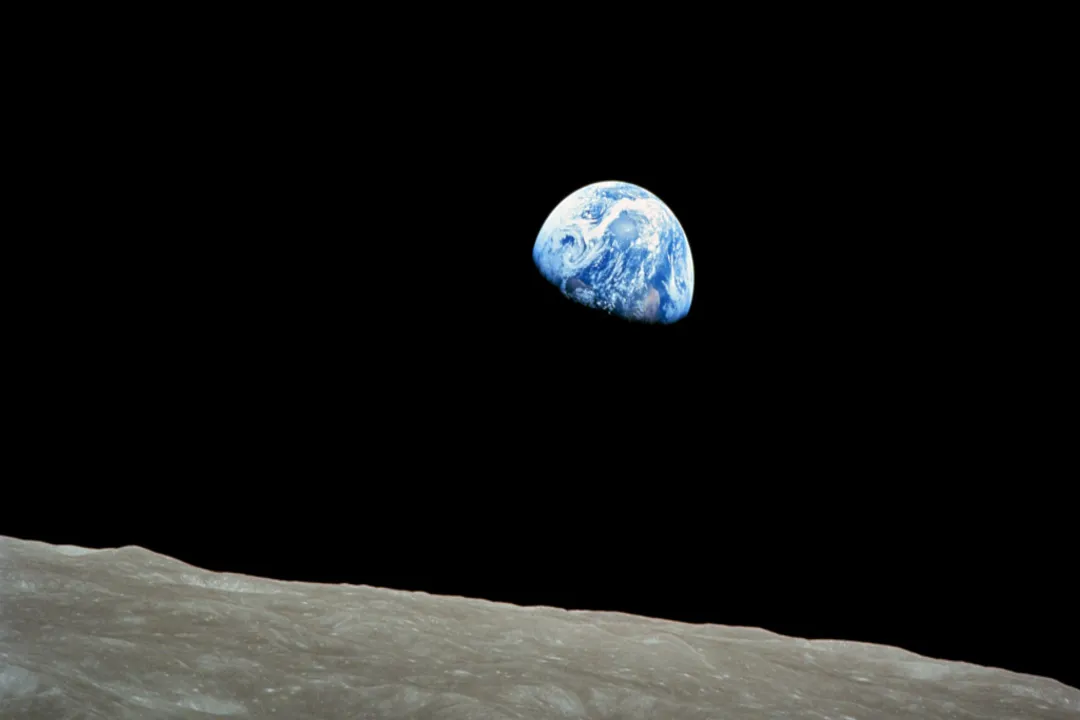
The notion of life existing beyond the gentle envelope that cradles our world presents a profound biological puzzle. An atmosphere is not merely the air we breathe; it is a multi-functional planetary shield, a global thermal regulator, and the medium that permits liquid water to persist on a surface. [4] Removing it altogether forces us to reconsider the very definition of a habitable niche, pushing the boundaries of biochemistry and cellular structure to extremes rarely considered in mainstream biology.
# Pressure Nullity
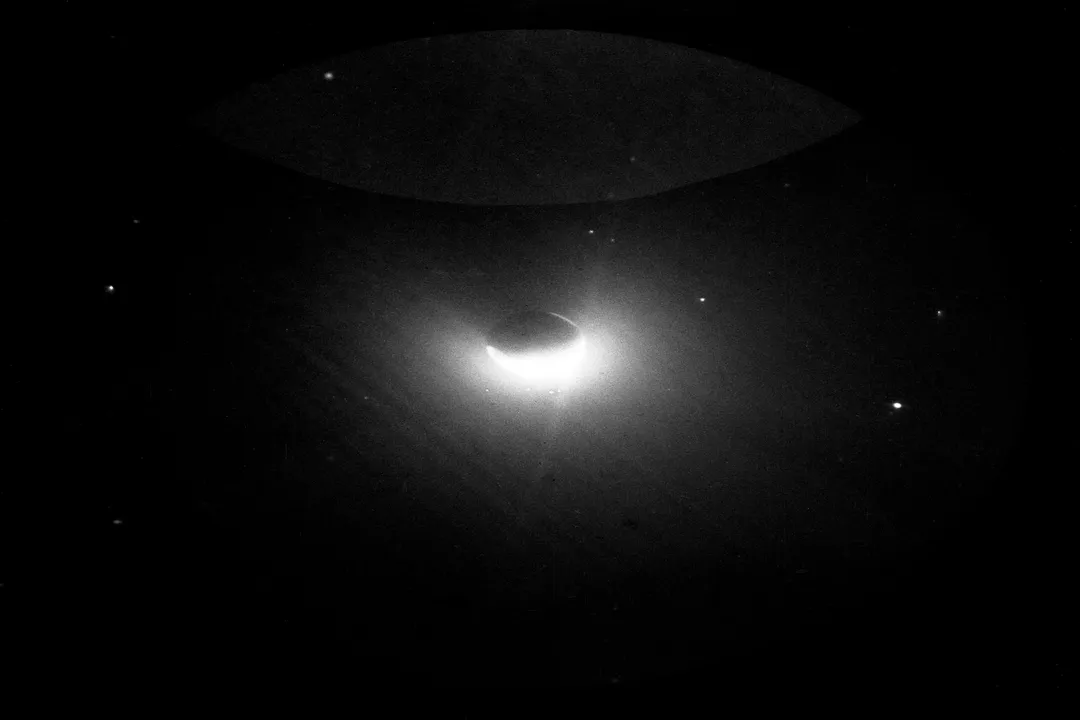
The most immediate and catastrophic effect of removing an atmosphere relates to pressure. On Earth, our standard atmospheric pressure keeps water in its liquid state across a wide range of temperatures. [4] If a planet were to suddenly lose its gaseous blanket, the ambient pressure would drop towards zero, creating a vacuum. [2] Under vacuum conditions, any liquid water exposed on the surface would instantly boil away into vapor, a process known as outgassing, regardless of the surface temperature. [4]
This presents an enormous hurdle for any conceivable water-based life. Life as we understand it relies on water as a universal solvent for metabolic reactions. [2] If all surface water boils or freezes into vaporized ice instantly, life must either evolve an entirely different solvent—a speculative leap requiring novel biochemistry—or find a way to maintain internal liquid water against an external pressure of nearly zero. Organisms would need incredibly strong, rigid cell walls or internal hydrostatic skeletons capable of containing their internal fluids against the near-perfect void outside. [2] It's an engineering problem first, and a biological one second.
# Thermal Swings
An atmosphere plays a critical role in moderating a planet's surface temperature, acting as a global insulating blanket. Without this gaseous layer, the surface temperature fluctuations become astronomical. [4] During the planet’s day, without gases to scatter or trap incoming solar radiation, the surface facing the star would be relentlessly bombarded, reaching extreme, scorching highs. Conversely, when that same location turned away into night, heat would radiate rapidly into space, causing temperatures to plummet to frigid lows. [4]
Consider a world similar in distance from its star to Earth. The day side might reach temperatures high enough to vaporize rock minerals over geological timescales, while the night side approaches absolute zero. [4] For life to survive these swings, its metabolism would need to either cease entirely during the extremes or possess an unparalleled capacity for thermal tolerance. [1] A terrestrial analogy might be found in the ability of certain extremophiles to enter cryptobiosis, suspending life functions until favorable conditions return, but surviving prolonged exposure to temperatures capable of breaking down organic macromolecules is a far greater challenge. [1]
# Radiation Hazards
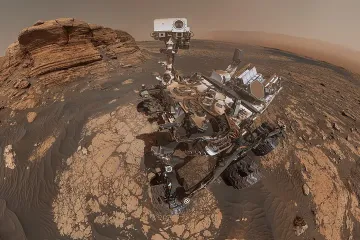
Earth's atmosphere, particularly the ozone layer within it, provides a vital defense against harmful high-energy radiation from space, primarily ultraviolet (UV) light and cosmic rays. [4] On a world without an atmosphere, the full spectrum of stellar and galactic radiation would strike the surface unimpeded. [4]
UV radiation is energetic enough to directly damage the DNA and proteins of living cells, causing mutations and rapid cellular death. [4] Cosmic rays, which are high-energy atomic nuclei, possess even greater penetration power. Life existing on the surface of an airless body would essentially be bathed in a continuous stream of sterilizing energy. This necessitates either a thick, natural shielding material—like an extremely dense organism or a highly reflective, opaque outer layer—or, more plausibly, a relocation to areas shielded from direct line-of-sight radiation exposure. [2]
# Subsurface Sanctuaries
Given the triple threat of vacuum, temperature, and radiation on the surface, the most logical and perhaps only viable location for life on an airless world shifts underground. [2][3] If a planet possesses subsurface ice or reservoirs of liquid water maintained by geological activity or geothermal heat, life could potentially thrive there. [2]
In this scenario, the ground itself replaces the function of the atmosphere. The overlying rock or ice layer provides:
- Pressure Stability: It maintains a constant, non-zero pressure, allowing liquid water to exist. [2]
- Thermal Buffering: Geological heat or the insulating properties of the overburden dampen the extreme surface temperature swings, creating a much more stable thermal gradient. [4]
- Radiation Shielding: A meter or more of dense regolith or rock is usually sufficient to block most harmful UV and cosmic radiation, leaving only lower-energy particles or perhaps requiring specialized defenses against secondary radiation produced when high-energy particles strike the rock. [1]
For speculative evolution on such a world, the entire biological system would revolve around accessing these deep, stable zones. Energy sources would likely shift entirely away from photosynthesis (since light penetration is minimal) toward chemosynthesis, utilizing chemical gradients found near hydrothermal vents or geological boundaries, much like certain deep-sea or deep-crust ecosystems on Earth. [2]
# Evolutionary Bottlenecks
When considering life evolving de novo on a world never blessed with an atmosphere, the challenges for abiogenesis itself are staggering. On Earth, the primordial soup gradually evolved protected by a nascent atmosphere and oceans. On a vacuum world, the initial steps toward polymerization and self-replication must occur in a pocket of liquid—perhaps deep within rock fractures or under a thick ice shell—from the very start. [2] This places an immediate, severe constraint on the earliest chemistry: it must be subterranean chemistry.
If we hypothesize an organism evolving on such a body, its entire evolutionary history would be defined by the need to generate and maintain internal pressure. Unlike Earth life, which evolved a cellular structure balanced against 1 bar of external pressure, this hypothetical life would have evolved a structure balanced against zero external pressure. This means their internal membranes and cytoskeletons would be far more structurally tense, designed to push outward against an internal turgor that is the sole source of their structural integrity. This inherent need for high internal pressure could represent a significant evolutionary bottleneck, potentially making their biochemistry less flexible or more fragile if they ever encountered a pressurized environment, such as a sudden subsurface volcanic eruption that breached their habitat into a pressurized cavern. [2]
# Analogues and Extremophiles
While no known organism thrives without an atmosphere in the classical sense, Earth-based extremophiles offer clues about survival mechanisms that might translate. Certain microbes, such as Deinococcus radiodurans, display exceptional resistance to ionizing radiation. [6] Furthermore, organisms like tardigrades (water bears) can enter a state of anhydrobiosis, essentially drying out their bodies and replacing the water in their cells with stabilizing sugars, allowing them to survive the vacuum and radiation of space exposure for brief periods when protected by a thin film. [6]
However, these are survival modes, not sustained life. For sustained life on an airless body, the key adaptation isn't surviving the vacuum for a week, but never needing to experience it for more than a fraction of a second. [2] The evolutionary pressure would favor burrowing, encapsulation, or the capacity to rapidly seal off small volumes of water and biomass from the void. The most successful "atmospheric void" life forms would likely be slow-growing, dense, and highly efficient at recycling internal resources, akin to organisms thriving on the deep terrestrial subsurface. [1]
# Comparative Environments
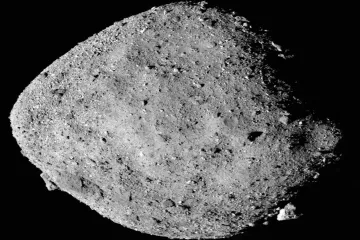
The question of life without an atmosphere often defaults to comparing our Moon or small asteroids. These bodies are truly airless, having lost any primordial gases due to low gravity and solar wind stripping. The key difference between these small bodies and a hypothetical larger, airless planet (like a Mars-sized body that retained some internal heat) lies in internal geological activity. [2]
A larger body is more likely to retain internal heat for longer periods, driving volcanism or hydrothermal circulation, which creates pockets of liquid water and chemical energy gradients necessary for chemosynthesis. [2] A small body like the Moon, which cooled rapidly, might only harbor relict ice deposits that are inaccessible or chemically inert. Thus, the potential for life without an atmosphere is inversely proportional to the size of the body's core cooling rate: the longer it stays warm inside, the better the chance for a viable subsurface biosphere. [2]
If we consider the Earth scenario—what would happen if life vanished from our surface, leaving the atmosphere intact—the environment would dramatically change over time. Without biological processes to cycle gases, the atmosphere would eventually change, though this would take millions of years. [5] On a vacuum world, however, the environment is static in its hostility from the beginning, meaning life must conquer that environment at inception rather than reacting to environmental change. [4]
The presence or absence of an atmosphere dictates whether biology interacts with the surface or remains entirely entombed. A planet with water but no atmosphere, as discussed on specialized forums, is fundamentally a world where the surface is merely a capstone for a subterranean ocean or aquifer system. [2] The life forms there would never experience wind, clouds, sunsets, or the blue light scattering that defines our own existence. [5] Their sensory apparatus, if any evolved, would be tuned to chemical gradients, pressure differentials, or the dim heat signatures of their rocky ceilings and floors, representing a truly alien evolutionary path divorced from photic zones and surface dynamics. This forces a realization that 'life' is a far broader concept than 'Earth life,' capable of emerging under conditions that appear utterly sterile to our perspective. [1] The survival strategy shifts from active adaptation to the external world to perfect, self-contained isolation within the planet's crust.
# Life in the Void
Even if we look at the possibility of life existing on the very outer layer of rock, perhaps migrating just beneath the surface dust to avoid the worst radiation, the energy requirements are severe. Any organism relying on solar energy would have to rapidly absorb, process, and store massive amounts of energy during the brief, searing day, and then somehow utilize or survive that stored energy through the ensuing, prolonged, freezing night. [4] If we look at the structural components of life—proteins, lipids, nucleic acids—they are generally fragile when subjected to repeated, massive thermal cycling. To counteract this, life would need novel chemical bonds or structural components that are intrinsically temperature-insensitive, perhaps favoring complex metallic salts or silicates in their structure over the carbon-based bonds we rely upon, which would fundamentally alter the rules of genetics and replication. [1]
The conditions described—vacuum, radiation, and temperature extremes—make surface life virtually impossible under known biochemistry. Therefore, the answer to whether life could exist without an atmosphere is likely yes, but only if it never interacts with the surface. The biosphere of an airless world must be a lithosphere-dependent environment, a shadow ecosystem dwelling in perpetual darkness, separated from the star by miles of insulating, pressure-maintaining rock. The existence of such life would serve as a testament to biology's capacity to exploit thermal and chemical gradients wherever they appear, even in the most fundamentally hostile settings imaginable. [2]
#Videos
What If Earth Suddenly Lost Its Atmosphere? - YouTube
The Dr Binocs Show - What If Earth Lost Its Atmosphere? - YouTube
Related Questions
#Citations
How would life evolve to live on a planet that starts with Very little to ...
Can there be life on a planet with water, but without atmosphere?
Can life exist on a completely flat planet without any atmosphere?
What would happen if there was no atmosphere? | CK-12 Foundation
What would Earth be like if life had never existed? | New Scientist
Could humans survive inside the planet if Earth's atmosphere were ...
What If Earth Suddenly Lost Its Atmosphere? - YouTube
If this space study is right, humans have never left Earth's atmosphere