What is the zone where life exists called?
The specific region on Earth where life, in all its forms, can be found is scientifically designated as the biosphere. [1][4][7] This concept defines the global ecological system integrating all living beings and their relationships, including their interaction with the lithosphere (land), hydrosphere (water), and atmosphere (air). [1][2][3] It is not a physically separate layer but rather the sum total of all ecosystems on our planet, encompassing every place where organisms exist. [2][4] Think of it as the thin, dynamic film wrapping the Earth where biological activity occurs. [7]
# Defining Life Zone

The term biosphere directly translates to the "sphere of life". [6] From an academic perspective, it represents the relatively narrow zone spanning the lowest parts of the atmosphere, the entire hydrosphere, and the upper layers of the lithosphere where living things have established themselves. [1][7] When scientists discuss the biosphere, they are referring to the global ecological system. [1] It is the collective term for all biomes—the largest ecological areas characterized by vegetation, soil, climate, and wildlife—existing on Earth. [2]
A helpful way to visualize this is through its inclusion within the larger planetary structure, often described using the geological spheres. The biosphere is fundamentally defined by where it overlaps with the other three major Earth systems. [3][4] The definition emphasizes that life is not simply on the Earth, but integrated within its physical systems. [2] For instance, life exists not just on the surface but also deep within the soil layers and far below the ocean surface, provided the necessary conditions—like liquid water, energy, and essential chemical elements—are present. [4]
# Global Components
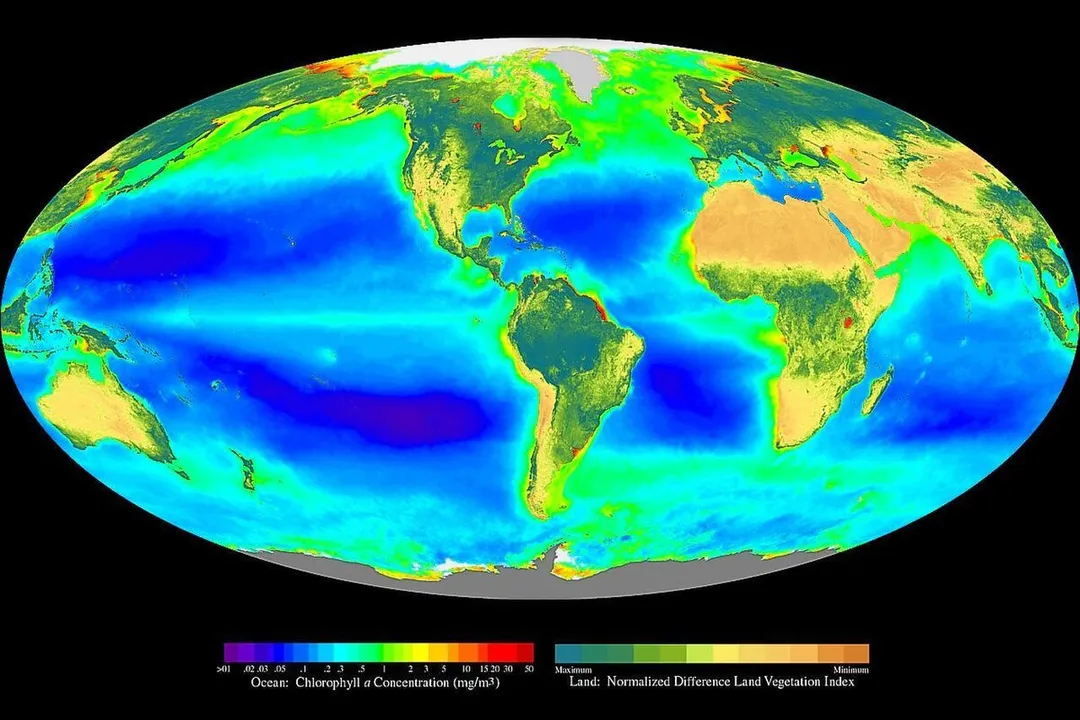
The biosphere's makeup demonstrates a critical interconnectedness between biology and geology/meteorology. [2] It is essentially the intersection of three vast planetary envelopes: the atmosphere, the hydrosphere, and the lithosphere. [1][3][7]
The atmosphere provides the gaseous medium necessary for respiration and photosynthesis. Life extends into the atmosphere primarily through airborne spores, seeds, and various flying creatures, reaching only a few kilometers above the surface before conditions become too harsh. [1][7]
The hydrosphere, meaning all the water on Earth, is perhaps the most consistently life-supporting component. From surface rivers and oceans to subterranean water sources, liquid water is crucial, and life is found throughout the world’s water bodies. [2][6]
The lithosphere refers to the solid, rocky crust and upper mantle of the Earth. Life penetrates this layer through soil and rock, often deep beneath the surface, where organisms like certain bacteria thrive in extreme, dark conditions. [4][7]
Consider a hypothetical cross-section of Earth. If you were to start at the very top of the troposphere (the lowest layer of the atmosphere) and drill down through the oceans and into the continental crust, the small band where you consistently found living organisms—from the highest soaring bird to the deepest thermophilic bacteria—that band is the biosphere. [3][7] This overlapping region is where the chemistry required for life can sustain itself. [4]
| Sphere Component | Primary Role in Biosphere | Typical Life Range/Example |
|---|---|---|
| Atmosphere | Gas exchange, energy transfer | Spores, flying organisms (up to ~10 km) [1] |
| Hydrosphere | Solvent for biochemical reactions | Marine, freshwater, and subterranean life [2] |
| Lithosphere | Nutrient reservoir, habitat | Soil microbes, deep-sea vent organisms [7] |

# Physical Extent
While the biosphere is often conceptually portrayed as a continuous layer, its actual physical thickness is remarkably small when compared to the overall size of the planet. [4] Life exists in a very narrow band across the surface and within the crust and atmosphere. [1]
In terms of vertical distance, the biosphere is not deeply extensive in any single direction. On the lower end, it extends down into the Earth's crust, with evidence of microbial life found several kilometers below the surface in deep rock formations. [4] Conversely, its aerial reach is relatively shallow; most life exists within the lower atmosphere, though hardy spores can be carried much higher. [1]
The upper limit in the atmosphere is constrained by factors like temperature, pressure, and radiation, making the zone where complex, sustained life thrives quite limited. [7] This contrasts sharply with the size of the Earth itself. If the Earth were the size of a standard apple, the biosphere would be thinner than the skin of that apple. [4] This realization underscores a crucial point: the life-supporting environment is fragile and confined to a very thin shell relative to the planetary bulk. [4]
This inherent thinness presents an interesting comparative challenge when discussing extraterrestrial life. When astronomers discuss the habitable zone around a star, they are defining the orbital distance where a planet could maintain liquid water on its surface. [9] While the habitable zone is a vast orbital distance, the biosphere is the actual, very thin environmental reality on a planet that is in that zone, confirming that habitability is about more than just orbital mechanics; it requires this thin, balanced ecological layer to be present and functioning. [9]
# Life Interactions
The defining characteristic of the biosphere is the activity that occurs within it, driven by energy flows and biogeochemical cycles. [2] Life constantly interacts with and modifies its surroundings within these three spheres. [3]
For instance, the composition of the modern atmosphere is largely a product of life itself. Photosynthesis by plants and algae removes carbon dioxide and releases oxygen, fundamentally altering the atmosphere over geological time scales. [4] This cycle is a direct, ongoing interaction between the biosphere and the atmosphere.
Similarly, the weathering of rocks in the lithosphere is accelerated and altered by biological processes, such as the action of roots or the acids produced by microbes, which helps create the soils necessary for terrestrial ecosystems. [3] Water in the hydrosphere is continuously cycled, purified, and sometimes polluted by biological processes as it moves through evaporation, precipitation, runoff, and absorption. [2]
One fascinating aspect of this interaction involves life in extreme environments, often called extremophiles. [1] These organisms thrive where one might expect life to be impossible, such as near deep-sea hydrothermal vents, which are areas where chemical energy, rather than solar energy, fuels the ecosystem. [4] These deep-dwelling communities illustrate the biosphere's ability to permeate the solid Earth, utilizing chemical gradients that exist at the interface of the lithosphere and hydrosphere. [7] The organisms found there are not simply surviving; they are performing vital ecological roles based on chemosynthesis, contrasting with the photosynthesis that dominates the sunlit surface regions. [4]
# Ecosystem Dynamics
The concept of the biosphere is best understood through the smaller, interconnected units that compose it: ecosystems. [2] An ecosystem represents a specific, localized community of living organisms interacting with the non-living components of their environment. [3] The entirety of life on Earth is the grand aggregation of all these local, interacting systems. [2]
The flow of energy and matter dictates the health of the biosphere. Solar energy captured by primary producers (like plants) fuels almost all surface life. This energy then moves up through consumers and is eventually lost as heat, requiring a constant, one-way input of energy. [4] Matter, however, cycles. Nutrients like carbon, nitrogen, and phosphorus move between the living (biotic) components and the non-living (abiotic) components of the lithosphere, hydrosphere, and atmosphere. [3]
Understanding these cycles is key to appreciating the biosphere's structure. If we look at how humans impact this global system, the imbalance in these cycles becomes evident. For example, burning fossil fuels—which are essentially ancient, stored segments of the lithospheric biosphere—releases carbon into the atmosphere far faster than current biotic processes can reabsorb it, demonstrating a disruption of the natural geological timescales over which these materials should move. [4] This speed of human-induced change is what makes the fragility of this thin biological shell so critical to manage carefully. We are essentially borrowing from deep time storage and rapidly reintroducing it into the active, short-term cycle of the surface biosphere.
The sheer diversity within this thin band is also noteworthy. Life exists across vast gradients of temperature, pressure, and salinity. [1] To map this effectively, scientists often categorize life by the terrestrial biomes—like deserts, rainforests, or tundra—which represent major climatically determined regions of the biosphere. [2]
# Biosphere Management
Because the biosphere represents the totality of life support on Earth, its maintenance is paramount for planetary health. [7] Awareness of the biosphere's boundaries and dependencies helps inform conservation efforts and resource policy. [5] The biosphere is not an infinitely large reservoir; its capacity to absorb waste and regenerate resources is finite. [4]
When we consider the global impact of pollution or habitat destruction, we are observing stress placed upon specific parts of the biosphere that then ripple outward due to the interconnected nature of the system. [2] For instance, destroying a large section of rainforest affects local weather patterns (hydrosphere/atmosphere interaction), reduces global oxygen production (atmosphere interaction), and releases stored carbon (lithosphere interaction). [3]
It becomes clear that protecting the biosphere isn't just about saving individual species; it is about maintaining the delicate, balanced cycling of energy and matter across the air, water, and rock that allows any life to persist. [7] The boundaries of the biosphere are defined by where life can exist, but its continued health is defined by how well we maintain the conditions within those boundaries. [1] This is why the concept extends into fields like ecology and environmental science—they study the mechanics that keep this spherical layer functional. [2] The Earth functions as a single, interconnected system where biological processes regulate the physical environment just as much as the physical environment dictates the potential for biology. [4]
#Videos
What is the Biosphere - More Grades 9-12 Science - YouTube
Related Questions
#Citations
Biosphere - Wikipedia
Biosphere - National Geographic Education
1.1 What is the biosphere? - Siyavula
What Is the Biosphere? (article) | Life - Khan Academy
What is the biosphere definition? - Facebook
The term biosphere is used for the zone of Earth where class 12 ...
Biosphere | Definition, Resources, Cycles, Examples, & Facts
What is the Biosphere - More Grades 9-12 Science - YouTube
The Habitable Zone - NASA Science