What are three reasons life on earth exists?

The genesis of biology on this world is not a single event but rather the sustained success of a set of extremely precise environmental circumstances. To wonder why life exists here is to ask what combination of planetary fortune, orbital mechanics, and elemental availability allowed the transition from inanimate chemistry to self-replicating entities. It is a question that drives astrobiology and deep Earth science, pointing toward three interlocking reasons for our existence: the perfect orbital positioning that permits liquid water, the presence of the necessary chemical building blocks in a workable form, and the long-term geophysical processes that provide energy and stability for those chemicals to assemble and persist. If any one of these pillars were removed, the biological story we know would simply never have begun.
# Orbital Zone

The most frequently cited prerequisite for life as we understand it is the presence of liquid water, and this hinges entirely on Earth’s location within the solar system. [1][4] Earth orbits the Sun at just the right distance to maintain temperatures that allow water to exist primarily in its liquid state—the so-called habitable zone, sometimes called the "Goldilocks zone". [1][2] If our planet orbited much closer to the Sun, that water would boil away into space; if we were much farther out, it would be permanently frozen solid. [1]
Water is not merely a convenient substance; it is the indispensable medium for nearly every chemical process that sustains terrestrial biology. [2][4] It acts as a solvent, allowing the essential organic compounds—the building blocks of life—to mix, interact, and form the complex sequences required for metabolism and replication. [2][4] The fact that water remains liquid across a substantial temperature range, unlike alternatives like liquid ammonia which only exists at extremely cold temperatures, gives terrestrial chemistry the necessary kinetic energy to proceed without freezing out the reactions. [4]
The existence of this liquid water was not guaranteed at Earth’s formation 4.6 billion years ago. The earliest Earth, referred to by geologists as the Hadean eon, was a hostile environment of bare rock, lacking both an ocean and an atmosphere. [3] The water arrived later, likely delivered through bombardment by aqueous asteroid material around 4.37 to 4.20 billion years ago. [3] This timing is critical, as the first traces of life appear to be as old as 4.2 billion years, suggesting that the emergence of liquid water created a habitable window that life exploited almost immediately. [3]
It is fascinating to consider that our planet’s habitability extends beyond just the distance from the Sun. The planet is also shielded from harmful solar radiation by its magnetic field, and the atmosphere acts as an insulator, keeping the planet warm enough to sustain liquid water on the surface. [1] Without this protective electromagnetic bubble and insulating blanket, the Sun’s constant radiation would strip away the atmosphere and boil off any surface water, rendering the habitable zone designation meaningless. Thus, the location involves three components: the correct distance, an insulating blanket, and a protective shield. [1]
Thinking about the sheer historical luck involved in establishing this environment, it’s striking how quickly life seized the opportunity once water appeared. If we were to look at a planet today that is just outside our current orbital parameters, perhaps only a few million kilometers further out, we might find a world completely encased in ice. The margin for error in establishing the liquid water medium necessary for carbon-based biochemistry is incredibly thin, making this prerequisite perhaps the most finely tuned aspect of life’s existence here. [1][3]
# Elemental Recipe
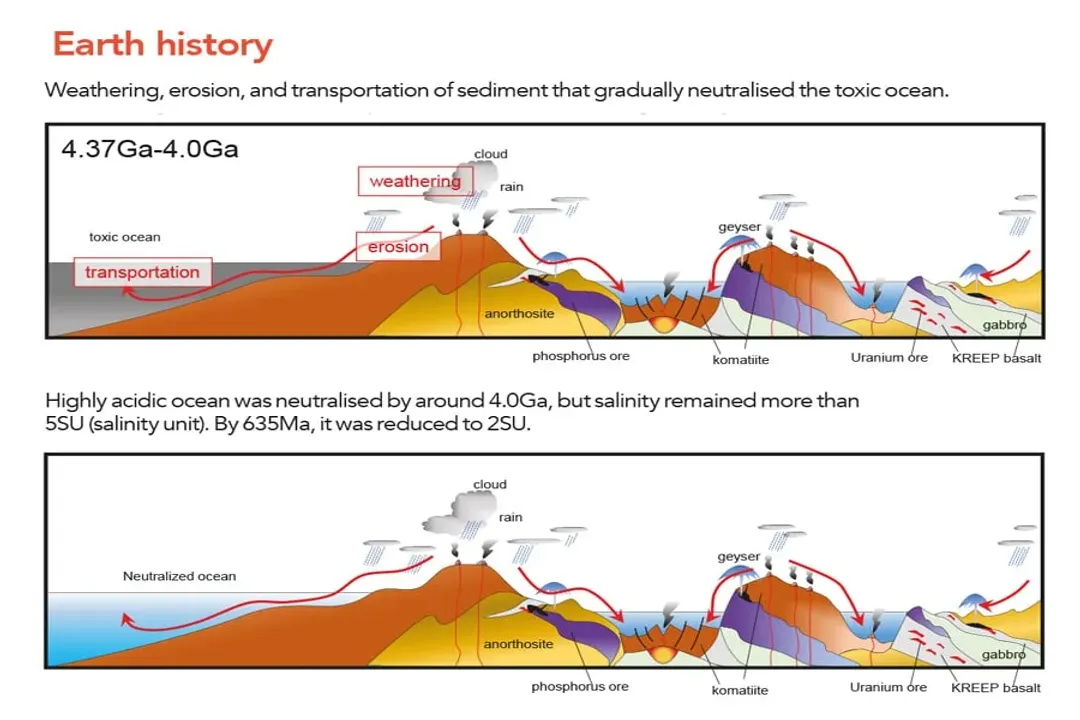
The second reason life exists is because the raw materials—the specific elements—needed to construct biological machinery were present on Earth in sufficient quantity, and under conditions that allowed them to bond into organic molecules. [2][3] Life on Earth is fundamentally carbon-based, requiring key elements such as carbon, hydrogen, oxygen, nitrogen, phosphorus, and sulfur. [2][4] While these elements are common in the universe, their presence at the surface of a rocky planet that formed relatively close to the Sun presents a chemical challenge.
Carbon and nitrogen, for instance, tend to become solids only at very cold temperatures, suggesting they should have been incorporated into materials farther out in the early solar system. [2] Furthermore, carbon readily bonds with iron, meaning much of the available supply would have been sequestered deep within the Earth’s core during differentiation. [2] The fact that enough carbon, nitrogen, and other building blocks were available at the surface, bound in the rocks, atmosphere, or early ocean, is essential. [3]
This necessity for surface availability is contrasted by the conditions where these elements naturally favor aggregation. In the colder regions of the early solar system, these elements readily form solid, complex organic compounds, which could have been delivered to early Earth via meteorites or comets. [2] This theory suggests that the raw ingredients might have been assembled off-world, with Earth merely being the recipient of a cosmic delivery service. [2] Experimental evidence supports this, as samples returned from asteroids, like those from the Hayabusa2 mission to Ryugu, have confirmed the presence of multiple types of amino acids—life's fundamental building blocks—in extraterrestrial material. [2]
Beyond just the raw elements, the way they organize matters profoundly. The Miller-Urey experiment, conducted at the University of Chicago, demonstrated that the building blocks of life, specifically amino acids, could form spontaneously in water under conditions mimicking the early Earth’s atmosphere using electrical sparks as an energy source. [2] This established the field of prebiotic chemistry, showing that the pathway to organic molecules was physically plausible here. [2]
A deeper layer of chemical requirement involves chirality, or "handedness," in molecules. [2] Large biological molecules like proteins require molecules to have a specific orientation—either all "left-handed" or all "right-handed"—to fold into the necessary structures for reproduction. [2] If the early chemical reactions produced a 50/50 mix, large-scale, reproducing polymers could not assemble effectively. Therefore, life’s existence required not just the presence of organic material, but the selective amplification of one handedness over the other during the crucial assembly phase. [2] This selection process—an early chemical bias—effectively locked the entire future trajectory of terrestrial biology onto a single molecular path. It raises the conceptual point that life, once started, might not just be defined by the elements it uses, but by a historical accident of molecular symmetry that happened to be favored by an energy source at that specific time.

# Planetary Engine
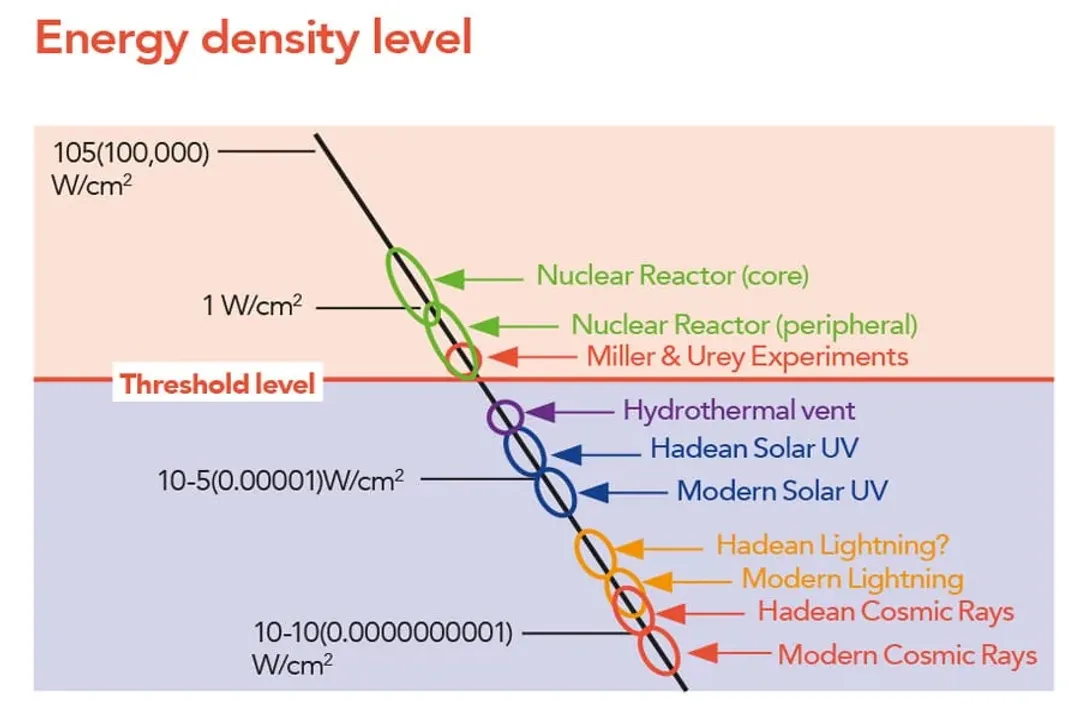
Having the right location and the right ingredients is insufficient if the environment lacks the dynamic energy and chemical cycling needed to drive complex reactions over millions of years. This third reason centers on the geological and energetic stability of the planet. The energy from the Sun alone, while vital for later photosynthesis, was deemed insufficient to break down the basic inorganic compounds like water, carbon dioxide, and nitrogen required to initially form organic molecules. [3] A much more potent, focused energy source was required for abiogenesis. [3]
One compelling theory, proposed by the Hadean Bioscience Project, suggests this powerful energy came from nuclear geysers operating during the Hadean eon, when radioactive elements were more common on the surface. [3] These natural nuclear reactors could generate intense radiation, heating the water and supplying a massive flow of electrons to drive chemical reactions that would otherwise remain inert. [3] This model satisfies the requirement for a powerful energy input far surpassing simple sunlight, which is necessary to convert simple inorganic compounds into the complex organic molecules that eventually form things like RNA. [3]
Furthermore, life requires an environment capable of regenerating its resources, which involves constant material exchange, a process often driven by plate tectonics. [1][3] While life can exist in non-tectonic environments like hydrothermal vents, the diversity and chemical variation required for life's emergence are better supported by a dynamic land surface. [3] Plate tectonics helps circulate elements like carbon and ensures a diversity of environments—varying in pH, salinity, and temperature—which encourages the creation of a wider array of organic molecules. [1][3]
This constant recycling stands in stark contrast to bodies like Mars, which may have had water early on but now lacks the internal engine to replenish surface nutrients or maintain a global magnetic field. [4] Life on Earth is sustained by cycles—the carbon cycle, the water cycle, and the rock cycle—which move life-giving elements between the crust, atmosphere, and oceans. [1]
Imagine, for a moment, if Earth’s internal heat engine stalled completely, halting plate tectonics. While surface water might remain for a time, the lack of volcanic input would cease the replenishment of critical nutrients like phosphorus from the deep crust to the surface oceans. [1] Over geological timescales, the essential building blocks would become locked away or used up in sedimentary layers, leading to planetary biological stagnation. The continued existence of life here is thus dependent on the continuous, albeit slow, grinding friction of our planet’s interior—a massive, slow-motion geothermal and tectonic laboratory operating for billions of years. [1][3] This long-term stability, secured by the magnetic field and powered by internal heat, gave the early, fragile chemical reactions the vast stretches of time needed to self-organize and begin reproducing. [1]
# Sustained Conditions
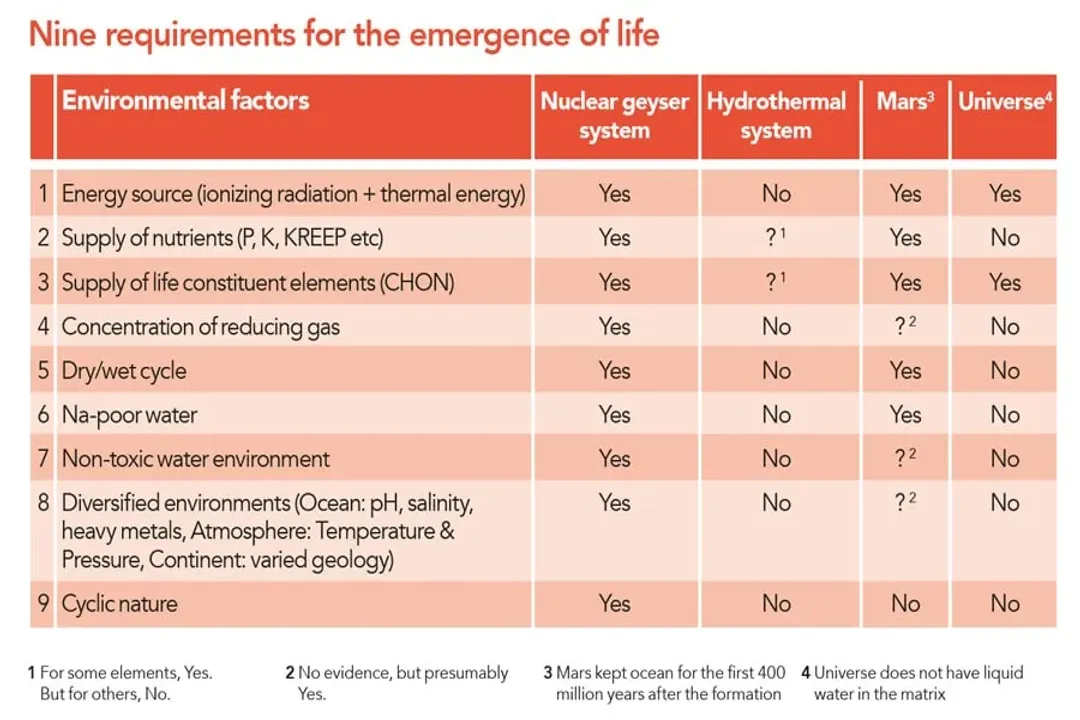
The three reasons—location, chemistry, and dynamism—overlap in the need for specific local conditions during the very first moments of life's appearance. The Hadean Bioscience researchers identified nine essential requirements, suggesting that an environment must meet all of them for life to begin. [3] For example, the early oceans were too acidic and salty to support initial life; thus, life likely emerged in a watery environment on land, such as a wetland or pool, which would also allow for the necessary dry-wet cycles. [3] These cycles, alternating between hydration and dehydration, are theorized to be essential for generating more complex organic molecules like RNA from simpler amino acids. [3]
The requirements create a compelling profile for the birthplace of life: it needed to be enclosed enough to concentrate gases like methane and ammonia, subject to temperature variations (day/night cycles) to drive different reactions, and feature water that was poor in sodium but rich in potassium—a chemical signature reflected in modern cells which have low internal sodium concentrations. [3]
Comparing the theoretical locations, the researchers found that a nuclear geyser system met all criteria, whereas deep-sea hydrothermal vents failed on key counts, lacking sufficient energy for synthesis, potentially offering toxic oceans, and lacking the necessary diverse environment provided by surface tectonics. [3] Therefore, the existence of life is a testament to a highly specific, energetic, and geographically diverse patch of early Earth, which subsequently thrived due to the general planetary conditions summarized above. [1][3] Life persists because Earth has sustained these foundational requirements, allowing chemistry to transition into biology and subsequently evolve into the incredibly varied biosphere we observe today. [4]
Related Questions
#Citations
Why is the Earth habitable? | AMNH
The origin of life on Earth, explained | University of Chicago News
The origin of life: The conditions that sparked life on Earth
What conditions are required for life? - Science | HowStuffWorks