What are the three things another planet would need for life?

The deep human curiosity about life existing elsewhere in the cosmos often boils down to a search for a mirror of our own world, an 'Earth 2.0.' However, moving past that simple analogy requires a grounded understanding of the fundamental requirements that chemistry and biology demand, regardless of the specific environment. While astronomers look for rocky planets within the habitable zones of their stars, the true requirements for life, as we understand it, center on three non-negotiable pillars: the right kind of solvent, a constant source of usable energy, and the presence of necessary atomic ingredients. [1][7] These prerequisites form the foundation upon which biology can begin its complex processes.
# Water Essential
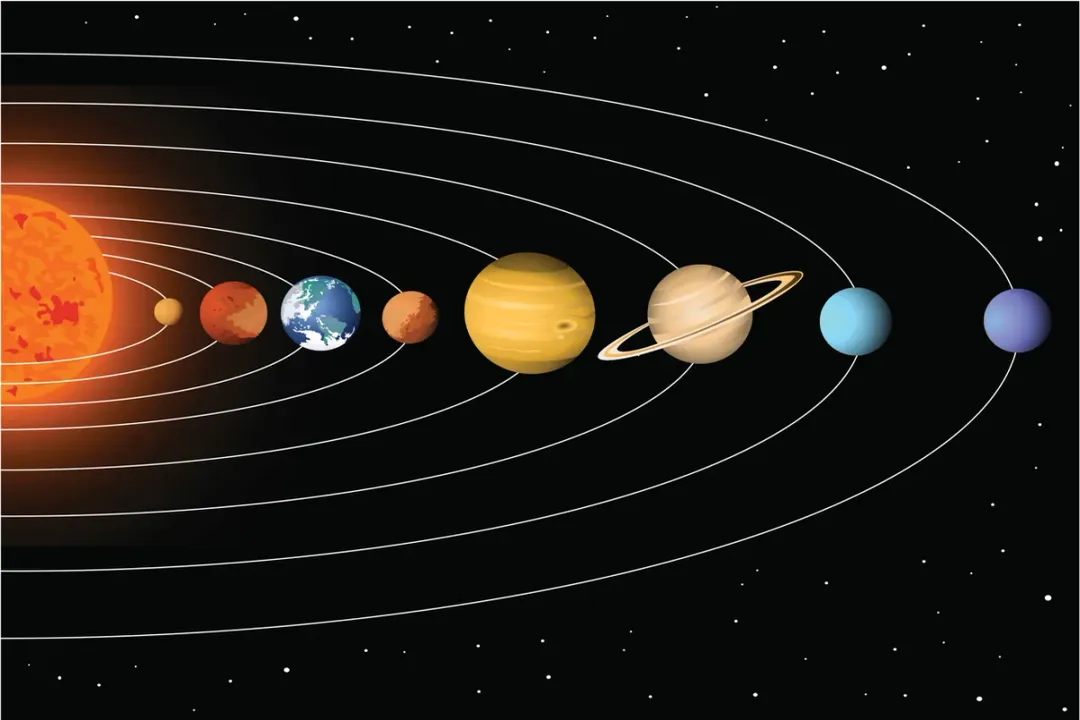
The first and perhaps most frequently cited necessity is the presence of liquid water. [4][9] Water is often called the "universal solvent," and for good reason; its unique molecular structure allows it to dissolve many substances, facilitating the transport of nutrients into cells and carrying waste products out. [7] Without a liquid medium, complex chemical reactions necessary for metabolism and replication simply cannot occur efficiently, or perhaps at all. [1]
It is critical to distinguish between water in its various phases. While water vapor and ice are abundant throughout the solar system—and indeed, frozen water exists in abundance on Mars and the moons of gas giants—it is the liquid state that drives terrestrial biology. [7] The ability of a world to maintain this liquid state is a direct result of the interplay between surface temperature and atmospheric pressure. For instance, a planet orbiting further out might have water ice, but if its atmosphere is too thin, the pressure might be too low for that ice to melt into liquid water even if the temperature rises slightly above freezing; it would sublimate directly into gas. [3] This dependency means that simply orbiting within a star's conservative habitable zone—the area where liquid water could exist—is not a guarantee of actual liquid surface water if the atmospheric conditions are insufficient to maintain the necessary pressure envelope. [3] Life's essential chemistry needs a flowing, interactive liquid environment, not merely frozen reservoirs or atmospheric humidity.
# Energy Flux

The second core requirement is a sustained source of energy. [4][9] Life is an inherently energy-intensive process; organisms must constantly capture, convert, and expend energy to maintain order against the natural tendency toward entropy. On Earth, this energy primarily comes in two forms: light from the Sun and chemical energy derived from geological processes. [7]
Stellar energy drives photosynthesis, the process used by most primary producers on our planet to convert light into chemical energy (sugars). [7] Therefore, a planet needs reliable access to electromagnetic radiation of a specific spectrum, often necessitating an orbit that is stable enough to avoid extreme fluctuations in stellar output. However, life is not exclusively solar-powered. On Earth, deep-sea vent ecosystems thrive entirely independent of sunlight, relying instead on chemosynthesis. [7] This process draws energy from the chemical reactions between water and minerals released from the planet's interior, such as hydrogen sulfide. A planet with significant geothermal activity, even if orbiting a dim star or existing as a moon far from its host star (like Europa or Enceladus), could potentially host subsurface or deep-ocean life fueled by this internal heat engine. [2] The nature of the planet dictates the nature of the energy it must provide: is it an energetic surface environment bathed in light, or a sheltered, chemically rich subsurface ocean? Both pathways require a consistent flux of energy transfer to sustain biological activity over geological timescales. [3]

# Chemical Basis
The third pillar involves the necessary atomic components, the actual building blocks of life. [9] While the sheer variety of compounds used in biology is staggering, they are all constructed from a relatively small set of elements. [3] Carbon is almost universally considered the indispensable element for life as we know it, primarily because of its exceptional ability to form long, stable, and complex chains and rings—the backbone of organic molecules like DNA, proteins, and lipids. [7]
However, carbon alone is insufficient. Terrestrial life requires a suite of essential nutrients, often referred to as CHNOPS: Carbon, Hydrogen, Nitrogen, Oxygen, Phosphorus, and Sulfur. [3] Hydrogen and Oxygen are often supplied via water, but Nitrogen is vital for amino acids and nucleic acids, while Phosphorus is the cornerstone of the energy currency molecule, ATP, and the structure of DNA and RNA. [4]
When considering a distant world, the crucial question isn't just if these elements are present, but in what concentration and form. A planet might possess a massive amount of carbon locked away in its crust as carbonates, rendering it unavailable for biological synthesis unless plate tectonics and volcanism are active enough to cycle these materials back into the environment. [1] Similarly, a planet rich in silicon might favor silicon-based chemistry over carbon, but the stability and flexibility offered by carbon chains make it the overwhelmingly preferred candidate based on our current understanding of molecular self-assembly. [3]
| Element Group | Terrestrial Role | Importance |
|---|---|---|
| Carbon (C) | Organic backbone | Forms complex, stable molecular structures [7] |
| Nitrogen (N) | Proteins, Nucleic Acids | Essential for genetic material and enzymes [3] |
| Phosphorus (P) | ATP, DNA/RNA | Energy transfer and genetic blueprint [4] |
| Sulfur (S) | Certain amino acids | Important for protein folding and structure [3] |
A thought exercise in comparative biochemistry suggests that while carbon is likely essential, the solvency of the environment might force reliance on other solvents, such as liquid methane or ammonia, if surface temperatures are extremely low. In such theoretical scenarios, the chemical requirements might shift, favoring elements that form stable compounds in those non-aqueous solutions, though complexity and stability generally decrease compared to carbon in liquid water.
# Environmental Stability
While water, energy, and chemistry are the ingredients, they must be present within a stable container for life to evolve beyond mere ephemeral chemical reactions. [5] This brings us to the secondary, yet equally vital, planetary conditions that support the primary three.
# Temperature Range
Life requires a temperature range where its necessary chemical components can exist without breaking down (too hot) or freezing solid (too cold). [3] While extremophiles on Earth push these boundaries dramatically, the vast majority of known life requires a relatively temperate band for sustained, large-scale metabolic activity. If the planet experiences massive, unpredictable temperature swings—say, due to a highly eccentric orbit—any potential biochemistry would need incredible resilience or the ability to hibernate for long periods, as seen in certain terrestrial spores.
# Atmospheric Envelope
A planet must have a sufficient atmosphere, which serves several critical functions beyond maintaining surface pressure for liquid water. It acts as a thermal blanket, preventing massive day-night temperature swings that would otherwise bake or freeze the surface. [3] Furthermore, the atmosphere is a shield. It can deflect incoming micrometeorites and, most critically, help filter harmful radiation. A planet like Mars, which lost most of its protective magnetic field, now has a thin atmosphere that allows high levels of damaging radiation to strike the surface, making sustaining complex surface life difficult. [3][7]
# Magnetic Field
This leads to the often-overlooked requirement: a planetary magnetic field, or magnetosphere. A functioning dynamo deep within the planetary core generates this field, which acts as an invisible shield, deflecting the stellar wind—a constant stream of charged particles emitted by the host star. [3] Without this deflection, the stellar wind can slowly strip away the atmosphere over billions of years, a process theorized to have dramatically altered Mars's climate. [7] Even if a planet has perfect water, energy, and chemistry, losing its atmosphere to stellar erosion means losing its temperature regulation and its radiation buffer, effectively sterilizing the surface environment over time. The very existence of Earth's complex biosphere is arguably as much a testament to our planet's internal magnetic activity as it is to the presence of surface oceans.
#Videos
Planet Earth - What Makes It Habitable? - YouTube
Related Questions
#Citations
What is needed for life on another planet? What other ... - Quora
Planet Earth - What Makes It Habitable? - YouTube
Eight ingredients for life in space | Natural History Museum
What a Planet Needs to Sustain Life – Bryce Bicksler
Why do people automatically assume another planet has to have ...
A question... We know what is essential for life on earth. Could it be ...
How many planets in our universe could support life? | HowStuffWorks
Requirements and limits for life in the context of exoplanets - PMC
What conditions are needed on a planet for life? - Answers