What are three things Einstein did?
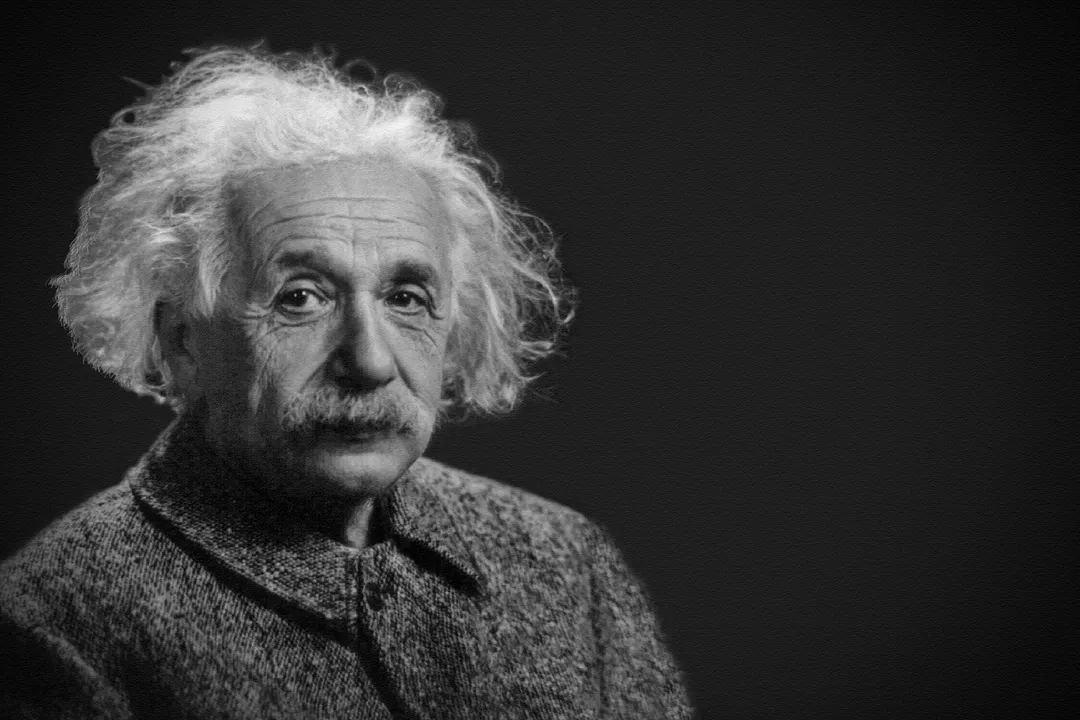
Albert Einstein is a name synonymous with genius, yet pinning down exactly what he accomplished beyond general brilliance can be tricky. He wasn't just one thing; he was a revolutionary thinker whose work fundamentally reshaped physics across several disciplines, often while working in relative obscurity as a patent clerk. [3][6][7] To truly grasp his impact, we can focus on three towering achievements that form the bedrock of modern science: the theory of special relativity, the theory of general relativity, and his crucial explanation of the photoelectric effect.
# Motion Defined
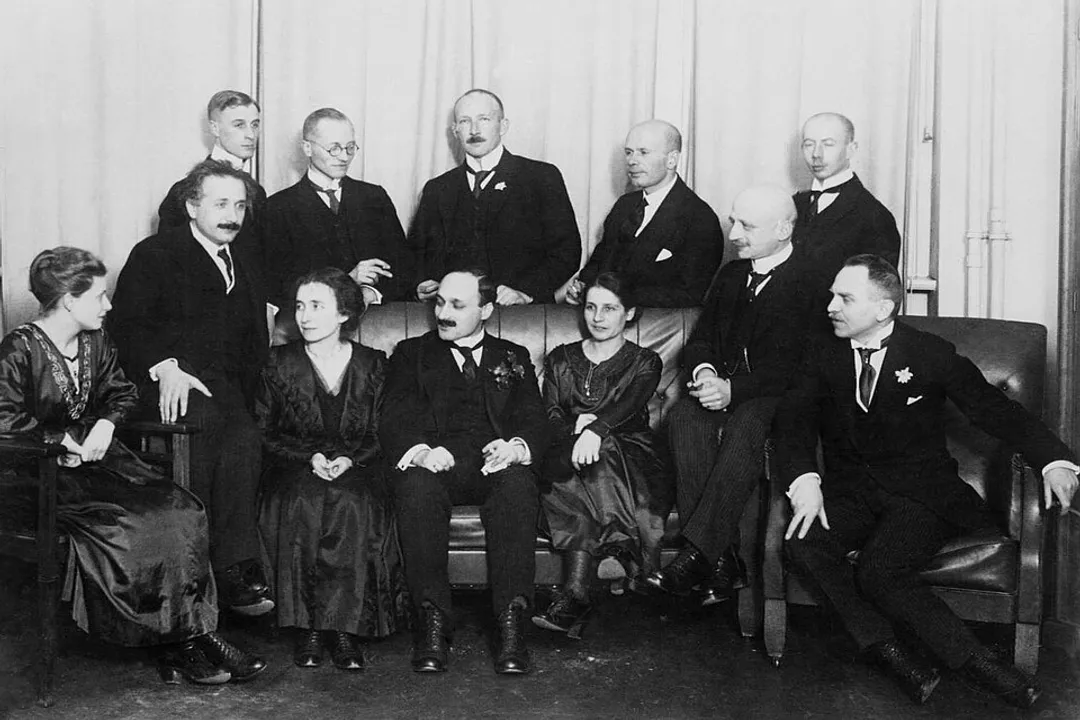
The first seismic shift came in 1905, often called Einstein's Annus Mirabilis, or "Miracle Year," when he published several groundbreaking papers. [3] One of these introduced the Special Theory of Relativity. [6] This theory dealt with the relationship between space and time for objects moving at constant velocities, building upon two core postulates. [6] The first stated that the laws of physics are the same for all non-accelerating observers. [6] The second, far more radical idea, was that the speed of light in a vacuum—represented as c—is constant for everyone, regardless of the motion of the light source or the observer. [6]
This seemingly simple second postulate demolishes the older Newtonian mechanics. If the speed of light must remain the same for two people watching a light beam, even if one is speeding toward it and the other away, then their measurements of space and time must differ. [6] This meant that concepts previously considered absolute—time and distance—are actually relative to the observer's motion. [6] Imagine two observers, one stationary and one traveling near the speed of light; the moving observer would experience time passing more slowly and distances contracting relative to the stationary one. The idea that space and time are intertwined into a single, four-dimensional entity called spacetime emerged from this realization. [1][5]
A direct and famous consequence of Special Relativity is the mass-energy equivalence formula, . [1][6] This equation shows that mass () and energy () are interchangeable, linked by the speed of light squared (). [6] Because is an enormous number, even a tiny amount of mass contains a vast reservoir of potential energy. [1] While this principle underpins nuclear energy and weapons, Einstein's initial goal was simply to describe the relationship between mass and energy inherent in the structure of the universe. [6] It’s an equation that speaks volumes about conservation laws, showing that matter isn't destroyed or created, but rather converted from one form to the other. [1]
# Gravity Warped
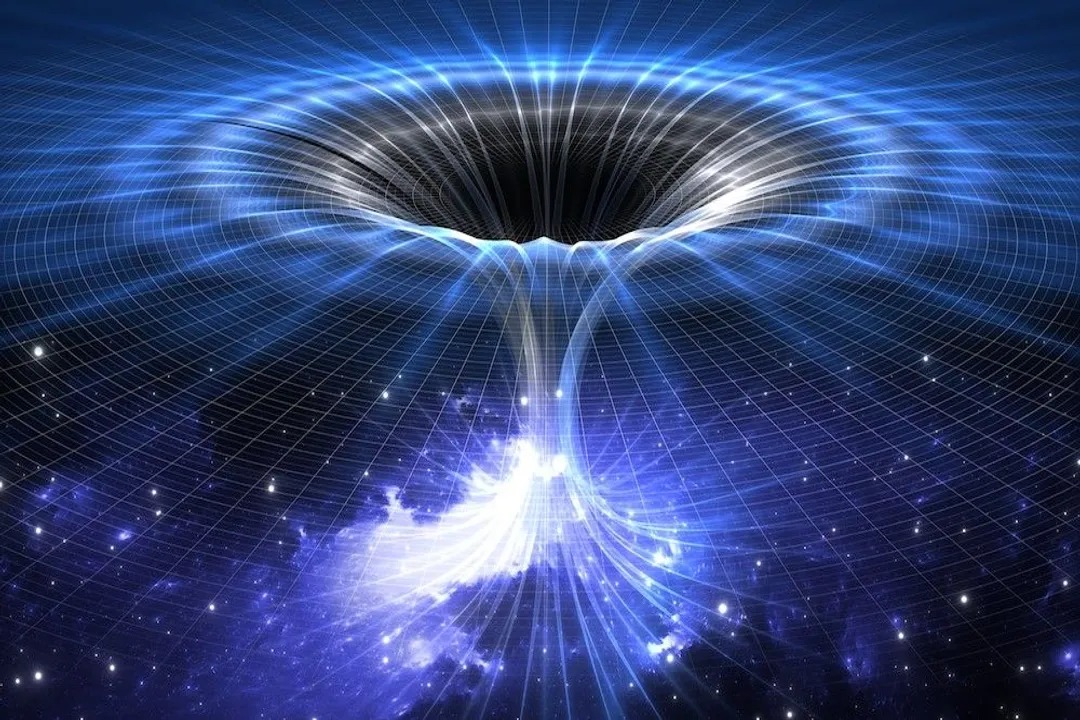
While Special Relativity handled constant motion, it didn't account for acceleration or gravity. Ten years later, in 1915, Einstein released the General Theory of Relativity, which provided a completely new description of gravity, replacing Isaac Newton’s description which had stood for over two centuries. [5][6]
Newton saw gravity as a mysterious, invisible force acting instantly across vast distances. [5] Einstein proposed something far more geometric: gravity is not a force but a manifestation of the curvature of spacetime caused by the presence of mass and energy. [1][5] Imagine a bowling ball placed on a stretched rubber sheet; the ball creates a dip, and any smaller marbles rolled nearby will curve inward toward the dip—that curvature is gravity. [5] Planets orbit the sun not because the sun pulls them with a force, but because they are following the straightest possible path through the spacetime that the sun’s immense mass has curved. [1]
This theory made several unique predictions that differed from Newtonian physics. The most dramatic confirmation came in 1919 when Sir Arthur Eddington observed the light from distant stars bending around the sun during a total solar eclipse, precisely matching Einstein’s calculations. [1][5] This observation catapulted Einstein to international fame. [1] General Relativity remains the foundation for modern cosmology, helping scientists understand black holes, the expansion of the universe, and even the necessity of time corrections in the Global Positioning System (GPS) satellites orbiting Earth. [1][5] It is remarkable that the mathematics derived from conceptual thought experiments about gravity and acceleration proved to be a more accurate description of the cosmos than anything before it. [6]

# Light Photons
The third crucial contribution, which actually earned Einstein his 1921 Nobel Prize in Physics (awarded in 1922), involved the photoelectric effect. [3][6] This phenomenon involves light shining on a material, causing it to eject electrons. [8] Classical wave theory could not adequately explain the experimental results—for instance, why high-frequency light caused electron emission immediately, while low-frequency light, no matter how intense, failed to do so. [8]
Einstein’s 1905 explanation proposed that light itself is not a continuous wave but is instead composed of discrete packets of energy, which we now call photons. [6][8] The energy of each photon is proportional to its frequency. [8] For an electron to be ejected, it needs to absorb the energy of a single, incoming photon; if the photon’s energy (determined by its frequency) is too low, no amount of them hitting the surface will ever be enough to kick out an electron. [8] This work was incredibly important because it provided strong, tangible evidence for the quantum theory initiated by Max Planck. [6][8] It is a historical irony that the concept which helped launch the quantum revolution—a field Einstein would later famously express deep philosophical unease with, declaring that "God does not play dice" with the universe—was the very foundation upon which his Nobel Prize was built. [9]
# Enduring Legacy
Beyond these three major pillars of modern physics, Einstein's breadth of contribution is vast. Even before his relativity papers, he provided an explanation for Brownian motion in 1905, which definitively proved the actual existence of atoms and molecules, a notion still debated by some scientists at the time. [2][6][7]
His work continues to touch everyday life and cutting-edge science in unexpected ways. For instance, the underlying principles he established regarding stimulated emission—though not fully explored by him during his lifetime—were critical theoretical steps necessary for the later invention of the laser. [5]
However, scientific greatness does not equate to infallibility. Einstein himself wrestled with theories he could not fully resolve, and he made significant theoretical missteps later in his career. [9] He spent decades trying, unsuccessfully, to formulate a unified field theory that would combine gravity with electromagnetism. [9] Furthermore, when quantum mechanics developed further based on the probabilistic nature he helped ignite with the photoelectric effect, Einstein remained deeply skeptical of its incomplete description of reality, advocating for hidden variables to restore determinism. [9] Even a mind that reshaped spacetime struggled to accept a universe that seemed fundamentally random at its smallest scale. [9] This tension between his early quantum leap and his later resistance to quantum completeness offers a fascinating case study in scientific stubbornness—even geniuses cling to their preferred view of how the cosmos ought to operate. [9]
Related Questions
#Citations
10 Things Einstein Got Right - NASA Science
What Did Albert Einstein Invent? - Science | HowStuffWorks
Albert Einstein - Wikipedia
10 facts about Albert Einstein - National Geographic Kids
4 Everyday Items Einstein Helped Create | National Geographic
7 ways Einstein changed the world | Live Science
7 facts about Albert Einstein that may surprise you | The IRC
Albert Einstein's Greatest Discoveries | Chemistry And Physics
The 3 biggest mistakes made by Einstein - Big Think