What do you need to form a star?
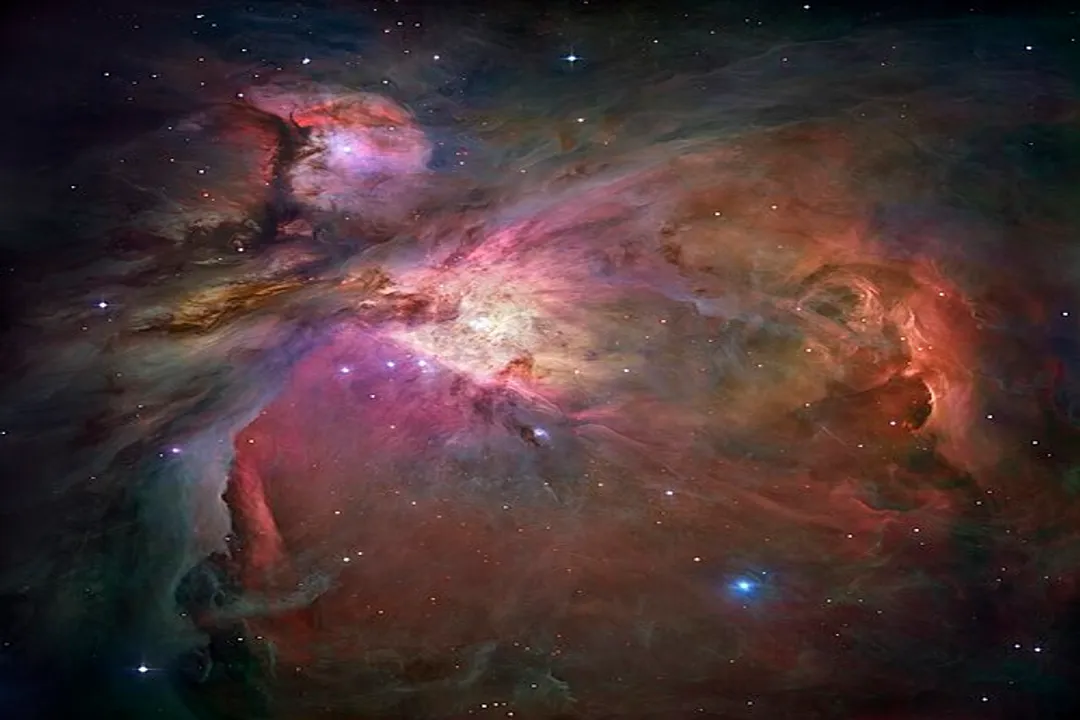
The genesis of a star begins not with a flash, but with an immense, cold accumulation of material scattered across the interstellar medium. What a star ultimately requires is a colossal amount of gas, predominantly hydrogen, brought together under the relentless influence of its own gravitational field until a self-sustaining thermonuclear reaction ignites at its center. [1][2] This process is fundamentally a cosmic battle between the outward push of gas pressure, which tries to keep the cloud dispersed, and the inward pull of gravity, which attempts to compress it. [5]
# Cosmic Ingredients
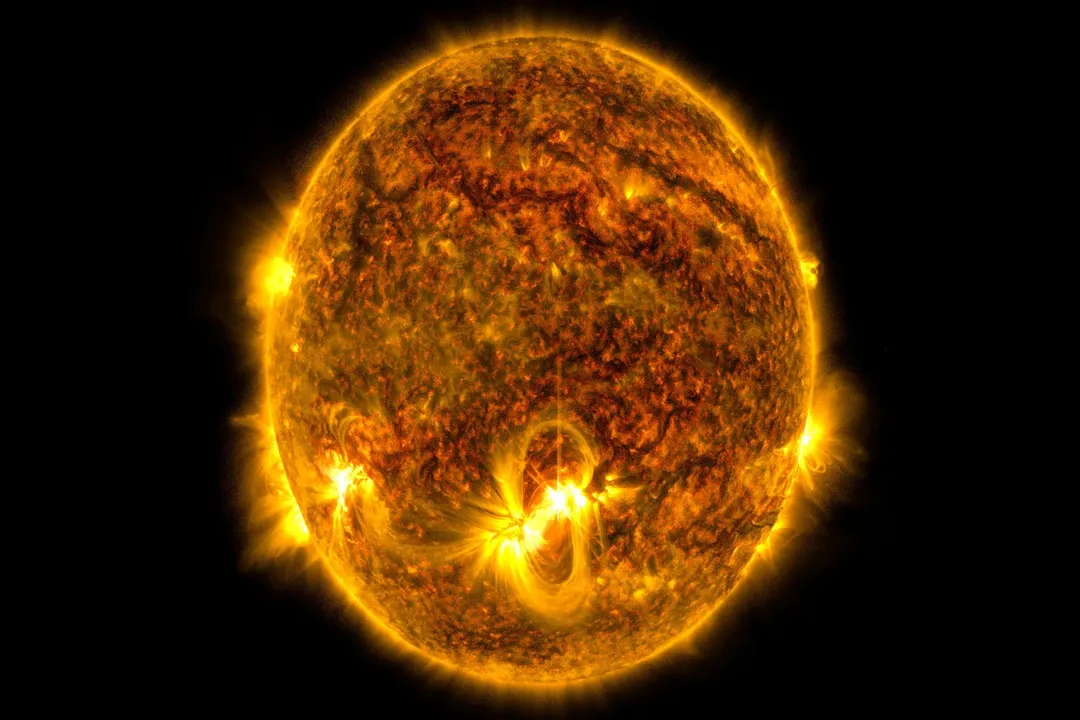
The primary material needed to form any star is gas, specifically within the vast, cold structures known as giant molecular clouds. [1][10] These clouds are the stellar nurseries of the galaxy, offering the necessary raw stock for stellar birth. [10] Chemically, the composition is remarkably consistent across the universe: the vast majority is hydrogen (), followed by helium (). [1][7] These two light elements are the fuel source for the star's entire main-sequence life, as hydrogen fusion into helium is what generates the star's energy. [2][6]
While and form the bulk—often over $98%$ of the mass—the presence of heavier elements, often referred to by astronomers as "metals," is also a necessary condition, though they do not participate in the primary fusion reaction. [6] These heavier elements, created in previous generations of stars and dispersed by events like supernovae, exist in trace amounts within the cloud. [6] Their importance lies not in being the fuel, but in their effect on the cloud's physical properties. Metals are highly effective at radiating heat away from a collapsing core through electromagnetic processes. [6] This rapid cooling is critical because if the gas cannot efficiently shed the heat generated by gravitational contraction, the internal pressure rises too quickly, halting the collapse before fusion can begin. [6] Therefore, an environment that is too "pure"—lacking these trace metals—might form objects that take significantly longer to cool and contract, potentially altering the mass distribution of the resulting stellar population, even if the fundamental requirement remains hydrogen. [6]
# Gravitational Initiation
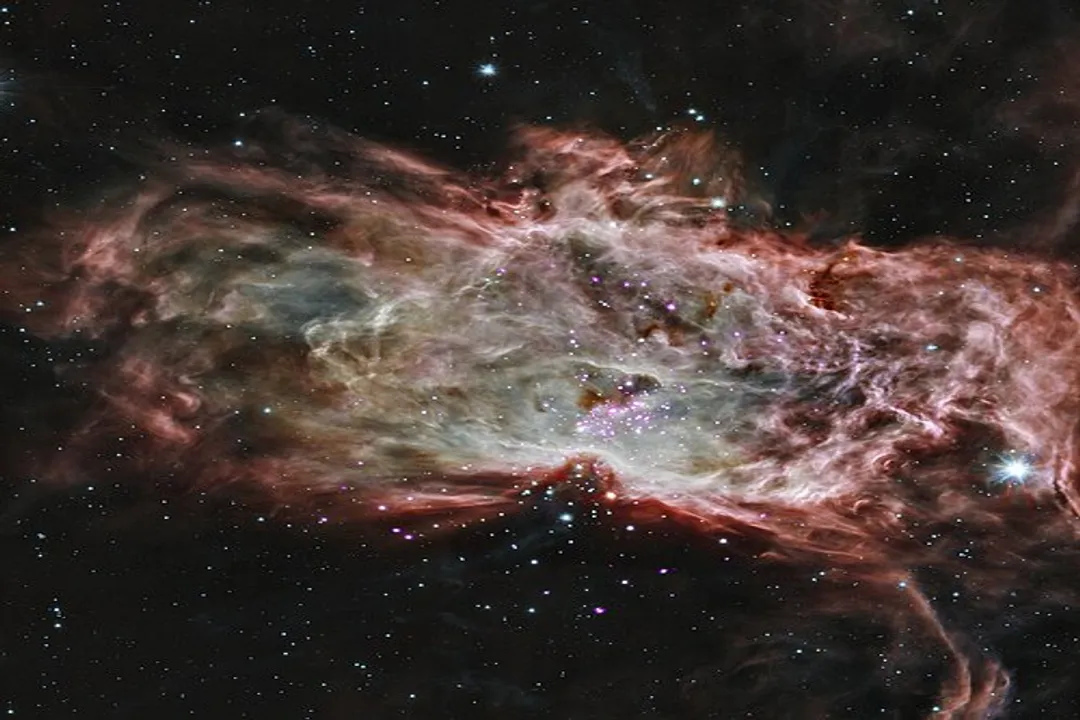
A star cannot simply form from any random patch of gas floating in space. The ingredients must coalesce into a region that possesses a critical balance where gravity overwhelms all other forces acting upon it. [1] Molecular clouds are turbulent environments; they contain vast amounts of gas moving at different speeds and densities. [3][10] Star formation starts when a section of this cloud becomes gravitationally unstable. [3]
This instability is often triggered by external events that compress regions of the cloud, increasing their local density until the self-gravity of that region overcomes the thermal pressure holding it up. [3] Such triggers can include the shockwaves from a nearby supernova explosion, or even the compression caused by the rotation of a spiral galaxy arm passing through the cloud. [3][10] A key concept in understanding this initiation is that it's the density of a small region, not just the total mass of the entire cloud, that matters most. If a small, dense pocket of gas has enough mass relative to its size, it will begin to collapse in on itself, creating a protostar at its center, even if the surrounding gas remains diffuse. [5] For a region to collapse and form a star, its mass must exceed what is known as the Jeans mass for those specific conditions of temperature and pressure. [2]
When considering the scale, the entire process takes time—millions of years—as the dispersed cloud material slowly funnels inward toward the densest point. [1] This slow, inexorable gathering is the real work of star birth. While a star's mass is the ultimate determinant of its fate, the immediate precursor is achieving a critical, localized density within the cloud structure. [3][10]
# Mass Limit Defined
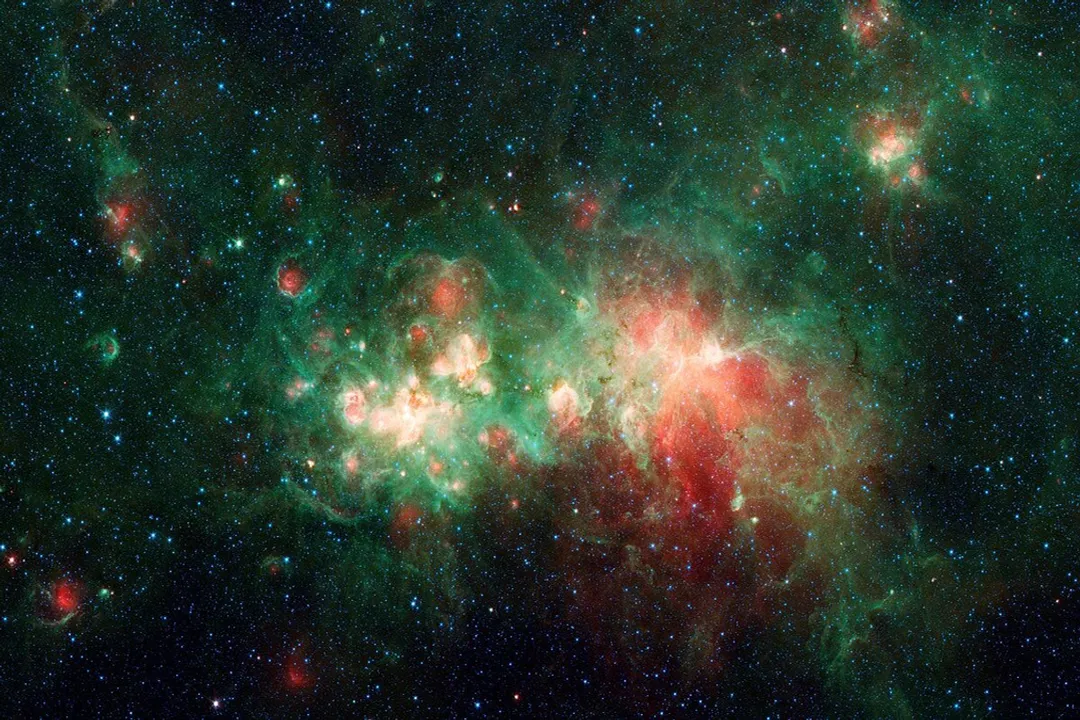
Even once a collapse has begun and a central object, the protostar, has formed, it is not yet a true star. The deciding factor that separates a true star from a stellar failure—a brown dwarf—is mass. [2]
The distinction hinges entirely on whether the object can achieve and sustain hydrogen fusion in its core. [2][4]
| Object Type | Minimum Mass Requirement (Solar Masses, ) | Defining Characteristic |
|---|---|---|
| Brown Dwarf | Sustains deuterium fusion, but not sustained hydrogen fusion. [2] | |
| True Star | Achieves core temperature/pressure sufficient for sustained fusion. [2][4] |
For an object to become a star, it must accumulate enough surrounding gas to reach at least $0.08$ times the mass of our Sun (). [4] Below this threshold, the gravitational pressure in the core will not be sufficient to force hydrogen nuclei close enough together for long enough to sustain the nuclear burning that defines a main-sequence star. [2] Instead, the object stalls its contraction, becomes a brown dwarf, and slowly cools down over eons. [2] Think of it as a failed engine: it has the fuel (hydrogen) but cannot build up enough internal compression to turn the ignition key ( million Kelvin). [4] Even a small deficiency in the initial accretion means the difference between a long-lived, light-emitting star and a dim, cooling stellar remnant. [4]
# Stellar Ignition
The formation pathway moves through distinct phases following the initial collapse. Once the core of the collapsing cloud fragment has gathered enough material to become a protostar, it continues to contract and heat up dramatically. [3] During this phase, the energy radiated by the object comes solely from gravitational contraction, not from fusion. The object draws in more material from the surrounding envelope of gas and dust. [3]
This accretion process continues until the core temperature and pressure reach the critical point for sustained nuclear reactions involving hydrogen. [3] When this ignition occurs, the outward pressure generated by the energy released from fusion finally balances the inward force of gravity. At this point, the object achieves hydrostatic equilibrium and officially joins the main sequence, becoming a true star like the Sun. [1][3]
This moment of ignition marks a profound shift in the object's nature. Before ignition, the object's luminosity fades as it contracts; after ignition, its luminosity stabilizes because the nuclear furnace provides a constant energy output that matches the gravitational pull. [5] The required chemical ingredient—hydrogen—is present, the necessary physical condition—extreme core pressure and temperature—is met, and the star is born. [2]
If we consider the implications of the required mass, it becomes apparent that the vast majority of material in a molecular cloud does not end up in a star. The process is highly inefficient, with much of the initial cloud mass being either blown away by stellar winds from the forming stars, or simply failing to achieve the necessary Jeans mass threshold to collapse locally. This means that for every one star that successfully ignites, there is potentially ten times the mass in residual gas and dust that remains scattered or forms non-stellar objects. [1][10] The necessary elements are simple—mostly hydrogen—but the required configuration of those elements, held together by sufficient mass against internal thermal resistance, is what is truly rare and difficult to achieve in the cosmos.
#Videos
How Do Stars Form? - YouTube
Related Questions
#Citations
Star Basics - NASA Science
What are the minimum element requirements for a star?
Star formation - Wikipedia
Can you make a star out of elements other than hydrogen and helium?
make a star
How Do Stars Form? - YouTube
How many ingredients are needed to create a star? - Quora
How do stars form in clouds of dust and gas? - Facebook
Star Formation | Center for Astrophysics | Harvard & Smithsonian
Mass Needed to Create a Star - The Physics Factbook - hypertextbook