How many universes could exist?

The sheer number of universes that might exist is one of the most captivating and least settled questions in modern physics. While definitive proof remains out of reach, theoretical constructs stemming from cosmology, quantum mechanics, and string theory suggest possibilities ranging from exactly one to an effectively infinite count. The ambiguity is not due to a lack of imagination, but because the term "multiverse" itself describes several distinct, competing, or complementary ideas about reality existing beyond our observable horizon.
# Scale of Reality

The history of science has often involved recognizing that our perceived environment is just a small fraction of a much larger whole. We once thought our valley was the universe, then our planet, then our solar system, and then our galaxy. Today, some researchers suggest this expansion of scale continues, postulating that there may be far more universes than just our own. The current scientific discourse often boils down the possibilities to two main categories: one universe, or an infinite number.
# Eternal Inflation Bubbles

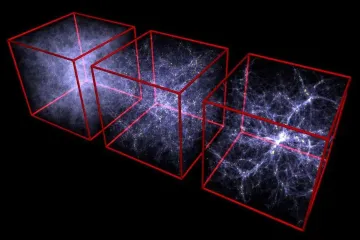
One major pathway to a multiverse arises from the theory of cosmic inflation, the period of exponential expansion in the very early universe. According to the theory of eternal inflation, this rapid expansion did not end everywhere simultaneously. While inflation ended for the region we inhabit about 13.8 billion years ago, it continues in other regions of spacetime.
When inflation slows down in a localized area, a "bubble universe" is born—the event that created our own Big Bang fireball. Because the space between these bubbles continues to expand indefinitely, they are forever separated from one another, moving away from each other faster than the speed of light, making contact impossible even if one could travel to the edge of our bubble.
The number of these bubble universes is typically posited to be infinite. A fascinating implication of this model is that these separate bubbles might not share the same physical constants or laws that govern our reality. If this is true, the specific, life-permitting values we observe in our universe—like the strength of gravity or the mass of an electron—are simply a matter of cosmic lottery; we exist only in one of the rare bubbles where the constants happened to be right for observers to evolve.
# Infinite Space Repetitions

A different model suggests an infinite number of universes based on the simple premise of infinite spatial extent within our single spacetime continuum. If the universe stretches on forever, and the building blocks of matter are finite in type, then there are only so many ways those particles can arrange themselves within a given volume. Given infinite space, any finite arrangement of particles, even one as complex as an entire galaxy or solar system, must eventually repeat.
This idea leads to a startling conclusion: there could be another exact copy of Earth, another version of you making the exact same decision you are making right now, and infinite versions in which you made every possible alternate choice. However, this level of repetition relies on the universe being spatially infinite, a point that is not definitively proven. Furthermore, if the universe began at a finite point, as many physicists agree, this type of exact repetition across an infinite volume is unlikely to occur for concurrent universes.
It is worth noting the contrast between this infinite repetition and the eternal inflation model: in the infinite space scenario, the physics remains the same in all repetitions, whereas in the eternal inflation scenario, the physics itself is what varies infinitely between bubbles.
# Quantum Branching Worlds
Moving away from cosmology and into the strange realm of quantum mechanics, the "Many-Worlds Interpretation" (MWI) offers yet another path to a staggering, perhaps infinite, number of universes. This theory addresses what happens when subatomic particles, described by a "wave function" encompassing all possibilities, are observed. While the traditional Copenhagen interpretation suggests the wave function "collapses" into a single reality upon observation, MWI proposes something different.
The many-worlds theory suggests that every time a quantum outcome is observed or a choice is made, the universe splits, or "branches," into separate worlds—one for every possible outcome. Instant by instant, our perceived reality fragments into near-uncountable alternatives. This creates a constantly growing, branching structure where uncountable versions of you are living lives that diverge from yours by the slightest shift in a quantum interaction or a major life decision.
This interpretation is considered mathematically straightforward by some physicists but carries the significant scientific hurdle of being fundamentally unfalsifiable—if these alternate worlds are completely separate and non-intersecting, finding evidence against their existence becomes impossible, which challenges the core of scientific methodology.
# The Mirror Universe Concept
A less common, yet intriguing, model suggests a symmetry in time related to the Big Bang itself. Instead of proposing separate universes outside our timeline, some theorists suggest that a universe existing on the opposite side of the Big Bang timeline—stretching backward in time—is an exact mirror image of our own. In this view, both universes were created simultaneously, exploding forward and backward in time from the initial singularity.
In this mirror reality, everything would run in reverse: antiprotons would form atoms with positively charged electrons, and processes like cracking an egg would happen in reverse, with the egg re-forming inside the chicken. While this offers an elegant, symmetrical vision of cosmic history, it is another theoretical structure without tangible empirical confirmation.
# The Challenge of Quantification and Proof
When physicists discuss the number of universes, they must first define the term, as the answer changes drastically depending on which theory they invoke. String theory, for instance, does not necessarily predict a specific number of universes but rather the vast landscape of possible universes that can arise from its mathematical solutions. Some estimates for these theoretical solutions run as high as different physical possibilities. It is crucial to understand that these solutions describe different physical laws arising from how string theory’s extra dimensions might compactify, not a count of separate, currently existing cosmic bubbles.
The current scientific status can be summarized by the evidence: we have evidence for one universe—our own—and everything else remains conjecture. Arguments against the multiverse concept often center on practicality and proof. Occam’s razor suggests that adding countless unobservable entities without solving existing paradoxes is intellectually cumbersome. The most significant scientific critique is the lack of falsifiability; if a theory cannot be disproven through observation or experiment, its status as science is called into question.
If there were another universe nearby, it might theoretically leave an "imprint" or bruise on our Cosmic Microwave Background radiation if it brushed against us, but no definite evidence of such an event has been found. Therefore, the search continues, constrained by the limits of what we can observe.
When considering the infinite possibilities presented by the many-worlds interpretation, a moment of personal reflection can be useful. If every possible outcome of every choice is realized somewhere else, then the actions taken in this reality—the one you are currently experiencing—become paramount. The existence of an alternate you who made a different decision does not negate the consequences of your decision here; it simply means that the responsibility for the unique unfolding of this existence rests entirely on the choices you perceive and execute in this specific branch of reality. This is perhaps the most concrete takeaway from the most abstract of these theories. As we continue to push the boundaries of observation, whether by looking for cosmic imprints or better understanding quantum mechanics, the count of known universes remains firmly at one, even as theory suggests the possibility of infinity.
#Videos
How Many Universes Are There? - YouTube
How many universes are there? - Chris Anderson - YouTube
Related Questions
#Citations
How many universes exist ? : r/cosmology - Reddit
How Many Universes Are There? - YouTube
Do parallel universes exist? We might live in a multiverse - Space