Could the universe survive without stars?
The cosmos, as we know it, is illuminated by the fiery brilliance of countless stars, the engine rooms of creation that forge the very elements necessary for planets and life. To contemplate a universe entirely devoid of them feels like imagining an ocean without water—a fundamental contradiction to our observable reality. Yet, the very nature of cosmic evolution, both in its distant past and its far future, suggests that a starless state is not only possible but perhaps inevitable over vast timescales. [1][5] When we strip away these stellar furnaces, what remains? A realm of profound cold, slow decay, and darkness, governed by the lingering energy of past events and the inexorable march toward thermal equilibrium. [2][5]
# Cosmic Stillness
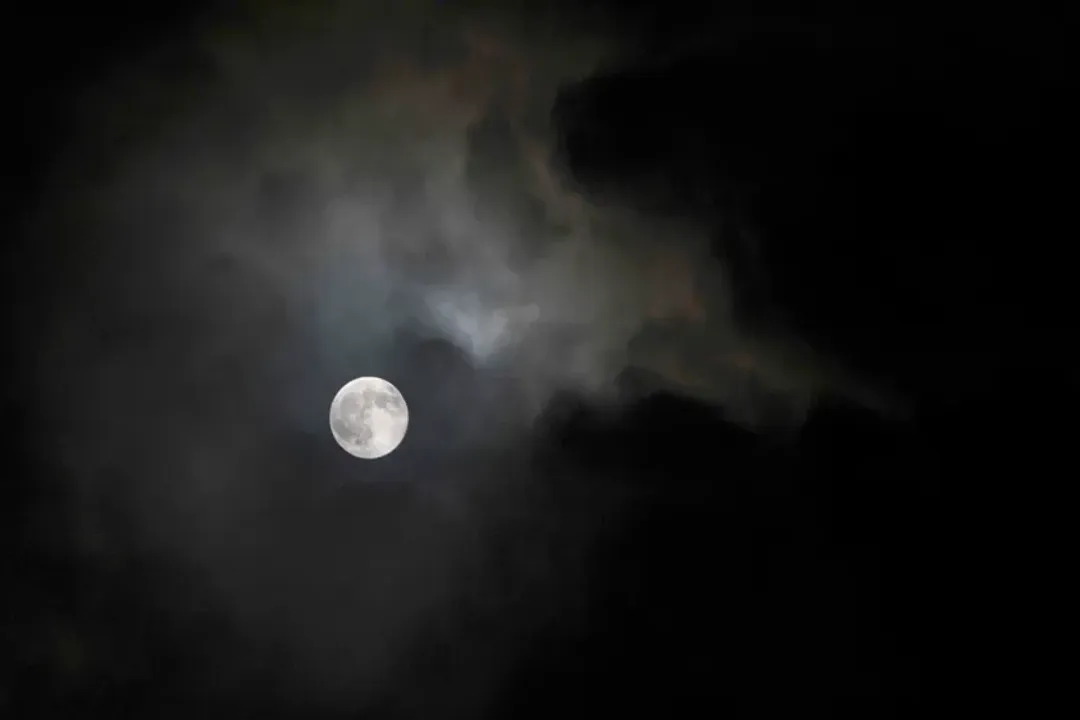
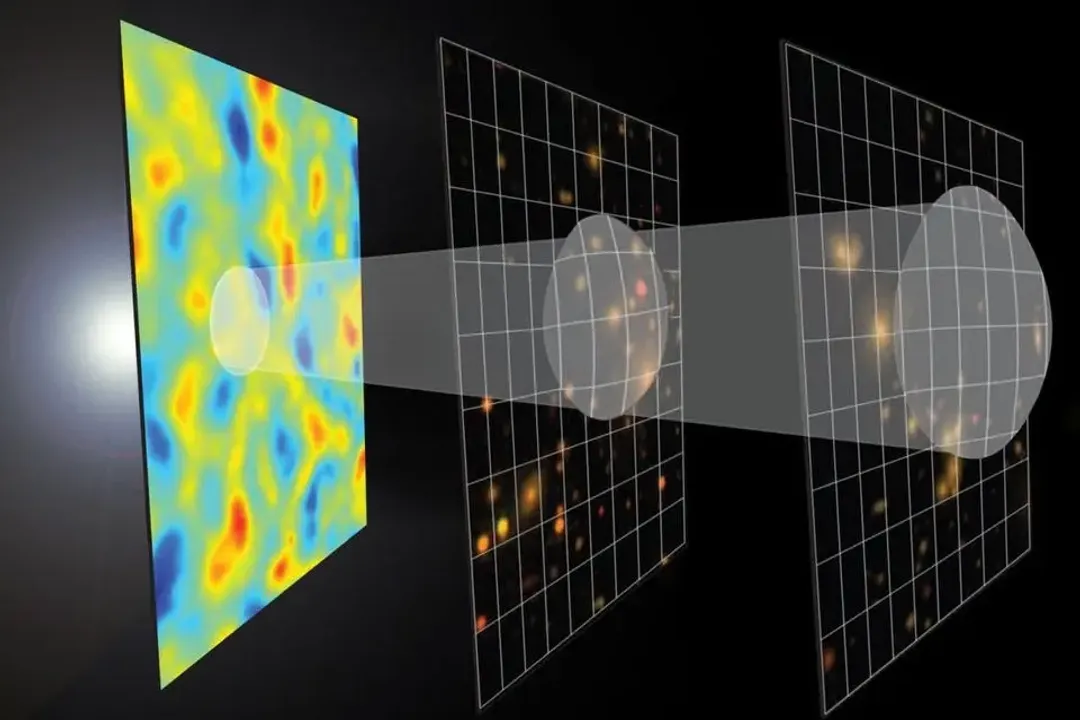
Imagine the instant the light of every star—save perhaps our own Sun for a brief period if we consider a localized event—went out. The universe would immediately plunge into an absolute, chilling darkness, save for the faint background radiation left over from the Big Bang, the Cosmic Microwave Background (CMB). [2][5] The CMB, though present, is incredibly cold, currently measuring about $2.725$ Kelvin. [2] Without the energetic input from fusion in stars, the universe’s temperature would be dictated by this ancient relic, leading to a deep freeze across interstellar space. [5]
The primary function of stars, beyond providing light, is nucleosynthesis—the creation of elements heavier than hydrogen and helium. [2] If stars never existed, the universe would consist almost entirely of the primordial gas clouds—massive amounts of hydrogen and helium, with only trace amounts of lithium. [5] There would be no carbon for organic chemistry, no oxygen to breathe, and no silicon to form rocky planets as we understand them. [2][5] Planets, as we define them—bodies orbiting a luminous center—could not form via standard accretion models reliant on heavier elements accumulating around a young star. [2] Even the gas giants like Jupiter might look vastly different, composed of lighter elements and lacking the complex atmospheric chemistry driven by stellar energy input. [2]
# Pre-Stellar Epoch
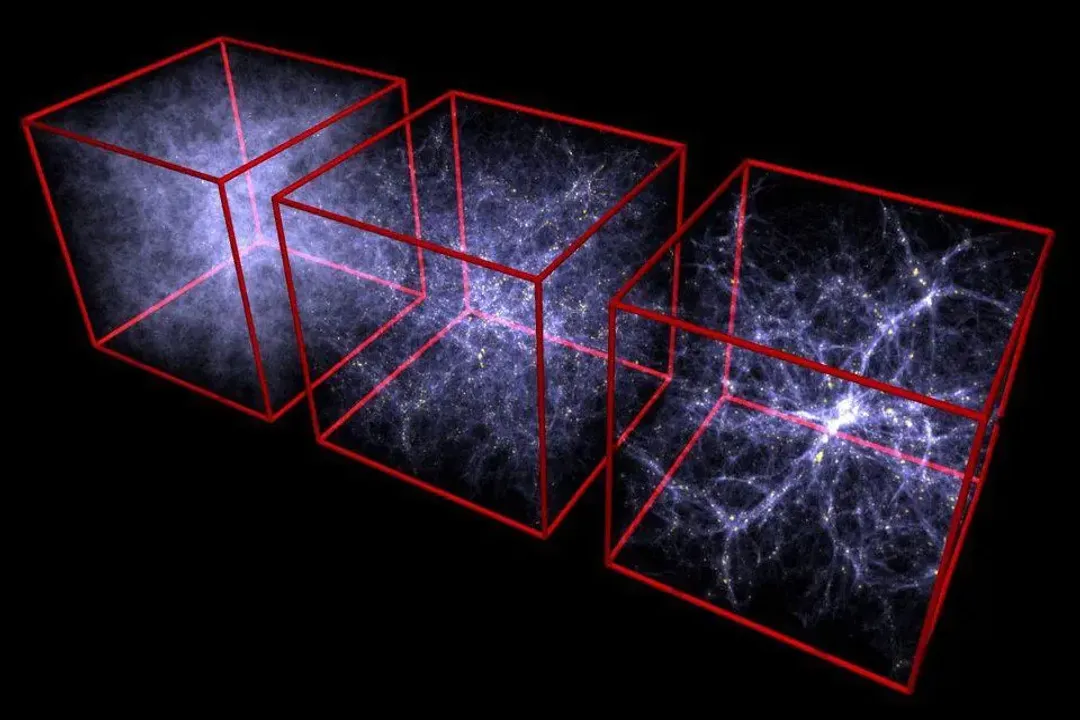
This hypothetical dark universe closely mirrors the state of our own cosmos for the first few hundred million years after the Big Bang, a time before the Population III stars ignited. [5] During this epoch, the universe was a dark expanse dominated by hydrogen, helium, and dark matter. [1][5] Gravity was the only organizing force capable of collapsing the largest clumps of baryonic matter, slowly gathering the raw fuel necessary for the first stars to begin burning. [1] These theoretical first stars would have been massive, extremely hot, and very short-lived, but their explosion was the required spark to seed the universe with the heavier elements needed for later stellar generations, planets, and potentially life. [1][5] In a universe that never had stars, this seeding never happens, leaving the raw material largely inert and unable to form complex structures beyond diffuse gas clouds and black holes. [1]
# Energy Without Fire
The question then shifts from the structural to the biological: could any form of life persist or even arise in such an environment? On a planet orbiting a star like our Sun, the cessation of fusion means immediate catastrophic cooling and the end of photosynthesis, which underpins most surface life. [6] However, the sources suggest that localized, non-stellar energy sources could sustain some forms of existence, even in a universe without sunlight. [7][1]
Life, at its most fundamental, requires an energy gradient—a source of potential to drive chemical reactions—and a solvent. [7] In a starless environment, the most promising gradient comes from within the planet itself. Geothermal heat, driven by planetary formation remnant heat and the decay of heavy, radioactive elements, provides an enduring, though faint, energy source. [7] This is the principle behind certain extremophile ecosystems discovered deep in Earth's oceans around hydrothermal vents, which rely on chemosynthesis rather than photosynthesis. [7] If a planet formed through processes that aggregated heavy elements (perhaps through gravitational collapse of primordial gas pockets rich in trace elements or through highly efficient localized accretion), it could sustain subsurface biospheres powered by this slow, internal nuclear decay. [1]
Consider the vast, icy moons in our own solar system, like Europa or Enceladus, which harbor subsurface oceans maintained by tidal heating from their massive parent planets. [7] While tidal heating is an indirect stellar effect (the planets orbit a star), if we substitute the tidal forces with strong internal radioactive heating, the principle of liquid water existing far from any star remains valid. [7] If we assume the question implies a universe where no body undergoes fusion, we are left with primordial heat and radioactive decay as the energy budget. In a universe dominated by dark matter and cooled gas, any planet or rogue world capable of holding onto such internal energy would be an island of activity in a cold sea. [7]
A fascinating calculation arises when we compare the rate of energy release. The energy output of a typical main-sequence star is enormous. If we consider a planet warmed only by radioactive decay—say, a body rich in Uranium-238, Potassium-40, and Thorium-232—the steady-state heat flux might only support localized pockets of warmth, perhaps enough for microbial life existing in a liquid water layer just a few kilometers beneath an insulating ice or rock crust. [7] The available energy density would be orders of magnitude lower than what Earth receives from the Sun, implying biological processes would have to proceed at an extraordinarily slow pace. Life in such a setting would not thrive in the abundance we know; it would merely persist through chemical inertia. [1]
# Planetary Longevity
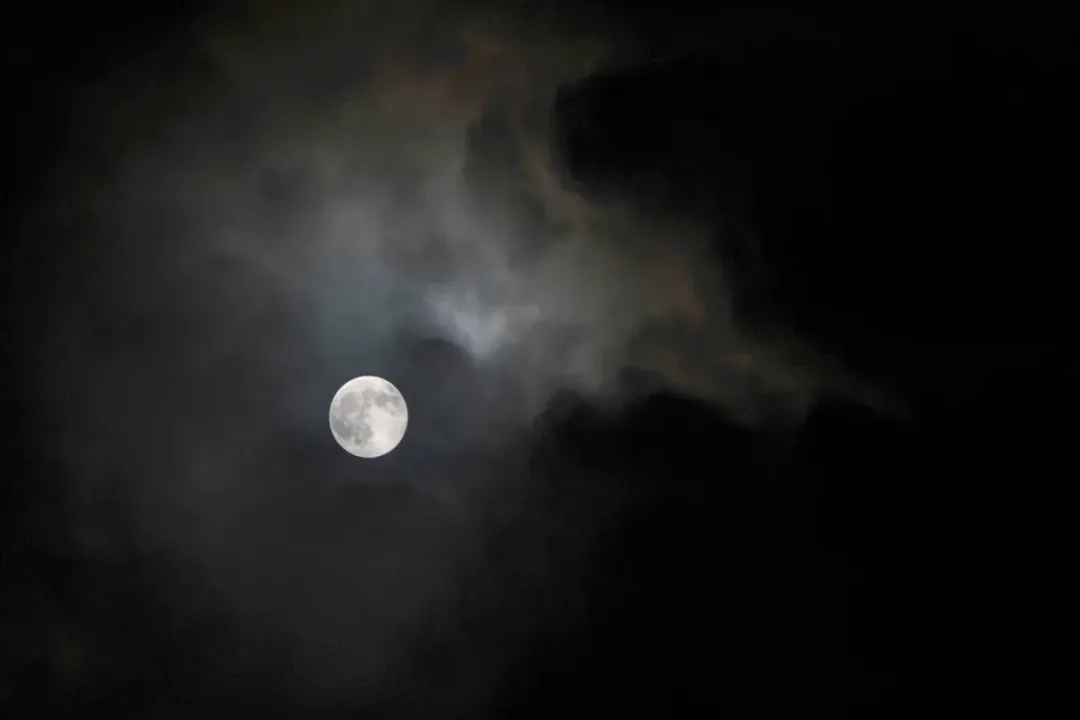
If we shift the hypothetical from a universe never having stars to one where stars die or vanish, the survival outlook changes drastically depending on the mechanism. One scenario discussed in theoretical settings involves the hypothetical instantaneous destruction of every star except our Sun. [6] In this localized scenario, Earth would initially survive, as the Sun remains. [6] The immediate crisis would not be darkness, but the sudden, terrifying realization that all other cosmic light—all other galaxies and stellar nurseries—are gone. For humanity, this would be a psychological and astronomical shockwave, but physically, provided the Sun functions normally, Earth remains habitable for billions of years based on the Sun's lifespan. [6]
However, the true starless universe requires the end of fusion everywhere. As stars exhaust their fuel, they transition into remnants: white dwarfs, neutron stars, and black holes. [1] The universe would eventually enter the Degenerate Era, where the only sources of light would be the cooling embers of these stellar corpses. [1] White dwarfs glow faintly from residual heat, but they cool down over trillions of years, eventually becoming cold, inert black dwarfs. [1]
This transition highlights a crucial distinction: a universe without stars is different from a universe after stars have died. The former lacks the heavy elements; the latter is rich in them, locked inside stellar remnants and the planets that formed around them. [1] In the post-stellar universe, planets that already exist—those that formed when stars were active—might persist for eons, benefiting from the internal energy discussed earlier, long after their parent stars have faded. [6] The key ingredient for sustained geological or biological heat—the heavy radioactive isotopes—would already be present on these worlds, a legacy of the now-extinct stars. [1] A world that got lucky enough to form during the active stellar age has a head start on surviving the deep freeze of the degenerate era. [1]
# The Future Cosmos
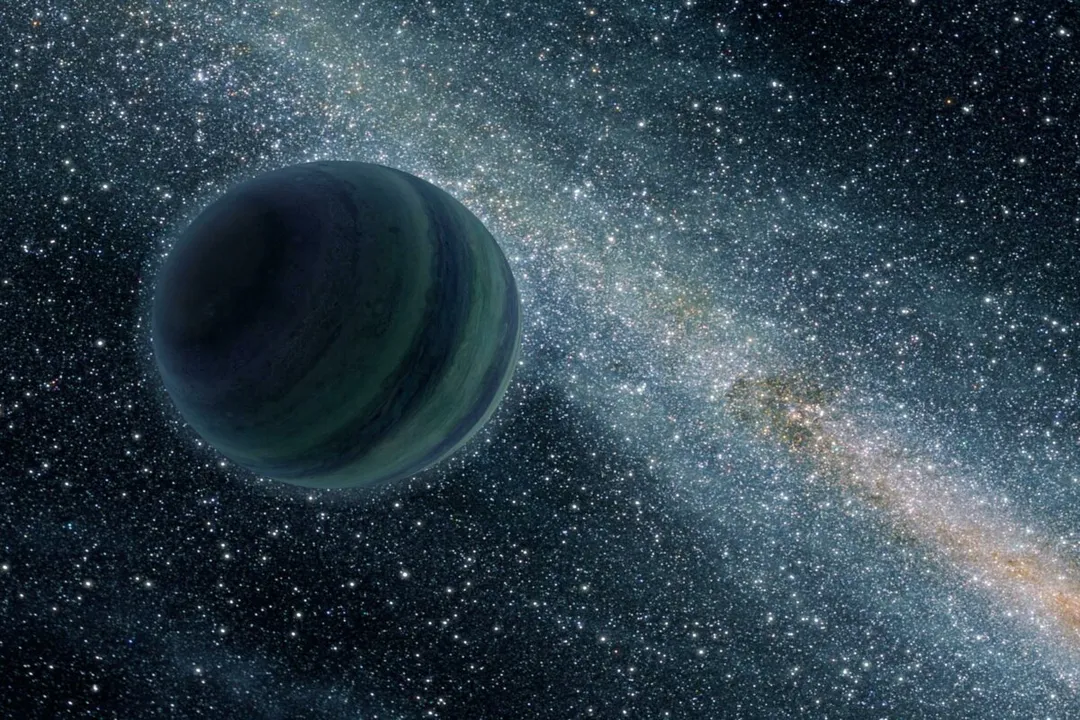
Looking further ahead, even the most persistent energy sources eventually fade. Black dwarfs cool until they match the CMB temperature, rendering them indistinguishable from the background void. [1] Tidal forces might stir up a few remaining planetary systems, perhaps causing some bodies to collide, generating a final, fleeting spark of heat or light, but these events are exceedingly rare. [6]
Eventually, the universe enters the Black Hole Era, where the only large-scale structures are supermassive black holes feeding on the occasional stray particle or brown dwarf. [1] Even black holes evaporate over incomprehensibly long timescales via Hawking radiation. [1] The ultimate fate, assuming the current model of accelerating expansion driven by dark energy continues, is a universe of extreme dilution, cold, and darkness—a state of near-perfect thermodynamic equilibrium, or heat death. [2] In this final state, the difference between a universe that never had stars and one that lived through them becomes negligible; both converge on the same featureless, frigid expanse where no organized energy gradients remain to drive any process, physical or biological. [1][2] The structures that remain, such as stray protons or leptons, will be separated by distances so vast that interactions become improbable to the point of non-existence. [1] The universe survives, but only as a near-absolute zero vacuum punctuated by dark, cold remnants. [2]
#Videos
Could Life Survive Without a Star? - YouTube
Planets Without Stars – Hidden Worlds in the Galaxy - YouTube
Related Questions
#Citations
Life Without Stars? A 2023 paper implies that most of the life in our ...
What If There Were No Stars? - Science | HowStuffWorks
What would the universe be like without stars, planets, or a sun?
Could Life Survive Without a Star? - YouTube
What was it like when no stars yet existed? - Big Think
If every star in the universe except the Sun were destroyed, would ...
Is life possible on rogue planets and moons? | The Planetary Society
The universe without stars except the sun.... Does it affect life in any ...