Why is it so dark in the night?
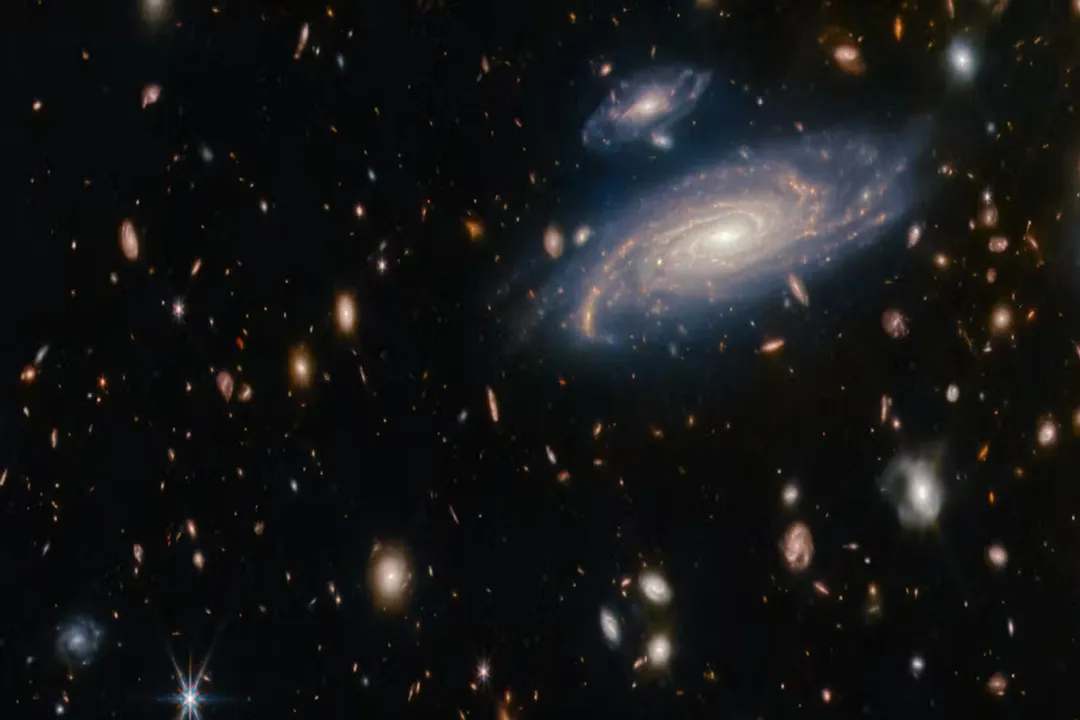
The blackness we perceive when we look up at the night sky seems like a simple, obvious fact of life, yet it conceals one of the most profound scientific questions ever posed. Why, if the universe is filled with an incomprehensibly vast number of stars, isn't the entire celestial sphere blazing with light? It’s a question that forced scientists to fundamentally rethink the nature of space, time, and the cosmos itself. [2][8]
# Finite Sky Brightness
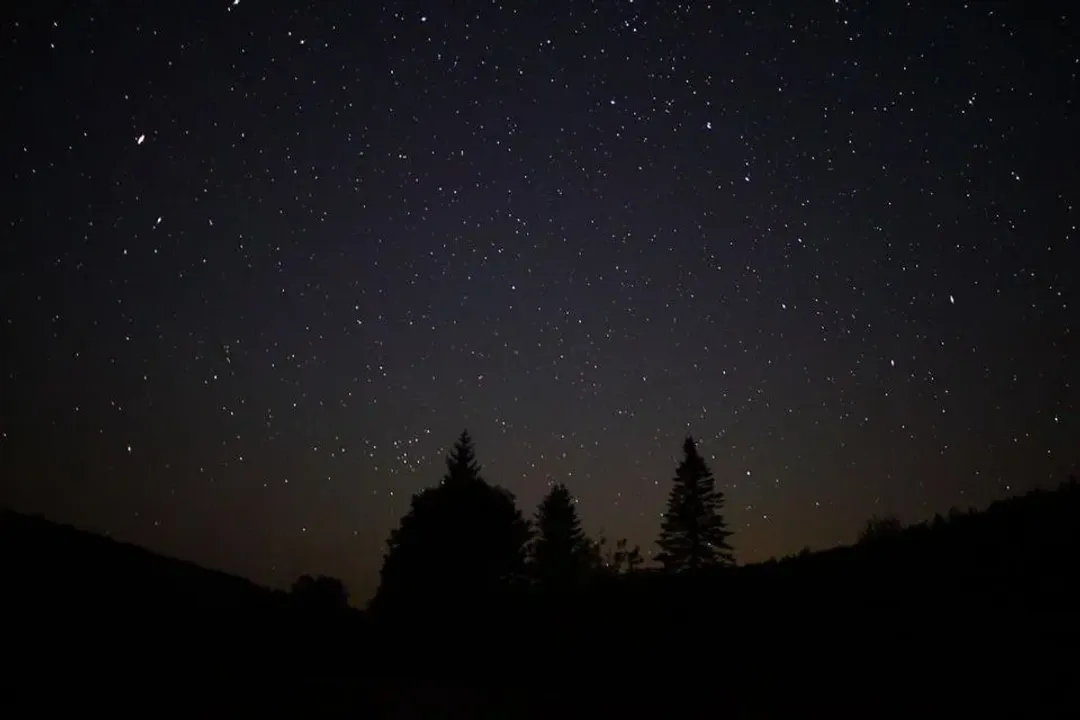
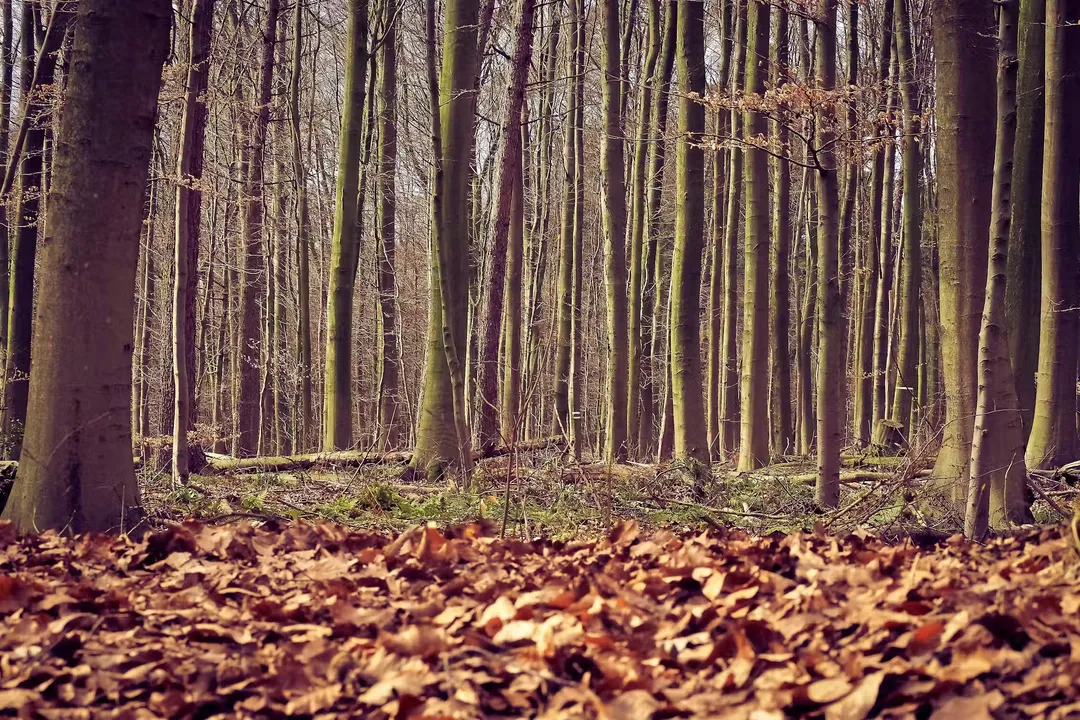
When we step outside on a clear night, far from city glow, the darkness feels absolute, punctuated only by the scattered pinpricks of distant suns. Our intuition suggests that if you look far enough in any direction, your line of sight must eventually land on the surface of a star, much like walking through an endless forest where every direction you look eventually hits a tree trunk. [6] If the universe were truly infinite in size, infinitely old, and uniformly populated with stars, the night sky should be as bright as the surface of the Sun. [2][8] The total amount of light reaching us from all those distant stars should simply add up to one enormous, blinding glow.
This realization wasn't immediate; it took a long time for thinkers to grapple with the discrepancy between this logical expectation and the visible reality. [8] The apparent darkness is, therefore, not a sign that stars are few or far between, but rather evidence that our assumptions about the universe's structure and history were incomplete. [2]
# Olbers’ Contradiction
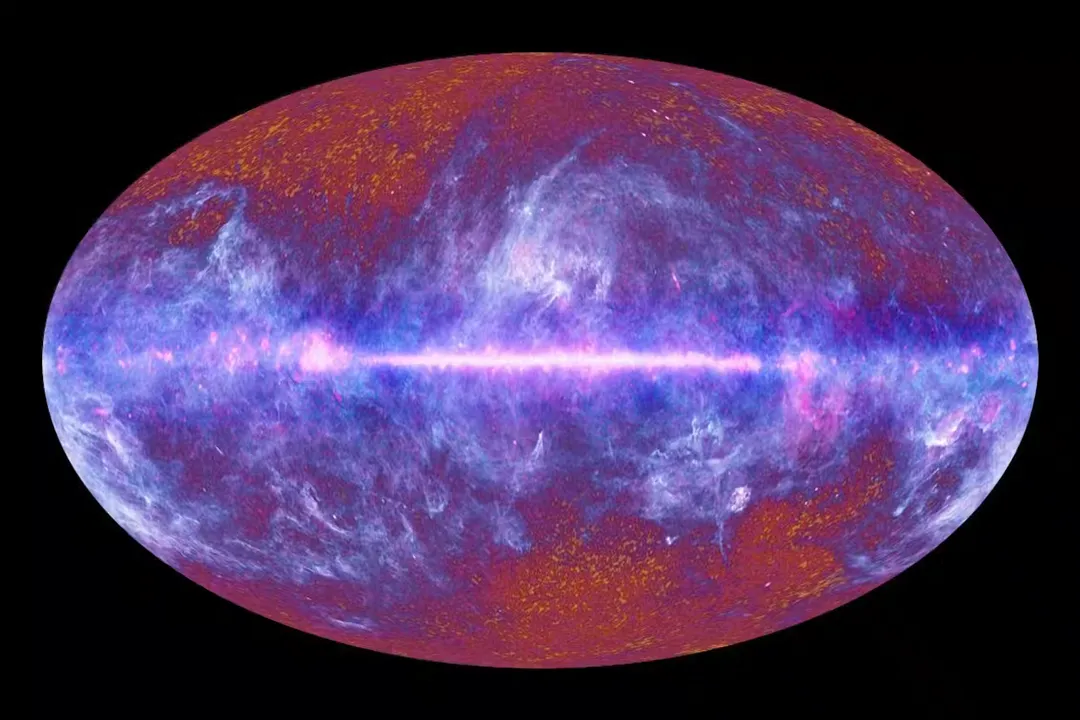
The formalization of this issue is often credited to the German astronomer Heinrich Wilhelm Olbers in the early 19th century, although similar ideas had been discussed before. [8] This conflict between expectation and observation is now famously known as Olbers' Paradox. [8] The paradox hinges on geometry and uniformity: in an infinitely large, static, and eternal universe, the surface brightness of a distant object decreases with the square of the distance, but the number of objects increases with the square of the distance. These two effects cancel each other out perfectly, meaning a star 100 times farther away is 100 times dimmer, but there are 10,000 times more stars in that volume of space to compensate, resulting in a constant perceived brightness. [2][6]
If the universe were static, the only way the night sky could remain dark is if stars were so sparse that they essentially vanish entirely before filling the sky, which astronomical observation clearly refutes. [6] The sheer emptiness of the night sky acts as powerful negative evidence against the idea of an infinitely old and unchanging cosmos. [8]
# Age Constraint
The most critical component in resolving Olbers' Paradox lies in the concept of time. [2][6] The universe is not infinitely old; it began approximately 13.8 billion years ago with the Big Bang. [6] This realization, flowing from modern cosmology, provides the primary shield against universal brightness.
Because light travels at a finite speed—approximately 300,000 kilometers per second—we can only see objects whose light has had enough time to cross the intervening distance to reach Earth. [2] Anything farther away than about 13.8 billion light-years is currently beyond our observational horizon, simply because its light has not yet arrived. [6] The universe is vast, but it is causally limited by its age. [2] The darkness we see in large patches of the sky is, effectively, the light of extremely distant objects that is still on its way, or the edge of the observable cosmos itself. [6]
Consider this practical comparison: if the universe were truly eternal, we would see stars in every direction. Even if the farthest visible star is, say, 10 billion light-years away, that only defines the boundary of the visible universe. If space extended infinitely beyond that point, the sky should be brightened by the objects existing in that unobservable, yet supposedly existing, infinite volume. The fact that we see an end to the integrated starlight implies there isn't an infinite sea of light sources behind that visual horizon. [2][8]
# Cosmic Motion
While the finite age of the universe is the main answer, the expansion of space provides a secondary, equally important mechanism that dims the light we can see from very distant sources. [2][6] The universe is not static; it is stretching, and this stretching affects the light traveling through it.
As light travels across expanding space, its wavelength gets stretched out. This phenomenon is known as cosmological redshift. [2] Light that started its journey as visible light (like blue or green) from a galaxy billions of years ago might be stretched so severely by the time it reaches our telescopes that it is shifted far into the infrared or even microwave portions of the spectrum—wavelengths our eyes cannot detect. [6]
This redshift means two things for the night sky's darkness:
- It lowers the energy of the incoming photons, reducing their measurable brightness. [2]
- It shifts the photons out of the visible range entirely, meaning even if the light were incredibly bright, our eyes perceive it as darkness. [6]
The cumulative effect is that the light contribution from the most distant, time-limited sources is heavily suppressed, either by time or by redshift, ensuring that the visible night sky remains overwhelmingly dark. [2][6]
# Atmospheric Glow
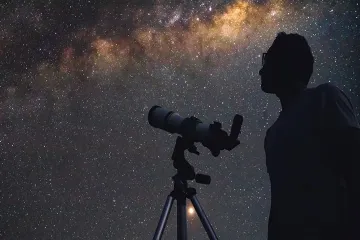
While the grand cosmological answers explain the overall darkness of the universe, on any given night, the actual appearance of the sky surface isn't perfectly black; it often has a faint, grayish, or bluish tint. [9] This localized brightness is caused by phenomena much closer to home than distant galaxies.
One contributing factor is airglow, a faint emission of light by Earth's own atmosphere. [5] Certain atoms and molecules in the upper atmosphere become excited by solar radiation during the day and then slowly release that energy as light throughout the night. [5] This process is completely natural and occurs even in the most remote locations, lending a subtle background luminosity to the sky. [5]
However, for most people living near populated areas, the much greater contributor to sky lightness is light pollution. [9] Artificial light emitted from cities, streets, and homes scatters off atmospheric particles, creating a bright dome above inhabited areas. [9] This scattered light effectively acts like a dim, artificial ceiling, overwhelming the faint light from truly distant stars and making the sky appear a lighter gray or orange hue. [9] An observer standing in a location with zero light pollution would see a much deeper, richer black than someone in a suburban backyard, though they would still see the fundamental cosmological darkness explained by Olbers' Paradox. [9]
# Perception and Reality
It is worth noting that the darkest moment of the night sky might not be the dead middle of the night but rather the moments just before dawn. [4] This is because the light from the Sun, which is below the horizon, still scatters off the upper atmosphere. As the Sun gets closer to rising, the amount of scattered light increases, meaning the sky gradually brightens until sunrise. [4] Therefore, the deepest level of natural, unpolluted blackness occurs when the Sun is furthest below the horizon, typically a few hours after midnight, when the ambient light from the galactic plane and distant sources has its longest path through the absorbing/expanding cosmos, and atmospheric glow is at its natural baseline. [4]
When considering the faintness of objects, we must remember that even the stars we see are wildly different. If we were to map the brightness contribution, the nearest few thousand stars dominate the visible light spectrum entirely. [7] The collective light from all the other billions of stars in the Milky Way and beyond contributes only the remaining fraction that pushes the sky from perfect black toward a very deep, but not absolute, zero level of illumination when factoring in airglow and atmospheric scatter. [7]
To fully appreciate the darkness, imagine an ideal scenario where the atmosphere is perfectly clear and there is zero light pollution. The perceived darkness is still a relative concept tied to our visual system. Our eyes are remarkable but have limits; they cannot detect light below a certain threshold. The faint, redshifted photons from the edge of the observable universe, while certainly present, are so few and far between, or so stretched into invisibility, that they fall below the threshold of human detection, leaving the night sky feeling profoundly empty. [6] The dark night is thus a testament not to a lack of matter, but to a universe with a definite beginning and a persistent, measurable expansion. [2][8]
#Videos
Why is it Dark at Night? - YouTube
Related Questions
#Citations
Why is it Dark at Night? - YouTube
Why Is The Sky Dark At Night? - Medium
Why is it dark at night? (actually a physics question, I promise) - Reddit
Is the night really darkest just before the dawn? If so, why? - Quora
Why Does It Get Dark At Night - The Average Scientist
Why is the sky dark at night? [duplicate] - Physics Stack Exchange
What causes space and the night sky to appear dark - Britannica
Why is the sky dark at night? The 200-year history of a question that ...