In a hypothetical infinite, static universe, how do the effects of distance dimming and object density balance out regarding sky brightness?
Answer
The two effects cancel each other out perfectly.
The surface brightness of a distant object decreases with the square of the distance, but the number of objects in that volume increases with the square of the distance, causing these two effects to cancel out, resulting in constant perceived brightness.
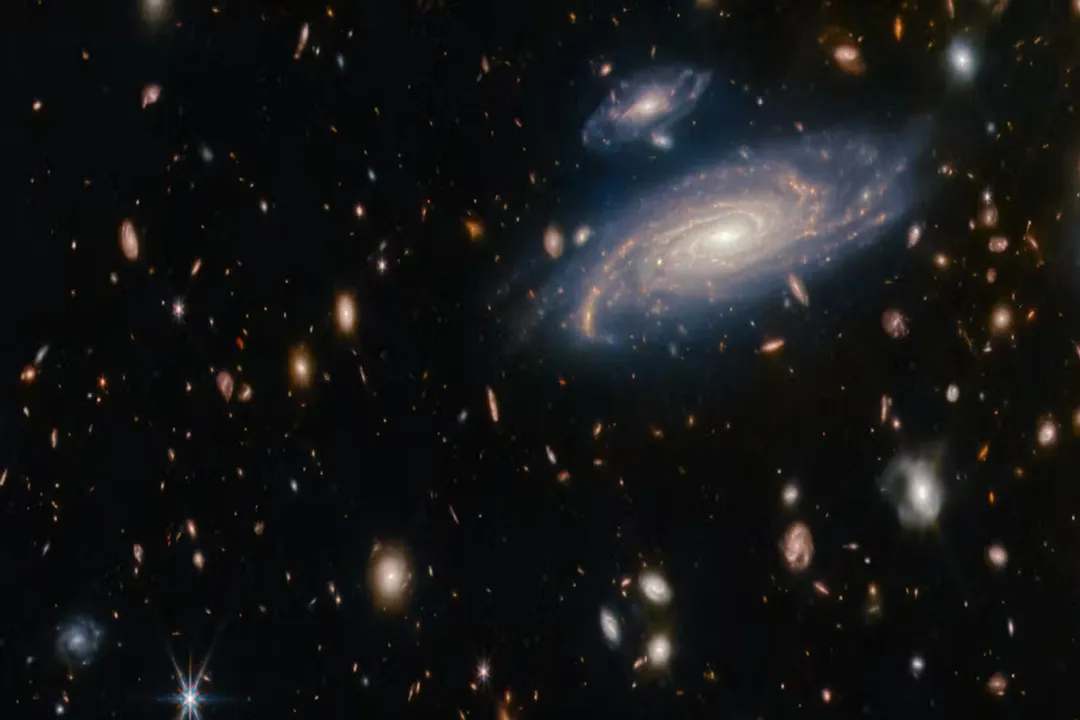
#Videos
Why is it Dark at Night? - YouTube
Related Questions
What conflict between expectation and observation regarding the night sky's brightness is famously named?In a hypothetical infinite, static universe, how do the effects of distance dimming and object density balance out regarding sky brightness?What is the most critical component cited for resolving Olbers' Paradox?What is the approximate age of the universe according to modern cosmology cited in the text?What physical constraint limits how far back in time we can observe objects in the universe?What secondary mechanism, related to the stretching of space, contributes to the darkness of the night sky by affecting light from distant sources?What happens to the wavelength of light as it travels across expanding space?What is the natural, faint emission of light by Earth's own atmosphere, caused by excited atoms releasing energy, called?In populated areas, what is the much greater contributor to sky lightness than natural airglow?Under ideal conditions (zero pollution, clear air), when does the deepest level of natural blackness occur?What is the approximate speed of light given in the text?