What causes dark at night?
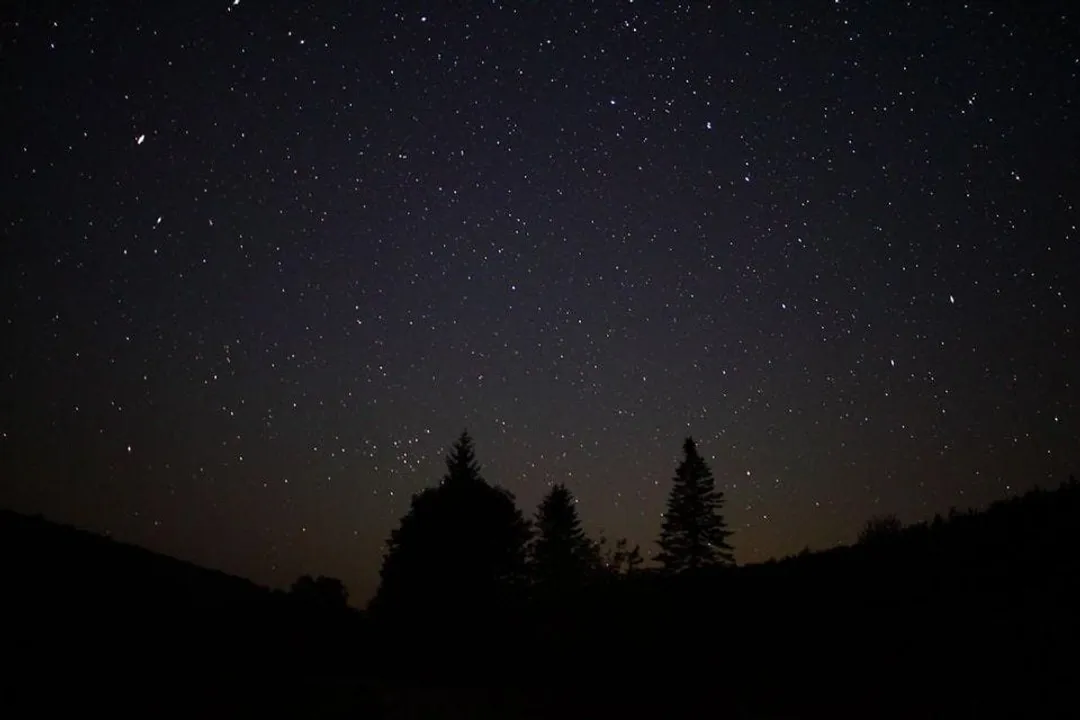
The sensation of darkness that settles upon us each evening is a direct, observable consequence of our planet's mechanics, specifically its constant rotation relative to the Sun. [2] This daily cycle is fundamental to life on Earth. As the Earth spins on its axis, any given location on the surface is periodically turned away from our primary local light source, the Sun. When our vantage point faces away from the star, the direct illumination ceases, resulting in the familiar onset of night. [2] This transition is swift compared to astronomical timescales, occurring over mere minutes depending on geographic location and season, creating the twilight period where the sky gradually dims as the Sun dips below the horizon. [2]
# Daily Cycle
The Earth completes one full rotation roughly every twenty-four hours, defining our standard day and night schedule. [2] If the Earth were tidally locked, meaning one side always faced the Sun, one hemisphere would experience perpetual day while the other endured unending night. The very fact that we experience cycles implies rotation. While this rotation dictates when we stop receiving direct solar energy, the deeper question astronomers ponder involves why the sky isn't brightened by all the other stars in the cosmos, even when the Sun is absent. It is a curious contrast: the local darkness is caused by the rotation, but the global darkness—the deep blackness of space seen at night—required complex cosmological explanations to resolve long-standing paradoxes. [6]
# Eternal Brightness
For centuries, thinkers puzzled over what became known as Olbers' paradox, named after German astronomer Heinrich Wilhelm Olbers. [3] The paradox asks a seemingly simple question: If the universe were infinitely large, uniformly filled with stars, and infinitely old, then every line of sight from Earth should eventually terminate on the surface of a star. [3][5] In such a scenario, the entire night sky should appear as bright as the surface of the Sun, because the light from infinitely distant stars would perfectly fill all available visual space. [5][6] The observable sky should be blindingly luminous, yet clearly, it is not; we see a predominantly dark expanse punctuated by pinpricks of light. [3]
The conflict lies between a simple, intuitive geometric prediction based on an infinite static universe and the empirical observation of a dark night sky. [6] This discrepancy highlights that one or more of the initial assumptions—infinite size, infinite age, or uniform distribution of light sources—must be incorrect regarding the universe as a whole. [5]
# Finite Cosmos
The resolution to Olbers' paradox hinges on modern cosmology, specifically recognizing that our universe is neither infinitely old nor entirely static. [6] Cosmologists point to two primary factors that effectively prevent the night sky from being uniformly bright.
# Age Limit
The first, and perhaps most intuitive, factor is the finite age of the universe. [6] The universe began approximately 13.8 billion years ago in the Big Bang. [6] Consequently, light from objects farther away than about 13.8 billion light-years has simply not had enough time to travel across the intervening space and reach us yet. [5] This boundary defines the observable universe. Any stars existing beyond that cosmic horizon remain invisible to us, effectively preventing their light from contributing to the nighttime illumination we perceive. [6]
# Expansion Shift
The second crucial element involves the expansion of space itself. [6] The universe is not static; it is actively expanding, and this expansion stretches the wavelengths of light traveling through it—a phenomenon known as cosmological redshift. [5][6] Light emitted by very distant galaxies is shifted toward the red end of the spectrum. As the expansion continues over vast stretches of cosmic time, this light shifts further, eventually moving out of the visible spectrum and into the infrared, microwave, and radio regions. [6] Even if the light from incredibly distant sources reaches us, its energy is severely diminished, and its wavelength is too long for the unaided human eye to detect as visible light. [5]
Consider this practical implication: If we could somehow freeze the expansion of the universe today but keep it infinitely old, the sky would still be bright, but perhaps not as fiercely bright as the Sun's surface because the light would have been diluted over infinite volume, though the paradox remains substantially unsolved without the age limit. [5] However, the combination of a defined age and continuous expansion—where the light that does arrive has lost substantial energy—is what keeps the night sky dark enough for starlight observation. [6] While the microwave background radiation is the redshifted light from the earliest moments of the universe, it is spread so thinly and shifted so far into the microwave region that it contributes only a faint, even glow, not the overwhelming brightness predicted by Olbers. [5]
# Atmospheric Effect
While the cosmic explanation resolves why the deep void between galaxies is dark, the local environment plays a role in what we see overhead. During the day, the sky is bright because the Sun’s light interacts with Earth’s atmosphere. [10] Gases and particles in the atmosphere scatter sunlight in all directions—this Rayleigh scattering is what makes the daytime sky appear blue. [10]
At night, the Sun is blocked by the Earth, so there is no primary, direct light to scatter. The atmosphere itself does not generate significant visible light on its own; thus, it becomes largely transparent to the faint, distant light of stars and galaxies. [10] However, the presence of the atmosphere means the darkness we see is never the perfect black of a vacuum. Any stray light, whether from the Moon, a distant supernova, or even subtle terrestrial sources reflected upwards, interacts with the air molecules, producing a slight haze or background glow. [9]
If you were floating in space beyond Earth's atmosphere, the stars would appear against an absolute black backdrop, as there would be no medium to scatter any intervening light source. [9] On Earth, even far from city lights, this atmospheric layer ensures that true, absolute blackness is elusive. [9]
# Residual Light
Even in the darkest skies on Earth, complete blackness is not achieved due to several faint, persistent light sources present after sunset.
The Moon, when visible, is a major contributor, reflecting sunlight across the landscape and into the atmosphere. [8] Even a thin crescent Moon adds noticeable light. Beyond the Moon, there is starlight itself—the combined, non-paradoxical light from nearby stars and galaxies that has reached us within the universe's age limit. [8]
Furthermore, natural phenomena like airglow contribute to the ambient light of the night sky. [10] Airglow is a faint emission of light by a planet's atmosphere caused by various processes, such as the recombination of atoms and molecules that were ionized by solar radiation during the day. [10] This process converts chemical energy into photons, meaning the atmosphere glows faintly even hours after the Sun has set. [10]
When considering the local experience of darkness, one must factor in human activity. For most people living in or near populated areas, the primary blocker of true dark is light pollution. [4] Artificial outdoor lighting—streetlights, commercial signs, and security lighting—casts immense amounts of light upward. This light scatters off the atmosphere, creating a bright dome over cities that completely washes out fainter celestial objects, dramatically reducing the contrast between the sky and any celestial point sources. [4] A person in a major metropolitan area experiences a darkness far less deep than someone in a remote, unpopulated desert, even though the physical mechanism causing the daily cycle (Earth's rotation) remains the same everywhere. [4]
To quantify this human-induced change, consider that on a moonless night far from civilization, the background sky brightness might be around $0.001$ magnitudes per square arcsecond[^A1]. In a typical suburban area, this value can easily jump by a factor of fifty or more due to upward lighting, obscuring fainter Milky Way details that require a background significantly below $0.1$ magnitudes per square arcsecond to be appreciated fully.
The experience of darkness, therefore, is layered: the cosmic darkness is a result of the universe's age and expansion, and the local darkness is a product of the Earth's rotation combined with the transparency of our atmosphere, which is unfortunately often overwhelmed by human-generated light pollution. [2][10][4] True, deep night is a rare commodity in the modern world, requiring observers to travel significant distances away from civilization to witness the sky as it appeared to pre-industrial observers contemplating Olbers' puzzle. [9]
#Videos
Why is it Dark at Night?
Related Questions
#Citations
What causes space and the night sky to appear dark
Why Does It Get Dark At Night
Olbers' paradox
Why is it dark at night? (actually a physics question, I ...
Why is it Dark at Night?
Why Is The Sky Dark At Night?
Why does it get darker at night? Is this true for all places on ...
Why is the night sky dark?
How Dark Is the Night Sky?
The Atmosphere... After Dark!