What type of star is the Sun in size?
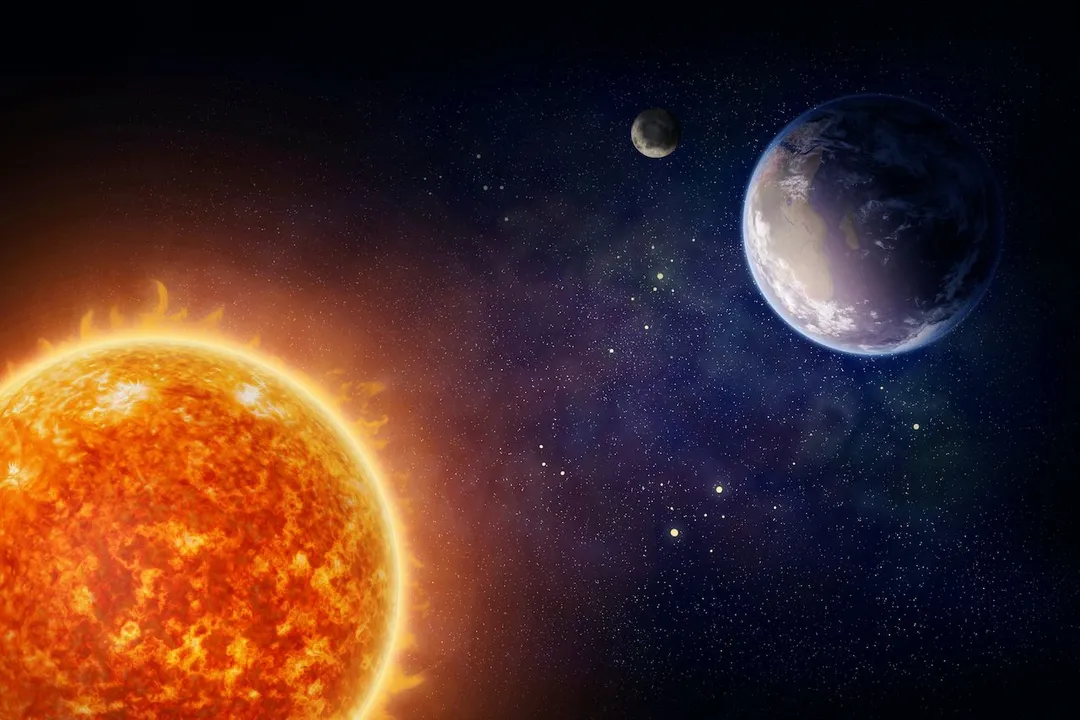
The classification of our Sun is often a topic of casual curiosity, leading many to wonder exactly where it stands on the cosmic scale. Simply put, the Sun is classified as a G2V star, commonly known by the less technical, yet highly descriptive name: a Yellow Dwarf. [2][7] This designation immediately tells astronomers a great deal about its temperature, mass, and evolutionary stage. [7] It sits firmly on the main sequence of stellar life, meaning it is currently fusing hydrogen into helium in its core, a stable process that powers its light and heat. [2]
# Stellar Type
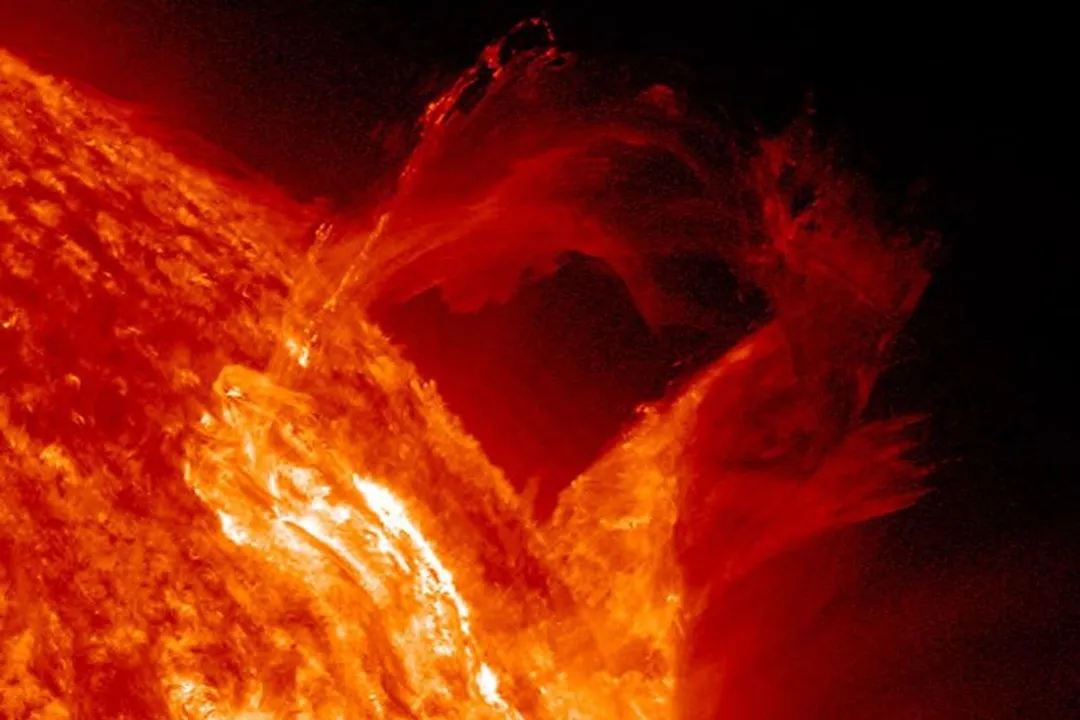
Being a Yellow Dwarf is significant because it places the Sun squarely in the middle tier of star sizes when considering the entire stellar population of the universe. [3] It is not among the colossal supergiants that capture the imagination, nor is it one of the faint, long-lived red dwarfs that make up the vast majority of stars. [3][8] The spectral classification G2V breaks down into its temperature group (G-type, indicating a surface temperature around 5,778 Kelvin) and its luminosity class (V, denoting it as a main-sequence star). [2] Stars like the Sun are considered the reliable, long-term energy sources for their planetary systems. [7]
# Size Metrics
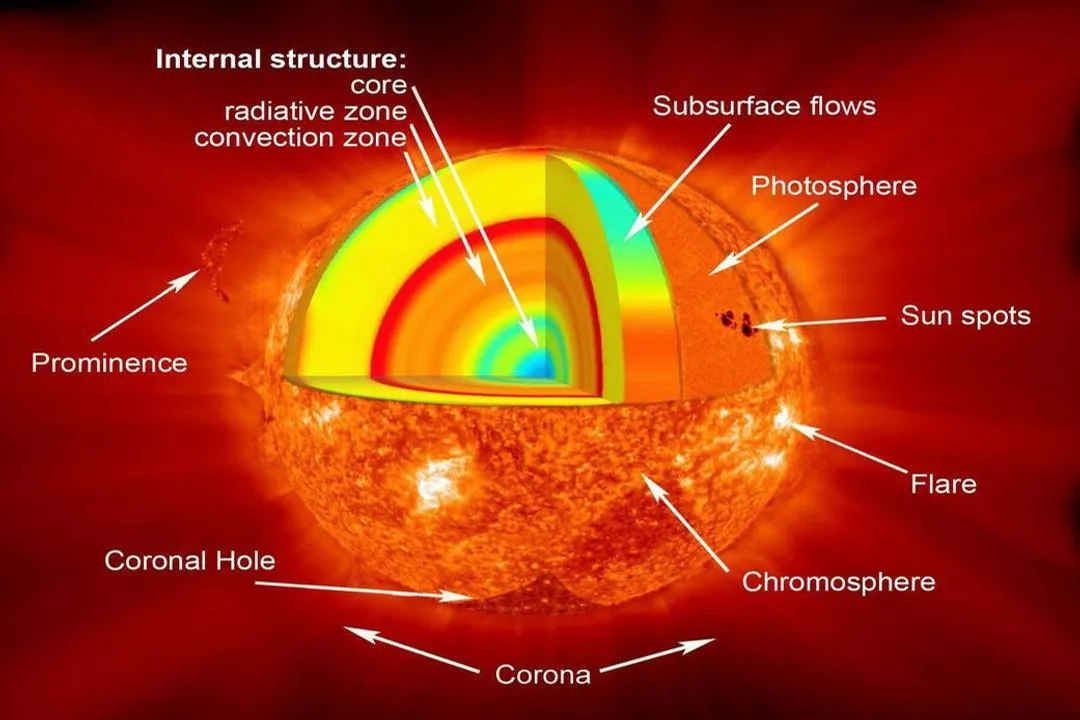
To grasp the Sun's size in concrete terms, we look at two primary metrics: diameter and mass. The Sun has a radius of about 695,700 kilometers (or about 432,450 miles). [2] If you prefer diameter, this translates to roughly 1.39 million kilometers across. [6] This measurement might seem enormous, and in human terms, it certainly is, but in the grand scheme of stars, it’s merely typical for a star of its class. [3]
In terms of mass, the Sun contains about kilograms. [2] This accounts for approximately 99.86% of the total mass of the entire Solar System. [5] While this dominance is clear locally, it’s important to realize that this mass is significantly less than the most massive stars known. [4] For context, the Sun's mass is often used as the standard unit in astronomy—one Solar Mass (). [2]
# The "Average" Star
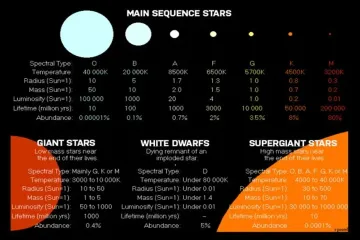
The term "average-sized star" can be misleading if one only thinks about the most visible or dramatic stars in the night sky, such as blue giants or bright red supergiants. [8] In terms of sheer numbers, the Sun is indeed average or slightly above average among stars in the Milky Way galaxy. [3] The vast majority of stars are smaller and cooler than the Sun, specifically the abundant red dwarfs. [3] Therefore, while the Sun is larger than perhaps 75% of all stars, it pales in comparison to the giants. [8]
If you consider the entire spectrum of stellar masses, the Sun sits in a comfortable middle ground. It is significantly more massive than the small red dwarfs but dramatically less massive than the O-type or B-type stars, which can have masses dozens of times greater than our own. [3][2]
For instance, the most massive stars can reach masses up to 100 times that of the Sun, or even more, though these are rare. [4] Our Sun's status as a G2V star means it has a predictable, stable burn rate, which is a key factor in assessing a system's potential for harboring life. [7] The massive stars burn through their fuel in just a few million years, collapsing or exploding before complex life has time to develop. [3] The longevity of a star like the Sun, however, offers billions of years of consistent energy output. [2]
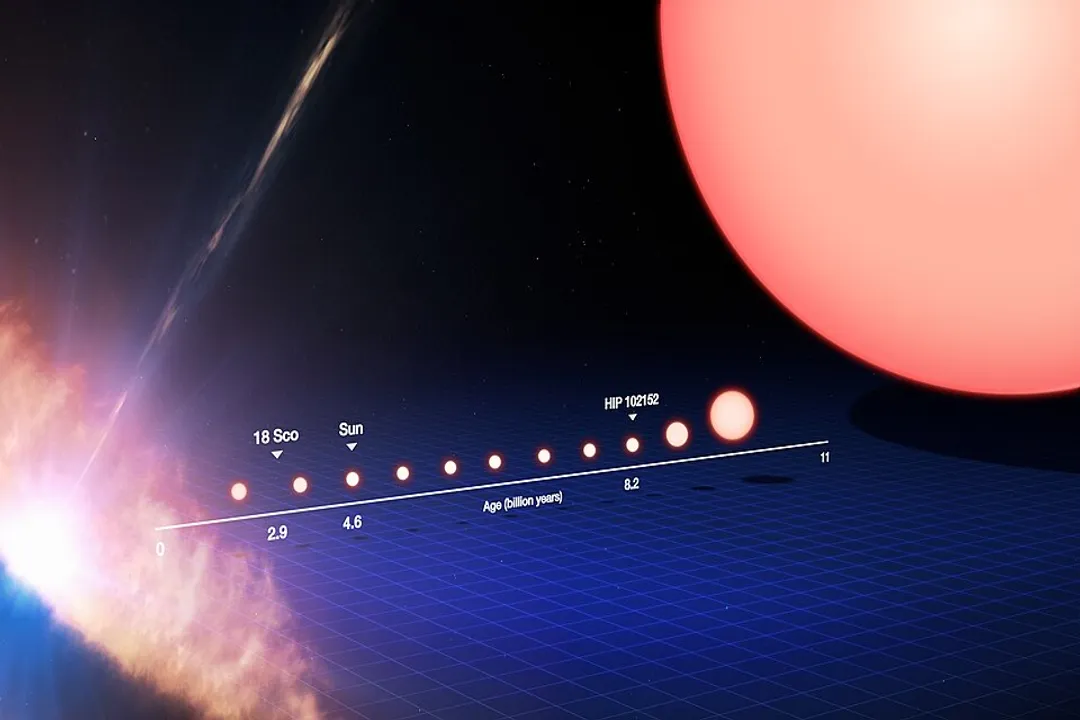
To place this longevity into perspective, one useful way to think about it is through the lens of stability. Our Sun is currently about halfway through its stable hydrogen-fusing life, predicted to last for about 10 billion years in total. [2] This middle-aged stability has been a gift to Earth, allowing life an extremely long window for evolution and diversification. [3]
# Cosmic Comparisons
Visualizing the scale difference between the Sun and other objects helps contextualize its size more effectively than just citing kilometers or solar masses. [1]
# Earth Versus Sun
The discrepancy in size between our planet and our star is staggering. If you were to line up Earths side-by-side across the Sun's diameter, you could fit approximately 109 Earths across the face of the Sun. [6][1] This ratio is often cited to illustrate the relative scale of our planetary home to its source of energy. [1]
If we look at volume, the comparison becomes even more extreme. The Sun is so large that you could fit over one million Earths inside it, assuming you packed them perfectly without any wasted space. [6] To imagine this, consider a sphere with a diameter of $1.39$ million kilometers. [6] If you imagine your entire planet Earth—vast and seemingly infinite from our perspective—being reduced to the size of a small marble, the Sun would still be larger than the room you are sitting in. The Sun’s sheer mass also dictates its gravity, which is about 28 times stronger than Earth's surface gravity. [2]
# Giants Among Stars
When compared to the largest stars known, the Sun shrinks to an almost negligible point. Stars like Betelgeuse or UY Scuti dwarf our G2V classification. [4] If you were to replace the Sun with one of these massive red supergiants, its outer layers would extend far beyond the orbit of Earth, and possibly even beyond Mars or Jupiter, swallowing up the inner solar system entirely. [4][8]
Consider this: the largest known stars can have radii hundreds, sometimes over a thousand, times that of the Sun. [4] If the Sun were scaled down to the size of a standard doorway, a hypergiant star might be comparable in size to a skyscraper. This vast range in stellar size demonstrates that our Sun is not an outlier in terms of sheer magnitude, but rather a very standard, middle-of-the-road performer in the galaxy's stellar spectrum. [3]
# Understanding Stellar Context
The way we categorize stars—using spectral types and luminosity classes—is a direct result of astronomers observing the patterns across the galaxy. [2] The Sun's classification as a G2V star is not accidental; it is a statistical reality based on the frequency of these star types. [3]
If we were to create a simple table based on stellar types and typical sizes, the Sun would fall clearly in the middle range:
| Star Type | Example | Relative Size to Sun | Typical Lifespan |
|---|---|---|---|
| Red Dwarf | Proxima Centauri | Much Smaller | Trillions of Years |
| Yellow Dwarf (Sun) | Sol | ~10 Billion Years | |
| Blue Giant | Rigel | Tens of Times Larger | Millions of Years |
| Red Supergiant | Betelgeuse | Hundreds of Times Larger | Thousands of Years |
| [2][3][4][7] |
This table highlights that the Sun’s moderate size is directly linked to its lifespan. [2] Its mass determines its core temperature, which in turn dictates how fast it burns its fuel supply. [7] An interesting mathematical consideration arises when we look at mass distribution. If you were to randomly select a star in the Milky Way, you would have a much higher probability of picking a red dwarf (a star less than half the Sun's mass) than a G-type star like ours. [3] This means that average in terms of population count leans smaller, making the Sun a relatively large star compared to the sheer quantity of low-mass stars in the galaxy, even as it remains small compared to the behemoths. [3][8]
# Size and Future Evolution
The Sun’s current size and mass dictate its fate thousands of millions of years from now. Because it is not massive enough to progress past the red giant phase, its ending will be relatively gentle compared to the explosive deaths of its larger cousins. [2] When its core hydrogen is exhausted, the Sun will expand dramatically, becoming a Red Giant star. [2] During this phase, its diameter will swell, likely engulfing Mercury and Venus, and possibly reaching Earth's current orbit. [2] However, this expansion is temporary; it will eventually shed its outer layers to form a planetary nebula, leaving behind a dense, hot White Dwarf star, which will slowly cool over eons. [2] This entire evolutionary arc is predicated on the specific mass and size it holds today. [7]
#Videos
The scales of the stars
Related Questions
#Citations
How Does Our Sun Compare With Other Stars?
Sun
In what sense is the sun “average” sized if it's larger than ...
How big is our Sun compared to the largest known star in ...
Our Sun: Facts
How Big is the Sun? | Size of the Sun
The Sun: Understanding Its Classification as a Star
Is the Sun the largest star? - Cool Cosmos - Caltech
The scales of the stars