Do we say the sun is a star?
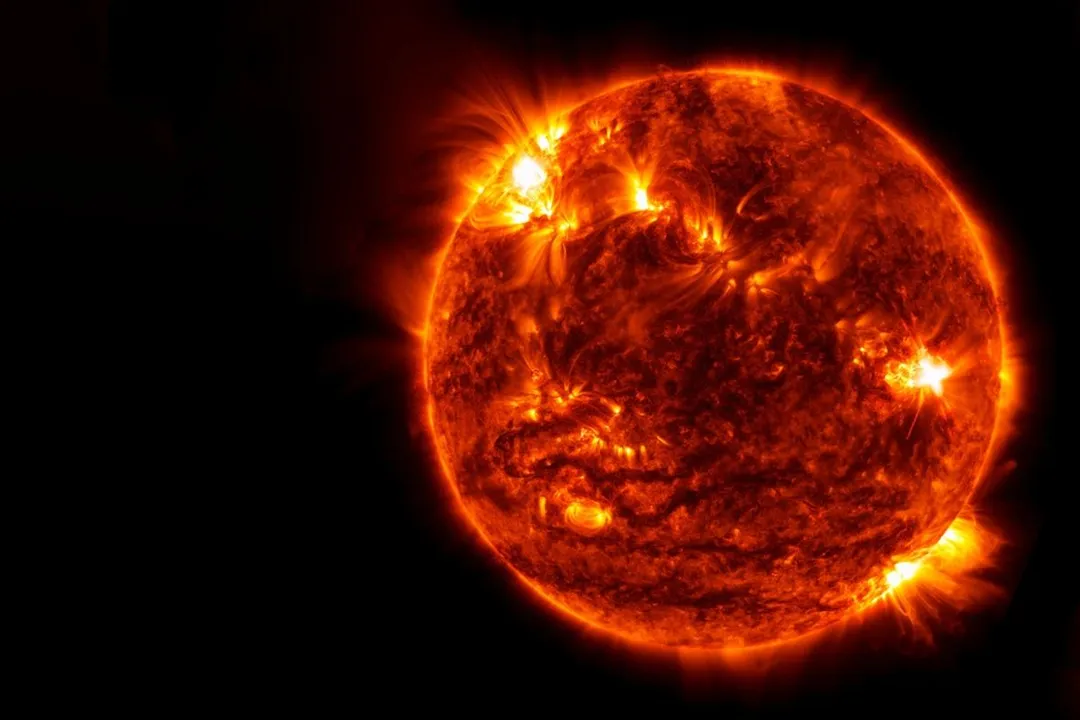
The most direct answer to whether the Sun is a star is an emphatic yes. In the grand cosmic accounting, our Sun is categorized as one of the billions of stars scattered throughout the universe. The confusion, if any exists, stems not from astrophysics, but from language and perspective. To the casual observer, it appears wholly unique—the massive, bright object dominating our daytime sky—whereas the countless other stars are mere pinpricks of light visible only after nightfall.
# Cosmic Classification
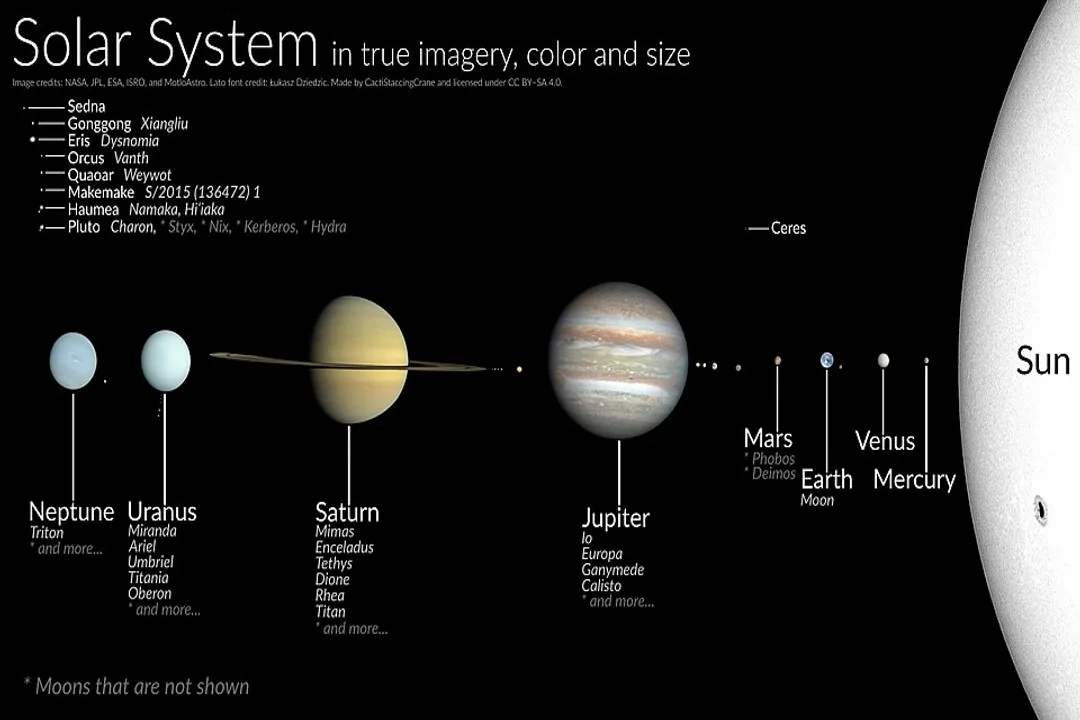
The fundamental criterion that separates a star from a planet, or a brown dwarf, is its internal engine: nuclear fusion. A star must be massive enough, and its core hot and dense enough, to fuse lighter elements, primarily hydrogen, into heavier ones like helium. This process releases tremendous amounts of energy in the form of light and heat, which is precisely what the Sun does. Planets, by contrast, do not generate significant energy through sustained nuclear fusion; they primarily reflect light from their parent star.
The Sun achieves this stellar status due to its substantial mass. It contains about 99.8% of the total mass in our entire solar system. This enormous gravitational pressure at its core is what ignites and sustains the fusion reactions, making it a self-luminous celestial body, the very definition of a star.
# Star Versus Sun
The distinction between using the general term "star" and the proper noun "the Sun" is historical and rooted in proximity. Before humanity realized the true scale of the cosmos, the Sun was simply the celestial body that governed our days. It was a unique entity, and as such, it was given a proper name, similar to how Earth has its name, or how we name individual stars like Sirius or Alpha Centauri.
If the Sun were orbiting a different star, we would almost certainly refer to it by its scientific designation, perhaps its catalog number, but we would not call it "the Sun" in that context. The term "Sun" specifically refers to our star, the one at the center of our solar system. Conversely, every other star we see in the night sky is simply a star, part of the larger population. It is a matter of ownership and history; every star functions like our Sun by generating its own light, but only ours carries that specific proper noun. It is analogous to calling a specific dog "Fido" while referring to all others as "dogs".
# Technical Profile

Scientifically speaking, the Sun is not an extraordinary star; it is quite average, perhaps even slightly below average in terms of luminosity when compared to the wider galactic census. Astronomers classify stars using systems that describe their temperature and luminosity class. Our Sun is classified as a G2V star.
Breaking down this classification reveals a lot about its typical nature:
- G denotes its spectral type, which correlates with its surface temperature—the Sun is a yellow dwarf.
- 2 is a sub-classification, indicating it is slightly hotter than a G0 star but cooler than a G9 star.
- V (the Roman numeral five) indicates its luminosity class, meaning it is a main-sequence star. This is the longest stage in a star's life, where it steadily fuses hydrogen into helium in its core.
A common misconception is that because we observe planets orbiting our Sun, it must be uniquely large or important to host a system. However, the discovery of exoplanets orbiting countless other stars demonstrates that planet formation around G-type stars is a common occurrence. The main takeaway from its G2V profile is one of cosmic normalcy: our Sun is a stable, middle-aged star whose life expectancy is typical for its mass range.
# Discovery of Stellar Kinship
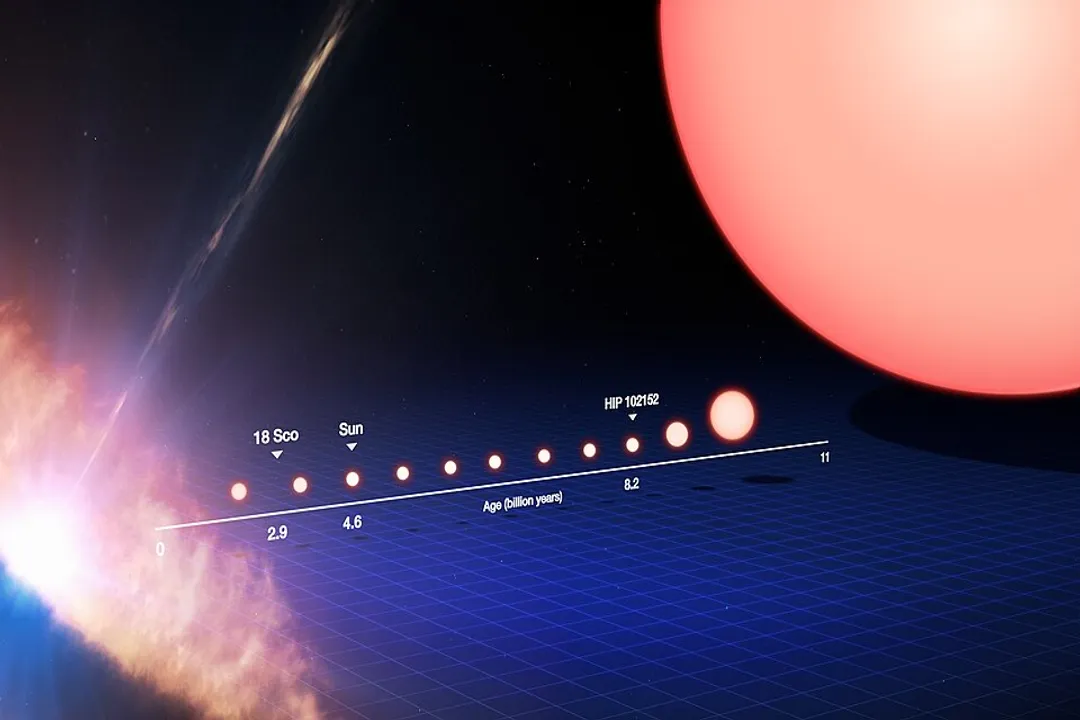
The realization that the Sun was just one star among many was a profound shift in human understanding, challenging millennia of geocentric and anthropocentric views. For a long time, the Sun was considered separate from the fixed, distant "stars" of the night sky. The historical movement toward recognizing the Sun as a star involved key advancements in astronomy, particularly the development of heliocentric models and better measurements of stellar parallax.
While figures like Copernicus moved Earth to orbit the Sun, the definitive separation between the Sun and the fixed stars required understanding distance. It was only when astronomers could accurately measure the immense distances to the other stars that the true nature of the Sun—a star incredibly close to us—became undeniable. Determining precisely when this transition occurred isn't marked by a single date, but it solidified during the transition from early modern astronomy into the age of more precise observation, confirming that the bright object in our day sky shared the same fundamental physics as the faint lights we see at night.
# Perspective on Scale
The reason the Sun appears so overwhelmingly powerful is entirely due to its nearness, a factor of about times closer than the next nearest star system, Proxima Centauri. If we were to place our Sun next to other stars, the differences in size and brightness become evident.
Consider a comparison to two other stellar neighbors:
| Star Name | Type | Relative Size (Diameter) | Notes |
|---|---|---|---|
| The Sun | G2V Yellow Dwarf | 1.0 (Baseline) | Average main-sequence star |
| Sirius A | A1V White Main Sequence | Brighter and hotter than the Sun | |
| Betelgeuse | M1-2 Ia-Iab Red Supergiant | Far larger, cooler, and nearing the end of its life |
If Betelgeuse, a well-known red supergiant, were placed where the Sun is, its outer layers would likely extend past the orbit of Jupiter, possibly engulfing Mars. This illustrates that while the Sun is a star, it occupies a specific rung on the ladder of stellar sizes—it’s a very small, relatively cool member compared to the behemoths in the galaxy.
It is an interesting thought experiment to consider what would happen if the Sun's perceived brightness was drastically reduced, perhaps by an immense interstellar dust cloud blocking 99.999% of its light. In such a scenario, the Sun would fade to being one of the dimmer, harder-to-spot points of light in the sky, indistinguishable to the naked eye from many other distant, cooler main-sequence stars. This hypothetical scenario emphasizes that our perception of the Sun's uniqueness is entirely an artifact of its location relative to us. The physics governing its life and death are shared by all stars.
# Implications for Earthly Life
The Sun's status as a star directly dictates the conditions necessary for life on Earth. As a G2V star, it has a predictable lifespan, currently about halfway through its main sequence phase. This relative stability—the consistent output of energy over billions of years—allowed complex life to evolve. A star that burned hotter and faster (like a blue giant) would have given life far less time, perhaps only a few million years, to develop. Conversely, a star that burned dimmer and cooler might not have provided enough sustained energy to warm our planet adequately, keeping water perpetually frozen.
When we examine the solar system, we are seeing the only star we can study up close. This gives us an unmatched laboratory for stellar physics. We can directly measure solar wind, magnetic fields, and plasma dynamics in a way that is impossible for any other star, which we can only observe via light collected over vast distances. Every model we create for how distant stars behave, how they evolve, and how they eject planets or generate solar flares, is fundamentally calibrated using the data we gather directly from the Sun.
Another way to frame this intimacy is through the concept of planetary habitability zones. The definition of the habitable zone—the region where liquid water could exist on a planet's surface—is calculated directly from the Sun's current energy output (luminosity). If the Sun were slightly more or less luminous, the Earth would either be too hot (a runaway greenhouse like Venus) or too cold (a frozen ball like Mars might be today), forcing the habitable zone to shift outward or inward, potentially leaving our planet outside the 'Goldilocks' range.
# The Nature of Starlight
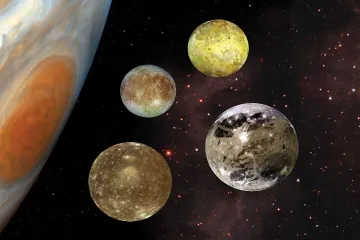
It is worth considering what makes the light from the Sun qualitatively different from, say, the light from a planet like Jupiter. Jupiter shines brightly, but its light is entirely reflected sunlight. The Sun, however, is the source. This difference is key to classifying celestial objects.
If an object is undergoing sustained, core-level fusion, it is a star. If it is simply glowing from residual heat or reflecting the light of another star, it is not. While some objects, like brown dwarfs, sit right on this fuzzy boundary—they are too small to sustain full hydrogen fusion but large enough to temporarily fuse deuterium—our Sun definitively crossed the threshold into true stellar status long ago. It is a shining, burning beacon driven by thermonuclear power.
The universe, as we now understand it, is teeming with these fusion-powered orbs. Every point of light we see in the dark sky is another sun, another celestial furnace powering its own system of planets, moons, and debris. The fact that we call the nearest one "the Sun" is a linguistic convenience, a historical tether to a time when we couldn't see the forest for the trees, or rather, couldn't see the galaxies for our own star. In essence, the Sun is the most local, and perhaps the most familiar, example of the most common type of object in the universe.
Related Questions
#Citations
Sun - Wikipedia
ELi5 what makes the sun a star and not a planet? And why ... - Reddit
Our Sun is a Star - Facts About the Sun | Exploratorium
If the Sun is a star, why not just call it a star? Why call it the Sun?
How Do We Know The Sun Is a Star? ☀️ #astronomy ... - YouTube
When was it first determined that the Sun is a star?
Is a Sun a Star or a Planet? How We Know - Discover Magazine
The Sun Is A Star. But Is Every Star A Sun? - IFLScience
Ask a Solar Physicist - Stanford Solar Center