Did Galileo say the Sun was the center of the universe?
The very notion that a man like Galileo Galilei would openly champion the idea of the Sun—not the Earth—sitting firmly in the middle of everything was, at the time, an explosive proposition, bordering on intellectual treason. It wasn't just a minor astronomical disagreement; it struck at the heart of both Aristotelian physics and the prevailing theological interpretations of the cosmos that had dominated Western thought for over a millennium. [3][10] To understand whether Galileo said the Sun was the center, one must look past simple yes/no statements and examine the weight of the evidence he presented, evidence that made the heliocentric view, first formally proposed by Copernicus, scientifically compelling for the first time. [2]
# Earth Centered
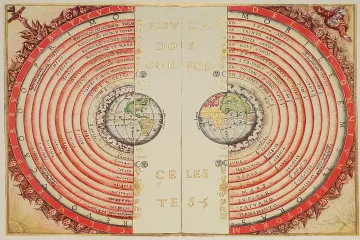
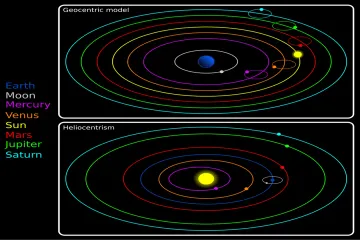
For centuries leading up to Galileo’s famous observations, the established model was geocentric. This view placed the Earth motionless at the center of the universe, a concept deeply ingrained in both philosophy and common understanding. [3] Aristotle had codified this idea, and it was subsequently adapted and reinforced through Christian theology. [10] In this framework, the planets, the Sun, and the Moon all moved around our stationary world in perfect, crystalline spheres. [3] This model fit what people experienced daily: the Sun rose and set, the stars wheeled overhead, and we certainly did not feel the planet moving beneath our feet. [3] Any challenge to this structure was perceived as profoundly destabilizing, threatening not just astronomy but the entire established order. [10]
The ancient Greeks, including Ptolemy, had worked hard to make the mathematical predictions of this Earth-centered model work, often resorting to complex systems of epicycles—circles moving upon other circles—to explain the seemingly erratic retrograde motion of the outer planets. [3] While mathematically sophisticated, it remained cumbersome and, ultimately, an inaccurate description of reality.
# New Theory
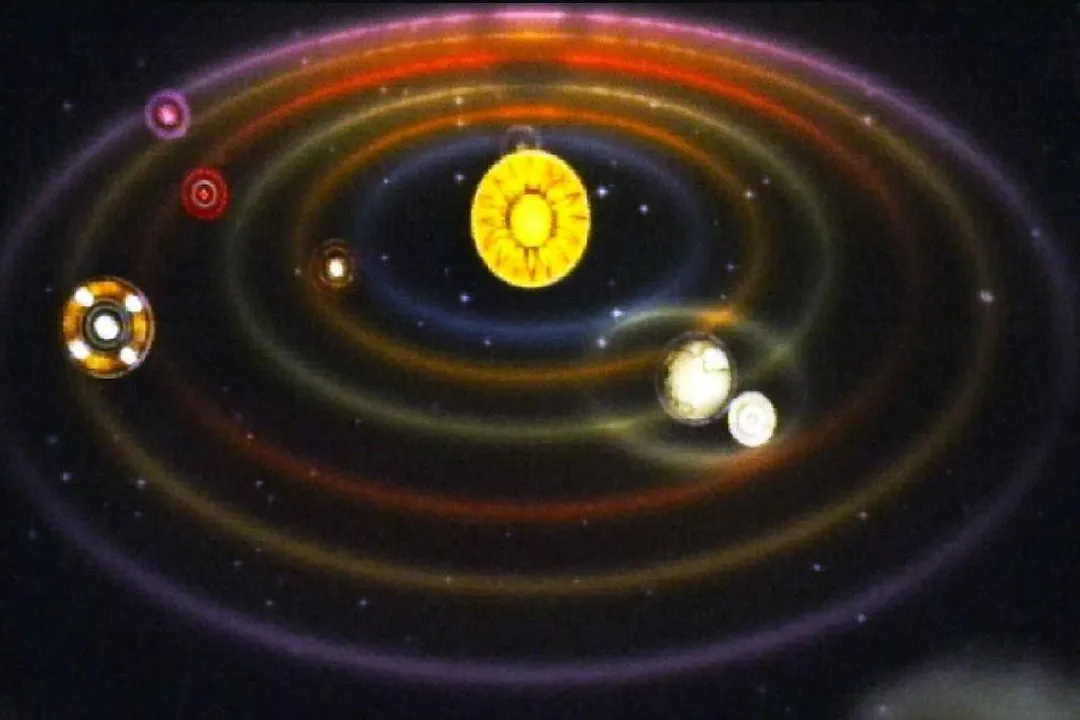
The genuine shift began not with Galileo, but with the publication of De revolutionibus orbium coelestium by Nicolaus Copernicus in 1543, well before Galileo’s major telescopic work. [2][6] Copernicus proposed a radically different arrangement: the Sun was stationary at the center, and the Earth was just another planet orbiting it, spinning on its own axis daily. [2][5] This heliocentric model naturally explained the apparent retrograde motion of the planets—it was simply the faster-moving Earth overtaking the slower outer planets in their orbits, creating an optical illusion of backward movement. [2]
However, Copernicus’s theory, while elegant mathematically, lacked compelling observational proof that could overturn the entrenched geocentric system. It was largely viewed as a mathematical tool rather than a description of physical reality, partly because, as an Earth-dweller, proving the Earth moved was counter-intuitive and lacked definitive proof at the time. [2][5] If the Earth were moving at tremendous speed, one might expect to see a slight shift in the apparent position of the stars over the year, known as stellar parallax, which was simply not measurable with the naked eye instruments available then. [6]
# Telescope Power
Galileo did not invent the telescope, but around 1609, he significantly improved it and, critically, turned it skyward to systematically observe celestial bodies as no one had before. [4][9] This instrument transformed astronomy from a discipline based primarily on mathematics and ancient authority into one based on direct, verifiable observation. [2][9] Galileo’s findings provided the empirical muscle that the Copernican model had desperately needed. He didn't just suggest the Sun was the center; he found concrete evidence showing the old system must be wrong, making the Sun-centered system the most plausible remaining option. [9]
# Jupiter's Dance
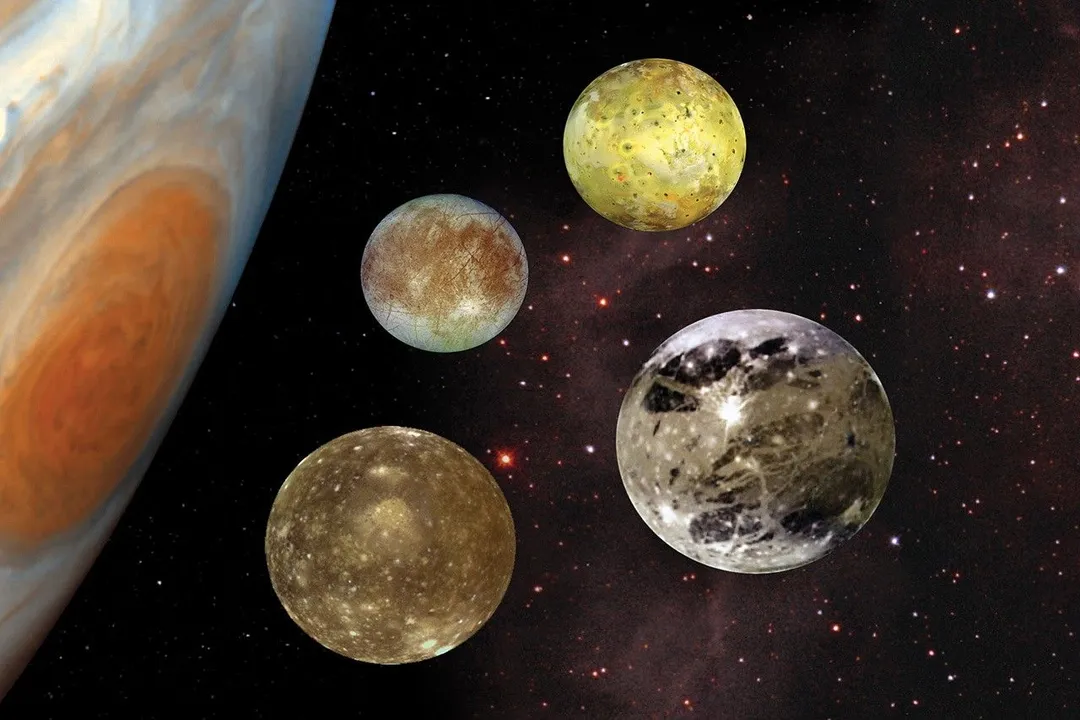
One of Galileo’s most stunning early discoveries was the realization that Jupiter was orbited by four small bodies, now known as the Galilean moons. [4][9] He observed these four points of light moving around Jupiter over several nights. [4] This finding was a devastating blow to the Ptolemaic/Aristotelian worldview because it demonstrated unequivocally that not everything in the heavens orbited the Earth. [2][4][9] If Jupiter could possess its own orbiting retinue, then the Earth’s position as the singular center of all celestial motion was certainly false. [9]
It’s interesting to reflect that while this discovery didn't force the acceptance of the Sun at the center, it forced the acceptance that multiple centers of motion existed in the heavens, cracking the foundation of the singular, Earth-centric universe. [2] If you were to chart the motion of these moons versus the motion of Venus around the Sun, you would find that the moons’ independent orbits are mathematically analogous to the Copernican system, just centered on Jupiter instead of the Sun. [2] This established a working precedent for planetary subordination.
# Venus Shows All
Perhaps the single most powerful piece of observational proof Galileo provided in favor of the Sun being central involved the planet Venus. [4][5][9] Using his telescope, Galileo observed that Venus exhibits a complete set of phases—crescent, gibbous, and full—much like the Moon. [4][9]
In the Ptolemaic system, where Venus orbited the Earth, it could only ever appear as a crescent or a new phase from Earth's perspective, because the Sun-facing side would only partially be visible to us as it stayed between the Earth and the Sun. [4][9] However, when Venus was on the far side of its orbit from Earth (i.e., near the Sun in the sky), the full face of Venus would be illuminated from our viewpoint if it were orbiting the Sun, as Copernicus suggested. [4][9] Galileo saw these full phases, which were impossible to explain under the standard geocentric arrangement but were a natural consequence of Venus orbiting the Sun. [5][9]
This observation was the empirical nail in the coffin for strict Ptolemaic epicycles, which could not account for the observation of a full Venus. The only geometry that allowed for the full spectrum of phases observed was one where Venus orbited the Sun. [9]
# Sun's Spots
Galileo’s investigations were not limited to planets. By observing sunspots, he provided evidence of imperfection in the heavens, something strictly forbidden by the old philosophy, which held that celestial bodies were perfect, immutable orbs of aether. [4] More importantly for the motion debate, he observed that these spots moved across the face of the Sun in a predictable manner. [4] His diligent tracking suggested that the Sun itself was rotating on its axis. [4]
This demonstrated that celestial bodies could rotate and change, further eroding the Aristotelian conception of a static, perfect cosmos centered on a static Earth. While this observation didn't directly prove heliocentrism, it contributed to the overall picture that the heavens were dynamic, not fixed crystalline spheres. [4]
# Religious Clash
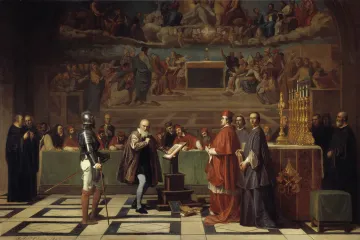
Galileo was certainly convinced by his own evidence that the Copernican system, with the Sun at the center, was correct. [5][10] He presented his findings in works like Sidereus Nuncius (Starry Messenger) and later, more provocatively, in the Dialogue Concerning the Two Chief World Systems. [10] While he attempted to present the Copernican view as merely a hypothesis in his Dialogue to satisfy the Church authorities initially, his intent and the arguments presented clearly favored the heliocentric conclusion. [10]
The challenge was that the Catholic Church had long interpreted certain scriptural passages as supporting the Earth's central, unmoving position. [10] In 1616, the Church declared heliocentrism "formally heretical" because it seemed to contradict Scripture. [10] When Galileo published his Dialogue in 1632, it was perceived as a direct violation of this earlier injunction, as the voice arguing for the geocentric view (Simplicio) was made to look foolish. [10]
The subsequent trial by the Roman Inquisition in 1633 led to Galileo being forced to publicly recant his belief that the Earth moved and that the Sun was the center. [10] He was found "vehemently suspect of heresy" and sentenced to house arrest for the remainder of his life. [10] It is a historical irony that the very man who provided the most compelling physical evidence for the Sun being central was forced by institutional power to verbally deny that very conclusion. [10]
If we consider the historical context surrounding his work, it becomes clear that Galileo was not simply repeating a theory; he was providing the proof that forced the scientific community to consider the Sun as the universe's anchor. While Copernicus provided the what, Galileo provided the how we know. [2] The fact that the Ptolemaic system required ever-increasing complexity (epicycles) to match observations, while the Copernican system, supported by Galileo's data, explained those same observations with relative simplicity, is a classic demonstration of the power of Occam's razor in science. A good way to visualize this is to compare the mathematical complexity required to track Venus: in the geocentric model, its path is a bizarre loop; in the heliocentric model, it's a steady, predictable ellipse. [2][9]
# Scientific Shift
Galileo’s legacy isn't just that he believed the Sun was central; it’s that his observations—Jupiter's moons, Venus's phases, and the imperfections of the Sun itself—destroyed the observable basis for the rival theory. He shifted the scientific conversation from whether the Earth moved to how the celestial mechanics worked under a solar-centered system. [4][9] Even though he was ultimately compelled to deny his findings publicly, the observations themselves remained facts, eventually allowing thinkers like Kepler and Newton to build the fully developed model we recognize today. [2] Galileo’s work was foundational, providing the observational certainty that transformed heliocentrism from a mathematical curiosity into accepted physical reality, even if the official verdict against him stood for centuries. [10] The Sun, as the physical, immovable anchor of the solar system, was established by the sheer weight of his astronomical scrutiny.
Related Questions
#Citations
Galileo Challenge - Stanford Solar Center
How Galileo Put the Sun at the Centre of the Solar System | PI News
During the time of Galileo, what was considered to be "the universe"?
Galileo's Observations of the Moon, Jupiter, Venus and the Sun
Did Galileo Galilei believe the Sun was the center of the Universe?
Heliocentrism - Wikipedia
The Center of the Universe | Secrets of the Dead - PBS
Galileo's view on Earth spinning around the Sun confirmed - Facebook
Galileo: Sun-Centered System | PBS LearningMedia
The Galileo Controversy | Catholic Answers Tract