What did Stephen Hawking say about the universe?

The enduring curiosity surrounding Stephen Hawking often centers on his relentless pursuit of the universe’s biggest secrets: its beginning, its nature, and its ultimate fate. He possessed a rare gift for distilling the most complex physics—the mathematics governing spacetime, black holes, and quantum mechanics—into concepts the general public could grasp, fundamentally shaping how we discuss cosmology today. Hawking spent much of his career grappling with the initial conditions of existence, seeking answers not through theological arguments, but through the immutable laws of physics themselves.
# Universe Origin

For many centuries, the beginning of the cosmos was the domain of philosophy and theology. However, Hawking anchored his discussion firmly in scientific modeling, focusing heavily on the Big Bang theory. This model posits that the universe expanded from an infinitely hot, dense point known as the initial singularity approximately 13.8 billion years ago.
Hawking’s work reinforced the scientific consensus that the universe did have a beginning, departing from the older idea of a steady-state, eternal cosmos. He dedicated significant attention to the mathematics describing this moment of creation. In his lectures, he explained that the standard model of cosmology suggests time itself began at the Big Bang, meaning asking what happened before that moment is like asking what is north of the North Pole.
# Singularity Models
The core issue with the standard Big Bang model, as Hawking saw it, was the singularity itself. A singularity represents a point where the laws of physics, as we currently understand them in general relativity, break down because quantities like density become infinite. To move beyond this mathematical impasse, he understood that a theory unifying general relativity with quantum mechanics—a theory of quantum gravity—was necessary.
One way Hawking approached this mathematical singularity was through the concept of imaginary time, which allowed the timeline of the early universe to be treated without a sharp beginning or boundary point.
| Cosmological Model | Description of Beginning | Role of Time |
|---|---|---|
| Standard Big Bang | Infinitely dense initial singularity | Time begins at the singularity |
| Hawking-Hartle No-Boundary | Smooth, curved beginning | Time behaves like another dimension of space near the start |
The shift suggested by the no-boundary proposal—that the universe evolved smoothly from a state where time was indistinguishable from space—offered a way to describe the origin without invoking a "creator" outside of spacetime. This is a subtle but profound shift in conceptual modeling; instead of a point event, the beginning becomes a curvature in the geometry of reality itself.
# Self Creation
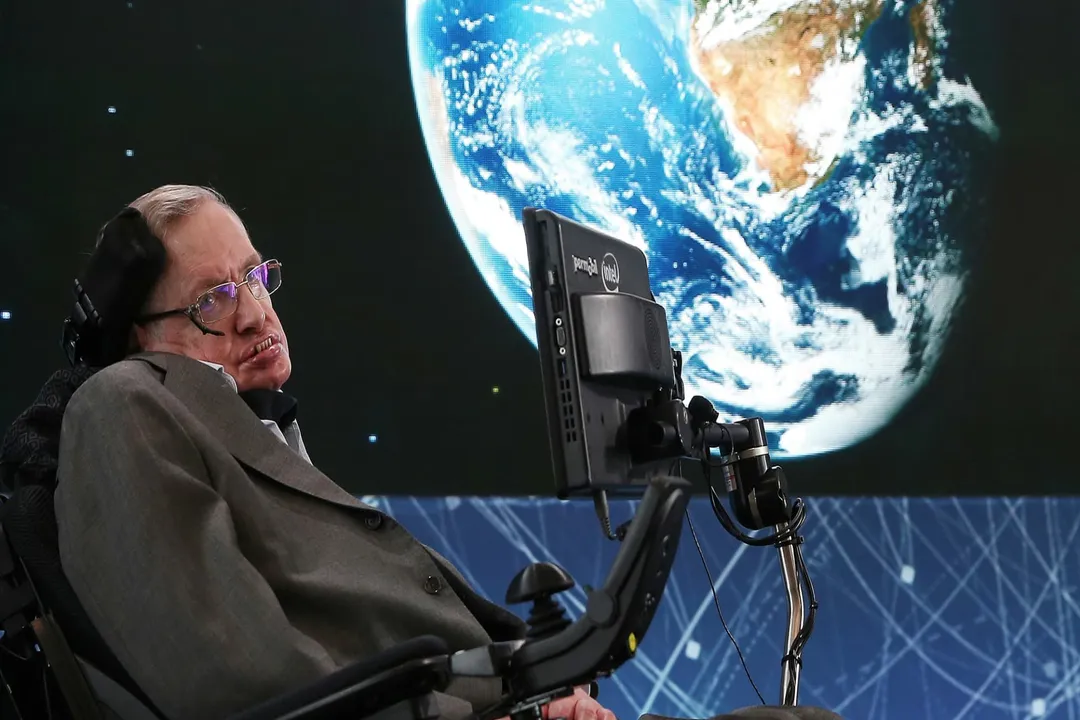
Perhaps one of Hawking's most publicized and challenging statements regarding the universe's origin was his assertion that, given the known laws of physics, the universe could create itself from nothing. This idea does not rely on a supernatural entity acting upon a void; rather, it suggests that physical laws are sufficient to explain spontaneous genesis.
He often framed this using the concept of quantum mechanics. In the quantum realm, particles can pop into and out of existence spontaneously due to quantum fluctuations. Hawking extended this idea to the entire cosmos. The reasoning hinges on the fact that if there is a law like gravity, which governs the universe’s behavior, that law itself might permit self-creation.
This assertion directly confronted long-held philosophical and religious positions regarding first causes. While some critics, particularly those with creationist leanings, argued that this merely substitutes a physical "creator" (the law of physics) for a divine one, Hawking maintained that the laws were inherent properties of the universe, not external mandates. The universe, in this view, is self-contained and self-explanatory based on its own operating manual.
# Fate Of Cosmos
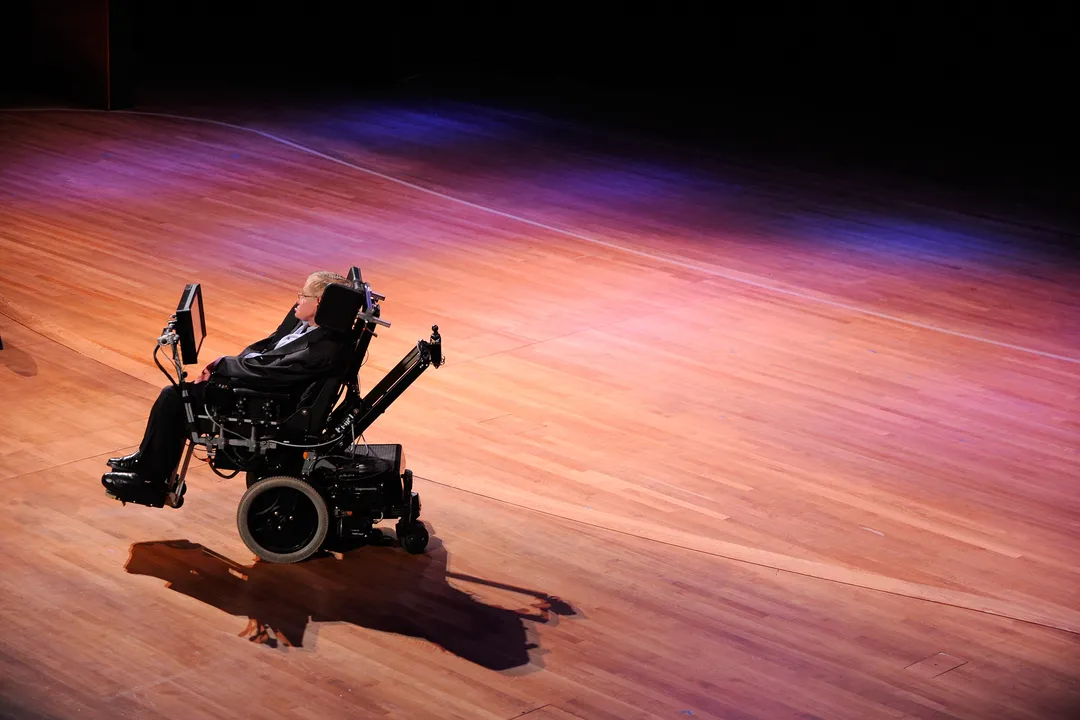
Hawking’s fascination wasn't limited to the past; he also spent considerable effort contemplating the far future of the universe. His predictions often leaned toward the scientific possibilities suggested by his theories on black holes and entropy.
In the time leading up to his death in March 2018, there was significant interest in his final thoughts, especially as expressed in his last book, Brief Answers to the Big Questions. A notable piece of speculation concerned the potential end of the universe. While many cosmological models predict an eventual "Big Freeze" or continued acceleration leading to eventual heat death, Hawking suggested a more dramatic scenario related to the instability of the vacuum state.
He speculated that the current universe might exist in a false vacuum—a temporary, relatively stable state. If a lower energy state (a true vacuum) existed, a bubble of this new vacuum could spontaneously appear and expand at the speed of light, instantly erasing everything as we know it. This prediction, which came to light shortly before his passing, served as a stark reminder that even the most stable-seeming realities are subject to the probabilistic nature of quantum mechanics.
If we look at the probabilistic nature of this end-of-universe scenario, it highlights a central theme in Hawking’s work: our current reality is just one possible outcome of the underlying physics, and it is not guaranteed to be permanent. Thinking about the universe as a complex equation that might have multiple solutions—some benign, some catastrophic—offers a humbling perspective on our brief existence. The fact that he issued this final caution just weeks before his death adds a layer of poignant immediacy to the physical laws he spent his life uncovering.
# Reality Questions
Beyond the specifics of birth and death, Hawking’s words frequently provoked fundamental questions about causality, determinism, and reality itself. His work consistently challenged the perception that we live in a purely predictable clockwork universe.
When discussing the search for a unified theory—the Theory of Everything—Hawking implied that finding this theory would be the ultimate triumph of human intellect, describing the goal as providing the complete understanding of the universe's behavior, even its chaotic aspects.
A key concept emerging from his broader statements, often quoted from interviews or lectures, is the idea that the universe is fundamentally knowable through reason and observation. Yet, he also understood the implications for free will. If the universe is entirely governed by deterministic laws (even quantum ones which are probabilistic rather than arbitrary), then our feeling of making free choices might be an illusion, a fascinating byproduct of complex neurological computation.
It is interesting to consider that Hawking’s life work was essentially an attempt to prove that the laws of nature are complete enough to explain themselves without recourse to external intervention. For the general reader, this often creates cognitive dissonance. We are evolved beings who experience choice deeply, yet the underlying science points toward a universe governed by mathematical necessity. This tension—between subjective experience and objective law—is where much of the public fascination with his cosmological pronouncements lies.
# Determinism Versus Choice
Hawking frequently addressed the philosophical fallout of his physics, particularly regarding free will. If one knew the state of the universe at a single point in time, and possessed the complete Theory of Everything, one could, in principle, predict the entire future. This deterministic viewpoint seems to preclude true freedom of action.
However, Hawking reconciled this by pointing out the practical impossibility of such a calculation. The sheer complexity involved in calculating the future state of every particle in the universe makes it functionally equivalent to genuine randomness from our perspective. Furthermore, in his later years, he seemed to suggest that while determinism might hold in theory, the laws describing human behavior are so complex that they effectively allow for the experience of choice. This pragmatic approach essentially allows science to define the mechanics of reality while acknowledging the reality of human perception within that system.
His emphasis on questioning the universe—even questioning the very structure of time and space as demonstrated in his TED talk from 2008—was a call to continuous inquiry, rather than a declaration of final answers. He positioned science not just as a descriptor of what is, but as the primary tool for understanding why it is that way, even if the "why" leads to conclusions that challenge our most basic assumptions about existence and agency. The very laws he described suggest that the universe has no need for an external guiding hand to initiate its complexity or drive its evolution.
#Videos
Questioning the universe | Stephen Hawking - YouTube
Related Questions
#Citations
The Origin of the Universe - Stephen Hawking Estate
Stephen Hawking Explains The Origin of the Universe - Farnam Street
Questioning the universe | Stephen Hawking - YouTube
Stephen Hawking says nothing was around before origin of universe
Stephen Hawking said that God is not needed to create the universe ...
Hawking Says Universe Created Itself
Two weeks before his death, Stephen Hawking predicted 'the end of ...
Stephen Hawking: 'Our only chance of long-term survival is not to ...
Hawking's Final Word on the Beginning - Reasons to Believe
14 genius Stephen Hawking quotes that will make you question your ...