What are the particles from the Sun called?
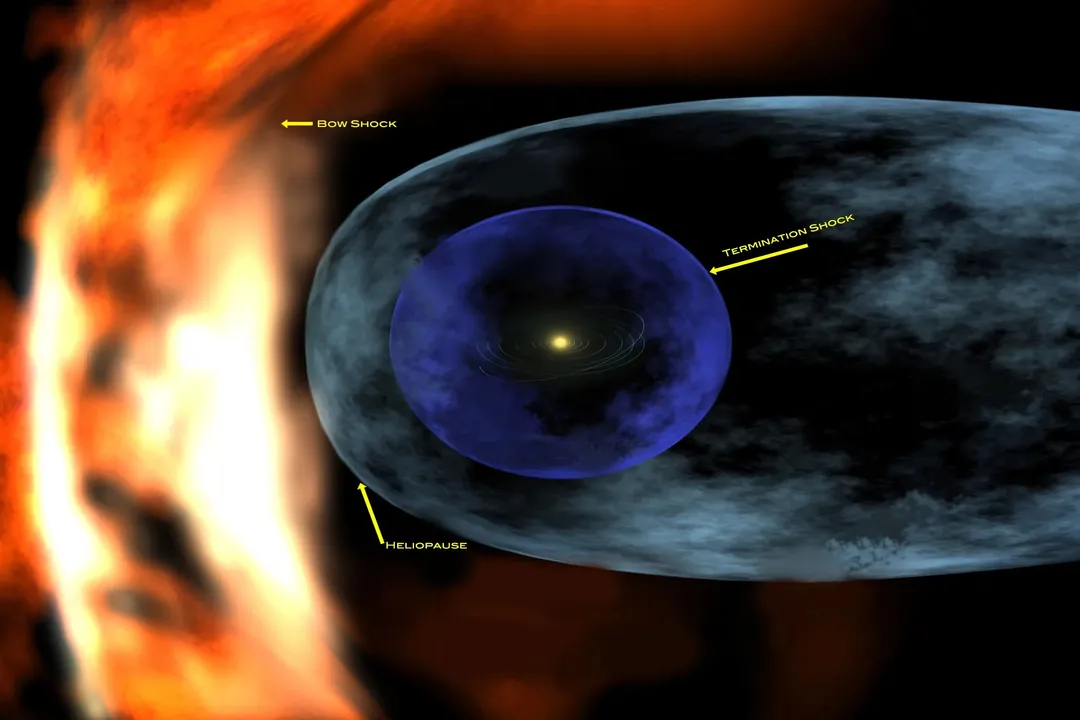
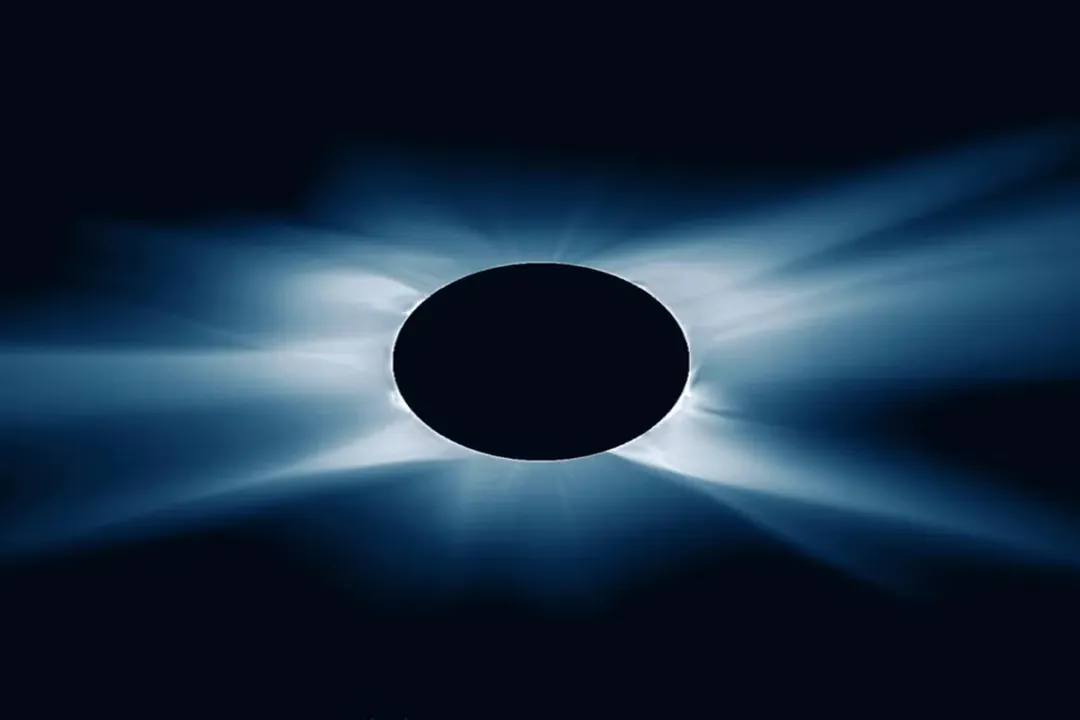
The constant outflow of material from our star is not a single, uniform phenomenon but a mixture of incredibly energetic components, the most famous of which is the solar wind. This wind is a continuous stream of charged particles, primarily in the form of plasma, that escapes the Sun's outermost atmosphere, the corona, and flows outward through the entire solar system. It is essentially the Sun constantly shedding its upper layers into space.
# Particle Types
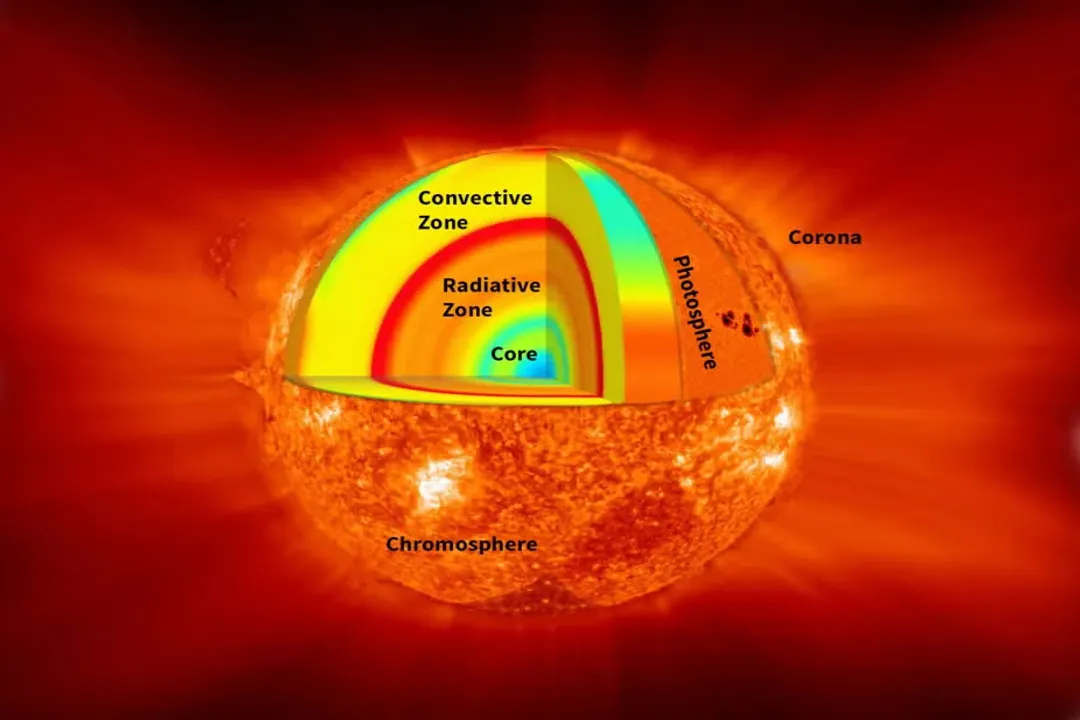
When people ask what particles the Sun emits, the answer most frequently points to the solar wind, but other particles are also produced and travel outward. The distinction between them lies in their origin, speed, and how they interact with the space between the planets.
# Solar Wind Composition
The solar wind is not a gas in the traditional sense; it is a plasma, meaning the gas is so hot that the electrons have been stripped from their atoms, leaving a soup of charged particles. The main constituents of this plasma are electrons and protons (hydrogen nuclei). Accompanying these are helium nuclei, also known as alpha particles, which make up about 4 to 5 percent of the stream. While the solar wind carries the bulk of the mass leaving the Sun, it is the charge of these particles that dictates their dramatic influence on the solar system's magnetic environment.
# Neutrino Emission
A vastly different particle also constantly streams away from the Sun: the neutrino. Unlike the solar wind, which boils off the Sun's surface layer, solar neutrinos are born deep in the Sun's fiery core. They are products of the nuclear fusion reactions that power the star, specifically the proton-proton chain. These particles are often described as being nearly massless and electrically neutral. Because they lack an electrical charge, they are not affected by the Sun's magnetic fields, allowing them to travel directly out from the core unimpeded. A neutrino escapes the Sun’s core in just a couple of seconds, whereas a proton in the solar wind might take days to escape the Sun's outer layers.
# Speed Variations
The solar wind is not uniform in its speed or density; it exhibits distinct flow patterns. Scientists typically categorize it into two main types: the fast solar wind and the slow solar wind. The fast solar wind streams away at speeds averaging about (kilometers per second). This fast stream originates from coronal holes—regions where the Sun's magnetic field lines extend outward into space rather than looping back to the surface. In contrast, the slower solar wind, moving at roughly , tends to originate from areas near the Sun's equator or other magnetically complex regions. The continuous variability between these fast and slow streams is what generates much of the dynamic activity we observe as space weather. Neutrinos, on the other hand, travel at nearly the speed of light, making their transit time to Earth essentially instantaneous compared to the solar wind.
# Shaping the Heliosphere
The entire solar system is encased within a massive bubble carved out by the Sun's outpouring of matter, known as the heliosphere. The constant barrage of solar wind particles is the primary sculptor of this protective region.
The solar wind pushes against the interstellar medium—the thin gas and magnetic fields that fill the space between the stars—creating a boundary called the heliopause. This interaction forms a vast structure that stretches far beyond the orbits of the planets. The particles themselves are key because they carry the Sun’s magnetic field (the interplanetary magnetic field) outward with them.
It is fascinating to compare the journey of the charged solar wind versus the neutral neutrino. The solar wind plasma dictates the surface conditions of the solar system, affecting satellites, radio communication, and planetary atmospheres through magnetic reconnection and pressure changes. Meanwhile, neutrinos pierce right through the heliosphere, the Earth, and everything on it, delivering fundamental data about the core nuclear furnace directly to detectors on Earth, largely unaffected by the massive magnetic structures the solar wind creates. This duality means we are simultaneously observing the Sun's atmospheric expulsion and its deep-seated engine through two fundamentally different particle streams.
# Space Weather Effects
The charged nature of the solar wind means it is the primary driver of space weather, an activity that NASA's Heliophysics division focuses on understanding. When the Sun experiences explosive events, such as coronal mass ejections (CMEs), the solar wind flow dramatically intensifies, leading to major space weather events.
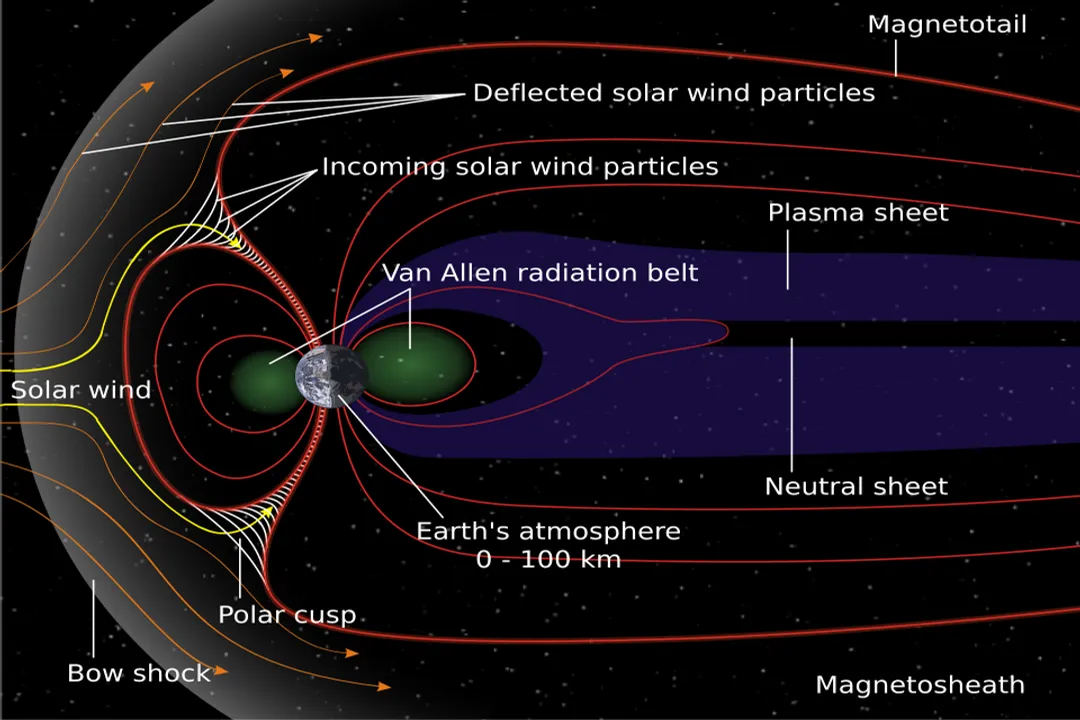
The continuous pressure and flow of the solar wind impact planetary magnetospheres. When the solar wind interacts with Earth’s magnetic field, it compresses it on the day side and stretches it out into a long "magnetotail" on the night side. Disturbances in this flow, especially those associated with the interaction between the Sun's magnetic field carried in the wind and Earth’s magnetic field, can trigger phenomena like geomagnetic storms. These storms manifest beautifully on Earth as the auroras (Northern and Southern Lights), where solar particles precipitate into the upper atmosphere, exciting atmospheric gases.
The difference in flow speed has direct operational consequences. A region dominated by the faster solar wind tends to be more quiescent magnetically, while the slower wind, often associated with stream interaction regions, can lead to recurrent geomagnetic activity as fast streams periodically catch up to slower ones downstream. For anyone designing equipment to operate beyond low Earth orbit, predicting which "weather pattern" is approaching is more critical than knowing the average flow rate alone. The fast stream represents an 'open' magnetic structure, whereas the slow stream often comes from 'closed' magnetic regions that are about to release energy, creating a more turbulent boundary condition for spacecraft shielding and navigation systems.
# Detecting the Unseen
Observing these particles requires different techniques. The solar wind, being plasma, can be measured in situ (directly in space) by spacecraft flying through it, which sample the density, speed, and magnetic field direction of the stream. Observing the effects, like the shape of the heliosphere or aurorae, gives remote confirmation of the wind's presence and power.
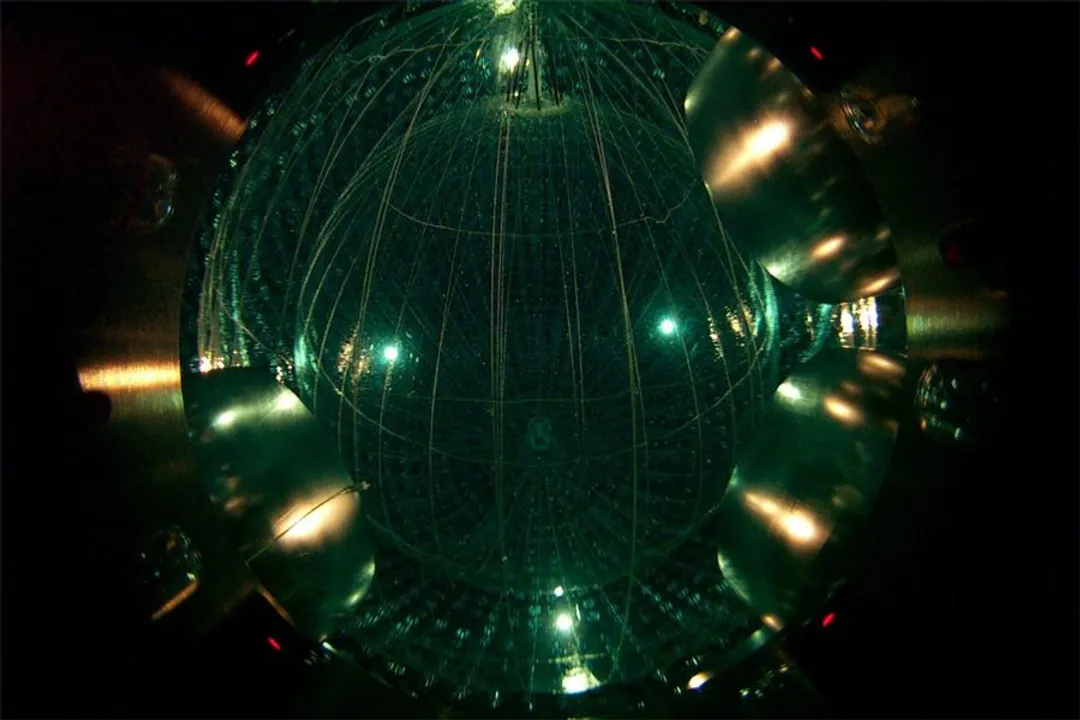
Neutrinos are far more elusive. Because they interact so weakly with matter—a typical neutrino can pass through light-years of lead without interacting—detecting them requires massive, shielded instruments, often placed deep underground to shield them from cosmic rays. Experiments like Borexino have successfully detected these solar neutrinos, providing direct proof that the fusion process predicted to be occurring in the core is, in fact, happening. These detections confirm our entire model of stellar energy generation, making the neutrino a messenger from the Sun's most inaccessible region.

# Core Physics vs. Surface Ejection
Understanding the particles from the Sun allows us to build a complete picture of stellar physics, from the core to the edge of the solar system. The solar wind is a direct, continuous consequence of the Sun being so hot at its surface (the corona) that the thermal energy overcomes the Sun's gravity, allowing the ionized material to escape. This process is fundamentally about the thermal expansion of the superheated, magnetized atmosphere.
The neutrino, however, tells us about the engine. Its creation confirms the rate of hydrogen fusion deep within the Sun’s core, which is under immense gravitational pressure and extreme heat. If the rate of core fusion were to suddenly increase, the corresponding neutrino flux would reach Earth in just over eight minutes. In contrast, a change in the solar wind generation rate would take days to manifest as a measurable shift in particle density at Earth's orbit.
# A Simple Model Comparison
To grasp the difference in scale and interaction, consider this analogy:
| Feature | Solar Wind Particles (Protons/Electrons) | Solar Neutrinos |
|---|---|---|
| Origin | Solar Corona (Atmosphere) | Solar Core (Fusion Site) |
| Charge | Charged (Positive/Negative) | Neutral |
| Speed | Variable (400–750 km/s) | Nearly Speed of Light |
| Interaction | Strong (Shapes Magnetospheres) | Extremely Weak (Passes Through Earth) |
| System Impact | Drives Space Weather, Creates Auroras | Confirms Core Fusion Rate |
If you were trying to understand the weather forecast for the next three days in your backyard, you would monitor the solar wind; if you were trying to check the structural integrity of the power plant generating the city's energy, you'd be more interested in the core metrics, which the neutrino stream provides for the Sun.
# Magnetic Influence on Escape
A critical detail often overlooked when discussing the solar wind is the role of the magnetic field in particle acceleration and escape. The magnetic field lines emanating from the Sun do not always extend straight out; they are complex and twisted. In regions called coronal holes, the field lines open directly into space, providing an unimpeded path for the plasma to stream away, creating the fast wind.
Conversely, in regions where magnetic field lines loop back toward the Sun, plasma can become trapped or confined for extended periods. This confinement leads to the slower, more variable solar wind flows and is also the source region for the most violent ejections, CMEs, when magnetic energy builds up and is suddenly released. The Sun's surface magnetism, therefore, acts as a gatekeeper and accelerator for the solar wind, a process entirely absent for the electrically neutral neutrino.
The continuous monitoring of these magnetic patterns on the Sun’s surface is an essential input for space weather prediction models used by agencies worldwide. While the average speed of the solar wind is known, the direction of the interplanetary magnetic field embedded within the wind is often the most crucial factor determining whether a solar event will cause a severe geomagnetic storm on Earth or be largely deflected by our planet’s own protective field. This sensitivity to magnetic alignment underscores the solar wind's role as the primary external force acting upon our technological infrastructure in space.
In summary, the particles streaming from the Sun are dominated by the electrically charged solar wind—a continuous flow of plasma from the corona—and the electrically neutral neutrinos—a silent torrent from the nuclear core. Together, these streams provide scientists with a complete physical record of the Sun, from its energetic surface dynamics to its fundamental internal energy production mechanism.
Related Questions
#Citations
Solar wind - Wikipedia
Heliosphere - NASA Science
Solar wind, a stream of charged particles escaping from Sun
What particles emitted by the Sun pass directly through the Earth as ...
Physicists count subatomic particles released by the sun - EurekAlert!
Sun and Solar Wind | Space Physics at Princeton
The solar wind is a flow of particles from the sun - Facebook
Mysterious Particles Shooting Through Earth Shed Light on Sun
Meet the Sun - UCAR Center for Science Education