What is the real color of a sun photo?

The common image of the Sun—a brilliant orb of yellow or sometimes fiery orange—is deeply ingrained in our culture, coloring everything from children’s drawings to everyday iconography. Yet, if you ask an astronomer or look at raw data from instruments above the Earth's atmosphere, you will find a different answer: the Sun’s actual color, as perceived by the human eye viewing its full spectrum of light unimpeded, is white. [2][4] This discrepancy between perception and physics is not a trick of the light, but rather an effect of the light's journey to us.
# Earth's Veil
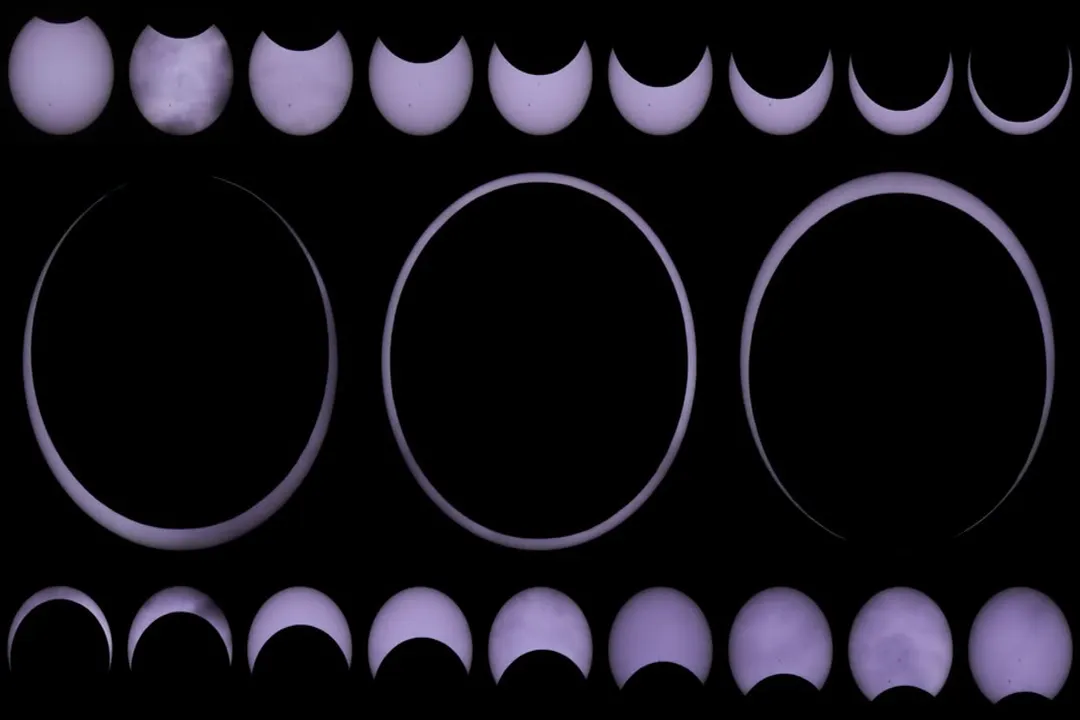
The main culprit behind our perception of a yellow Sun is the Earth's atmosphere. [2][4] This phenomenon is best explained by Rayleigh scattering, the same principle that gives the sky its distinctive blue hue during the day. [2][4] As sunlight travels through the atmosphere, shorter wavelengths of light, primarily blue and violet, are scattered most effectively by the tiny nitrogen and oxygen molecules in the air. [2][4]
When the Sun is high in the sky, some of this blue light is scattered across the heavens, which is why the sky looks blue. The light that reaches your eye directly from the Sun has had some of its blue components removed, causing the remaining mixture—dominated by the longer wavelengths like yellow, orange, and red—to appear yellowish. [2] Consider this: the atmosphere acts like a selective filter, progressively thinning out the blue end of the spectrum the lower the Sun hangs. [2] When the Sun is near the horizon, during sunrise or sunset, the light has to pass through a much thicker layer of atmosphere. This increased path length scatters even more blue light, leaving behind the deep reds and oranges we associate with twilight. [2] If you were watching the Sun from the International Space Station or the Moon, where there is no atmosphere to scatter the light, the Sun would appear intensely, brilliantly white. [4] This is a crucial context: the yellow appearance is a function of where you are observing from, not an inherent property of the star itself. [2]
# Spectral Truth
To understand why the Sun is white, we must look at its total energy output across the electromagnetic spectrum. The Sun emits light across a continuous spectrum, including ultraviolet, visible, and infrared light. [4] The visible light component is what our eyes can detect. When all the colors of the visible spectrum—red, orange, yellow, green, blue, indigo, and violet—are combined in the intensities that the Sun emits them, the result is perceived by our cones as white light. [2][4]
While the Sun's spectrum peaks in the green-blue part of the visible range, the human eye does not perceive this peak intensity as the object's color because our eyes integrate the entire range of incoming light. [4] If the Sun only emitted green light, it would look green, but because it emits across the whole visible band, the sum is white. [4] Think of mixing paint: mixing all the primary colors of light (Red, Green, Blue or RGB) results in white light; the Sun is effectively producing a very broad-spectrum RGB source, far richer than any artificial light bulb. [2]

# Imaging Sun Surfaces
When we examine photographs of the Sun taken by dedicated observatories, we often encounter colors that are neither yellow nor pure white. These images—the detailed close-ups of sunspots, prominences, and the granular texture of the photosphere—frequently feature dramatic reds, blues, greens, and sometimes even purple hues. [5][6] This is where the distinction between a true color photo and a scientific image becomes vital.
Astronomical images of the Sun’s surface are rarely taken using broadband, "white light" filters that mimic what the eye sees. [8] Instead, specialized instruments use narrow-band filters to isolate specific wavelengths corresponding to particular elements or temperatures within the Sun’s layers. [8][5] For example, light emitted by Hydrogen-alpha is a deep red at 656.3 nanometers. [5] Other filters target specific emissions from elements like ionized Calcium or neutral Iron, or even different layers of the solar atmosphere, such as the chromosphere or corona. [6]
The resulting images captured through these filters are monochrome—they only contain data for one specific color (wavelength) at a time. [5] To create the vibrant, detailed pictures we see, scientists assign these monochrome data layers to the Red, Green, and Blue channels of a final composite image. [5][6] This process is known as false-color mapping or representative coloring. [5][6]
| Element / Wavelength Target | Typical Filter Wavelength (nm) | Common Color Assignment | Purpose |
|---|---|---|---|
| Hydrogen-alpha (H-alpha) | 656.3 | Red | Viewing chromosphere activity, filaments, and flares [5] |
| Sulfur II (S-II) | Varies | Red | Viewing lower atmospheric layers/hotter regions [5] |
| Oxygen III (O-III) | Varies | Blue/Green | Viewing temperature gradients and specific plasma states [5] |
| White Light (Photosphere) | Broadband Visible | White/Yellow/Green | Showing surface granulation and sunspots [8] |
This mapping is done to enhance contrast and reveal features that would be completely invisible or indistinguishable in a simple visual composite. [5] A picture showing a bright blue network across the Sun might be highlighting areas dominated by Oxygen III emission, which the human eye would never register as distinctly blue against the rest of the solar disk in unfiltered light. [6] Therefore, when you see a spectacularly detailed image of the Sun with varied, saturated colors, you are not looking at the Sun as it appears, but at a scientific visualization designed for analysis. [5][8]
# Distinguishing Authenticity
When browsing solar imagery, especially on platforms like Instagram or in news reports, it is helpful to categorize the photos based on their intended message. A photo captioned as "The Sun in white light," or one that simply shows a bright disc without extreme surface detail or non-visible colors, is generally closer to the Sun's true appearance outside the atmosphere. [8] The Wikimedia Commons image labeled "The Sun in white light" serves as a good reference, showing a brilliant white or very pale yellow disc. [8]
Conversely, an image that looks painterly, with distinct bands of color delineating structures, is almost certainly a composite built from multiple filtered exposures. [5] It’s important to remember that even if an image is technically "false color," it is often an accurate representation of the physics occurring in that specific solar layer, just not an accurate representation of visible color. [6] The false coloring acts as a helpful shorthand for scientists and educators to separate different thermal or chemical zones.
Here is a point to consider when analyzing these images: a truly white-light image, even if perfectly exposed for the photosphere, will often look slightly washed out or intensely bright, perhaps taking on a pale yellow or near-white hue depending on the digital sensor's balance, but it will lack the deep, unnatural saturation found in filtered composites. [4] The more saturated and varied the colors on the solar surface, the more processing involving element-specific filters has been applied.

# Practical Color Tip
For those interested in capturing the Sun's appearance from the ground accurately, the simplest action yields the most realistic, though still filtered, result: use a very dark, full-aperture solar filter that blocks nearly all visible light, allowing only a small, safe amount through. Even with the best filters, the atmospheric scattering effect remains dominant when viewing from the surface, meaning the best you can usually achieve is a very bright, slightly yellowish-white disc. [2] Any attempt to capture the surface details from the ground will require those narrow-band filters, immediately placing your resulting photo into the realm of false-color scientific imagery, much like the Hubble or SDO images, just adapted for terrestrial viewing conditions. The real "color" of the Sun is less a single hue and more an integrated experience of all visible light, which simplifies back to white when the atmospheric interference is removed. [2][4]
#Videos
What Is The Actual Color Of The Sun? - YouTube
Related Questions
#Citations
Star - What's the real color of the Sun? You might say it's yellow ...
The actual colour of the Sun is white. Then why are the photos from ...
If the sun is actually white, why does it look orange in NASA photos?
What Is The Actual Color Of The Sun? - YouTube
The fascinating science behind the Sun's true color ... - Instagram
Should this photo of the sun's surface actually be white?
File:The Sun in white light.jpg - Wikimedia Commons