What passes through the zodiac?
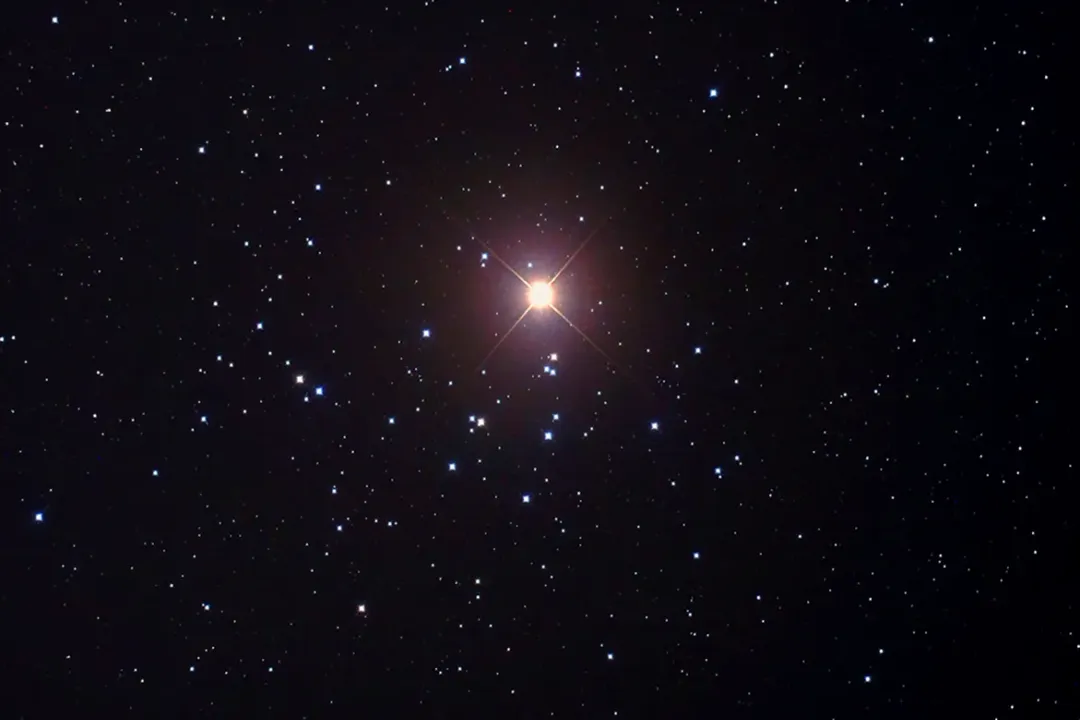
The term "zodiac" describes a specific belt in the sky through which the Sun, Moon, and visible planets appear to travel. This region is fundamental to both ancient astronomy and modern astrology, though the two fields treat the elements passing through it differently. In essence, the "what" passing through the zodiac refers to the celestial bodies whose movements define the passage of time and the basis for horoscopes. It is the apparent track traced by the Sun against the background stars as the Earth completes its orbit around it.
# Celestial Track
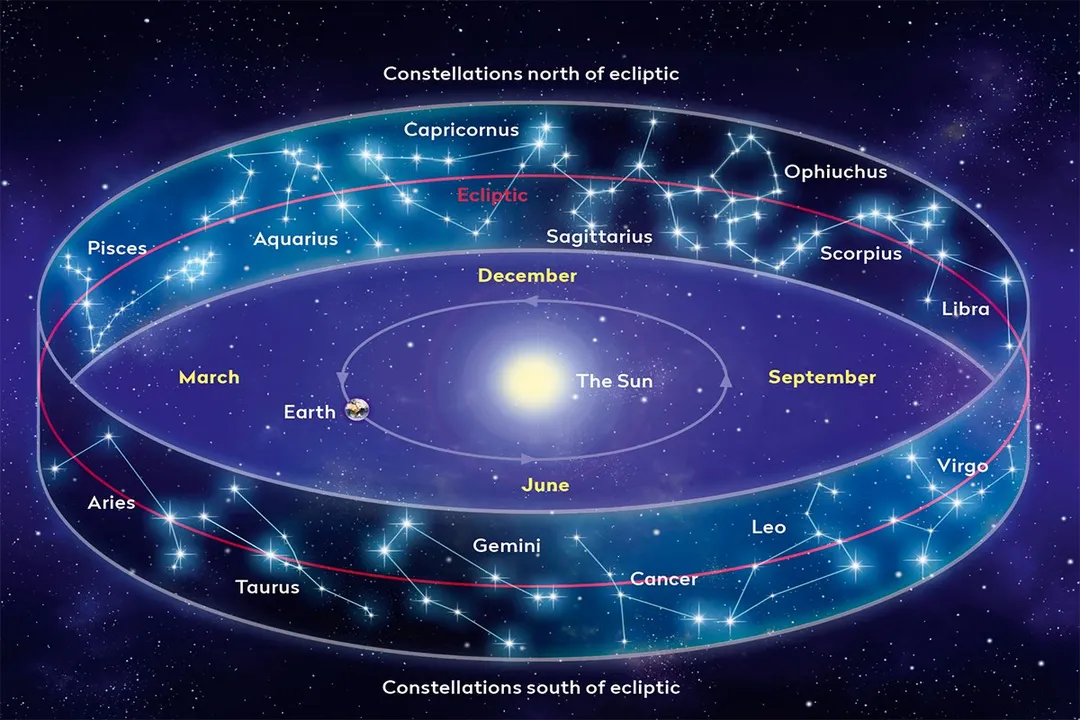
Astronomically, the path the Sun appears to follow across the celestial sphere over the course of a year is called the ecliptic. The zodiac is essentially a band centered on this ecliptic, extending approximately 8 to 9 degrees north and south of it. This band is crucial because it houses the constellations that ancient observers noticed the planets moved along with the Sun and Moon. The ecliptic itself is a great circle on the celestial sphere that represents the plane of Earth’s orbit projected outwards.
# Sun Moon Planets
The primary objects that pass through this zodiacal band are the luminaries and the classical planets visible to the naked eye. Specifically, this includes the Sun, the Moon, and the planets Mercury, Venus, Mars, Jupiter, and Saturn. While all these bodies travel within this zone, their positions are used for different purposes in astrological interpretation. The Sun’s position defines the tropical zodiac sign for a given date, while the Moon's position changes much more rapidly, cycling through the signs in about a month.

# Twelve Divisions
The concept of the zodiac is most commonly associated with twelve signs, which were established in antiquity to create a consistent calendar and system of celestial measurement. The Babylonians are credited with dividing the ecliptic into twelve equal arcs, with each arc spanning exactly 30 degrees. This division into twelve signs—Aries, Taurus, Gemini, and so on—is the foundation of Western astrology.
However, this astrological system creates a fundamental difference when compared to the actual constellations the Sun passes through. The twelve zodiac signs are uniform divisions of space, whereas the actual constellations that intersect the ecliptic are irregularly sized patches of sky. For instance, the constellation Virgo is much larger than Scorpio. Because of this lack of correlation between the mathematically equal 30-degree signs and the real stellar boundaries, the Sun spends differing amounts of time in each constellation. Furthermore, the Sun actually moves through thirteen constellations, not just twelve, as it passes through the constellation Ophiuchus (the Serpent Bearer) between Scorpio and Sagittarius. Ophiuchus is included in the astronomical description of the zodiac path but is conventionally excluded from the astrological system of twelve signs.
This discrepancy—12 perfect slices versus 13 actual, irregularly sized patches—is the primary reason an astrological sign's starting date often shifts relative to the actual constellation alignment over centuries due to precession.
# Sequence Order
The twelve astrological signs follow a specific, established sequence based on the vernal equinox, which historically marked the beginning of spring and the start of the astrological year with Aries. While the sky has shifted since the system was codified, the traditional order remains fixed for interpretive purposes.
The signs in order are:
- Aries
- Taurus
- Gemini
- Cancer
- Leo
- Virgo
- Libra
- Scorpio
- Sagittarius
- Capricorn
- Aquarius
- Pisces
For astronomical reference, the constellations that lie along the path are nearly the same set, though the modern astronomical mapping accounts for the shift caused by Earth's movement. For example, in terms of the constellations the Sun actually illuminates, the sequence includes Ophiuchus, interrupting the traditional flow between Scorpio and Sagittarius.

# Ancient Roots
The origin of this division lies in early astronomical observations, primarily from ancient Mesopotamia. Early calendar systems used the Sun’s position against the stars to mark seasonal shifts. The division into twelve parts was a practical development, likely linked to the roughly twelve lunar cycles that occur within one solar year. Each division was assigned a symbol representing the characteristics associated with that time of year or the appearance of the constellation itself. These symbols, which include creatures and human figures, are the enduring markers of the zodiac today.
# Shifting Alignments
The reason the dates associated with an astrological sign today often do not align with the constellation that shares its name is due to a phenomenon known as the precession of the equinoxes. This is a slow, conical wobble in the Earth’s axial tilt, similar to a slightly off-center spinning top. This wobble means that the point in the sky where the Sun crosses the celestial equator on the spring equinox moves westward over thousands of years.
When the zodiac was originally established, the sign of Aries began at the vernal equinox. Due to precession, the actual constellation rising at the vernal equinox has moved backward through the signs. Consequently, the astrological dates—which are based on the original, fixed division of the sky—are now about a month out of sync with the actual constellations overhead. An observer looking for the constellation of Aries in late March/early April today might find the Sun actually illuminating the constellation Pisces, demonstrating the tangible shift between the calendar marker and the actual stellar background. While the astrological system maintains its fixed 30-degree segments regardless of this shift, the astronomical reality is that the constellation actually being backlit by the Sun during a specific date range has moved significantly over the past two millennia. This difference highlights the distinction: one is a fixed calendar system, the other is a dynamic celestial map.
Related Questions
#Citations
Astrological sign - Wikipedia
AstroPages | Zodiac | Western Washington University
Zodiac constellations | BBC Sky at Night Magazine
EarthSky - Facebook
The Origin of Zodiac Signs Symbols - Replogle Globes
Constellations of the Zodiac in Order
What is the Zodiac? - Universe Today
The 12 Zodiac Signs In Order and What Each One Means - InStyle
Zodiac Signs & Constellations Names - Star Walk