How to prove the Earth rotates around the Sun?
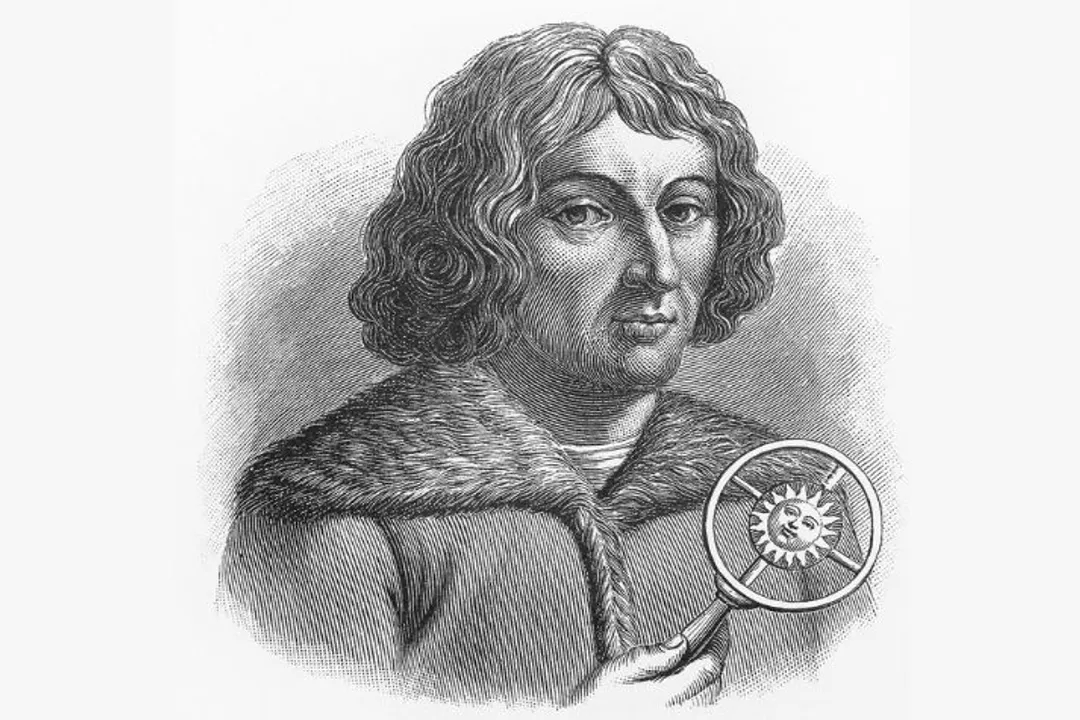
The transition from believing Earth was the stationary center of the cosmos to understanding our planet as one of several bodies circling a star was one of humanity's greatest intellectual achievements, built not on philosophical argument but on meticulous observation and mathematical prediction. Proving the Earth revolves around the Sun, the core tenet of heliocentrism, required evidence that directly contradicted what our senses immediately tell us—that the ground beneath our feet is solid and unmoving. The simplest, most direct evidence often involves looking far beyond our immediate surroundings and measuring extremely small shifts over long periods.
# Measuring Shift
One of the most compelling, though historically difficult, proofs lies in observing stellar parallax. Imagine holding your thumb out at arm's length and closing one eye, then the other. Your thumb appears to shift against the background wall; this apparent change in position due to the change in viewpoint is parallax. For Earth, the change in viewpoint is the distance the Earth travels in its orbit over six months. As Earth moves from one side of the Sun to the other, the angle from which we view distant stars changes slightly.
The stars themselves are so incredibly far away that this shift, known as the annual stellar parallax, is minuscule. To detect it, one needs extremely precise instruments and a baseline of about 300 million kilometers (the diameter of Earth's orbit). When this tiny angular shift is measured—a feat only consistently achieved in the 1830s—it provides a direct geometric confirmation that Earth is moving, creating the necessary baseline for observation. The fact that the nearer stars show a greater parallax shift than the more distant ones follows the laws of geometry perfectly, exactly as predicted by a Sun-centered model.
To put the scale of this required precision into perspective, consider that the parallax angle for Proxima Centauri, the closest star to our Sun, is approximately 0.77 arcseconds. A single arcsecond is 1/3600th of one degree. A common high-quality protractor might measure angles to a precision of half a degree—meaning you would need a measuring tool over a thousand times more accurate than a basic classroom instrument just to begin measuring these stellar distances. The successful measurement of parallax demonstrated not only that we move, but provided the first reliable yardstick for the universe’s vast scale.
# Light’s Apparent Angle
Another elegant piece of evidence confirming orbital motion is the aberration of starlight. This phenomenon is similar to how rain seems to fall diagonally when you are running, even if it is falling straight down relative to the ground. Because the Earth is moving through space at about in its orbit, the light from distant stars appears to arrive at a slightly different angle than it would if the Earth were stationary.
The star's light is effectively being added to the velocity vector of the Earth. The observed angle of the star is slightly tilted toward the direction of Earth's orbital motion. This effect was first measured by James Bradley in the 1720s by observing the apparent shift in the star Gamma Draconis. This observation provided undeniable proof of the Earth's velocity in its path around the Sun, an entirely different line of evidence from the static geometric proof of parallax. Furthermore, the magnitude of this aberration varies throughout the year in a predictable cycle that perfectly matches the changing speed and direction of Earth's movement, offering strong corroboration for the orbital path.

# Planetary Dynamics
Beyond direct geometric proofs, the entire structure of the solar system, as described by Kepler's Laws of Planetary Motion, only makes physical sense in a heliocentric system. If the Earth were stationary, the laws describing the orbits of Mars, Jupiter, and others would become incredibly complex, requiring elaborate, non-uniform epicycles to explain their apparent retrograde motion (where they occasionally appear to loop backward in the sky).
In contrast, assuming the Sun is the gravitational center, Kepler’s laws describe the observed orbits—ellipses with the Sun at one focus—with elegant simplicity. The observed periods of revolution and relative distances of the other planets, when calculated against a central Sun, produce a mathematically consistent model that works for every object in the system. The physics governing the motion of all celestial bodies points consistently toward the Sun being the central mass around which the motion is organized.
While Kepler's laws describe how the planets move, Newton’s Law of Universal Gravitation explains why they move that way, providing the final theoretical seal on the heliocentric model. Gravity dictates that the less massive object orbits the more massive object; since the Sun contains over 99.8% of the solar system’s mass, it must be the gravitational anchor.
# Separating the Motions
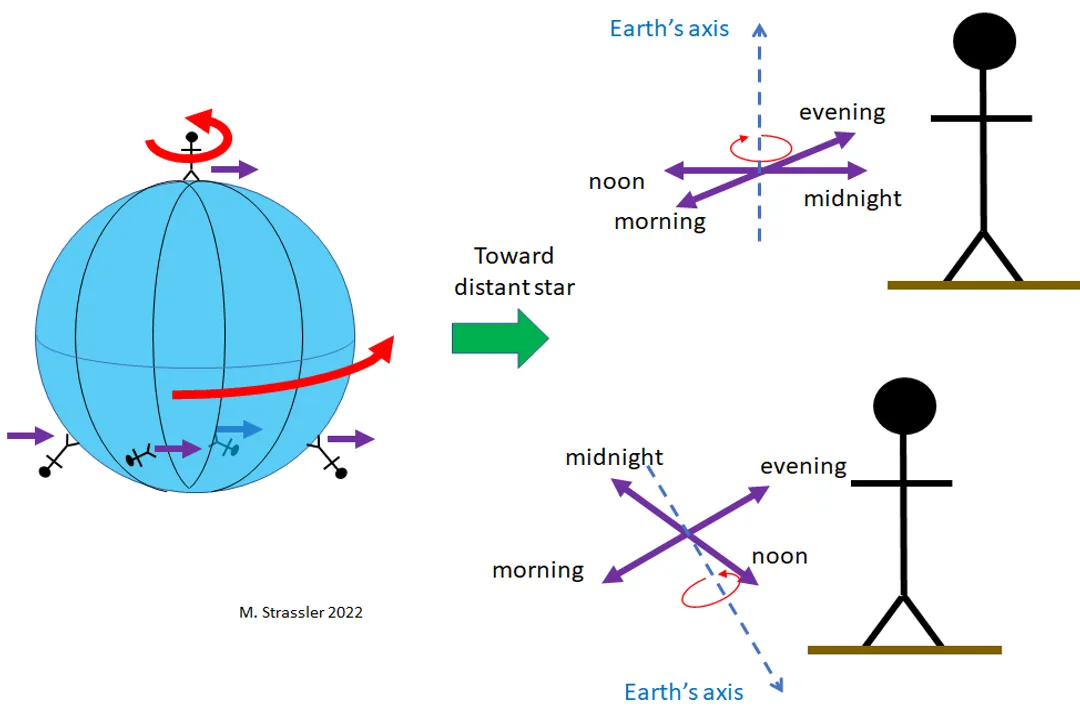
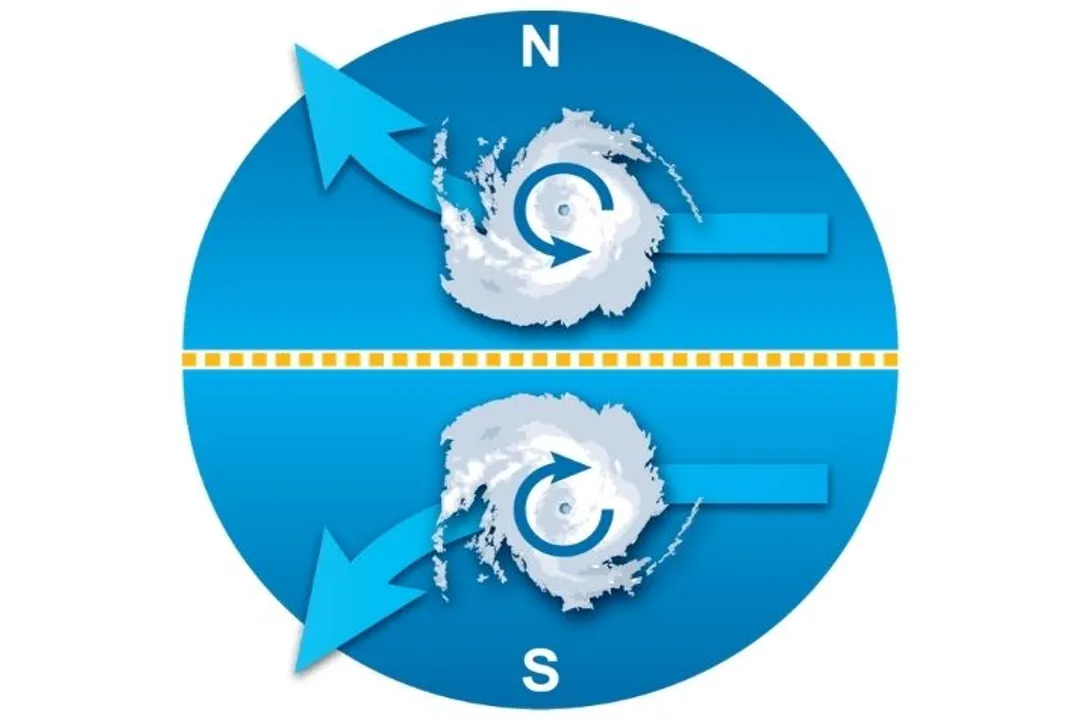
It is important to clearly distinguish the Earth's revolution (orbiting the Sun) from its rotation (spinning on its axis). Both motions occur simultaneously, but the evidence for each is distinct. While proving the spin is often easier through phenomena like the apparent rising and setting of stars or the Coriolis effect, proving the orbit requires looking outward into the distant stellar field or analyzing the dynamics of the whole system.
Sometimes, confusion arises from the common experience of inertia. We might instinctively feel that if the Earth were moving so fast in orbit—traveling at roughly 67,000 miles per hour—we should feel a constant wind or be flung off. The reason we don't feel this is analogous to being on a smoothly flying airplane: everything inside the cabin (the atmosphere, us, the buildings) is moving with the Earth at the same velocity. The atmosphere is not left behind because the Earth's gravity holds it, and everything shares the same inertial frame of reference.
When we consider the everyday effects, it is easy to miss the astronomical motions. For instance, people might ask how we can prove the Earth moves around the Sun without sophisticated telescopes, perhaps suggesting simple experiments like dropping an object and watching it land slightly to the west due to the Earth spinning beneath it. While that observation pertains to rotation, it highlights that proving revolution requires a different scale of observation, one that spans the solar system and the distant stars.
| Motion | Primary Evidence Type | Scale of Observation | Key Phenomenon |
|---|---|---|---|
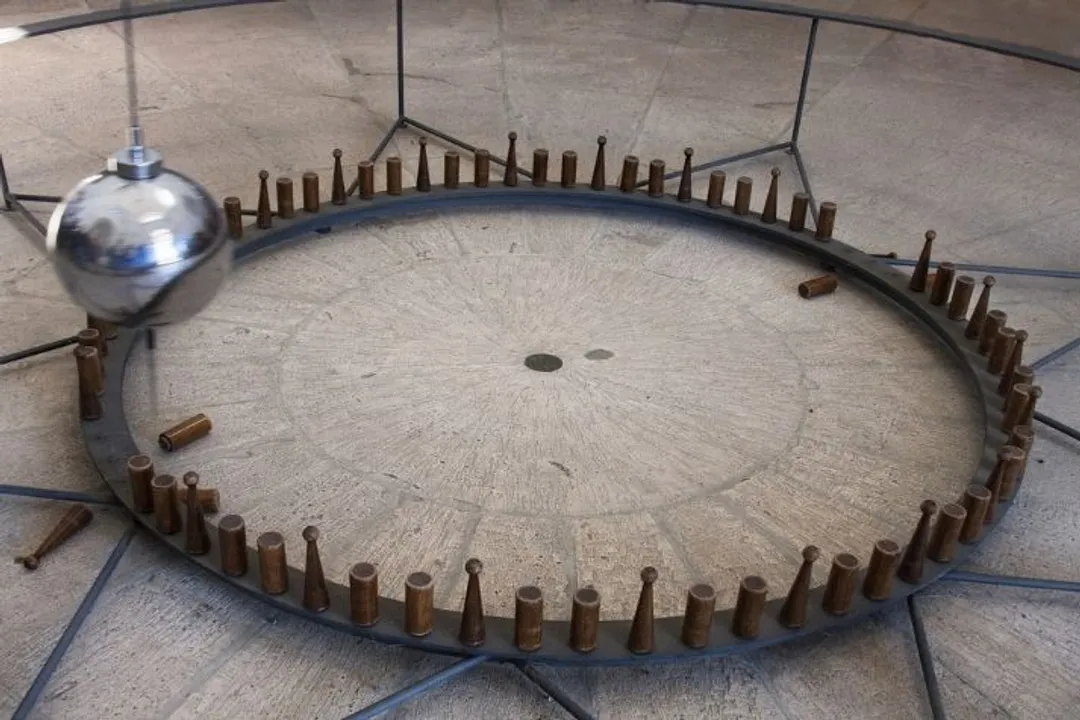
| Rotation (Spin) | Terrestrial Observation | Local/Atmospheric | Day/Night Cycle, Foucault Pendulum |
| Revolution (Orbit) | Celestial Observation | Interstellar/Solar System | Stellar Parallax, Aberration of Light |
This table summarizes how evidence for the two primary motions differs, showing the necessity of interstellar observation for proving the orbit.
# Modern Direct Confirmation
While classical proofs like parallax and aberration are intellectually satisfying because they rely on geometry and observation from Earth, modern methods offer undeniable, direct confirmation. Since the mid-20th century, we have left the planet and observed the solar system from a perspective outside the Earth's atmosphere.
Space probes and telescopes have provided continuous, direct imagery showing the Earth moving in a predictable, elliptical path around the Sun. Data collected from spacecraft orbiting other planets, such as Mars or Jupiter, confirms the orbital mechanics precisely as predicted by the Sun-centered mathematical models. When we launch a mission to another planet, we must calculate its trajectory based on the Sun being the central gravitational mass; these missions would fail catastrophically if Earth were the center of the system. The ability to accurately navigate to other worlds serves as a practical, engineering-based proof of the orbital mechanics we use every day in mission control.
Moreover, the periodic nature of our existence—the changing constellations we see over months, the predictable seasons tied to the tilt relative to the Sun, and the measurable Doppler shifts in the light from distant stars—all form a massive, interlocking set of data points. The consistency across astronomical data, geophysical measurements, and spaceflight engineering leaves no room for doubt regarding our planet's annual journey around the Sun.
#Videos
How We Figured Out That Earth Goes Around the Sun - YouTube
Related Questions
#Citations
What is the simplest way to prove that Earth orbits the Sun?
Earth Goes Around the Sun? What's Your Best Evidence?
How we can easily show that the Earth orbits the Sun ? : r/astrophysics
How We Figured Out That Earth Goes Around the Sun - YouTube
What are some practical ways to demonstrate that Earth rotates on ...
How Do We Know the Earth Rotates? - Elephango
Earth's rotation - Wikipedia
Simple experimental evidence that Earth revolves around Sun