How does Earth prove to be alive?
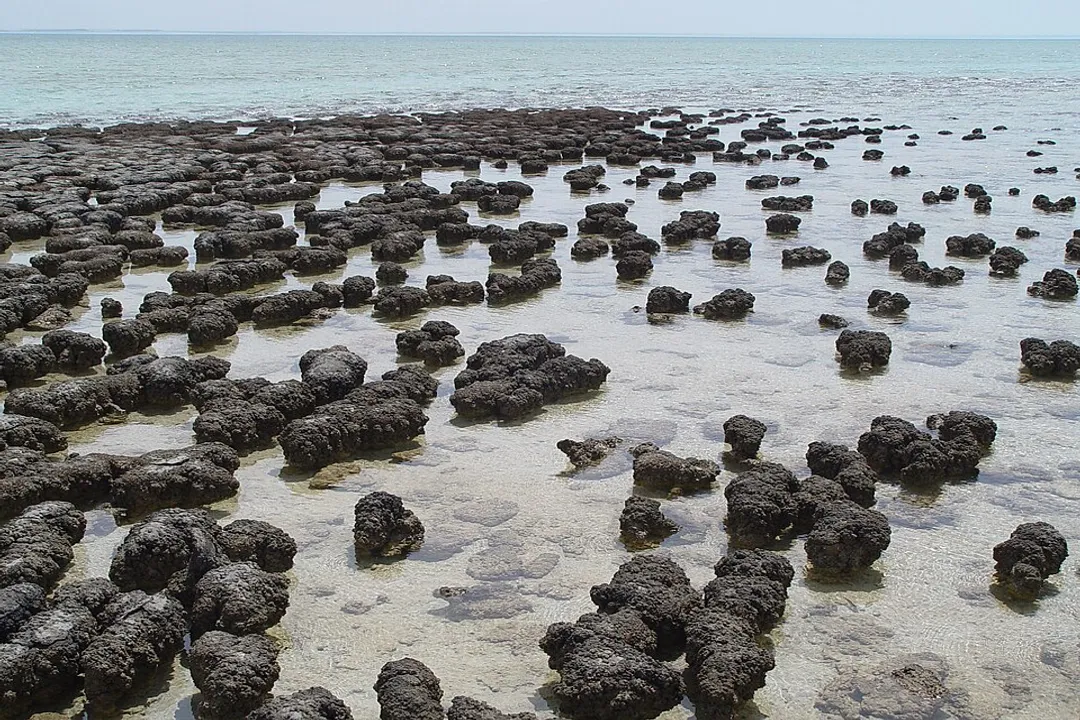
The way our planet maintains its atmospheric composition, regulates surface temperature, and supports a vast, interconnected web of organisms leads many observers to question if Earth functions as a single, massive living entity. [6][8] To properly consider this grand idea, one must first establish what "alive" means from a traditional biological standpoint, then contrast that strict definition with the planet’s observable behaviors. [9]
# Biological Markers
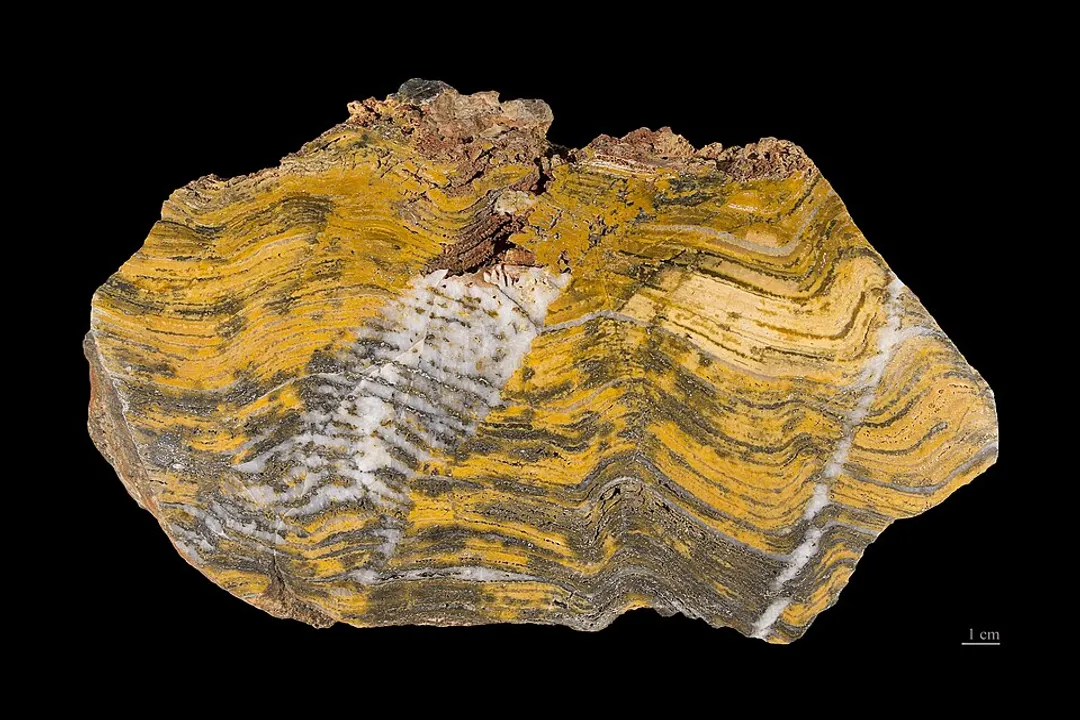
Biologists generally define life by specific characteristics, such as the ability to metabolize energy, grow, respond to stimuli, and reproduce. [2][7] For a system to be considered alive, it must possess an internal, self-contained mechanism capable of performing these functions, often revolving around nucleic acids like DNA or RNA for heredity. [4][7] The scientific consensus regarding the origin of life, or abiogenesis, centers on tracing the chemical steps that led to the first living cells. [1]
These steps involve several stages, beginning with the formation of simple organic molecules from inorganic precursors. [2][4] This process, known as chemical evolution, progressed through the formation of more complex polymers, leading eventually to self-replicating molecules, which are the fundamental requirement for Darwinian evolution. [1][5][7] While the exact location remains debated—whether deep-sea hydrothermal vents or warm surface ponds—the principle is that non-living chemistry spontaneously assembled the necessary components for the first organism. [5] The development from a simple chemical soup to the first self-sustaining, evolving entity is the critical threshold that separates the non-living from the living. [3]
# Early Chemistry
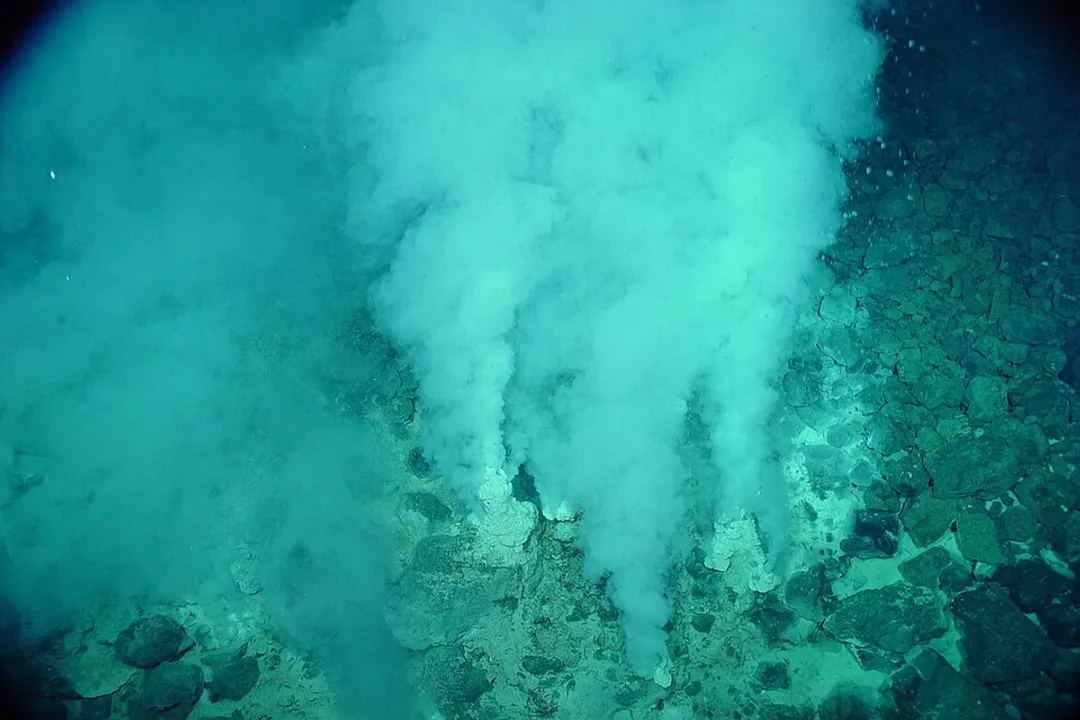
The necessary building blocks for life appeared relatively early in Earth’s history. [1] Experiments have demonstrated how basic inorganic compounds, given the right energy sources like lightning or UV radiation, can yield amino acids and other organic precursors. [4][7] In the primordial soup theory, these molecules accumulated in the oceans, eventually forming polymers such as proteins and perhaps RNA—the latter is often hypothesized as the first genetic material, preceding DNA in an "RNA world". [5] The transition from these simple chemicals to a true living system requires encapsulation, meaning these molecules needed to be contained within a boundary, like a lipid membrane, to create a distinct interior environment necessary for metabolism. [2]
It is this precise set of criteria—metabolism, reproduction, bounded complexity, and evolution—that the planet Earth, viewed as a whole, fails to meet directly. Earth is not composed of cells, nor does it metabolize energy in the manner a bacterium does; rather, it processes energy through geophysical and atmospheric cycles that support the life which does meet those criteria. [9]

# Planetary Feedback
The idea that Earth behaves as if it were alive is most famously encapsulated in the Gaia hypothesis, proposed by scientist James Lovelock and microbiologist Lynn Margulis. [8] This concept suggests that the biosphere, atmosphere, oceans, and soil are coupled together into a complex, self-regulating system that actively maintains conditions suitable for life. [8][6] It is less about the planet being a single organism and more about it exhibiting homeostatic properties akin to a living body. [9]
Evidence for this self-regulation appears when examining the stability of Earth’s climate over vast timescales. For billions of years, despite receiving significantly less solar energy early in its history (the faint young sun paradox), Earth managed to keep liquid water stable on its surface. [8] This stabilization is attributed, in part, to the collective actions of living things, such as photosynthetic organisms drawing down carbon dioxide, thereby preventing runaway greenhouse heating, or the production of compounds that influence cloud formation. [8] The entire system appears to adjust its own parameters—like atmospheric chemistry—to maintain habitability. [6]
Consider the contrast between the chemical timescale of abiogenesis and the temporal scale of planetary maintenance. The initial steps toward life may have taken hundreds of millions of years, a relatively swift transformation when measured against the planet's four-billion-year history. [1][5] However, the slow, gradual adjustments that keep global temperatures within a habitable band—adjustments driven by the cumulative output of trillions of individual organisms over epochs—represent a feedback loop of staggering temporal depth, far exceeding the lifespan or reaction speed of any single living being. [8]
# System Comparison
If we were to construct a simple checklist of life's requirements, Earth would fail the strict test.
| Requirement | Individual Organism | Planetary System (Gaia View) |
|---|---|---|
| Metabolism | Yes, chemical energy conversion | Yes, energy conversion (solar/geothermal) |
| Reproduction | Yes, cellular division | No, does not create copies of itself |
| Response to Stimuli | Yes, rapid physiological adjustment | Yes, slow, systemic feedback loops |
| Bounded Integrity | Yes, cell membrane | No, atmosphere merges into space |
| Self-Maintenance | Yes, internal homeostasis | Yes, via biotic/abiotic interaction |
| [6][9] |
A useful way to frame this distinction is to examine what constitutes a feedback loop. A simple thermostat or a single-celled organism responds quickly to an internal deviation, correcting the state based on immediate information. [9] The Earth system, conversely, exhibits a massive, distributed feedback system. For example, if surface temperatures rise too high, it might lead to increased evaporation, which could increase cloud cover reflecting sunlight, but this change might take centuries to fully manifest across the globe. [8] This contrasts sharply with a bacterium adjusting its enzyme production in seconds when nutrient levels change. [3] The sheer scale of the Earth’s regulatory machinery, involving geological activity, ocean currents, and all biological processes, is what gives it the appearance of a conscious, living regulator, even if it lacks the discrete cellular structure we expect. [6]

# Definitional Boundaries
Ultimately, whether Earth proves to be "alive" depends entirely on the chosen definition. [9] If one insists on the biological definition requiring cellular organization and direct genetic inheritance, then Earth is undeniably not alive; it is the stage upon which life occurs, not an actor in the same sense. [7] Life emerged from the Earth's non-living chemistry, and now that life profoundly governs the surface conditions. [1]
However, if one adopts a broader, functional definition—one centered on the maintenance of disequilibrium and self-organization across an immense planetary boundary—the concept gains traction. [6] This view suggests that the most significant proof of Earth's "aliveness" is not found in its rocks or oceans alone, but in the emergent property created when the geochemistry and the biosphere interact across eons. [8] It suggests that the system, while not a life form, operates like one to sustain its environment, making the planet a living system in the sense of a complex, self-sustaining machine, rather than a self-replicating organism. [9]
Related Questions
#Citations
The origin of life on Earth, explained - UChicago News
Abiogenesis
How exactly did life evolve from nothing? Can someone ...
The Earth as a Living Organism - Biodiversity - NCBI - NIH
Here's why scientists don't know how life on Earth began
Is the Earth Alive? - The Shape of the World
Hypotheses about the origins of life (article)
Is the Earth itself a giant living creature?
Is The Earth Alive? That Depends On Your Definition Of Life