How long does it take water to go through soil?
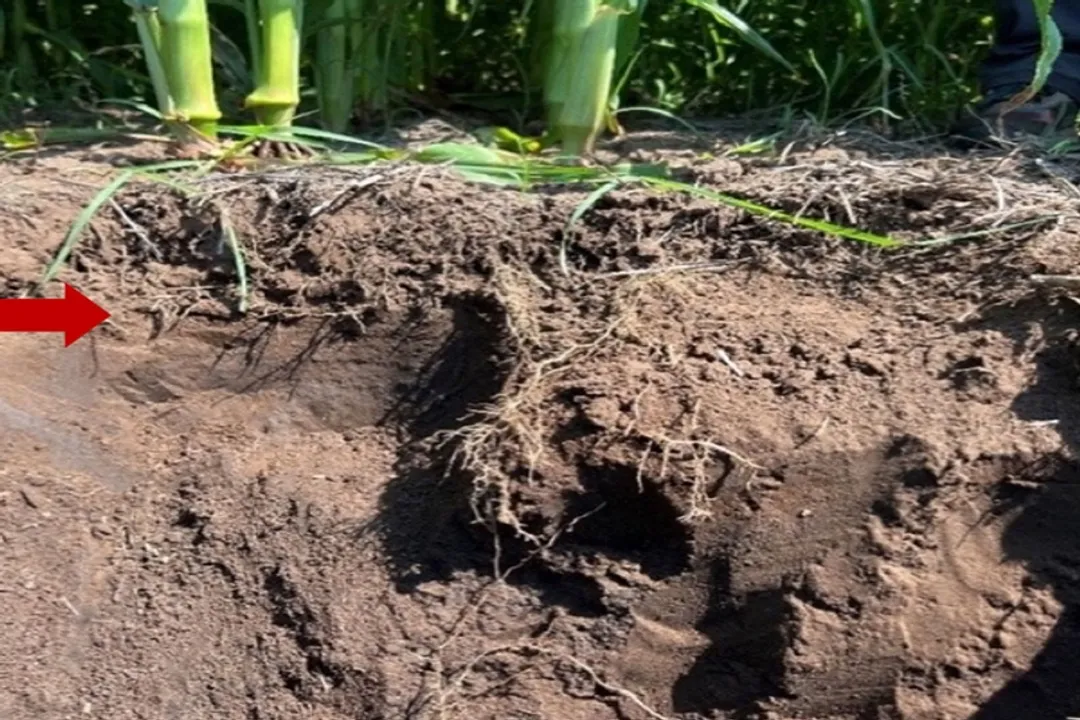
The time required for water to pass through soil is not a fixed number etched in stone; rather, it exists on a vast spectrum, shifting dramatically based on the medium it encounters and the conditions surrounding the event. To truly answer how long water takes to travel through the ground, we must first acknowledge that the process begins before infiltration even starts, with the time it takes for precipitation to actually hit the surface. Depending on the height of the clouds and the nature of the storm, this part of the journey might take a few seconds to a minute or two. However, the real variability lies beneath the surface, where the physical makeup of the soil dictates the speed of travel, turning minutes into hours or even days for the same volume of water to cover the same depth.
# Soil Texture
The primary determinant of water movement speed underground is soil texture—the relative proportions of sand, silt, and clay particles present. These fractions create different pore spaces, which act as the highways and bottlenecks for downward movement.
Sand particles are large, meaning the spaces between them—the macropores—are wide open. Water moves through sandy soil rapidly, a process often described as percolation. Silt particles are medium-sized, leading to moderate pore spaces and medium flow rates. Clay particles are minute, creating very tiny inter-particle spaces. This results in very slow movement because water is held tightly by the surface area of the tiny particles, a phenomenon related to surface tension and adsorption.
This difference is not subtle. While water moves quickly through coarse soils, the movement through fine-textured soils like clay is dramatically slower. The very structure of the soil dictates its permeability, which is the measure of its ability to transmit water.
# Movement Rates
If we consider a typical event, the contrast in time becomes apparent. In very coarse, sandy soil, water can infiltrate and move downward quite quickly, perhaps covering several inches in minutes. Conversely, consider a heavy clay soil. In one illustrative scenario posed for calculation, moving just 1 liter of water through 1.5 inches of clay soil was shown to require a significant duration. While the exact time depends on the precise structure and compaction of that specific clay, the implication is clear: movement through clay is measured in much longer intervals than movement through sand.
For practical gardening or agricultural purposes, this means that during a heavy rain event, water falling on sandy loam might reach the deeper root zone of established plants within the first hour or two, depending on the depth required. In contrast, that same volume of water hitting dense clay might still be residing in the top few inches or draining away as surface runoff long after the rain has stopped.
It is insightful to consider the sheer magnitude of this difference. If the sandy soil allows water to travel at a rate of 10 inches per hour, the clay might only manage 0.1 inches per hour under similar saturation conditions. This means that what takes a few minutes to pass through sand might take over an hour and a half to travel the same vertical distance in dense clay. This disparity is why irrigation scheduling in commercial horticulture must rigorously account for soil texture; applying too much water too quickly to fine soils results in inefficiency, where the water moves past the desired root zone before the plant can absorb it.

# Infiltration Thresholds
The journey of water through the ground begins with infiltration, which is distinct from runoff. Infiltration is the process where water enters the soil surface, and it is fundamentally controlled by the rate at which the soil can accept the water versus how fast the water is arriving from above.
When rain intensity outpaces the soil's infiltration rate, the excess water cannot go down, so it stays on top and moves horizontally—this is runoff. A rain event is only truly "effective" in replenishing soil moisture if the intensity remains below this threshold. If you have a soil type with a low infiltration rate, even a moderate shower can result in significant loss to runoff, meaning the water never begins its journey through the soil mass at all.
Soil management plays a vital role in maximizing the duration water spends available in the root zone, which is partly achieved by improving the rate at which it can enter the soil initially. Adding organic matter, for instance, tends to improve soil structure, creating larger, more stable aggregates. These improved structures enhance macroporosity, thereby increasing the infiltration rate and allowing water to begin its downward travel sooner and more efficiently, reducing immediate surface loss.
# Pore Space Dynamics
The time water spends moving through soil is also tied to how much water the soil can hold versus how much it lets pass. Soil texture dictates not only the speed of movement but also the total capacity for storage. While clay has a very high total water-holding capacity because its tiny pores hold water tightly against gravity, sandy soils hold less water overall but release it more readily.
Water in the soil exists in different pools: hygroscopic water (held too tightly for plants), plant-available water (held against gravity but accessible to roots), and gravitational water (free-moving water draining downward). The "time it takes to go through soil" primarily describes the movement of this gravitational water. Once the soil is saturated, the speed of drainage—how long it takes for the excess gravitational water to move out of the profile—is governed by those same permeability factors. If the soil structure is poor, this drainage phase can stall, leading to waterlogging, even if the soil is technically porous.
If we look at how much water is needed for a successful irrigation, the soil type dictates the necessary duration of application. For an area requiring an inch of water, applying it over 15 minutes in sand is appropriate because the water will move through quickly enough to wet the entire profile before runoff starts. Applying that same inch over 15 minutes to heavy clay is a recipe for surface ponding and waste, as the water cannot percolate fast enough. In clay, that same inch of water might need to be applied across several hours, often in cycles, to allow the slow infiltration process to complete without overwhelming the surface.
This concept suggests an actionable tip for homeowners and gardeners: observe your yard after a heavy rain. If puddles form and persist for hours on a certain patch of ground, that area has a significantly lower infiltration rate, meaning water takes much longer to pass through compared to areas where the water disappears quickly. If your soil has a high percentage of clay, treating it with bulky organic amendments helps create temporary, larger passages, effectively speeding up the drainage time without changing the fundamental particle percentages.

# Depth Influence
It is critical to remember that the total time is a function of both the speed and the distance. A very fast soil type (sand) only requires a short duration to wet a shallow root zone (say, 6 inches). However, if you need the water to travel 3 feet deep into the subsoil, even sand will take considerably longer than if it only had to travel 6 inches.
The challenge compounds in subsoils that become compacted or layered. If a farmer encounters a hardpan layer—a compacted zone below the typical tillage depth—the water that has rapidly moved through the topsoil suddenly hits a nearly impermeable barrier. At this point, the water stops moving vertically and begins to move laterally, saturating the soil above the hardpan until it can find a way around or through the obstruction, potentially leading to shallow water tables or unexpected hillside seeps. The time taken to penetrate this restrictive layer can extend from hours to days, depending on the hydrostatic pressure building up behind it.
Ultimately, understanding the passage time for water through soil involves blending hydrology, soil physics, and practical observation. It is less about finding a universal constant and more about assessing the soil's physical character—sand, silt, or clay—and its structural health to predict whether infiltration will be immediate or require patience over a much longer timescale.
#Videos
How long it takes water to soak into parched ground
Related Questions
#Citations
Simplified hydrologic cycle
A Meteorologist from the University of Reading shows just ...
How fast can rainwater travel through the ground when it ...
How much time does water takes to reach to the ground?
How long does it take for typical garden soil to absorb an ...
How long it takes water to soak into parched ground
Maximizing Water Availability Through Soil Management
So What Constitutes An Effective Rain Event? - Earth-Kind ...
How long does it take for 1 liter of water to run through 1.5 ...
Basics of irrigation scheduling