Where does escaped helium go?
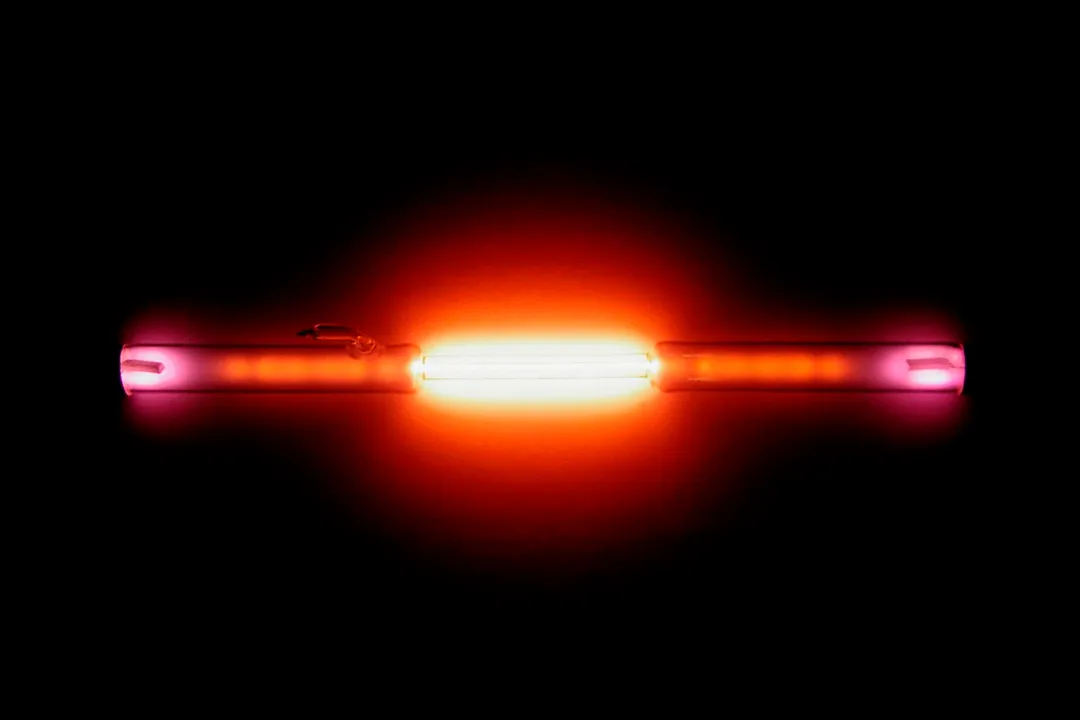
The question of what happens to helium released into the atmosphere has a surprisingly definitive answer: it leaves the planet entirely. Unlike many atmospheric components that might react, dissolve, or be temporarily trapped, helium’s fate is sealed by its fundamental physical properties and the vacuum that exists just beyond our breathable air. It is an inert element, the second lightest known after hydrogen, and that combination makes its departure almost certain once it gains sufficient altitude. [4][2]
When a balloon pops or a party tank runs empty, the gas disperses quickly. Since helium is much less dense than the nitrogen and oxygen that make up the bulk of our air, it naturally floats upward through the atmosphere due to buoyancy. [2] This movement isn't just a slow drift; it’s a continuous process dictated by the speed of the individual atoms.
# Atomic Weight

Helium's atomic mass is approximately $4$ atomic mass units (amu). [4] To put that into perspective, the primary component of our atmosphere, nitrogen, has an atomic mass of about $28$ amu, and oxygen is around $32$ amu. [4] This vast difference in mass means that, given the same kinetic energy, the lighter helium atoms will move significantly faster than the heavier molecules surrounding them. [5]
This characteristic is central to understanding planetary atmospheric retention. Lighter gases are more susceptible to being lost to space than heavier ones. While Earth has managed to hold onto its water vapor and heavier components, gases like hydrogen and helium are in constant jeopardy of exceeding the speed required to remain gravitationally bound. [2]
# Thermal Escape
The primary mechanism for helium loss is known as thermal escape, often referred to as Jeans escape. [2][5] In the outermost layers of the atmosphere, the exosphere, atoms are so far from Earth that they occasionally achieve speeds greater than Earth's escape velocity. While the average speed of gas molecules is determined by the ambient temperature, individual molecules are always moving at a wide range of speeds due to random thermal motion. [5]
For helium, a relatively small percentage of atoms in the upper atmosphere will, purely by chance, be moving fast enough to break free from Earth's gravitational pull. [2] Once these high-speed atoms reach the exobase, the boundary where the atmosphere fades into space, they simply coast away into the interplanetary medium. [5] It is an ongoing, passive process that never stops as long as the sun warms the upper atmosphere enough to keep the atoms moving rapidly.
Consider that the rate of this thermal escape depends heavily on the temperature of the thermosphere and exosphere. Although the Earth's magnetic field helps shield the upper atmosphere from intense solar radiation, coronal mass ejections and solar wind still provide enough energy to maintain the necessary thermal motion for consistent leakage. [2] The process is slow on a human timescale, but over billions of years, it has stripped the Earth of the vast majority of its primordial helium, which was lost very early in the planet's history. [2]
# Chemical State
A crucial factor in where escaped helium goes is its chemical inertness. Helium is a noble gas, meaning its outer electron shell is full, making it exceptionally unwilling to form chemical bonds with other elements. [4] This property has major implications for its atmospheric fate.
Gases like carbon dioxide () or water vapor () can be removed from the atmosphere through various sinks. They can react chemically, freeze out (as ice or dry ice), or be absorbed into the oceans or rocks. [4] Helium cannot participate in any of these removal processes. If it enters the atmosphere, it remains as atomic helium, unable to bond with nitrogen, oxygen, or other constituents to become part of a heavier, less volatile molecule. This means the only way for atmospheric helium to be removed is through direct physical ejection into space. [4]
If we were to somehow capture all the escaped helium that leaves Earth annually and compare it to the total amount of helium trapped underground, we could calculate the net depletion rate. However, since the rate of creation (radioactive decay) is incredibly slow compared to the rate of escape over geological time, the practical outcome is that any atmospheric helium is essentially lost to us forever. [9]
# Outer Reaches
Where, precisely, does this liberated gas travel? The ultimate destination for escaping helium is the void of space. [2]
Once an atom exceeds Earth's gravitational influence, it becomes part of the interplanetary medium. From there, it is subject to the Sun’s gravitational influence and the solar wind. The solar wind, a stream of charged particles flowing outward from the Sun, will carry the helium atoms further away from the inner solar system. [2] Given enough time, these atoms will be dispersed throughout the galaxy, mingling with the general interstellar medium. Earth, in essence, acts as a very slight, slow leak in the galactic recycling system for this particular element. [2]

# Finite Resource
The story of escaped helium is closely tied to its origin on Earth. Unlike elements that are continuously recycled through the planet's crust and atmosphere via plate tectonics or chemistry, Earth’s helium supply is largely finite, being generated primarily as a byproduct of radioactive decay deep within the mantle and crust—specifically, the decay of heavy elements like uranium and thorium. [4][5]
This production rate is extraordinarily slow when compared to the rate at which we use and lose the gas. The helium we rely on for MRI machines, semiconductor manufacturing, and welding is trapped in geological formations, often mixed in with natural gas reserves. [9] The process of extracting it involves cryogenically separating it from natural gas, which is itself a non-renewable resource. [9]
If we imagine a scenario where a city releases all its party balloons simultaneously, that quantity is immediately destined for space. But the more significant issue arises from the industrial scale of loss. Every time helium is used in a way that allows it to escape—such as filling a weather balloon or purging a system where it is vented—it is effectively removed from the terrestrial reserve pool, heading toward the outer reaches. [9]
# Economic Impact
The fact that helium escapes and is not easily replenished has led to discussions about supply constraints, sometimes termed a "helium crisis". [9] Because the resource is constantly being depleted through escape and consumption, the market must rely entirely on accessing finite underground reservoirs.
This scarcity translates directly into economic pressure. For instance, scientific facilities that require liquid helium for superconducting magnets, such as those used in powerful medical scanners, face fluctuating and increasing costs because the gas cannot be recycled perfectly and the natural supply is limited. [9] Furthermore, the process of harvesting it from natural gas (where it is present in trace amounts) requires specialized, energy-intensive infrastructure, adding to the expense of every cubic meter captured before it can escape. [9]
From a physical conservation standpoint, one could argue that the only truly contained helium on Earth is that which is trapped underground or bound within stable chemical compounds (which is rare for helium). If we view the planet as a closed system for economic purposes over decades or centuries, then any helium used in a transient application, like filling a festive balloon, is effectively donated to outer space. It is a strange situation where a valuable commodity is constantly being used up by both industrial demand and atmospheric physics. The challenge for engineers, then, is not just minimizing leakage during use, but designing systems that allow for near-perfect recapture of the gas after its initial industrial application, preventing that final, slow thermal drift into the void. [2]
#Videos
How Can Gases Such as Helium Escape the Earth's Atmosphere?
Related Questions
#Citations
Where does escaped helium go? - Quora
Can helium disappear from Earth? - Physics Stack Exchange
If helium is lighter than air how come it hasn''t all just floated away?
Helium - Wikipedia
Helium escape from the Earth's atmosphere: The charge exchange ...
The Escape of Helium from the Earth's Atmosphere - NASA ADS
When released helium leaves the earth forever. If there is a glass ...
How Can Gases Such as Helium Escape the Earth's Atmosphere?
The World Is Constantly Running Out Of Helium. Here's Why It Matters.