How soon will Earth run out of helium?

The constant hum of worry surrounding our planet's helium supply isn't about a sudden, immediate catastrophe next Tuesday, but rather a slow, inevitable geological problem complicated by modern industrial demand. While the idea of Earth completely running dry of this unique element sounds dramatic, the reality is more nuanced: we are not so much running out as we are failing to keep what we extract. [3][9] Because helium is so lightweight, once it escapes our atmosphere, it is gone forever, drifting into the void of space. [3][8] This continuous leakage, combined with our reliance on it for high-tech applications, creates a scenario where supply struggles to meet demand, leading to chronic shortages and price volatility. [9]
# Origin Story
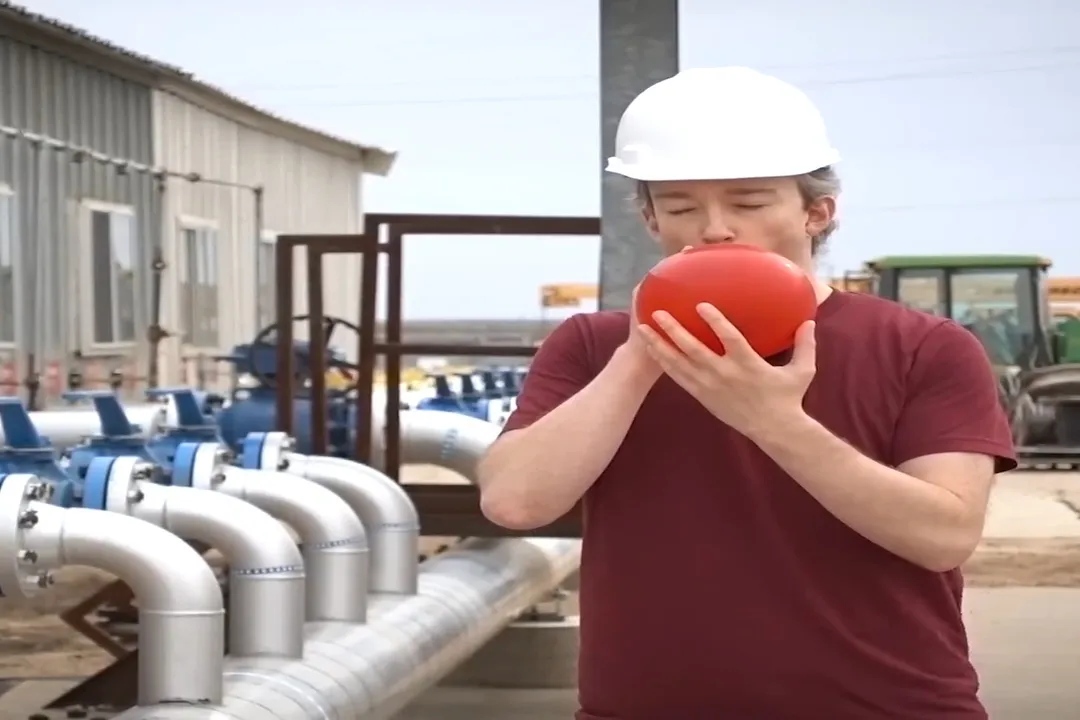
Helium, the second lightest element, doesn't feature prominently in the Earth’s original formation like nitrogen or oxygen do in the air we breathe. [7] It is not readily available in the Earth’s crust or atmosphere in large, readily accessible pools waiting to be tapped. Instead, the terrestrial helium we harvest is almost entirely a byproduct of radioactive decay deep within the planet. [8] Specifically, the alpha particles emitted during the slow breakdown of heavy elements like uranium and thorium capture electrons and become helium atoms. [8] Over billions of years, this created natural underground reservoirs, often trapped alongside pockets of natural gas. [3][8] This geologic history means that the world's helium supply is finite, tied directly to the remaining quantity in these subterranean caches. [7]
# Extraction Dependency
Our current method of acquiring usable helium is intrinsically linked to the fossil fuel industry. [3] Since the gas accumulates underground, the most economical way to gather it is by processing natural gas, from which it must be separated. [3] This dependency creates an immediate supply bottleneck: if natural gas production dips for any reason—market changes, geopolitical issues, or shifting energy priorities—helium extraction can slow down, even if the gas wells themselves are still present. [3] Furthermore, the purification process is complex and energy-intensive, adding another layer of cost and potential delay before the gas is ready for medical or industrial use. [9]

# The Leakage Problem
The most fundamental reason helium is considered a non-renewable resource on Earth is its atomic structure. Being a noble gas, it is chemically inert, meaning it does not bond with other elements to stay put. [7] Crucially, it is also incredibly light. [8] Once helium escapes the deep crust and enters the atmosphere, the Earth's gravity is too weak to hold onto it indefinitely. [7][8] It simply floats up and drifts away into space. [3] This means that every time a balloon is released, or when helium is vented after an industrial process without proper capture, that specific volume of material is lost to the cosmos forever. [3]
While some estimates suggest we might see critical shortages within the next couple of decades, perhaps hitting a major wall in 15 to 20 years under current consumption models, [1] this timeline is more of an economic projection than a hard geological deadline. [9] The planet has vast reserves still underground, but once the easily accessible, economically viable gas fields are depleted, or if extraction facilities are offline, the supply for the global market effectively dries up, even if the gas is still technically trapped beneath our feet. [9]
# Essential Applications
The concern over shortages isn't driven by scarcity for novelties; it’s driven by necessity across several high-stakes sectors. [9] The element's unique properties—its low boiling point and non-flammability—make it irreplaceable in several critical roles. [3]
- Medical Imaging: Perhaps the most well-known essential use is cooling the superconducting magnets in Magnetic Resonance Imaging (MRI) machines. [3][9] Without liquid helium to maintain temperatures near absolute zero (about $-269$ degrees Celsius or $-452$ degrees Fahrenheit), these machines would cease to function. [2]
- High-Tech Manufacturing: It is vital for the production of fiber optic cables, semiconductors, and microchips. [2][3]
- Research and Aerospace: Large quantities are required for cooling sensitive scientific equipment, in semiconductor manufacturing, and for pressurizing rocket fuel tanks in space exploration efforts. [3]
- Welding: In specialized welding, inert helium is used to protect the weld area from contamination by atmospheric gases. [2]
If the supply chain breaks down, the immediate impact would be felt in hospitals waiting lists and the slowdown of advanced technology production. [2]

# Recovery Versus Reserve
The distinction between recycling and primary extraction is where we can inject a measure of control into the scarcity issue. [3] When an MRI machine is cooled, the gaseous helium evaporates and rises. In a perfect system, this gas would be captured, re-liquefied, and returned to the medical facility. While this recovery is possible, it is expensive and often not done efficiently outside of large, centralized industrial settings. [3]
Consider the lifecycle of helium used in a university research lab versus a major semiconductor fabrication plant. The fabrication plant, with massive, continuous demand, has a strong economic incentive to invest in an on-site recovery and recycling unit, perhaps recovering 90% or more of the gas used. [3] A smaller operation might simply vent the gas, viewing the cost of capture equipment and the necessary cooling infrastructure as prohibitive compared to buying new, purified liquid helium on the spot market.
An Added Consideration for Infrastructure Planning
The economic viability of capturing vented helium often depends on geographic density. For a single, isolated MRI unit in a small rural hospital, establishing a dedicated liquefaction plant just to service that one unit is financially impossible. However, a regional hub that collects gaseous helium from several surrounding smaller medical centers or industrial users and transports it to a central liquefaction facility could make recycling cost-effective. This suggests that the local infrastructure for recovery, rather than just national policy, dictates how much of the "lost" helium is truly recoverable today.
# Economic Lifespan Insight
When we discuss the world "running out," we are often talking about running out of cheap helium, or running out of the current production capacity from the major global suppliers (like the U.S. National Helium Reserve or facilities in Qatar or Algeria). [9] The key distinction here is between the ultimate geological stock and the current economic reserve.
If global demand were to suddenly plummet—perhaps due to a pandemic or a major technological leap replacing MRI—the urgency would vanish overnight, and the remaining underground gas would be seen as a centuries-long supply. Conversely, if demand continues to grow aggressively, the market price could skyrocket, forcing a faster depletion of the existing accessible reserves, hitting the "running out" point sooner. [1][9]
Analyzing the Demand Curve vs. Geological Stock
To put the timescale into perspective, imagine the total known, economically extractable reserves are units, and current annual demand is . The geological lifespan is . However, if technological advances (like superconductors operating at higher temperatures or new medical imaging techniques) reduce the demand for helium, say to , the supply lifespan effectively doubles without drilling a single new well. Therefore, innovation in replacement technology might be a more effective lever for longevity than simply worrying about the last molecule escaping the atmosphere.

# Navigating Scarcity
Given that helium is continuously lost to space and its terrestrial stores are finite, managing the supply chain involves both conservation and strategic reserve management. [3][7] Governments sometimes maintain strategic reserves, such as the US National Helium Reserve, which acts as a buffer against market disruptions or facility outages. [9]
The ongoing challenge requires industries to become much more mindful of usage:
- Mandatory Recovery: Implementing stricter regulations for high-volume users (like large research facilities) to ensure gas capture and recycling systems are installed and maintained. [3]
- Process Optimization: Engineers must design new equipment that uses less helium, either by improving insulation to prevent boil-off or by using alternative coolants where feasible, though true replacement remains difficult. [3]
- Sourcing Diversification: Actively seeking out new, smaller extraction sites globally to diversify reliance away from just a few major facilities that are prone to periodic shutdowns. [9]
The question of how soon Earth will run out of helium is less a countdown to zero and more an ongoing negotiation with physics. We cannot stop the slow leak into space, but we can control how much we vent from our terrestrial reserves before we have to switch to more expensive, harder-to-reach caches, or find suitable alternatives for the technologies that currently depend on its absolute uniqueness. [3][7]
#Videos
The world will run out of helium, but this could fix it - YouTube
Related Questions
#Citations
Is all of Earth's helium going to run out within 15-20 years? - Quora
What happens when the world's supply of helium runs out - Reddit
The world keeps running out of helium. There is now a race to ... - BBC
The world will run out of helium, but this could fix it - YouTube
Is the world really running out of helium? | Tom Scott - Facebook
Will We Run Out of Helium? | Britannica
Are we really running out of helium? - ScienceNorway
The World Is Constantly Running Out Of Helium. Here's Why It Matters.