Is fusion still taking place in a white dwarf?
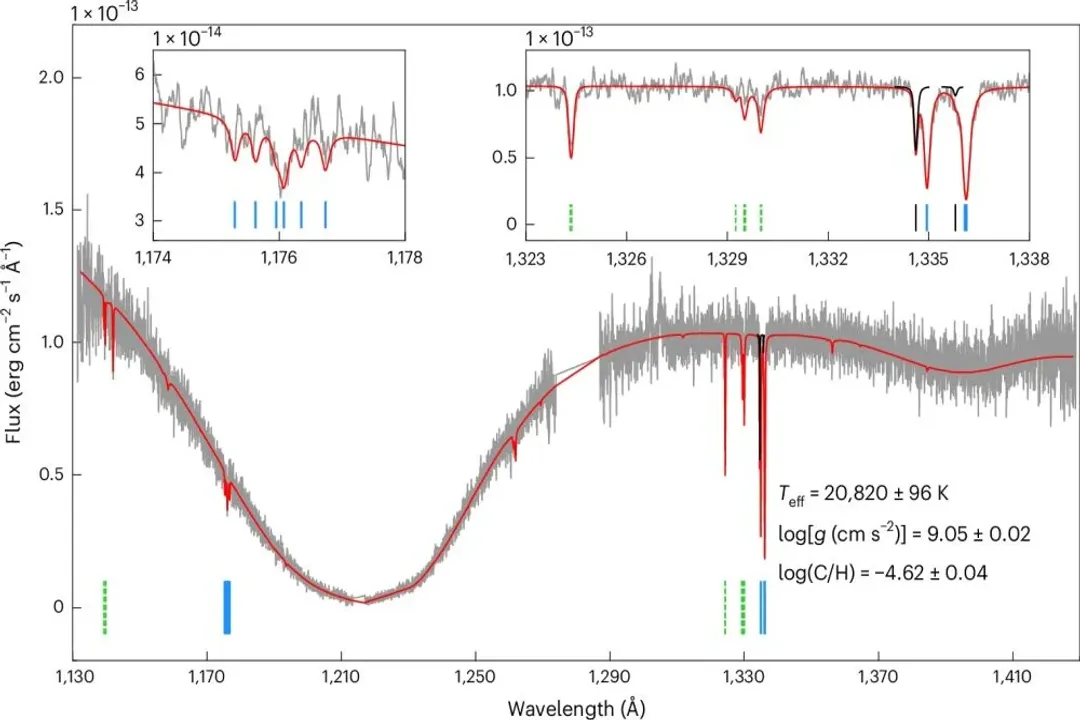
The faint, shimmering light emanating from a white dwarf is the ghost of a star, a glowing ember left behind after a stellar lifetime has concluded. For many observers, the question arises: is this object still an active nuclear furnace, perhaps on a grand, slow-burning scale? The short answer, for the vast majority of these stellar remnants, is a definitive no. A white dwarf is fundamentally a corpse, supported not by the energy of thermonuclear reactions but by a bizarre state of matter governed by quantum mechanics. [3][6]
# Stellar Remnant State
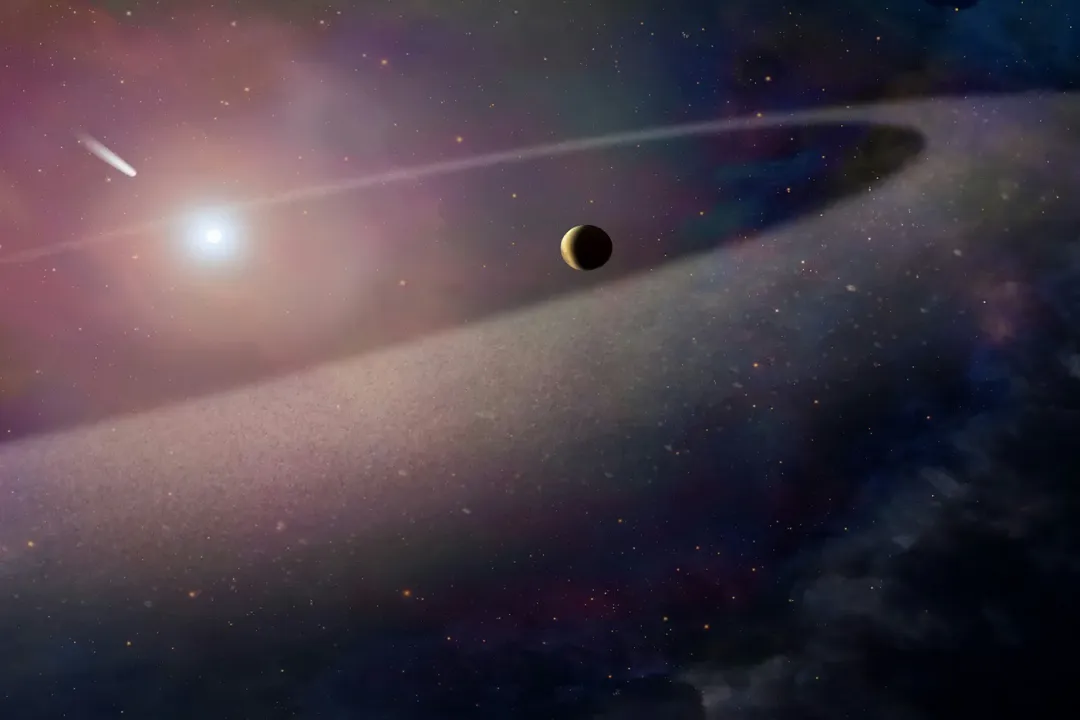
A white dwarf represents the final evolutionary stage for stars that started with masses similar to, or up to about eight times that of, our own Sun. [8] Once the star sheds its outer gaseous layers—a process that culminates in a planetary nebula—all that remains is the extremely dense, hot core. [8] This core is almost entirely composed of carbon and oxygen, though lower-mass stars might end up as helium white dwarfs. [2][6] Critically, the fuel that powered the star for billions of years—hydrogen fusing into helium in the core—is long exhausted. [3] The mechanisms that drive fusion in main-sequence stars simply cannot operate within this compact object.
# Pressure Source
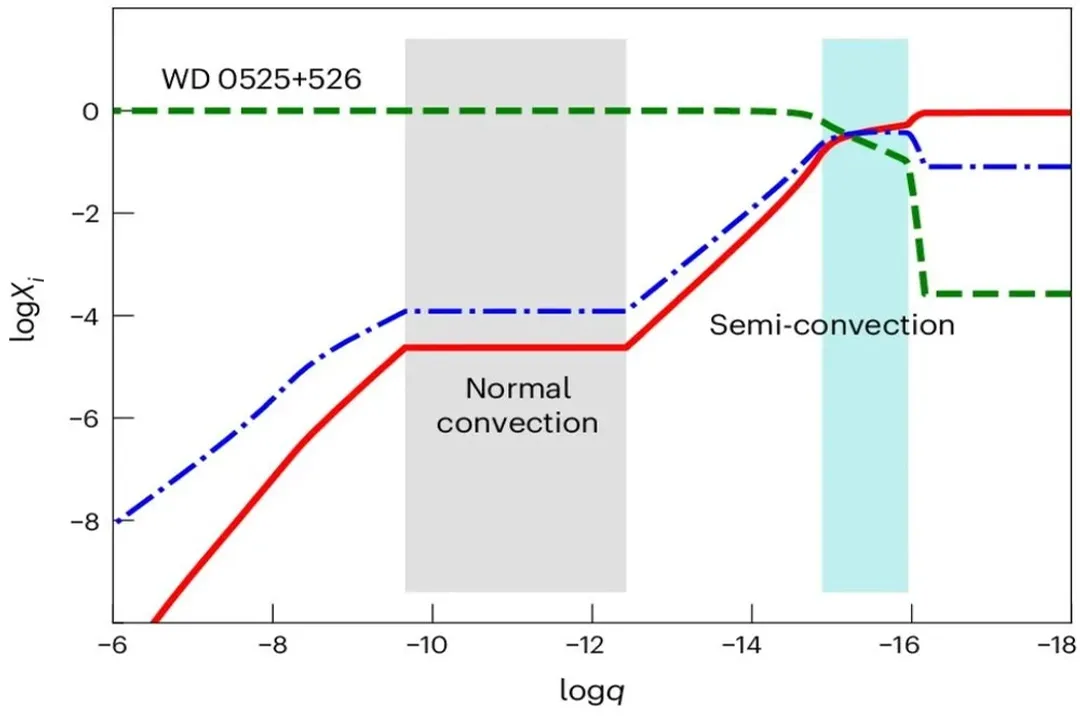
The defining feature that prevents a white dwarf from collapsing further, and the reason fusion is absent, lies in the physics of its internal structure. [3][4] In a normal star, gravity constantly tries to crush the star inward, and this crushing force is counteracted by the outward pressure generated by extremely high temperatures, which is the result of ongoing nuclear fusion. [3]
In contrast, a white dwarf is supported by electron degeneracy pressure. [3][4] This is a quantum mechanical effect where electrons are packed so tightly that the Pauli Exclusion Principle prevents them from occupying the same quantum state, creating an intense outward pressure regardless of temperature. [3] Imagine trying to compress a rigid, already densely packed spring; this pressure is not dependent on heating the spring up to make it expand. Because this pressure is independent of temperature, the star can remain stable while cooling down for eons, never needing to ignite further core burning. [4] This stability is a key difference from the dynamic equilibrium of an active star.
# Fading Light
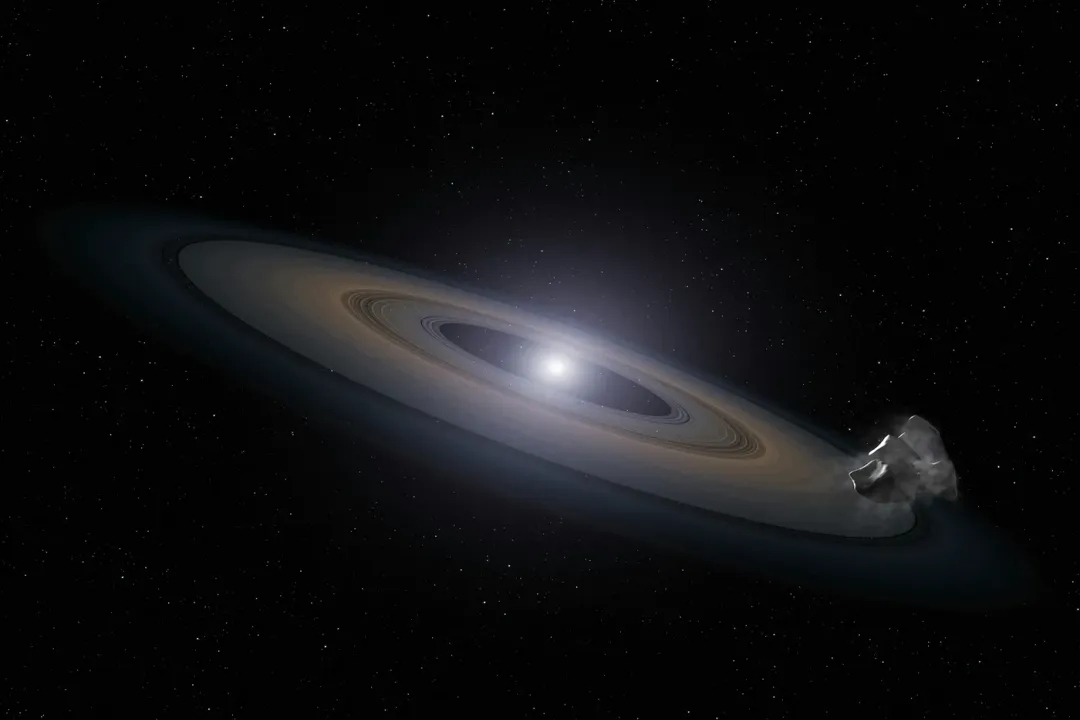
If fusion isn't occurring in the core, where does the light and heat come from? The radiation we observe from a white dwarf is the residual thermal energy trapped within its super-dense material from the star's previous life. [1][2] When the star first sheds its envelope, the core is scorching hot—often exceeding 100,000 Kelvin. [2] This intense heat causes the white dwarf to shine brightly, initially even emitting in the X-ray spectrum, as detected by observatories like Chandra. [9]
However, because the white dwarf has no internal energy source to replenish this lost heat, it behaves like a cooling ember in the cosmic night. [1] The cooling process is incredibly slow, taking billions, perhaps trillions, of years until the object dims sufficiently to become a theoretical black dwarf. [2] As the temperature drops, the color of the light shifts; very hot white dwarfs emit X-rays and ultraviolet light, while cooler, older ones glow with a reddish hue or eventually fade into invisibility. [9]
| Stellar State | Primary Energy Source | Pressure Support Mechanism | Core Temperature Dependence |
|---|---|---|---|
| Main Sequence Star | Core Hydrogen Fusion | Thermal Gas Pressure | High (Requires heat) |
| White Dwarf | Residual Heat (Cooling) | Electron Degeneracy Pressure | Low (Stable even when cold) |
The energy output of these objects is entirely dictated by their initial mass and density, which determines the rate at which their trapped heat can radiate away into space. [2] If we were tracking a hypothetical stellar remnant of one solar mass, the slow burn down to a dim cinder might take longer than the current age of the universe, giving us a profound sense of astronomical timescales. [1]
# Surface Activity
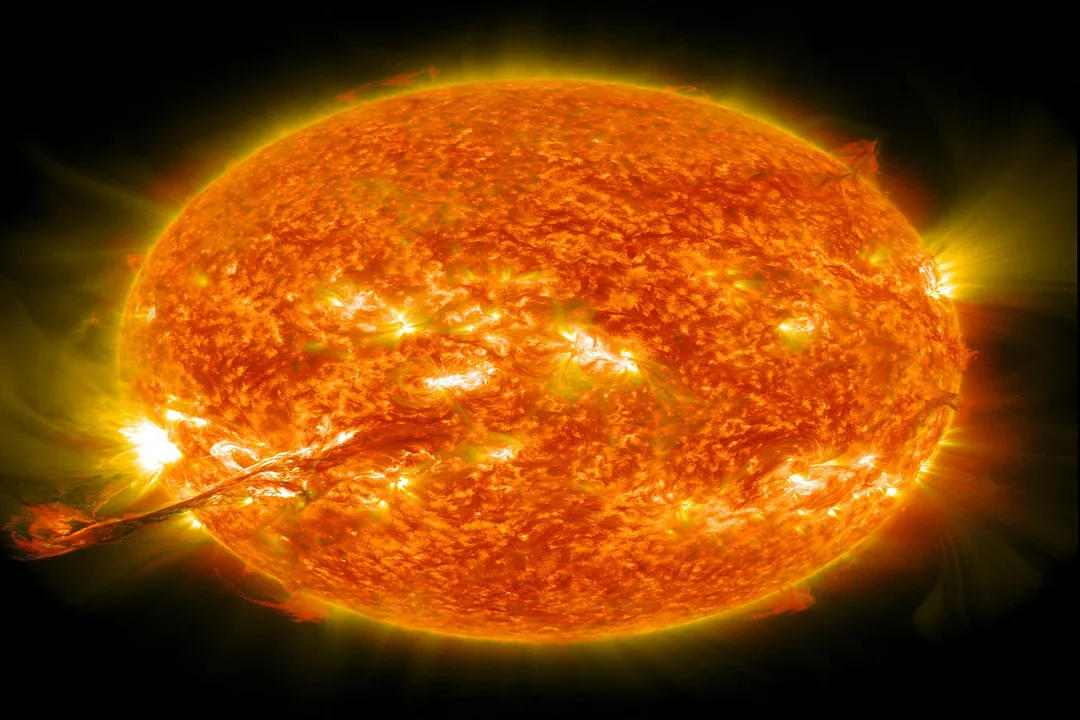
While sustained core fusion is off the table, it is important to acknowledge that some fusion events can happen on the surface of a white dwarf, leading to dramatic, though temporary, fireworks. [4] This usually occurs when the white dwarf is in a binary system and accretes matter from its companion star. [2]
This accreted material—often fresh hydrogen or helium from the companion—piles up on the white dwarf's surface. Because the white dwarf's surface gravity is immense, this fresh fuel is compressed rapidly. If enough material accumulates, the temperature and pressure at the base of this thin surface layer can momentarily become high enough to ignite runaway nuclear fusion. [4] This sudden outburst is observed as a nova explosion. [2] It is vital to understand that this event does not restart the star's life; the explosion blows off the newly accumulated layer, and the underlying core, still supported by degeneracy pressure, remains unchanged and will eventually cool down, ready to repeat the process years or millennia later. [4]
# Mergers and Extreme Cases
The universe rarely adheres to simple end-states, and white dwarfs are no exception, especially when they interact gravitationally. [5] While a single white dwarf will cool indefinitely, the collision or merger of two white dwarfs can drastically alter their future.
When two white dwarfs orbit each other closely, tidal forces and gravitational wave emission cause their orbits to decay, bringing them closer until they finally collide or merge. [5] The resulting object can be one of two things, depending on the total mass:
- Ultra-Massive White Dwarf: If the combined mass remains below a critical threshold (the Chandrasekhar limit, about 1.4 solar masses), the resulting object is simply a single, larger, hotter white dwarf supported by the same degeneracy pressure, though perhaps subject to different internal dynamics. [5]
- Reignition or Explosion: If the merger pushes the combined mass over the Chandrasekhar limit, the pressure in the core can become high enough to overcome electron degeneracy. This leads to rapid carbon fusion, resulting in a catastrophic thermonuclear explosion known as a Type Ia supernova, which completely obliterates the star. [5]
In rare scenarios involving mergers or very specific accretion paths, the resulting object might briefly reignite hydrogen or helium burning in the core, essentially becoming a very strange, short-lived star again, but these are highly exotic events deviating from the standard cooling narrative. [4][5]
# Contextualizing Stellar Evolution
Thinking about a white dwarf is like looking at a perfectly preserved historical artifact of a star. The Sun, for instance, is billions of years away from becoming one, currently fusing hydrogen steadily. [8] When it does evolve past the red giant phase, the resulting remnant will have a mass around 0.5 to 0.6 times that of the Sun, compressed into a sphere roughly the size of Earth. [2] Its future is one of quiet decline, a stark contrast to the energetic lives of stars that end in supernova explosions.
The sheer density involved is staggering. A teaspoon of white dwarf material would weigh several tons on Earth. [2] This extreme compression is what forces the electrons into the degenerate state. To try and add just one more proton to that teaspoon of matter would require overcoming the quantum resistance described by Heisenberg’s uncertainty principle, a resistance that doesn't require the star to be "hot" in the traditional sense. This means the white dwarf's destiny is fixed by its initial mass, not by any lingering, controllable fusion reactions in its heart. [3] The cosmic story of a white dwarf is one of inevitable cooling, an extremely long, slow fade toward the background temperature of space.
#Citations
What makes white dwarfs emit light? Is it continued fusion of ... - Reddit
White Dwarf - ESA/Hubble
Why doesn't nuclear fusion happen in a white dwarf? - Quora
The Sun's Transformation into a White Dwarf and Solid Carbon ...
This White Dwarf Merged With Another Star To Form An Ultra ...
White Dwarf Stars - Imagine the Universe! - NASA
Do gamma rays escape from stars when turning into white dwarfs
The Fate of Our Sun: A Journey to the White Dwarf - Medium
Field Guide to X-ray Sources :: White Dwarfs & Planetary Nebulas