What stars don't perform nuclear fusion?
The vast majority of objects we observe twinkling in the night sky are powered by nuclear fusion, the colossal engine where lighter atomic nuclei smash together to form heavier ones, releasing immense energy in the process. [1] This energy is what keeps a star hot, luminous, and stable against the crushing force of its own gravity. Yet, not every celestial body hanging in space fits this energetic definition. Some objects straddle the line between planet and true star, while others that were stars have reached a point where their fusion furnace has been forced to shut down.
# Stellar Definition
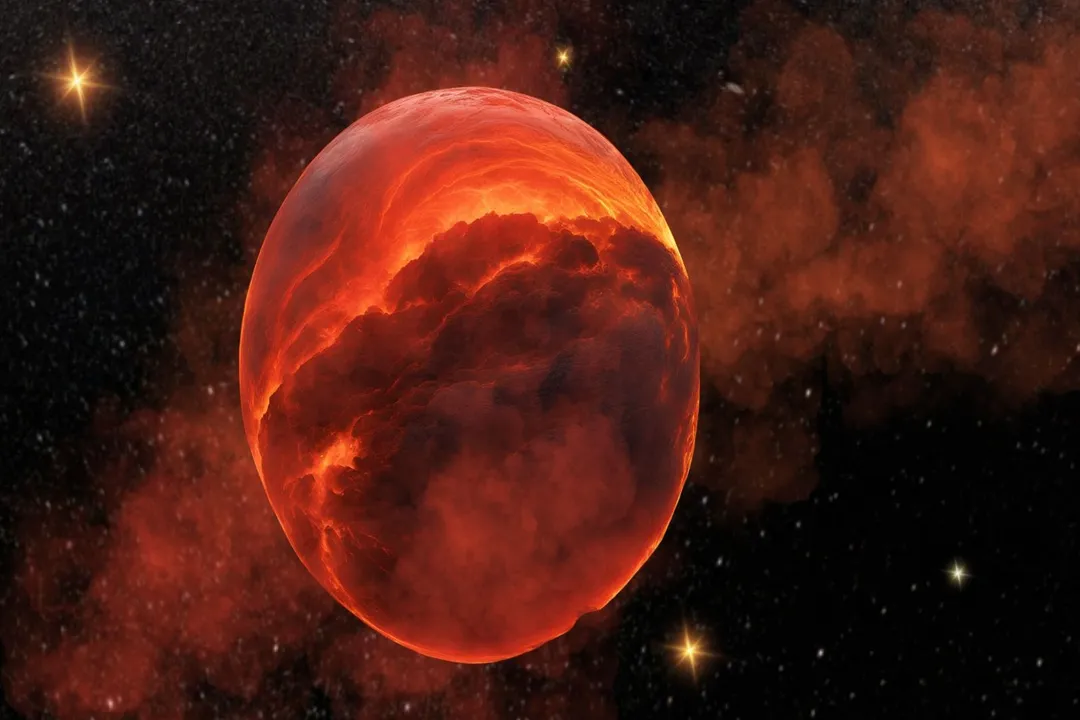
To understand what doesn't fuse, we must first nail down what does. In the context of main-sequence stars, like our Sun, the defining characteristic is the sustained burning of hydrogen into helium in the core. [1][8] This process requires extreme temperature and pressure, which only objects above a certain mass threshold can achieve and maintain over billions of years. [4] Any object that achieves this stable, long-term energy production is universally classified as a star. [8] Therefore, any object that either lacks the mass to initiate this reaction or has exhausted its fuel supply falls outside the criteria of a continuously fusing star.
# Brown Dwarfs
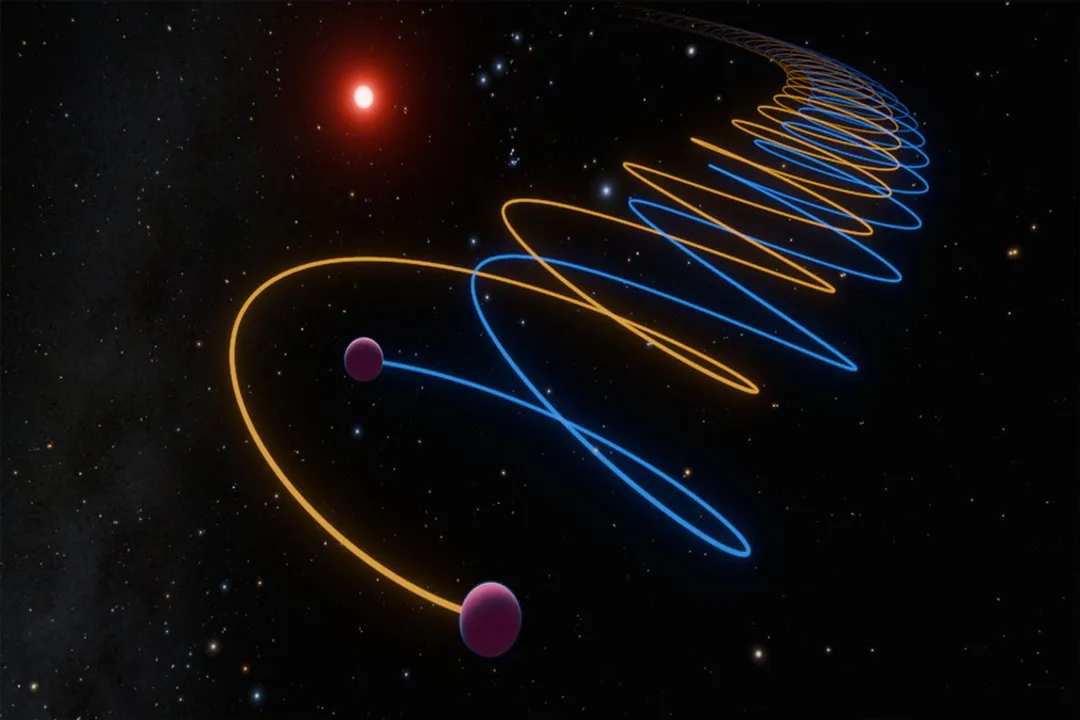
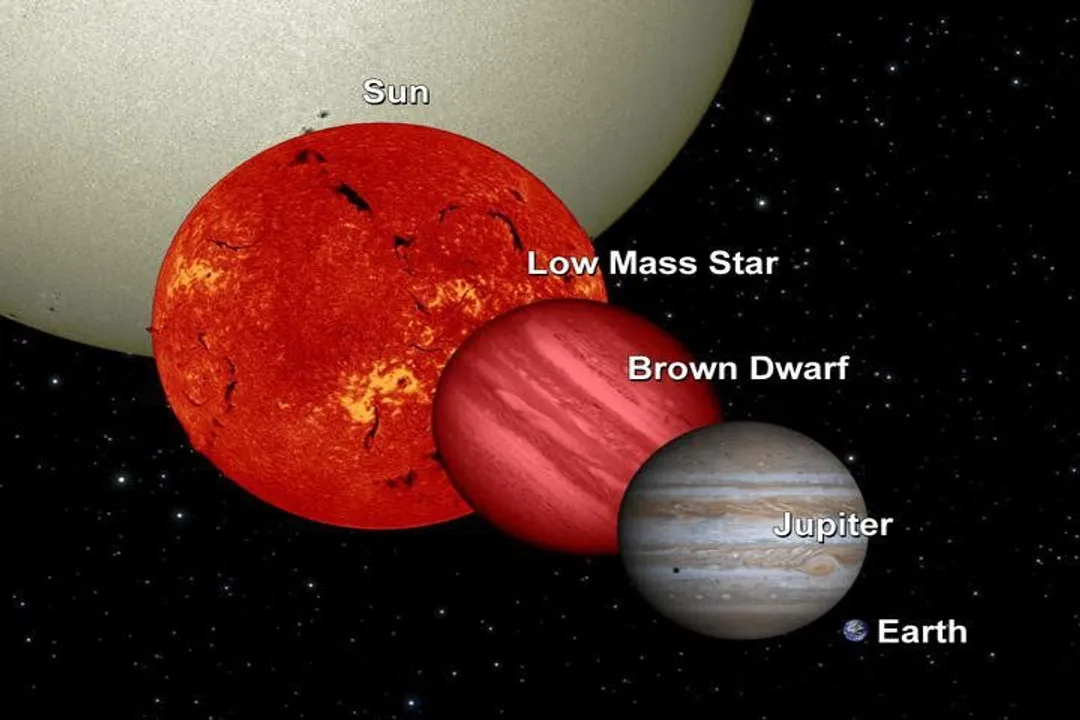
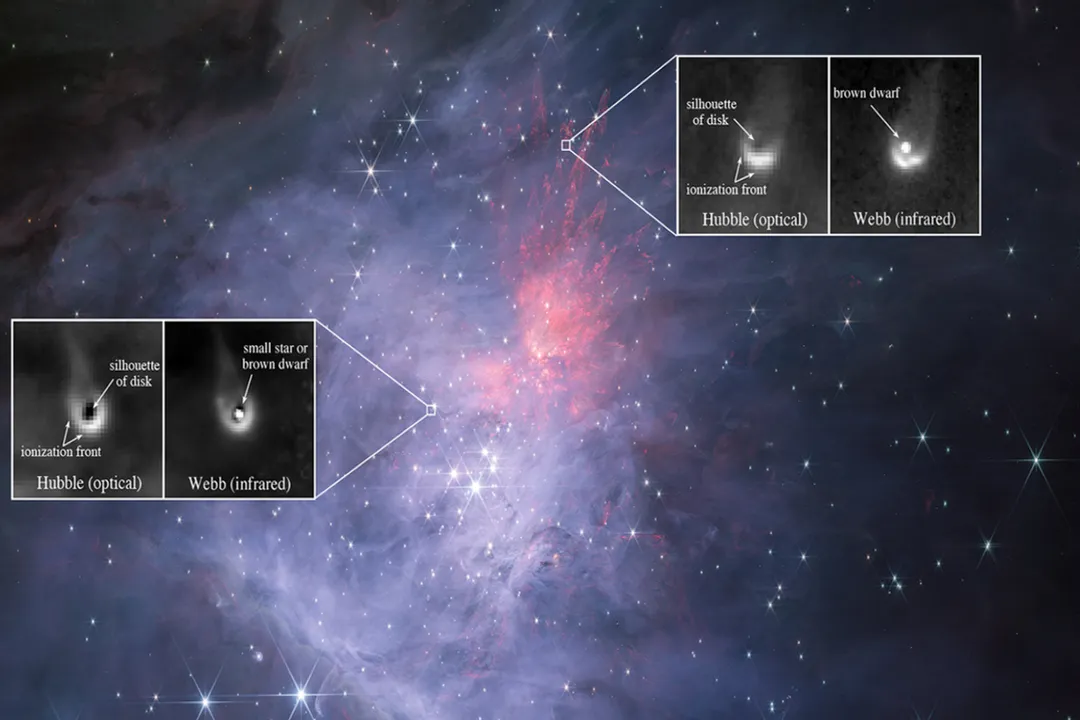
The most prominent example of an object close to stellar status but lacking the necessary furnace is the brown dwarf. [4][6] These objects are often nicknamed "failed stars" precisely because they did not accumulate enough mass during their formation to ignite and sustain the primary stellar reaction: core hydrogen fusion. [2][6]
Brown dwarfs occupy a fascinating intermediate space, mass-wise, between the largest gas giant planets—like Jupiter—and the smallest true stars, known as red dwarfs. [4] The dividing line is razor-thin, often estimated to be around solar masses, or roughly times the mass of Jupiter. [2][4]
While they cannot fuse ordinary hydrogen, many brown dwarfs are not entirely inert. They often possess enough mass and internal heat to briefly fuse a heavier isotope of hydrogen called deuterium (one proton and one neutron). [2] Deuterium fusion requires a lower temperature than regular hydrogen fusion, so these objects can shine faintly for a time, perhaps a few million years, powered by this temporary fuel source. [2] Once the initial deuterium supply is exhausted, however, the object settles down, cooling and dimming as it relies on residual heat from its formation and slow gravitational contraction for its meager energy output. [4] They are fundamentally supported by electron degeneracy pressure, similar to a planet, rather than thermal pressure from fusion, which is the hallmark of a true star. [2]
To illustrate the mass gap where fusion fails to ignite stably, consider the general ranges involved. A massive planet sits below about Jupiter masses (). Above that, an object can briefly fuse deuterium but cannot manage sustained hydrogen fusion—this is the brown dwarf range, stretching up to roughly . [2][4] Above , the core gets hot enough for stable hydrogen fusion, and a true star is born. [2]
| Celestial Body Type | Typical Mass Range (Solar Masses) | Core Energy Source | Sustained Fusion? |
|---|---|---|---|
| Gas Giant Planet | Gravitational Contraction/Residual Heat | No | |
| Brown Dwarf | to | Deuterium Fusion (briefly) / Contraction | No (Hydrogen) |
| Red Dwarf Star | Sustained Hydrogen Fusion | Yes |
This transition point—the solar mass boundary—is one of the most critical concepts in stellar astronomy. It’s less about an object being "hot" and more about it achieving the specific pressure environment required for the proton-proton chain (hydrogen fusion) to dominate its energy budget for geological timescales. [1]
# Limits of Fusion
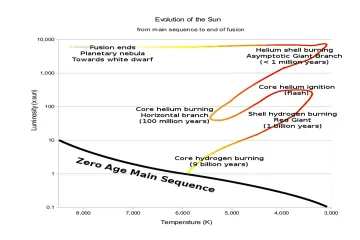
There is another way a celestial object might cease its fusion processes, though this involves objects that were stars. A star powered by fusion doesn't fuse everything available indefinitely. The process halts when the core elements become too heavy for fusion to release energy.
For massive stars, fusion proceeds through a series of steps: hydrogen to helium, helium to carbon, and then progressively heavier elements like neon, oxygen, and silicon. [7] This chain reaction only works because each step releases a net positive amount of energy. However, this sequence terminates when the core material turns into iron (). [5][7] Fusing iron actually requires an input of energy rather than releasing it. [5] Once a star develops an iron core, the energy production shuts down abruptly, leading to catastrophic core collapse and a supernova explosion. [7] While the supernova event itself creates elements heavier than iron—like gold and uranium—the stable, long-lived life of the star depended on fusion reactions that necessarily stopped before iron. [3] Therefore, an iron-core remnant, like a neutron star or a black hole, is not performing fusion in its current state. [7]
# Objects That Contract
The sources also touch upon objects that might be classified as stars based on mass but are not currently fusing hydrogen, relying instead on simpler physical processes. For instance, some discussions arise regarding very low-mass objects whose gravitational collapse has not yet heated the core sufficiently for fusion, or perhaps objects that are simply contracting slowly. [8] While an object can radiate light purely from the heat generated by gravitational contraction—a process called the Kelvin-Helmholtz mechanism—this is temporary and inefficient compared to fusion. [8]
If an object is below the mass required for hydrogen fusion, no amount of time spent contracting will turn it into a stable star; it will eventually just become a cold, dark remnant, perhaps a dense sphere supported by electron degeneracy pressure, similar to a planet or a white dwarf remnant without an active core. [5][8] The distinction rests entirely on whether the object generates energy from nuclear rearrangement or merely shrinks while releasing stored gravitational energy. [8]
It is tempting to define a star purely by its mass, but the observed physical reality shows that classification is more nuanced. An object just under the critical mass threshold might look physically similar to a true red dwarf star for a short time, potentially leading to confusion if one only observes its size and surface glow without spectroscopic analysis to check for the characteristic fusion products. [1][6] This blurring of boundaries highlights that the term "star" is intrinsically linked to an active process—sustained core fusion—rather than just a specific mass bracket alone. [1] The brown dwarfs represent the definitive astronomical objects where the difference between "almost a star" and "is a star" boils down to a handful of Jupiter masses and the successful ignition of a single, specific reaction.
Related Questions
#Citations
Does fusion reactions occur in every stars, or only in specific stars?
Are brown dwarfs which don't sustain any fusion considered stars?
What elements cannot be formed in the nuclear fusion process of ...
Stars & Brown Dwarfs - Cool Cosmos - Caltech
Can stars that are not powered by nuclear fusion exist?
Brown dwarfs — The stars that 'fail' - Space
Why do Stars Stop at Iron? - Space With Seti
Some stars don't glow by fusion; they shine by slipping on ghostly ...