Can a star burn without nuclear fusion?

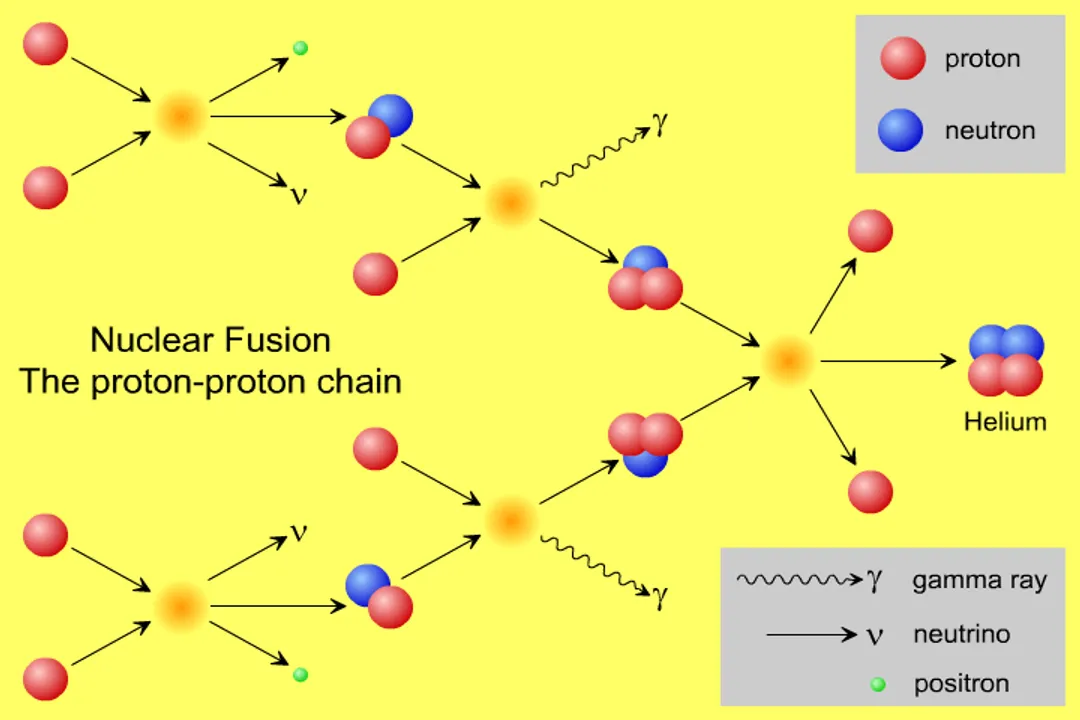
The notion of a star immediately brings to mind immense heat and light, processes powered by the relentless conversion of mass into energy deep within its core. This universally accepted mechanism is nuclear fusion, the process where lighter atomic nuclei smash together under extreme pressure and temperature to form heavier ones, releasing vast amounts of energy. [5][9] Yet, the universe is filled with objects that are star-like—objects massive enough to earn the moniker, or at least approach it—that manage to shine, glow, or simply exist in a state of equilibrium without sustaining this core hydrogen burning. The question of whether a star can exist without this primary engine forces us to carefully examine what we mean by "star" and what other physical mechanisms can generate enough power to counteract the crushing force of gravity.
# Stellar Power Baseline

For the vast majority of a star's life, specifically during its main sequence phase, its stability hinges on a delicate balance known as hydrostatic equilibrium. [4] This balance requires the outward pressure generated by thermonuclear reactions in the core to perfectly counter the inward pull of the star's own enormous gravity. [4] When we discuss a typical star, such as our Sun, we are talking about a sustained engine fueled by fusing hydrogen into helium. [5] This fusion process is incredibly efficient and long-lasting, capable of sustaining the star for billions of years. [6] A common misunderstanding is that the star is always on the verge of exploding; however, the outward pressure from fusion is precisely controlled, preventing catastrophic expansion. [4] If the fusion rate were to increase, the star would expand slightly, cooling the core and slowing the reaction back down—a built-in thermostat. [4]
# Non-Fusing Luminosity
If fusion powers the Sun, what powers objects that are often categorized near the stellar boundary but lack the necessary core temperature for sustained hydrogen fusion? These objects primarily fall into the category of brown dwarfs or perhaps very low-mass, pre-main-sequence objects. [2][7] A true star, by the most common astronomical definition, is a celestial body massive enough to initiate and maintain core hydrogen fusion. [7] Objects below this critical mass threshold, roughly $0.08$ times the mass of the Sun (), simply cannot achieve the million Kelvin required in their centers to overcome the electrostatic repulsion between hydrogen nuclei and start the reaction. [7][2]
However, just because they aren't fusing hydrogen doesn't mean they are completely dark or inert. A massive object, even if it hasn't reached the fusion threshold, is still subject to immense gravitational pressure. [8] This pressure causes the object to contract, which, in turn, heats its interior through the Kelvin-Helmholtz mechanism. [8] This contraction generates heat and light, allowing the object to "shine," albeit dimly and temporarily, without fusion. [7][8] These objects, the brown dwarfs, start their lives radiating heat from this gravitational slump. [7]
Consider the difference between the energy release mechanisms. Hydrogen fusion releases energy at a rate proportional to the fourth or higher power of the core temperature, which is incredibly potent. [6] In contrast, gravitational contraction releases energy at a rate related to the object's mass and radius, following much simpler physics. [8] A main-sequence star, like a G-type star, might maintain its luminosity for ten billion years. [6] A brown dwarf, powered only by contraction, cools and dims much more rapidly because the available gravitational energy is finite and less energetic per unit time compared to the nuclear furnace. [7] This difference in lifespan and energy density is why contraction is a temporary luminosity source, whereas fusion defines the stable maturity of a proper star. [6]
An interesting comparison arises when looking at the expected energy output. While exact figures depend on mass and age, an object just below the hydrogen-burning limit might initially radiate energy derived from contraction equivalent to perhaps $1%$ or less of a low-mass main-sequence star of the same size, but this output drops off sharply, sometimes by orders of magnitude within a few hundred million years, as the internal temperature gradient softens. [8] A main-sequence star, conversely, holds its luminosity remarkably steady for eons.

# Deuterium Burning Stars
The line between non-fusing and fusing objects becomes slightly blurred when we introduce heavier isotopes. While they cannot fuse regular hydrogen (), objects slightly more massive than the largest planets can fuse deuterium (). [2][7] Deuterium fusion requires a significantly lower core temperature—around 1 million Kelvin—than the process for regular hydrogen. [7] Objects massive enough to fuse deuterium but not hydrogen are often classified as high-end brown dwarfs. [7] Deuterium is rare, however, meaning this energy source is quickly exhausted, perhaps in only $10^7$ to $10^8$ years. [2] Once the deuterium is gone, these objects rely purely on Kelvin-Helmholtz contraction to continue radiating what little heat they have left, eventually fading into cold, dense remnants. [7]
# Post-Main Sequence Fire
To ensure we cover the spectrum of stellar burning, it is worth noting that once a true star exhausts its core hydrogen, it moves on to other forms of fusion, though these are often still classified under the umbrella of "burning." For very massive stars, after the hydrogen and helium shells have been consumed, subsequent burning stages involve fusing heavier and heavier elements. [3] Silicon burning, for instance, occurs late in the lives of the most massive stars, fusing silicon into iron. [3] While this is undeniably a process where the star "burns" without hydrogen fusion, the initial question typically implies a stable, hydrogen-burning entity. These late-stage fusion processes are much faster and less efficient at producing outward pressure relative to the gravitational stresses in a star that large, leading rapidly toward a core collapse. [3] The energy is still derived from nuclear reactions, but the mechanism and timescale are radically different from the stable hydrogen-burning phase that defines most stars we observe. [5]
# Mass Limits and Definition
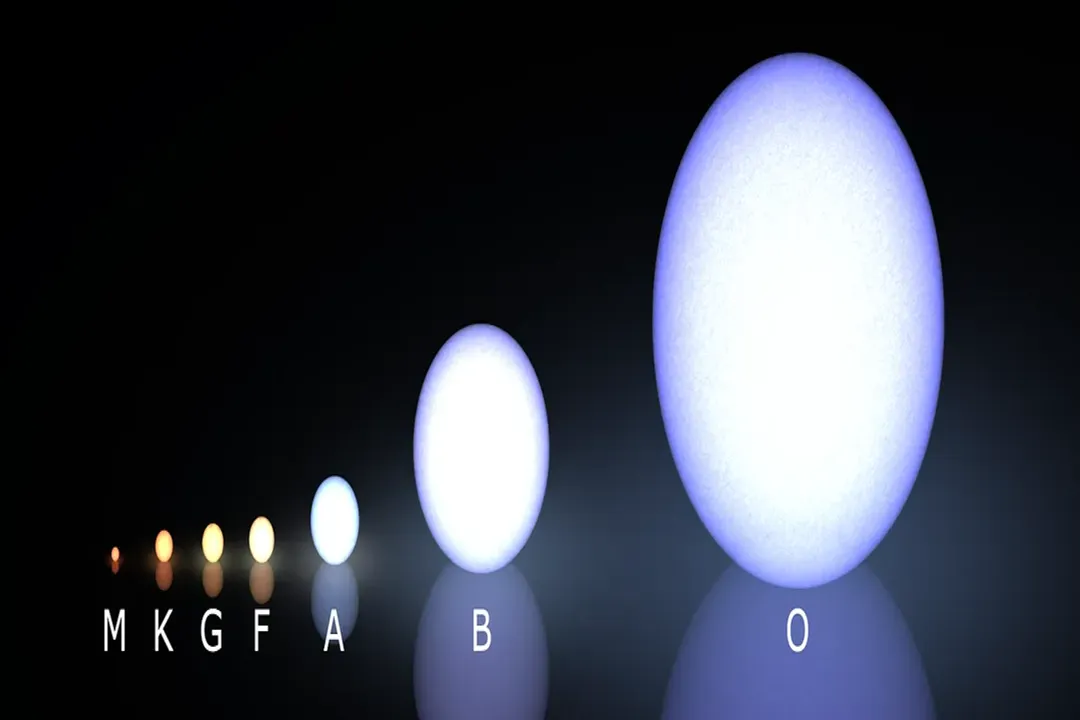
The ability to sustain fusion is fundamentally about mass. The consensus among astronomers places the boundary between a massive planet or brown dwarf and a star squarely at the mass required for sustained hydrogen fusion. [2][7] The lower limit for a main-sequence star is generally accepted to be about . [7] Below this, an object cannot maintain the necessary core temperature and pressure, regardless of how it forms. [2]
If we were to observe a celestial body that was clearly radiating significant light, but careful spectral analysis revealed no evidence of core hydrogen fusion products, we would immediately classify it based on its mass, not just its light output. If its mass were, say, , we'd call it a brown dwarf supported by electron degeneracy pressure mixed with gravitational contraction. [7] If its mass were , we'd call it a true star undergoing main-sequence life, even if it was currently in a temporary contraction phase before settling down. [5]
It is fascinating to consider the edge cases near the line. An object at will never be a true star, condemned to a slow fade after its initial deuterium burn, regardless of its initial formation environment. Conversely, an object slightly above, at , begins the process of hydrogen fusion, gaining access to an energy reserve that will keep it stable and luminous for billions of years, effectively granting it "immortality" on astronomical timescales compared to its neighbor. [6] The physics dictating this monumental difference in fate seems almost arbitrary at the transition point.
Ultimately, while mechanisms like gravitational contraction provide a temporary, non-fusing source of heat and light for star-like objects, they cannot sustain the existence of a luminous body for cosmological timescales. [8][7] The sustained energy required to maintain the structure of what we commonly call a star against gravity over billions of years demands the colossal energy density provided by nuclear fusion. [4][5] A star that is just burning in the sense of emitting light might not be fusing hydrogen, but if it is long-lived and massive enough to warrant the name, fusion—of some element—is almost certainly the ongoing source of its radiant glory. [9]
Related Questions
#Citations
This is a thought experiment, but assuming the absence of nuclear ...
Are there stars that are just burning and not powered by fusion?
Silicon-burning process - Wikipedia
Why doesn't the nuclear fusion in a star make it explode?
The Life Cycle of Stars | National Air and Space Museum
Throwback Thursday: How Fast Do Stars Run Out Of Fuel? - Medium
Can stars that are not powered by nuclear fusion exist?
How can the Sun "burn"? - StarChild - NASA