Do all stars do fusion?
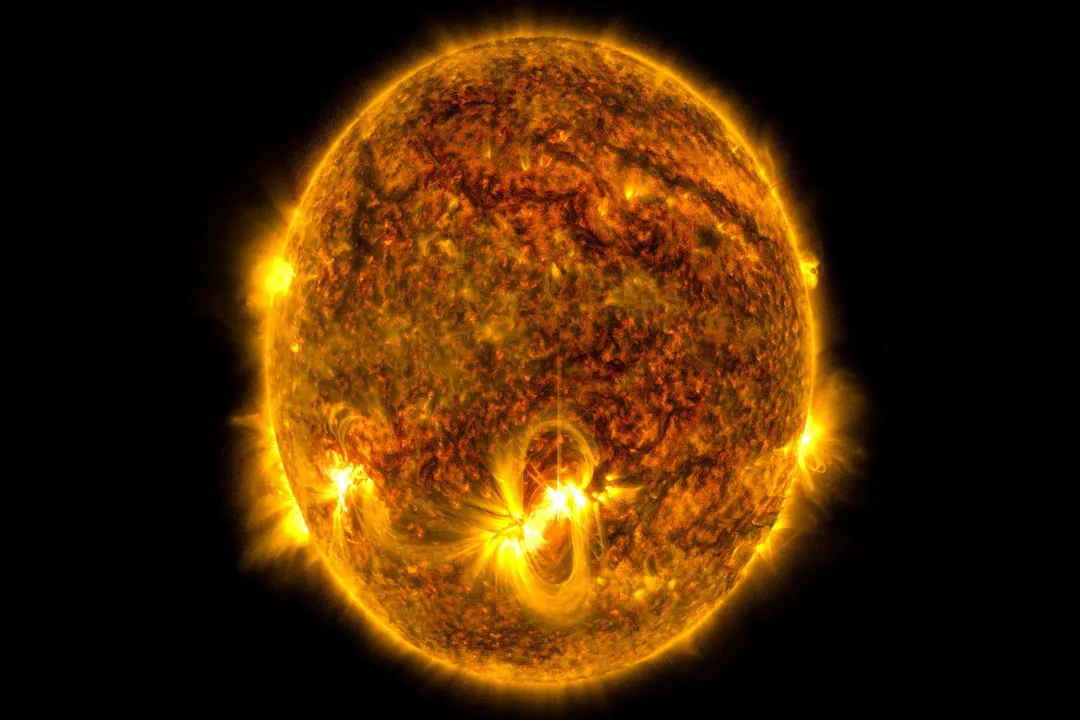
A luminous sphere of plasma held together by its own gravity, the star is defined by what occurs deep within its core: nuclear fusion. [3] This energetic process is the engine that powers the cosmos, yet the simple question of whether every star performs this feat requires a nuanced answer that delves into what we classify as a "star" and the lifespan of these celestial bodies. While the image most people hold—our Sun—is certainly a fusion reactor, the universe is populated by objects that skirt the line, forcing astronomers to define precisely when an object earns the title of true star.[1]
# Gravity's Balance

To understand the function of a star, one must first understand the fundamental conflict occurring within it. A star exists in a delicate, protracted equilibrium maintained by two immense forces: the crushing inward pull of its own gravity and the explosive outward pressure generated by thermonuclear reactions in its center. [3][9] Without the continuous energy output from fusion, gravity would rapidly win, causing the star to collapse. [9]
Nuclear fusion itself is the process where two light atomic nuclei combine to form a single, heavier nucleus. [5] This conversion is accompanied by a staggering release of energy because the mass of the resulting nucleus is slightly less than the sum of the masses of the original nuclei; this tiny bit of missing mass is converted directly into energy according to Einstein’s famous equation, . [5] For a celestial body to successfully become a star and sustain this process against the immense gravitational squeeze, its core must reach extraordinarily high temperatures—millions of degrees Kelvin—and densities. [5] It is this required sustained energy generation that forms the true litmus test for stellar status.
# Hydrogen Core
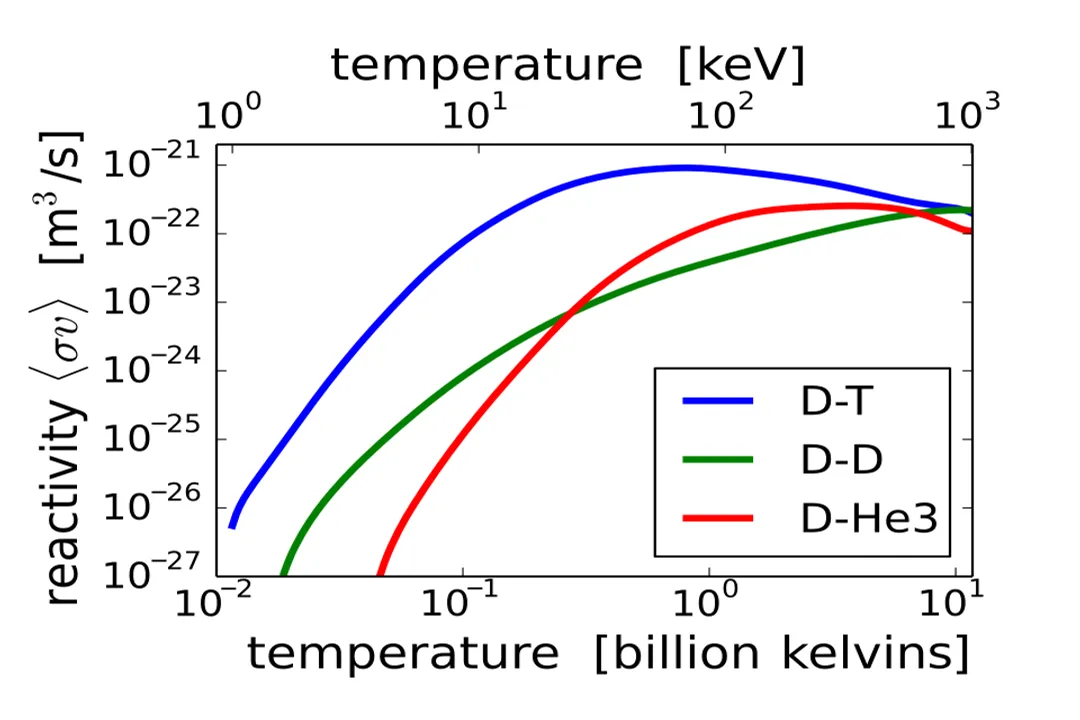
For the vast majority of its life, a star is classified as a main-sequence star, and its primary, defining activity is the fusion of hydrogen nuclei (protons) into helium nuclei. [2] This process, often referred to generally as hydrogen burning, is what keeps stars like our Sun shining steadily for billions of years. [4] In the Sun's core, four hydrogen nuclei eventually combine to form one helium nucleus, with the energy released keeping the star stable. [4] This phase is the longest in a star's existence, consuming the most abundant element in the universe as fuel. [2]
When we examine the physics of energy conversion, we see an interesting pattern emerge. The initial conversion of hydrogen to helium is highly efficient in terms of mass lost per reaction, though the total energy released over the star's lifetime is enormous. [10] The core temperature required to start this hydrogen fusion is relatively low compared to subsequent fusion stages, which explains why smaller stars can maintain this process for so long. Consider an object with just the mass of our Sun; its entire existence is dedicated to this specific reaction. [3] If an object cannot achieve the necessary core conditions to initiate this hydrogen fusion, it simply cannot join the ranks of true stars.

# Successive Burning

The stellar life cycle does not end with helium production. For stars significantly more massive than our Sun—those perhaps eight times the Sun's mass or greater—the story becomes much more dramatic and complex. [2] When the hydrogen supply in the core becomes exhausted, the core contracts, heats up, and eventually becomes hot enough to ignite the next fuel source: helium. [2]
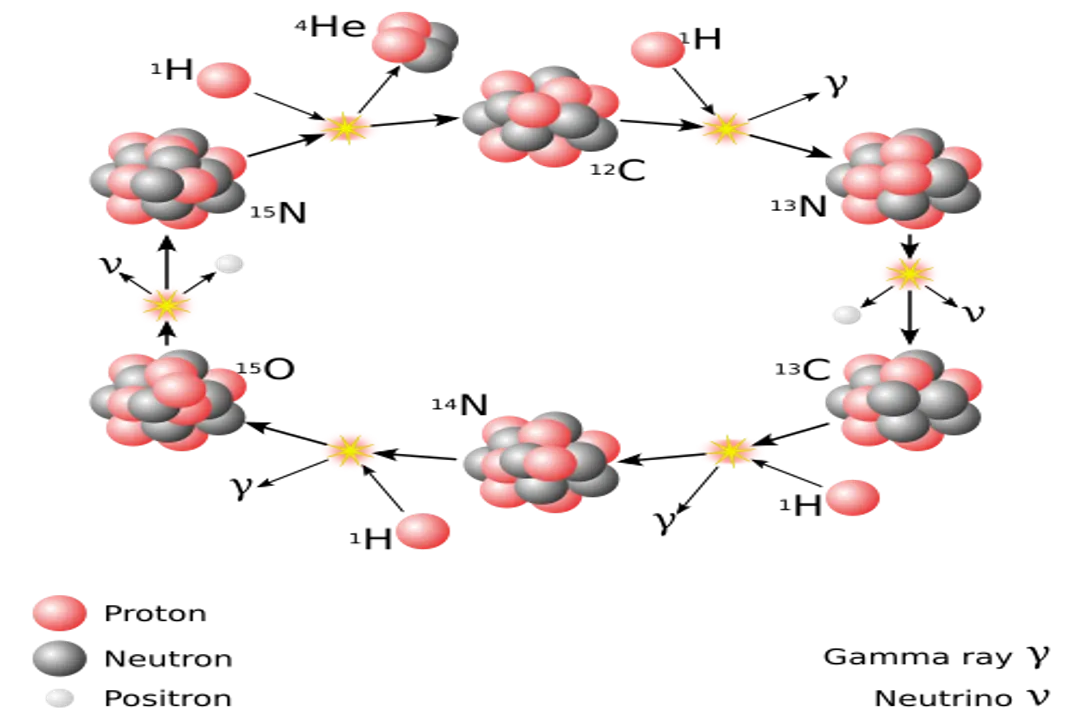
This process of building heavier elements continues sequentially. After helium fuses into carbon and oxygen, the core of these massive stars contracts again, reaching temperatures sufficient to fuse carbon, then neon, oxygen, and silicon. [2] This process, known as stellar nucleosynthesis, continues until the core is predominantly made of iron. [2][6] Iron is a cosmic dead-end for energy generation because fusing iron consumes energy rather than releasing it, leading to catastrophic instability. [2] This layered structure—with fusion happening in shells surrounding an inert core—is a feature unique to the later stages of very massive stars, something our Sun will never experience. [4] A less massive star, like the Sun, will puff up into a red giant and then shed its outer layers as a white dwarf, having only fused hydrogen and briefly, perhaps, helium. [4]
# Failed Stars
This brings us back to the central question: Do all stars do fusion? The clearest answer comes from looking at objects that almost qualify. Objects with masses below a certain threshold simply cannot generate the internal heat and pressure required to sustain the main process of hydrogen fusion. [1] These are called brown dwarfs. [1]
A brown dwarf sits in a strange place on the cosmic scale, bridging the gap between the largest planets and the smallest true stars. [1] While the minimum mass for a true star to ignite sustained hydrogen fusion is generally cited as about $0.08$ solar masses (or roughly $80$ times the mass of Jupiter), a brown dwarf falls just below this line. [1] They can briefly fuse deuterium, a heavy isotope of hydrogen, because the threshold for that reaction is much lower, but they cannot sustain the main hydrogen-to-helium reaction. [1] Therefore, an object that is massive enough to be considered a stellar remnant but too small to maintain the defining characteristic of a star—sustained hydrogen fusion—provides the firm "no" to the generalization that all objects fitting a broad stellar description must perform fusion. The difference between the smallest star and the largest brown dwarf is, quite literally, the ability to burn the most common element against gravity's relentless push. [1]
# Minimum Mass Threshold
To visualize this boundary, imagine two hypothetical objects approaching the dividing line. Object A is $0.079$ solar masses, and Object B is $0.081$ solar masses. Object A will cool and fade slowly after its brief deuterium burning phase, never achieving the equilibrium necessary for long-term stability. [1] Object B, however, achieves the critical core temperature and density necessary to ignite the proton-proton chain reaction for hydrogen fusion, stabilizing against its own gravity and beginning its billion-year main-sequence life. [3][5] This slight difference in mass dictates whether an object spends its life as a cooling remnant or a continuously shining star.
# Element Creation
The result of this constant nuclear churning, whether it is the simple hydrogen burning of a smaller star or the complex, multi-stage process within a giant, is the creation of new elements. [2][6] This process, stellar nucleosynthesis, is responsible for almost every atom found in the universe heavier than hydrogen and helium. [6]
In a star like our Sun, the primary legacy is the production of helium, which is then gently dispersed into the interstellar medium when the star dies as a white dwarf. [4] In contrast, the violent final collapse of a massive star (a supernova) forges the heaviest elements, such as gold and uranium, ejecting them across the galaxy. [6] The ongoing fusion process, therefore, is not just about luminosity; it is the fundamental chemical manufacturing process of the universe, dictating the composition of future stars, planets, and life itself. [2] If fusion ceased in any star, this chemical enrichment would stop immediately.
The key takeaway remains that while the vast majority of objects we call stars are defined by their ongoing hydrogen fusion, the universe includes objects like brown dwarfs that possess some stellar characteristics but fail this core test. [1] Thus, not every object in the stellar mass range is a fusion powerhouse; only those exceeding the critical $0.08$ solar mass threshold earn that distinction.[1]
#Videos
Do All Stars Synthesize Heavier Elements? - YouTube
Related Questions
#Citations
Does fusion reactions occur in every stars, or only in specific stars?
Stellar nucleosynthesis - Wikipedia
Star Basics - NASA Science
Do all stars undergo both hydrogen fusion and helium fusion? - Quora
Nuclear Fusion | Earth Science - Lumen Learning
The Elements: Forged in Stars | PBS LearningMedia
Do All Stars Synthesize Heavier Elements? - YouTube
Why do stars undergo nuclear fusion? - Physics Stack Exchange
Ask Ethan: When do stars turn the most mass into energy? - Medium