How does nuclear fission release energy?
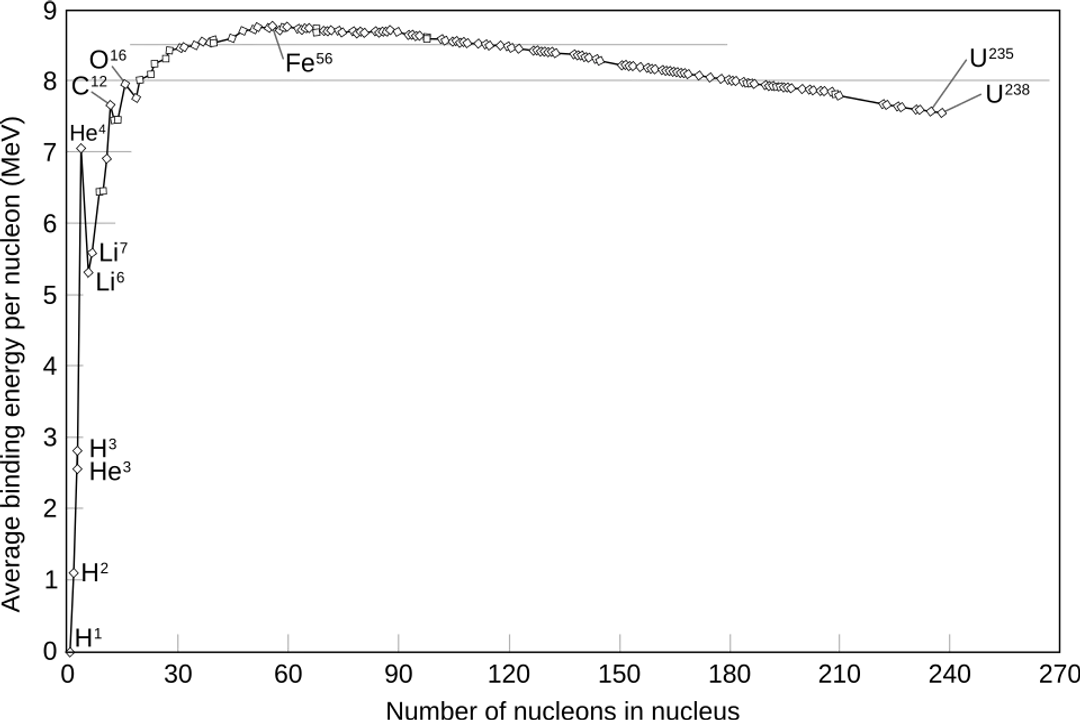
The energy locked within the atom, which powers both nuclear reactors and weapons, stems from a fundamental rearrangement of matter during a process called nuclear fission. [5][8] This process involves the splitting of a heavy atomic nucleus into two or more smaller nuclei, releasing a tremendous amount of energy in the process. [3][4] Understanding this immense power requires first appreciating the forces that hold the nucleus together in the first place.
# Atomic Glue
At the heart of every atom is the nucleus, packed tightly with protons (positively charged) and neutrons (no charge). [6] Because like charges repel, there must be an incredibly powerful, attractive force counteracting this electrical repulsion to keep the nucleus stable. [8] This force is the strong nuclear force. [9] The energy required to hold these particles together is known as the nuclear binding energy. [9] Elements found lower on the periodic table, like Iron (), have the most stable nuclei and the highest binding energy per nucleon—the particles inside the nucleus. [1] Heavy elements, such as Uranium-235 (-235), are less tightly bound, making their nuclei inherently more susceptible to breaking apart. [1]
# Initiating Fission
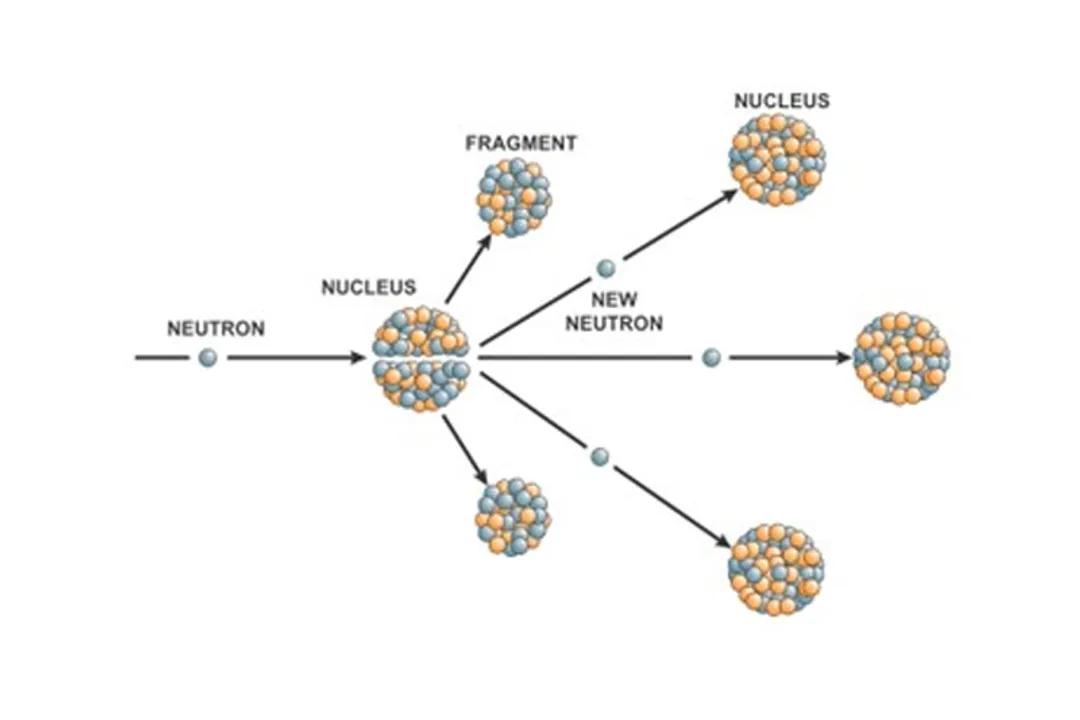
Nuclear fission is generally not a spontaneous event for useful isotopes; it must be induced. [3][7] The most common fuel used in commercial power generation is Uranium-235, an isotope that is fissile, meaning it can sustain a chain reaction. [6][7] The process begins when a free neutron strikes the nucleus of a fissile atom, like -235. [4][5] The nucleus readily absorbs this incoming neutron, forming a highly unstable, heavier isotope—in this case, Uranium-236 (-236). [3] This transient, excited nucleus vibrates intensely, overcoming the strong nuclear force that was keeping it intact. [4]
# The Splitting Event
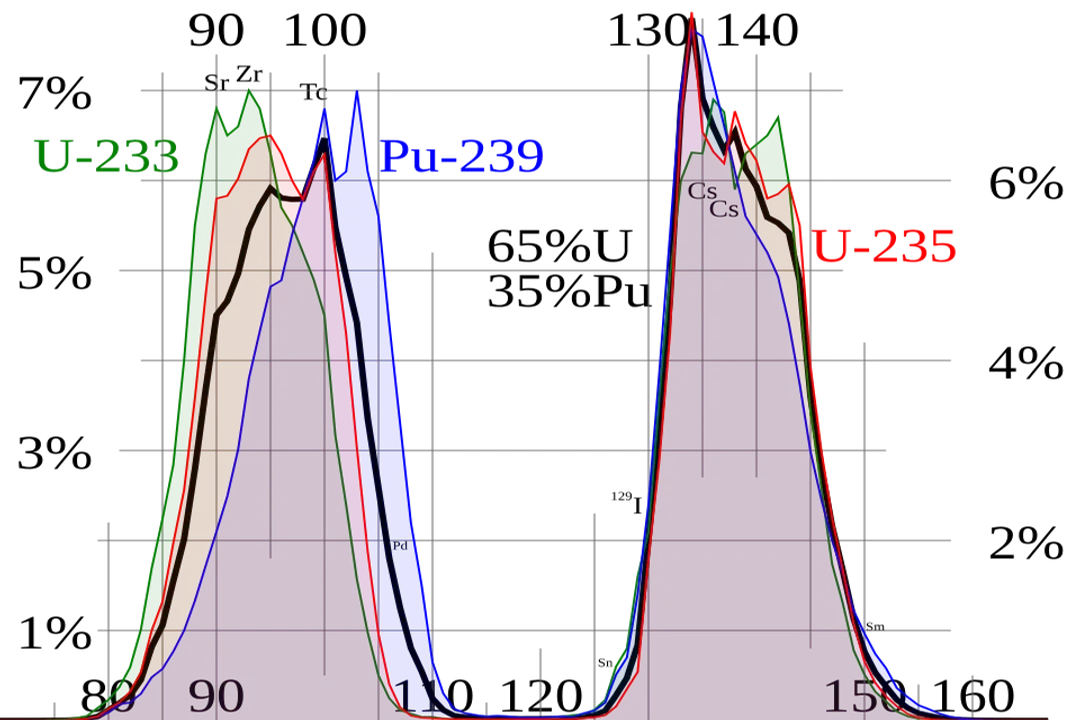
Once unstable, the -236 nucleus quickly splits, or fissions, into two smaller nuclei, often referred to as "fission products". [3][5] These products are typically lighter elements, such as Barium and Krypton, though the exact pair varies with each fission event. [3] Crucially, the splitting releases not only these new nuclei but also several additional free neutrons—typically two or three. [4][6] Furthermore, the fission products are often highly radioactive and undergo subsequent decay. [7]
The energy liberated from this split is substantial. When comparing the binding energy of the original heavy nucleus to the combined binding energies of the resulting lighter fragments, one finds that the fragments are more tightly bound and therefore more stable. [1] This difference in binding energy is the source of the released energy. [1][9] To place this into perspective, the energy released from a single fission event is on the order of millions of electron volts (), whereas a typical chemical reaction, like burning coal, releases energy in the electron volt () range, meaning nuclear energy is millions of times greater per atom involved. [8]
# Mass Defect
The reason energy appears when the nuclei split relates directly to Albert Einstein’s famous mass-energy equivalence equation, . [9] When scientists measure the total mass of the initial components (the -235 nucleus plus the incoming neutron) and compare it to the total mass of the resulting products (the two smaller nuclei, the newly released neutrons, and any associated gamma rays), they find a small but measurable difference. [3][6] The mass of the products is slightly less than the mass of the reactants. [9] This "missing mass," known as the mass defect, has been converted directly into kinetic energy and radiation, as described by the equation. [9] In a commercial reactor, capturing this kinetic energy from the fast-moving fragments and neutrons is the first step in generating usable heat. [4]
# Chain Reaction
The release of two or three new neutrons during the initial fission is what makes a sustained reaction possible. [4][6] If at least one of these newly released neutrons successfully strikes another nearby -235 nucleus, causing it to fission, the process repeats itself, creating a nuclear chain reaction. [5][7]
In a controlled environment like a nuclear power plant, this reaction must be managed carefully. If the reaction proceeds too slowly, it will die out; if it proceeds too quickly, the energy release becomes uncontrolled, leading to an explosion. [5] The state of the reaction is defined by the multiplication factor (). [3]
- If , the reaction rate decreases (subcritical).
- If , the reaction is stable and self-sustaining at a constant rate (critical). [3][7] This is the goal for steady power generation.
- If , the reaction rate increases exponentially (supercritical). [3]
Controlling this factor relies on managing the population of neutrons. Reactors employ materials called control rods, often made of Boron or Cadmium, which are highly effective at absorbing neutrons without causing fission. [3][4] By inserting these rods deeper into the reactor core, more neutrons are absorbed, slowing the reaction ( decreases); withdrawing them allows more neutrons to cause further fissions, increasing the rate ( increases). [4] The statistical distribution of neutrons is key here; while one neutron causing one new fission () seems simple, the actual behavior relies on the probability of a neutron traveling just the right distance, at the right speed, to strike another nucleus before escaping the core or being absorbed by non-fissile material. [2] This requires precise engineering of the fuel geometry and moderator materials. [4]
| Condition | Multiplication Factor () | Result |
|---|---|---|
| Subcritical | Reaction dies out | |
| Critical | Steady power production | |
| Supercritical | Power output increases exponentially |
# Energy Conversion
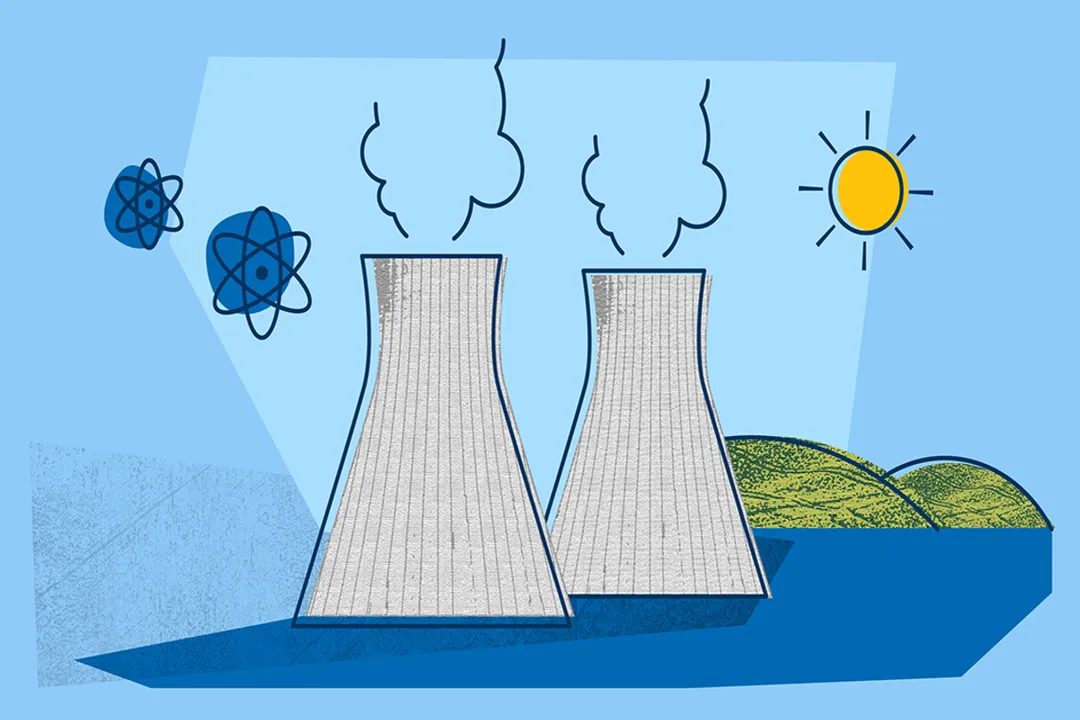
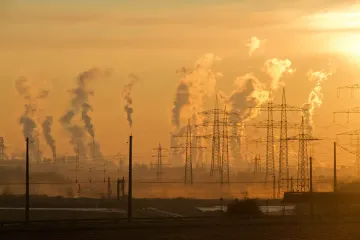
The direct result of the fission chain reaction is intense, localized heat produced within the fuel elements. [6][8] This thermal energy is the usable output that separates nuclear power from chemical energy production. [9] In a typical Pressurized Water Reactor (PWR) or Boiling Water Reactor (BWR), this heat must be transferred to generate electricity. [7]
The process generally follows these steps:
- Heat Generation: Fission fragments slam into surrounding atoms in the fuel, creating kinetic energy that manifests as heat. [4]
- Heat Transfer: A coolant, usually highly purified water, circulates through the reactor core, absorbing this heat. [7]
- Steam Production: The hot, pressurized coolant passes through a heat exchanger (steam generator) in a PWR, transferring its energy to a separate water loop, which flashes into high-pressure steam. [7] In a BWR, the water flowing over the core boils directly into steam. [7]
- Electricity Generation: This high-pressure steam is directed to spin a turbine, which is connected to an electrical generator, producing electric power. [7][8]
This conversion pathway, from nuclear reaction to spinning turbine, shares a fundamental similarity with fossil fuel power plants—both rely on boiling water to drive a steam engine—but the energy source driving the heat generation is fundamentally different. [1]
# Reactor Materials
The choice of materials surrounding the fuel is nearly as important as the fuel itself for maintaining a stable reaction. [4] While the fast neutrons released during fission carry a lot of energy, they are less likely to cause subsequent fissions in -235 than slower (thermal) neutrons. [6] To increase the probability of sustaining the chain reaction, a moderator material is needed to slow these neutrons down. [4][6] Common moderators include purified light water, heavy water, or graphite. [6] The moderator effectively slows the neutrons down to thermal energies where -235 is much more susceptible to capture and subsequent fission. [3]
The core assembly must balance the neutron economy: slowing them down sufficiently to maintain , while also ensuring they are not absorbed by the moderator, the control rods, or the structural materials themselves. [4] Furthermore, the entire system must be encased in a robust vessel capable of containing the immense pressures and temperatures associated with the heat transfer process, a necessity born from managing the sheer density of energy being created in such a small volume. [8] This need for containment highlights the engineering challenge of harnessing the binding energy contrast between heavy and light nuclei safely. [1]
#Videos
Nuclear fission | Physics | Khan Academy - YouTube
Related Questions
#Citations
How do both fission and fusion generate energy? - EUROfusion
How does both nuclear fusion and nuclear fission release energy?
Nuclear fission - Wikipedia
The Fission Process - MIT Nuclear Reactor Laboratory
DOE Explains...Nuclear Fission - Department of Energy
Physics of Uranium and Nuclear Energy
Nuclear explained - U.S. Energy Information Administration (EIA)
What is Nuclear Energy? The Science of Nuclear Power
Fission - Understand Energy Learning Hub - Stanford University
Nuclear fission | Physics | Khan Academy - YouTube