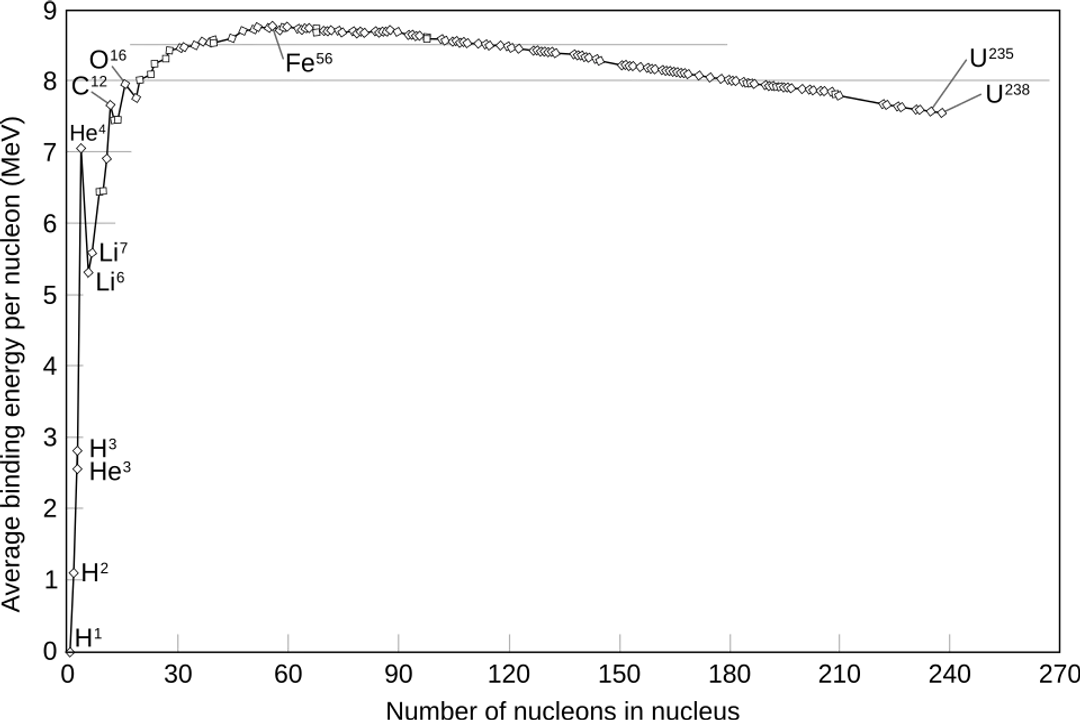
When comparing the binding energy of the initial heavy nucleus to the resulting fragments, where does the substantial energy liberated during fission come from?
Answer
The difference in binding energy; the fragments are more tightly bound
The released energy originates from the difference between the binding energy of the original nucleus and the combined binding energies of the lighter fragments, as the fragments are more tightly bound and thus more stable.
#Videos
Nuclear fission | Physics | Khan Academy - YouTube
Related Questions
What process releases the energy derived from the fundamental rearrangement of matter in nuclear applications?What is the incredibly powerful, attractive force counteracting electrical repulsion to keep protons and neutrons tightly packed in the nucleus?Which element is noted for having the most stable nuclei and the highest binding energy per nucleon?How is nuclear fission typically initiated in fissile isotopes like Uranium-235?What is released during the splitting of an unstable U-236 nucleus, in addition to the two smaller fission products?When comparing the binding energy of the initial heavy nucleus to the resulting fragments, where does the substantial energy liberated during fission come from?What term describes the small but measurable difference where the total mass of the resulting fission products is less than the initial reactants?What multiplication factor ($k$) defines a nuclear reaction that is stable and self-sustaining at a constant rate for steady power generation?What is the primary function of control rods, often composed of materials like Boron or Cadmium, in a nuclear reactor core?What is the necessary role of a moderator material, such as purified light water or graphite, in sustaining a chain reaction?In the process of energy conversion within a reactor, what substance is used to circulate through the core and absorb the heat generated by fission fragments?