Which star stays in the same place?
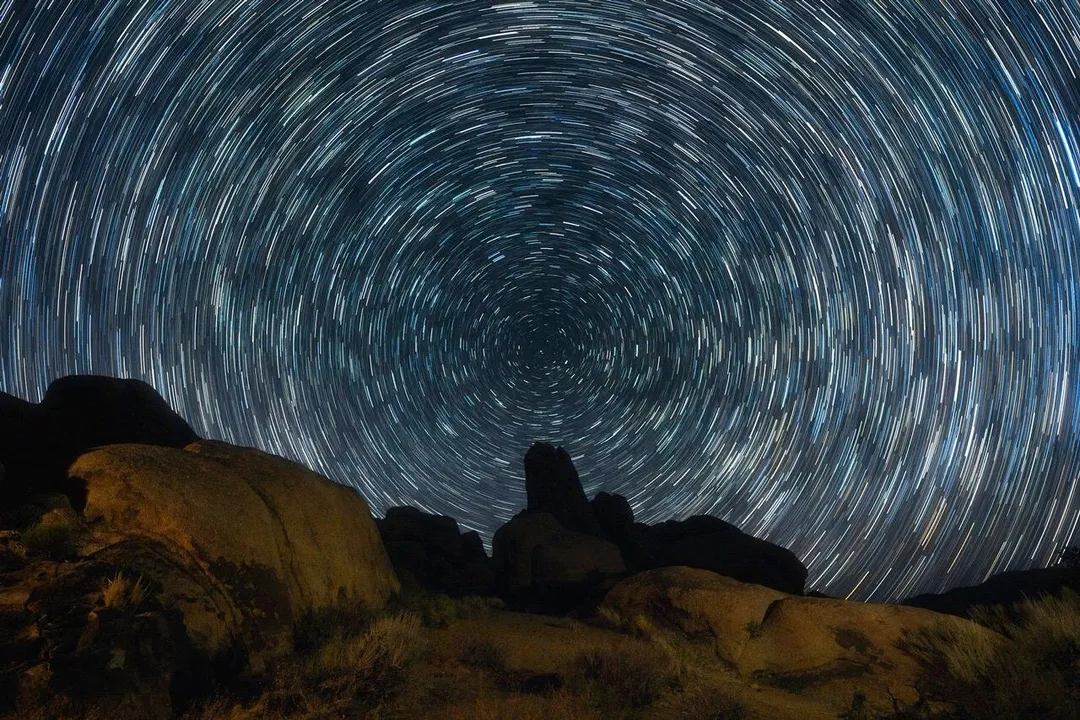
The night sky appears to be a vast, ever-shifting canvas, with the Moon waxing and waning and constellations seemingly turning overhead throughout the hours of darkness. Yet, if you spend a night observing, you will notice one star that seems stubbornly fixed in its spot, acting as a celestial anchor. This seemingly motionless point is the star we commonly call the North Star, and its steadfastness is a direct consequence of the intricate mechanics of our own planet. [2][5]
# Fixed Point
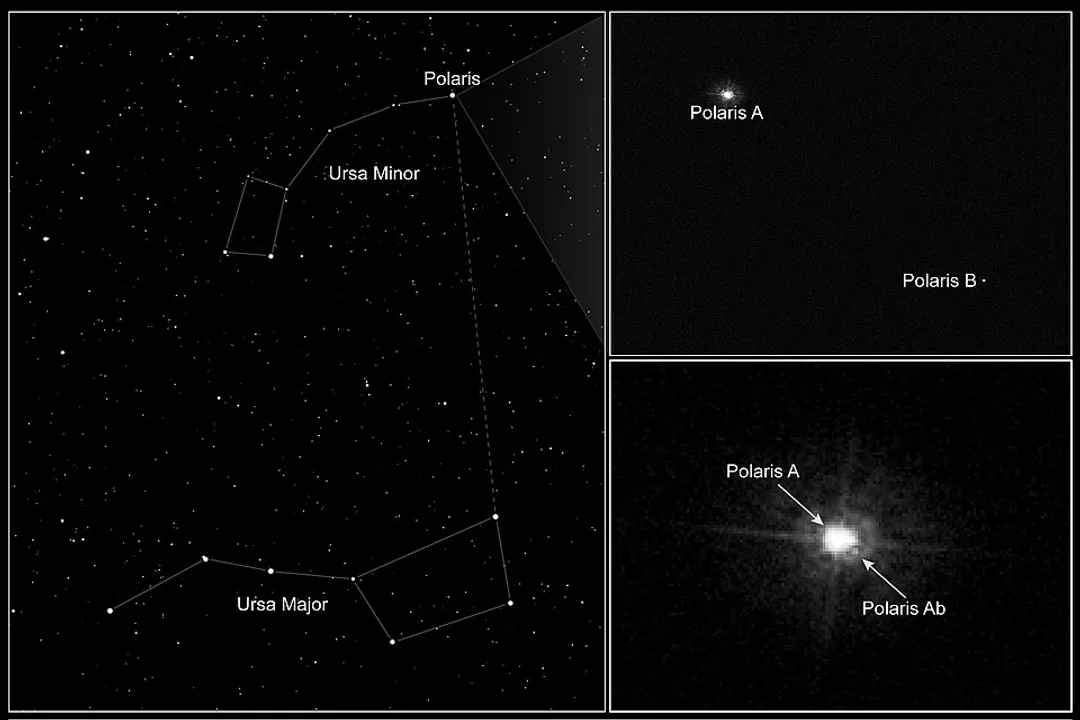
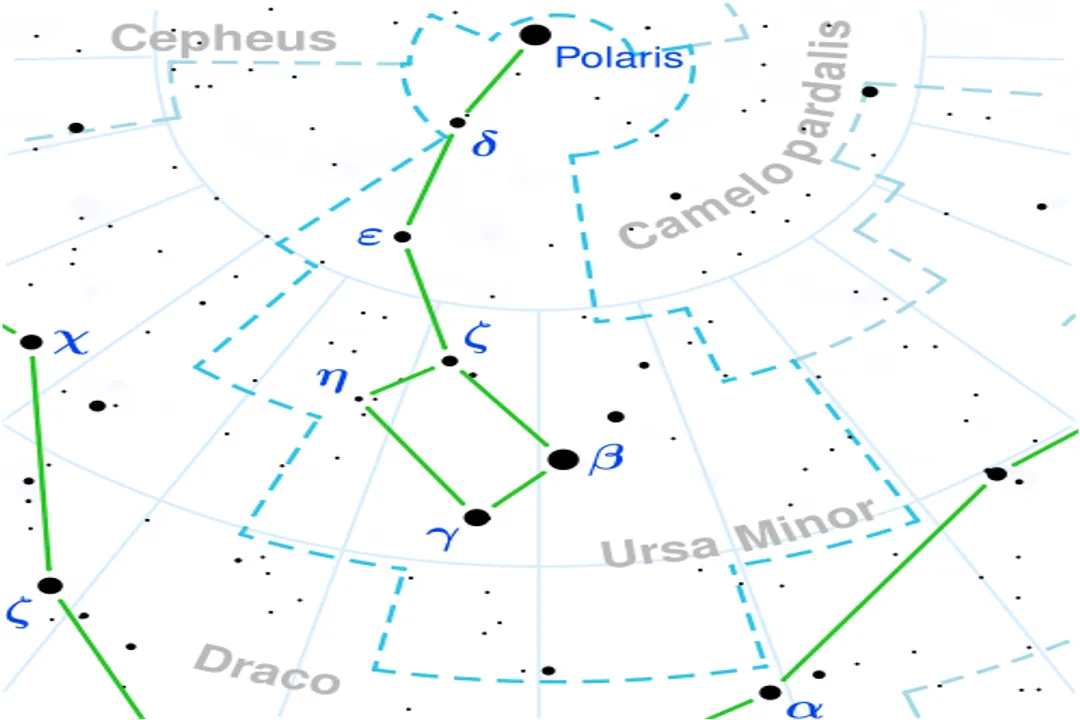
The specific star that occupies this near-fixed position in the sky for observers in the Northern Hemisphere is Polaris, which is part of the Ursa Minor (Little Dipper) constellation. [1][2] It is important to note that Polaris is not the brightest star in the sky, nor is it the center of the heavens; rather, its fame comes from its unique alignment with the Earth's axis of rotation. [2][3]
The appearance of a fixed point in the sky is not due to Polaris itself hovering in a unique, immovable location relative to the universe, but due to where it lies in relation to us. [5] Imagine spinning a globe: the top and bottom points, the poles, are the only points on the surface that do not trace a circular path around the axis as the globe spins; they simply pivot around it. [6] In the celestial sphere model, the Earth's rotational axis points almost directly toward a specific spot in space. [5][6] Polaris happens to be very close to this North Celestial Pole (NCP). [1][6]
Because Polaris is so close to the NCP, as the Earth rotates eastward beneath it, Polaris appears to stay put while every other star traces arcs around it. [5][3] This phenomenon is what allowed ancient navigators and modern stargazers alike to rely on Polaris for determining true north. [2]
# Earth Rotation
To fully grasp why Polaris remains stationary while others wheel by, we must consider the Earth's motion in detail. [5] The Earth spins, or rotates, on its axis once every sidereal day (about 23 hours, 56 minutes, and 4 seconds). [5] This rotation is what causes the daily cycle of sunrise and sunset. [2]
When you look toward Polaris, you are essentially looking down the line of the Earth's axis. [6] Stars that are far away from this rotational axis—like those in constellations such as Orion or the Big Dipper—appear to move in distinct circles around the NCP over the course of the night. [3] The closer a star is to the NCP, the smaller its visible circle will be. [1] Since Polaris is currently less than one degree away from the NCP, its path is so small that it appears fixed to the naked eye. [1][6]
An interesting way to visualize this relative motion is to consider what would happen if you were positioned on the North Celestial Pole itself. If you could stand at that point in space, the Earth would be spinning directly underneath you, and Polaris would be directly beneath your feet, never moving in your field of view. [6] Conversely, if you traveled south, the NCP would sink lower toward the northern horizon. [3] This dependency on latitude is a key takeaway for anyone using the star for navigation.
It is an excellent mental check to realize that the apparent stillness of Polaris is an illusion created by our own planetary motion. If the Earth stopped spinning, every star, including Polaris, would appear fixed relative to the distant background stars, though the Sun would no longer rise or set. [5]
# Celestial Pole Nearness

Polaris is not exactly at the North Celestial Pole; it is currently about 0.7 degrees away from it. [1] This offset means that over the course of a few hours, Polaris does trace a tiny circle around the true pole, but this circle is minute enough that for most practical purposes, it is considered fixed. [3][6]
The star's current close proximity is quite fortunate for us, as it offers a reliable navigational point. However, this proximity is temporary on a cosmic timescale. [1] The reason for the alignment is the Earth's axial tilt relative to its orbit around the Sun, which is approximately $23.5$ degrees. [2]
To provide a clearer picture of how Polaris compares to other prominent celestial objects, consider this simplified comparison table based on how they appear to move from a mid-northern latitude:
| Star/Object | Apparent Movement (Approximate) | Proximity to NCP | Navigational Use |
|---|---|---|---|
| Polaris | Appears nearly fixed | Very close () | Primary North reference |
| Stars in Ursa Major (Big Dipper) | Large counter-clockwise arcs | Moderate distance | Rotates significantly |
| Stars near the Celestial Equator | Trace large circles parallel to the horizon | Far from the pole | Rise and set daily |
| The Sun/Moon | Rises in the East, sets in the West | N/A (Orbit affects path) | Daily illumination |
This table helps illustrate that the apparent fixed nature is entirely a matter of angular separation from the pole. A star that is not close to the NCP will always appear to move significantly over the course of the night. [3]
# Locating the Marker
Since Polaris is not the brightest star, finding it without assistance can sometimes be tricky, especially in areas with significant light pollution. [2] Fortunately, Polaris is easily located using one of the sky's most recognizable asterisms: the Big Dipper, which is part of Ursa Major. [2]
Here is a simple, step-by-step method based on this well-known grouping:
- Find the Big Dipper: Locate the seven bright stars that form the shape of a large dipper or ladle. [2]
- Identify the 'Pointer Stars': Focus on the two stars that form the outer edge of the bowl of the dipper—these are Merak and Dubhe. [2]
- Follow the Line: Imagine a straight line extending directly away from the bowl, passing through these two pointer stars. [2]
- Count and Stop: Follow this imaginary line outward about five times the distance between the two pointer stars. [2] Polaris will be found at the end of this line, marking the tip of the handle of the Little Dipper (Ursa Minor). [1][2]
Once found, Polaris will be the brightest star in that immediate vicinity. While it is sometimes mistaken for a brighter star nearby, its key identifier remains its fixed position relative to the horizon over several hours. [2] Knowing this method bypasses the need to memorize the fainter stars of the Little Dipper itself. [1]
# Southern Skies
A common question that arises when discussing the North Star is whether there is an equivalent "South Star". [3] The answer is slightly more complicated. While the North Celestial Pole is currently occupied by a relatively bright star (Polaris), the South Celestial Pole (SCP) is currently located in a relatively empty patch of sky. [3]
There is no single, bright star that serves as a convenient, fixed marker for true south in the same way Polaris marks north. [3] The nearest bright star to the SCP is Sigma Octantis, but it is very faint—only about the $5.5$ magnitude—making it difficult to see without optical aid. [3]
This absence of a bright South Star means that finding south relies on locating other constellations, most famously the Southern Cross (Crux). [3] By taking the long axis of the Southern Cross and extending it roughly four and a half times its length, one can approximate the location of the South Celestial Pole. [3] Unlike the Northern Hemisphere, where a clear, accessible star helps, the Southern Hemisphere requires knowledge of a specific asterism to find its celestial pole. This difference in celestial geography highlights how lucky Northern Hemisphere observers are regarding navigational simplicity. [3]
# Changing Poles
The reliability of Polaris as the North Star is not a permanent fixture of the cosmos; it is a temporary alignment within a long, predictable cycle known as axial precession. [1] Axial precession is the slow wobble of the Earth's axis, similar to how a slowing top wobbles before it falls. [1][5]
This wobble takes a substantial amount of time to complete one full cycle—approximately 26,000 years. [1] Because of this slow precession, the star that occupies the position of the North Celestial Pole changes over millennia. [1]
Roughly 2,000 years ago, during the time of the ancient Egyptians, the star closest to the NCP was Thuban (Alpha Draconis) in the constellation Draco. [1] If you were observing the sky from ancient Egypt, Thuban would have been your stationary reference point. [6] As the wobble continues, the NCP will drift away from Polaris, and in about twelve thousand years, the bright star Vega in the constellation Lyra will be the closest star to the North Celestial Pole. [1]
This long-term view illustrates that the concept of a North Star is relative to the epoch. For any given generation of observers, the star nearest the pole serves that function, but its identity changes due to the Earth's mechanics, not the stars' actual movement across the galaxy. [5] This is a crucial distinction: Polaris is fixed relative to Earth's rotation, but it is not fixed relative to the distant background stars, nor will it remain the pole star forever. [5][1]
When considering the vastness of cosmic time, this celestial shift provides a unique marker for dating astronomical events recorded in ancient texts. For instance, finding out which star was the pole star in a historical record can help date when that record was written, provided one accounts for precession and nutation (smaller nodding motions of the Earth's axis). [1] This understanding helps confirm that ancient observations align with our current models of Earth mechanics, lending credence to the heliocentric model and the reality of planetary rotation. [7]
# Practical Implications for Observers
For anyone interested in practical applications, such as setting up a camera for long-exposure astrophotography or simply orienting oneself in the wilderness, knowing Polaris's role is paramount. [2] If you are in the Southern Hemisphere, remembering the Crux method is essential, as looking north for Polaris will lead you astray. [3]
When setting up tracking equipment for deep-sky photography, aligning the mount's polar axis as closely as possible with Polaris (or the SCP) allows the equipment to perfectly counteract the Earth's rotation, keeping the telescope fixed on the target celestial object for extended periods. [4][9] Even a slight misalignment will result in star trails, even with tracking engaged, unless the target is very close to the celestial pole. [4] This is why knowing the exact position, even if it’s slightly off the true pole, is vital for equipment calibration. [6]
Think about how latitude affects viewing. An observer standing directly at the North Pole ( N latitude) would see Polaris directly overhead at their zenith. [6] An observer standing on the Equator ( latitude) would see Polaris exactly on the northern horizon, skimming the land surface. [5] For every degree an observer travels south from the North Pole, Polaris drops one degree closer to the horizon. [5] This one-to-one relationship between latitude and Polaris’s altitude above the horizon provides a simple, surprisingly accurate method for determining one's north-south position anywhere in the Northern Hemisphere, an application that predates modern electronic navigation by millennia. [2]
#Videos
Why is the North Star Always in the Same Place? - YouTube
Why Is The North Star Always In The Same Place? - Physics Frontier
#Citations
Polaris - Wikipedia
What is the North Star and How Do You Find It? - NASA Science
How is the north star always north? Are any other stars ... - Reddit
Why is the North Star Always in the Same Place? - YouTube
Since Earth is rotating as well as orbiting the sun, why is the North ...
What keeps the North Star stuck at exactly North?
Constellations remain visible in same spot for weeks - Facebook