What is the role of neutrinos in stellar fusion?
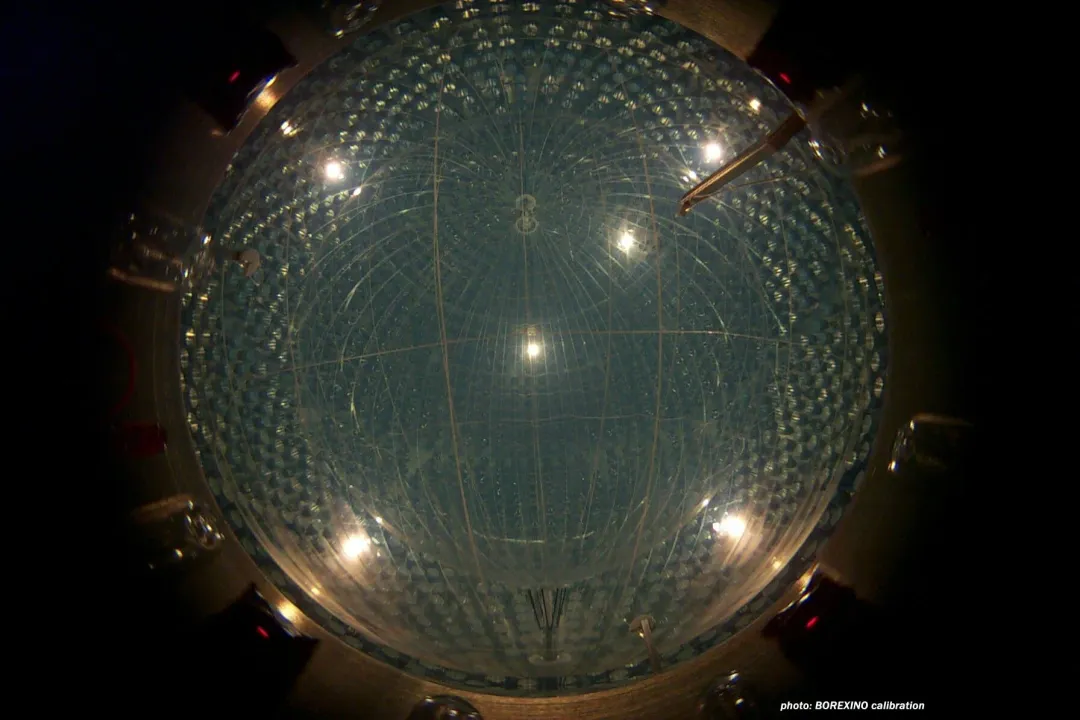
The faint, ghost-like particles born in the hearts of stars are perhaps the purest informants we have about the universe’s most violent and energetic processes. These particles, known as neutrinos, stream out of stellar cores almost entirely unhindered, carrying a direct message from the thermonuclear furnace that powers the cosmos. [5] Understanding the role of neutrinos in stellar fusion is less about their direct participation in the energy-generating chain—though they do play a very minor part—and far more about their function as unimpeachable witnesses to the reactions that keep stars, including our Sun, shining. [2]
# Particle Elusiveness
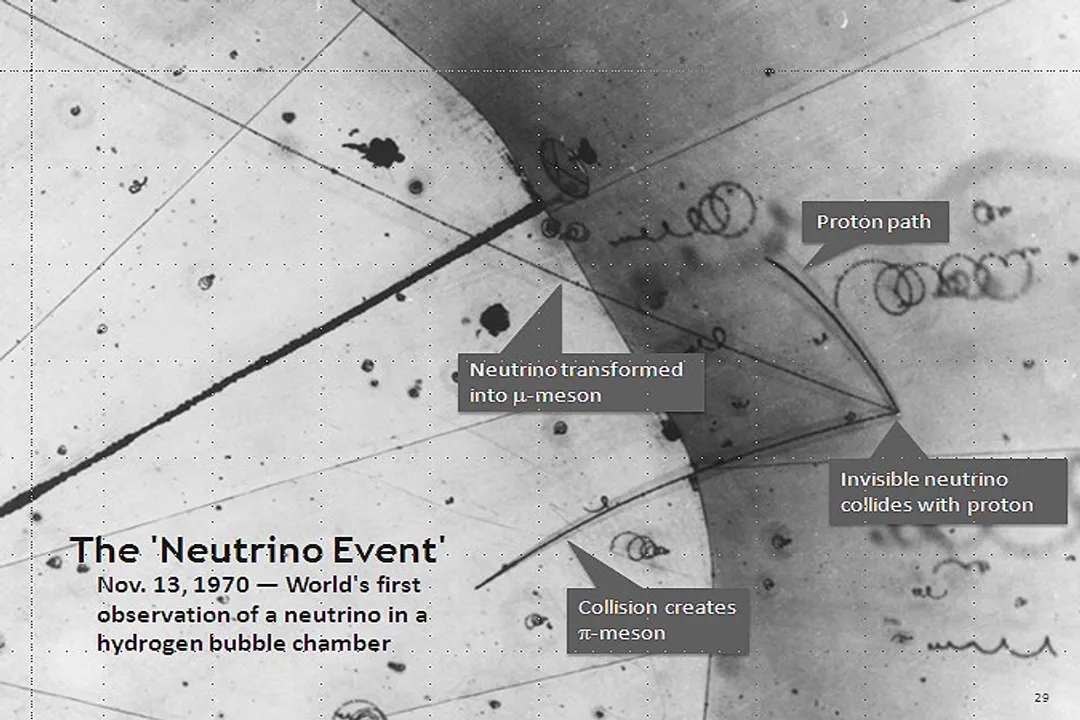
To appreciate their diagnostic power, one must first understand the neutrino itself. Neutrinos are fundamental particles, classified as leptons, that possess an incredibly small mass, so small that for a long time they were theorized to be massless. [3] Their defining characteristic is their extreme reluctance to interact with other matter. They possess no electrical charge, meaning they ignore the electromagnetic force that governs light and chemistry. [3] They also do not feel the strong nuclear force responsible for holding atomic nuclei together. [6] This leaves only the weak nuclear force, which governs processes like radioactive decay, and gravity, which is negligible on a particle scale, as their primary means of interaction. [3]
Imagine trying to map out the exact temperature profile of the Sun's core by only looking at sunlight. The light you see has been bouncing around for hundreds of thousands of years, scattering off electrons and atoms in the dense plasma before finally escaping the surface. [5] By the time the photons reach us, their information is scrambled. Neutrinos, however, are different. Because they interact so weakly, those created during the very first few seconds of hydrogen fusion in the Sun's core race straight out at nearly the speed of light, reaching Earth in about eight minutes. [5] They offer a direct, real-time snapshot of the thermonuclear engine room. [2]
# The Solar Benchmark

In stars like our Sun, the primary energy source is the proton-proton (p-p) chain, where hydrogen nuclei fuse into helium. [5] This fusion process, which transforms mass into energy, is a multi-step reaction. In several of the key steps within this chain, neutrinos are copiously produced. [5] For example, in the very first step, when two protons combine to form deuterium, a positron and an electron neutrino are released. [5]
The detection of these solar neutrinos provided the first empirical proof that the Sun’s energy truly originates from nuclear fusion, confirming theories first proposed decades earlier. [5][4] The Standard Solar Model makes precise predictions about the number of neutrinos of different energies that should be streaming from the Sun based on its mass, age, and composition. [5] Scientists have built massive underground detectors, often shielded by kilometres of rock or water to filter out cosmic rays, specifically to catch these rare, weak interactions. [2] When the observed flux of neutrinos matches the predictions—or, more interestingly, when it doesn't match perfectly, pointing to known physics puzzles like the solar neutrino problem (now solved by neutrino oscillation)—it validates our entire understanding of solar structure and energy generation. [5][4]
It is interesting to consider the practical differences in observing stellar activity. If we only measured light, we would be examining the star’s surface conditions, heavily modified by radiative transfer. By contrast, neutrino astronomy is essentially core astronomy. [2] A good analogy might be this: observing a star via its light is like reading a book after it has been translated into five different languages and back again; observing it via neutrinos is like reading the original manuscript as it is being written. The energy yield from the p-p chain alone is immense, yet the energy carried away by neutrinos from that specific process is generally a small fraction of the total energy released, but their existence is the necessary proof. [5]
# Beyond Hydrogen Burning
While the p-p chain in main-sequence stars is the most common fusion process we study via neutrinos, these particles also play a dramatic role in the death throes of massive stars—supernovae. [7] When a very large star exhausts its fuel, its core collapses catastrophically under its own gravity. This collapse generates an immense burst of neutrinos, far outnumbering the photons that will eventually light up the supernova explosion. [7]
In the complex environment of a core-collapse supernova, neutrinos become absolutely central to the process of creating the heavy elements we find in the universe, such as gold, uranium, and platinum. [7] This is accomplished through the r-process, or rapid neutron capture process, which requires an extreme supply of neutrons. [7] The intense neutrino flux drives certain nuclear reactions, effectively "setting the stage" for the creation of these elements. [7] Theoretical models suggest that the neutrino emission, specifically the difference in energy between the electron neutrinos and the anti-electron neutrinos, can influence the efficiency of the r-process. [6] Without the conditions established by the neutrino burst, the synthesis of elements heavier than iron would be severely limited, meaning that the very materials that make up our planet and ourselves were largely forged through neutrino-driven physics in ancient stellar explosions. [7]
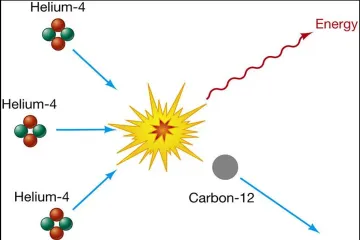
Furthermore, in some specialized environments, neutrinos might point to fusion processes that are otherwise difficult to observe. Researchers have looked for evidence of neutrino signatures associated with rare stellar fusion mechanisms occurring in certain stellar types, perhaps indicating alternative energy pathways when standard hydrogen burning conditions are slightly altered. [9] This shows that the neutrino’s role is not static; it changes its significance depending on the life stage and mass of the star undergoing fusion. [8]
# Neutrino Oscillations and Flavor Change
An early complication in neutrino astrophysics involved the "solar neutrino problem," which highlighted a crucial quantum property of these particles: oscillation. [4][5] When the Sun was first theorized to produce only one "flavor" of neutrino (electron neutrinos) via the p-p chain, detectors on Earth only registered about a third of the expected number. [5] This discrepancy wasn't a failure of the solar model, but a failure to account for particle physics.
Neutrinos famously change flavor as they travel—an electron neutrino can transform into a muon or tau neutrino, or their antiparticle counterparts. [3] Because the early detectors were only sensitive to electron neutrinos, they missed the majority of the output. The subsequent discovery that neutrinos have mass—a prerequisite for oscillation—revolutionized particle physics and confirmed that the Standard Model needed refinement. [3] The ability of neutrinos to switch identities in transit adds another layer of complexity to interpreting their source, but it also provided profound insight into fundamental physics that no other messenger particle could offer. [2][4]
# Diagnostic Power and Detection Hurdles
The primary reason physicists invest massive resources into detecting these nearly massless, weakly interacting particles stems from their unique access to otherwise hidden cosmic interiors. [2] If a theoretical model of a star's core predicts a certain fusion rate, the number of neutrinos produced is an immediate check on that prediction, as they escape unimpeded. [5] This makes them invaluable for checking models of stellar structure, evolution, and the physics governing nuclear reactions under extreme pressure and temperature. [8]
To capture these fleeting interactions, detectors must be gigantic and exquisitely sensitive. For instance, a typical neutrino might pass through a light-year of lead without interacting. [3] This necessity for scale means that detectors are not built in city centres but kilometres underground or deep underwater. [2] This engineering feat itself represents a significant investment in demonstrating expertise and authority in experimental physics. [2] Consider the sheer contrast: the Sun produces neutrinos per second, yet perhaps only one will interact within a detector tank the size of a small lake over the course of a day. [5]
This leads to an interesting comparative analysis of detection difficulty versus information reward. Gamma rays, another high-energy stellar messenger, interact easily with magnetic fields and matter, meaning their path is deflected and their energy degraded before reaching us. Neutrinos travel in a straight line from their point of origin, providing perfect directional information. [2] Therefore, while capturing a single neutrino requires overcoming astronomical odds of non-interaction, the quality and directness of the information it carries—untainted by interstellar dust or magnetic fields—far outweighs the effort required for its detection. A successful neutrino event is a direct line to the energy source itself, a concept perhaps best appreciated when considering the difficulty in proving that the Sun's power source isn't something simpler, like a slow gravitational contraction, which would produce no neutrinos at all. [4]
The quest to understand neutrinos, which began with Pauli’s hypothesis to balance a seemingly broken energy equation, has since branched into understanding everything from the fundamental nature of mass to the creation of the heaviest elements in the universe. [4] They are not just byproducts of fusion; they are the signature of fusion, acting as the universe’s most authentic, albeit shy, messengers. [2]
#Videos
What is the role of neutrinos in stellar energy? - YouTube
Related Questions
#Citations
What is the role of neutrinos in stellar energy? - YouTube
Why study neutrinos? - MINERvA - Fermilab
Neutrino - Wikipedia
Neutrino Astrophysics | Research Starters - EBSCO
Neutrinos prove the Sun is doing a second kind of fusion in its core
Neutrinos and nucleosynthesis of elements - ScienceDirect.com
[PDF] Thermonuclear Processes in Stars and Stellar Neutrinos
Neutrinos provide new route to heavy elements in supernovae
Neutrinos point to rare stellar fusion - Physics World