How does the eye convert light into neural signals?

The process by which the eye captures the outside world and translates it into language the brain can understand involves a precise, multi-step conversion, beginning the moment a photon strikes the outer surface. Light, traveling as electromagnetic waves, first enters the eye, passing through the cornea, which is responsible for the majority of the eye's focusing power. [7][4] This initial bending of light prepares the image for fine-tuning as it moves through the aqueous humor, passes through the pupil—the aperture controlled by the iris—and then travels through the crystalline lens. [7][4] The lens adjusts its shape to precisely focus the light rays onto the light-sensitive tissue lining the back of the eye: the retina. [7][4]
# Light Entry

The structure of the eye is architecturally brilliant, designed to protect and deliver an exact image. After passing the lens, the light travels through the vitreous humor, the gel-like substance filling the main cavity, before finally reaching the neural layers of the retina. [4][7] It is a fascinating, if slightly inefficient, design choice that the light must actually travel through several layers of neural cells before it strikes the photoreceptors themselves—the rods and cones—which are situated at the very back of the retina. [4][5] This means that the initial processing and filtering happen before the light even hits the primary sensing element, which is a testament to the complexity of retinal circuitry. [5] Considering the total optical power of the eye, the cornea alone is estimated to account for roughly 70% of the light refraction, with the lens making up the remaining adjustment power necessary for fine focus, a point worth noting when appreciating the mechanics of vision correction. [7]
# Photoreceptors
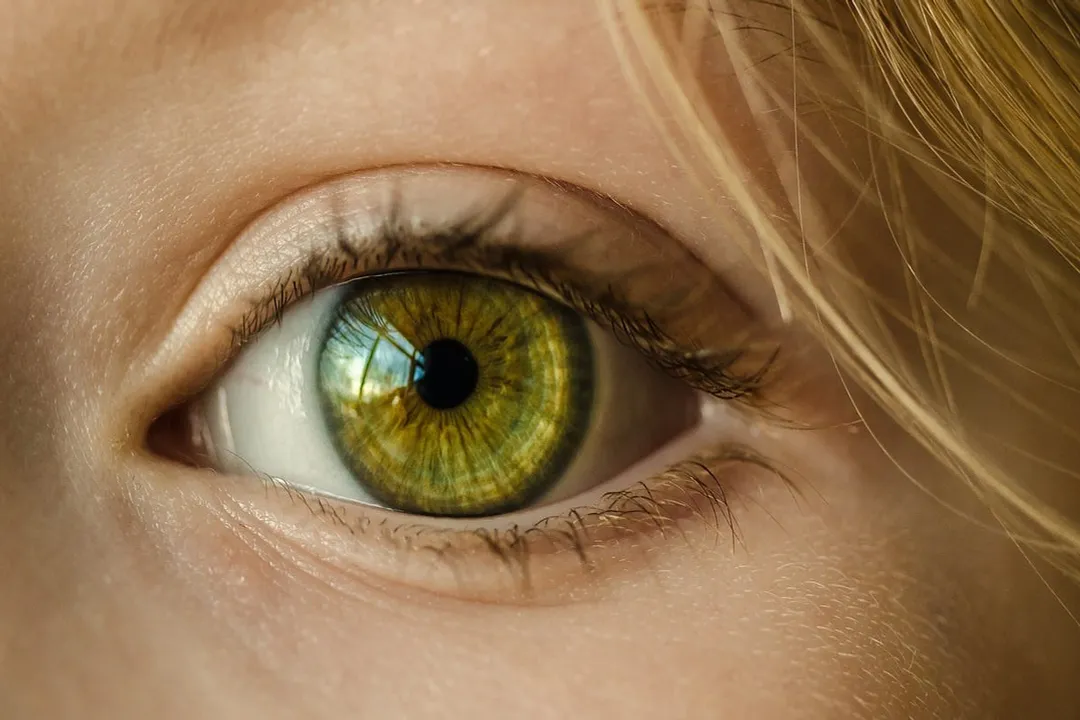
The retina houses two primary types of photoreceptor cells: rods and cones. [1][2] These are the specialized detectors that begin the conversion from physical light to biochemical energy, a process known as phototransduction. [5]
The human eye contains approximately 120 million rods and about 6 million cones. [1] This numerical difference reflects their specialized roles. Rods are exceptionally sensitive and operate best in low-light conditions; they are responsible for our night vision and peripheral sight, but they do not detect color. [1][2] Cones, conversely, require brighter light to function effectively, but they are responsible for high-acuity vision and color perception. [1][2] Different cones are sensitive to different wavelengths of light (red, green, or blue), allowing us to perceive the spectrum of color. [1]
Within these cells are specialized pigments that react directly to light. Rods contain the photopigment rhodopsin, while cones contain photopsins. [5][6] The specific chemical structure of these pigments dictates which wavelengths of light they absorb most readily. [6]

# Signal Cascade
The conversion of light energy into an electrical signal is counterintuitive compared to how most other sensory cells function. In most sensory systems, a stimulus causes the cell to depolarize (become more positive) and fire an action potential. In the dark, however, retinal photoreceptors are actually in an active, depolarized state. [3][5]
# Dark State
In the complete absence of light, the photoreceptor cell maintains an influx of positive ions, primarily sodium ions, through specialized channels in the outer segment membrane. [3][5] This continuous inflow keeps the cell membrane potential around -40 millivolts (mV), which is a depolarized state. [5] Because the cell is depolarized, it continuously releases the inhibitory neurotransmitter glutamate onto the next layer of cells, the bipolar cells. [3][5] This constant release of glutamate essentially turns off the downstream pathway in the dark. [3]
# Light Activation
When a photon strikes a rhodopsin (or photopsin) molecule, it causes the molecule to change shape—a process called isomerization—transforming the inactive form, 11-cis-retinal, into its active form, all-trans-retinal. [3][5] This molecular shift initiates a biochemical cascade within the cell. [3] This cascade doesn't directly cause the cell to fire; instead, it acts as an amplifier, leading to the closure of the very same sodium channels that were open in the dark. [3][5]
As the positive sodium ions can no longer enter the cell, the internal charge becomes more negative. This shift towards a more negative potential is called hyperpolarization. [3][5] The critical signal is not the electrical change in the photoreceptor itself, but the cessation of glutamate release caused by this hyperpolarization. [3] Therefore, the signal transmitted to the rest of the visual pathway is effectively an inhibition of an inhibitory signal. [3]
# Neural Relay
The information about light intensity, encoded by the rate at which glutamate release stops, must now be relayed onward. The bipolar cells act as the intermediate step. [3][5] Depending on the type of bipolar cell, the cessation of glutamate from the rod or cone will either excite or inhibit it, depending on whether the bipolar cell is an "ON" or "OFF" type relative to the photoreceptor's activity. [3][5]
These bipolar cells then synapse with the ganglion cells. [3][5] The ganglion cells are the final output neurons of the retina. They gather the integrated information from the bipolar cells and generate true action potentials—the standard electrical spikes used for long-distance neural communication. [2][4] The axons of these ganglion cells bundle together to form the optic nerve. [4][2]
This collection of neural wires exits the back of the eyeball at a specific point that contains no photoreceptors, creating what we know as the blind spot. [4]
# Brain Interpretation
Once the electrical signals leave the eye via the optic nerve, they embark on a well-defined route toward the visual processing centers in the brain. [4] The signals first travel to the lateral geniculate nucleus (LGN), a relay station located in the thalamus. [4][8] The LGN is not just a passive relay; it organizes and filters the incoming visual information, separating inputs based on factors like eye of origin and spatial information. [8]
From the LGN, the signals are projected via the optic radiations to the primary visual cortex, which is located in the occipital lobe at the very back of the brain. [4][8] It is here that the raw signals begin to be reconstructed into a coherent visual scene.
The visual processing system is highly parallelized. Information related to motion, depth, and color begins to be segregated and processed almost immediately upon reaching the cortex. [8] For instance, one stream of information, often associated with the dorsal pathway, might focus on where an object is and how it is moving, while another stream, the ventral pathway, focuses on what the object is (color, shape recognition). [8] This parallel processing allows the brain to construct a complete, three-dimensional, and dynamic understanding of the environment far faster than if the information had to be processed strictly in a linear sequence. While the initial transduction event is a localized chemical reaction, the final conscious perception is the result of complex, distributed computation across multiple cortical areas. [4][8] Understanding this relay structure helps explain why damage to specific parts of the visual cortex can result in being able to see color but not motion, or vice versa, even if the eye itself is perfectly healthy.
#Videos
2-Minute Neuroscience: Phototransduction - YouTube
Related Questions
#Citations
Photoreceptors (Rods & Cones): Anatomy & Function
Vision: It all Starts with Light - BrainFacts
Phototransduction: How the Brain Converts Light into Neural Signals
How Your Eyes Work - Retina International
36.14: Vision - Transduction of Light - Biology LibreTexts
How Your Eyes Work | Atrium Health Wake Forest Baptist
How Does Light Pass Through the Eye?
How the brain interprets visual information - Eye Health Center
2-Minute Neuroscience: Phototransduction - YouTube