Will the world end with a black hole?
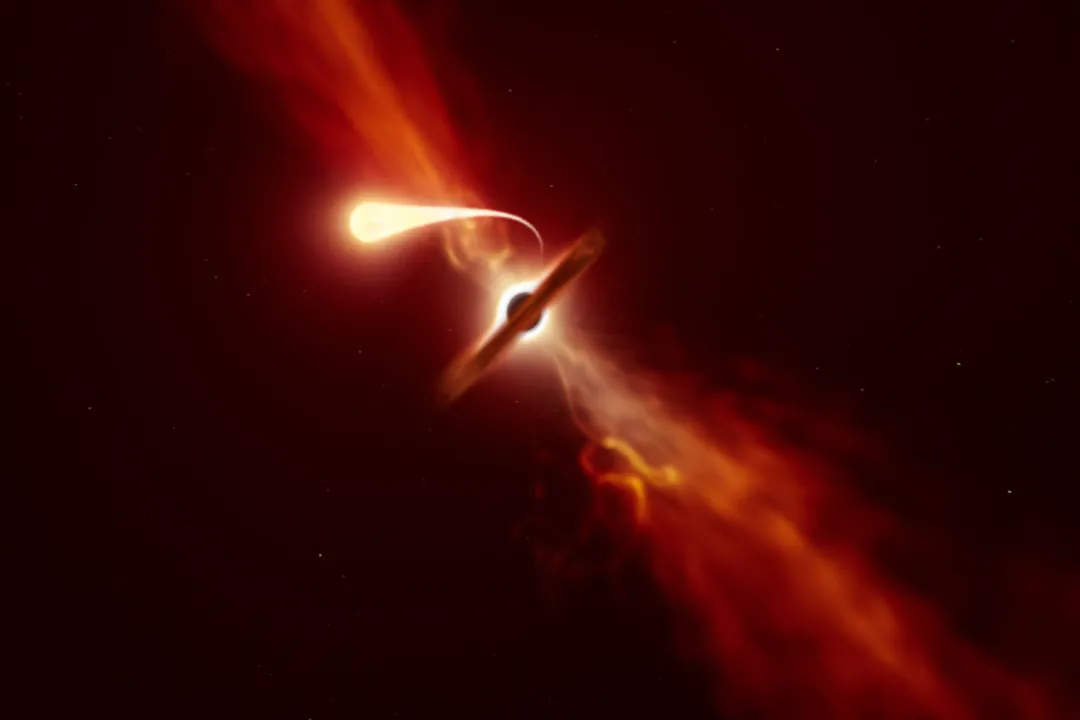
The idea of the world ending via a massive, invisible cosmic vacuum cleaner captures the imagination like few other scenarios. When we think about the universe's ultimate fate, black holes often spring to mind as the final arbiters of existence, capable of swallowing everything in their path, including our own pale blue dot. However, pinning down whether a black hole will be the agent of our destruction requires separating the terrifying science fiction from the cold, hard physics governing these incredible objects. [2][6] The reality, while less dramatic in the short term, is just as fascinating.
# Cosmic Scale
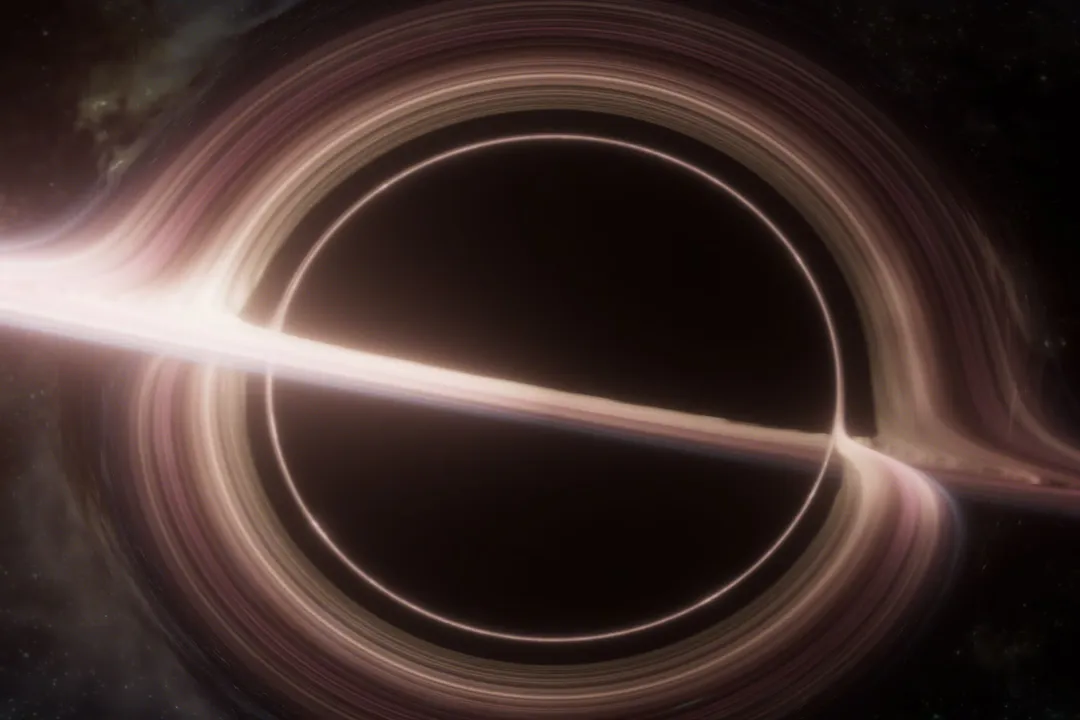
When considering the end of the world in the grandest sense—the end of the Earth, the Sun, and perhaps even the universe itself—we must first distinguish between local threats and universal timescales. [6] On the cosmic scale, black holes are certainly significant players, especially as the universe ages. [1] They are the remnants of massive stars, regions of spacetime where gravity is so strong that nothing, not even light, can escape once it crosses the boundary known as the event horizon. [9]
The ultimate fate of the cosmos is still debated among astrophysicists, often falling into scenarios like the Big Freeze (Heat Death) or the Big Crunch. [1] In the widely accepted Heat Death scenario, the universe continues to expand forever, stars burn out, and eventually, only black holes and dispersed fundamental particles remain. [1] In this far-future epoch, black holes dominate the landscape. They grow by consuming any remaining matter or smaller black holes over incomprehensibly long timescales. [1]
However, even these cosmic giants are not eternal. Stephen Hawking discovered that black holes slowly "evaporate" by emitting thermal radiation, known as Hawking radiation. [1] A stellar-mass black hole would take an estimated years to completely vanish, a duration far exceeding the current age of the universe, which is approximately years. [1] This means that black holes are the longest-lived structures in the universe, but they are not the final final end; they are just the very, very long intermission before true nothingness. [1] If the universe ends via Heat Death, it ends not with a bang involving a black hole swallowing everything at once, but with a slow, cold fade dominated by these evaporating behemoths. [1]
It is interesting to note the sheer difference in timescales. For the Sun to become a white dwarf, it takes about 10 billion years. For that white dwarf to cool into a black dwarf, perhaps another years. For a typical stellar-mass black hole to evaporate via Hawking radiation, we are talking about years. This immense gap highlights how stable these objects are on any time scale relevant to human civilization or even the current stellar population. [1]
This cosmic perspective suggests that the world, or even the galaxy, won't be "ended" by a black hole consuming everything across the board; rather, black holes will be the last things to exist before the universe settles into thermal equilibrium. [1]
# Earth Danger
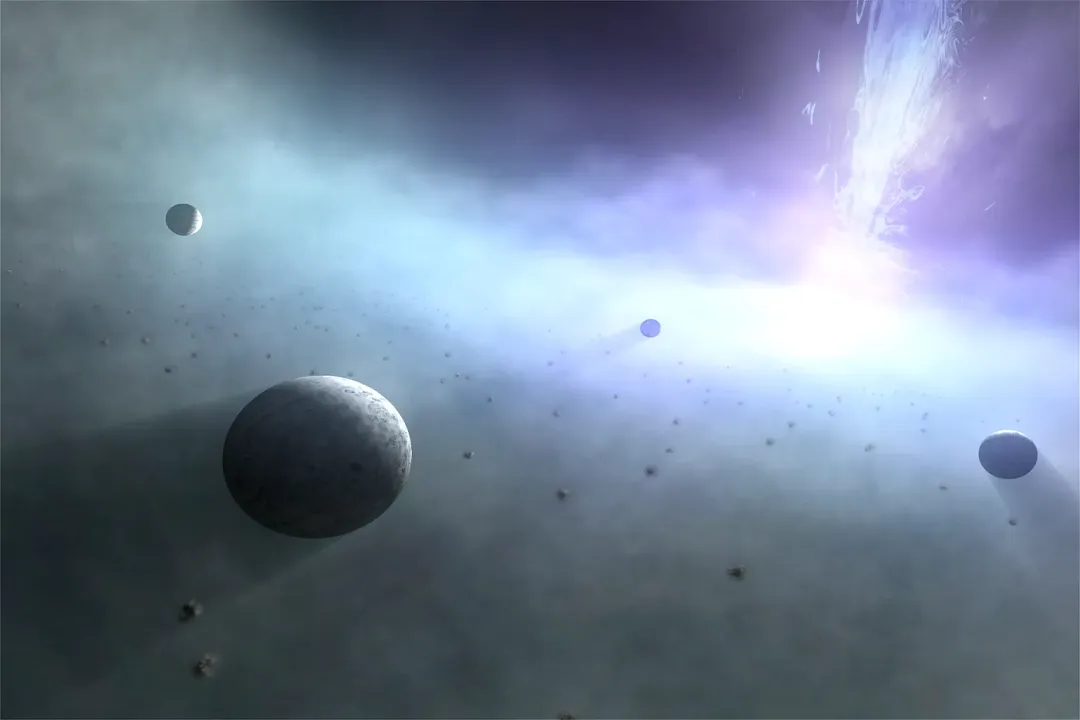
Shifting focus from the cosmic future to the immediate neighborhood, the question becomes: what is the probability that a black hole will collide with or capture the Earth?. [3] This scenario is far more relatable but equally unlikely on human timescales. [3][6]
There are two main types of black holes to consider: supermassive black holes and stellar-mass black holes, along with the hypothetical possibility of primordial black holes. [3][6]
# Supermassive Objects
The supermassive black holes (SMBHs) reside at the centers of galaxies, including our own Milky Way, where Sagittarius A* sits millions of times the Sun's mass. [3] The orbits of stars and gas clouds around these giants are well-modeled, and our solar system is currently far from the galactic center, located in a relatively quiet spiral arm. [3] The probability of Sagittarius A* suddenly ejecting material or expanding its influence dramatically enough to sweep up Earth is effectively zero based on current observations and orbital mechanics. [3]
# Stellar Remnants
Stellar-mass black holes, formed from the collapse of massive stars, are scattered throughout the galaxy. [6] While they are moving objects, the distances between stars and stellar remnants are vast. [6] The Milky Way is simply too sparsely populated for a random encounter to be statistically probable within the lifespan of the Earth or the Sun. [3] If a black hole were to pass near our solar system, its gravitational influence would certainly disrupt the orbits of the planets, but a direct collision resulting in the Earth being swallowed is an extremely low-probability event. [3][6]
# Primordial Concerns
A more unsettling, though still theoretical, possibility involves primordial black holes—tiny black holes that may have formed in the dense early universe. [6] If one of these were Earth-mass or smaller, it would not be massive enough to tear the planet apart from a distance like an SMBH would. [6] If a black hole with the mass of, say, a mountain somehow materialized inside the Earth, the result would be entirely different from a cosmic engulfment.
When considering these threats, we can construct a simple risk assessment based on proximity and mass.
| Black Hole Type | Typical Mass Comparison | Primary Threat Mechanism | Likelihood of Encountering Earth |
|---|---|---|---|
| Supermassive | Millions to billions of solar masses | Galactic orbit disruption | Negligible/Zero |
| Stellar-Mass | Several times the solar mass | Direct gravitational capture | Extremely Low |
| Primordial (Hypothetical) | Asteroid to Earth mass | Direct passage through Earth | Unknown, but must be extremely rare |
| [3][6] |
# Internal Arrival
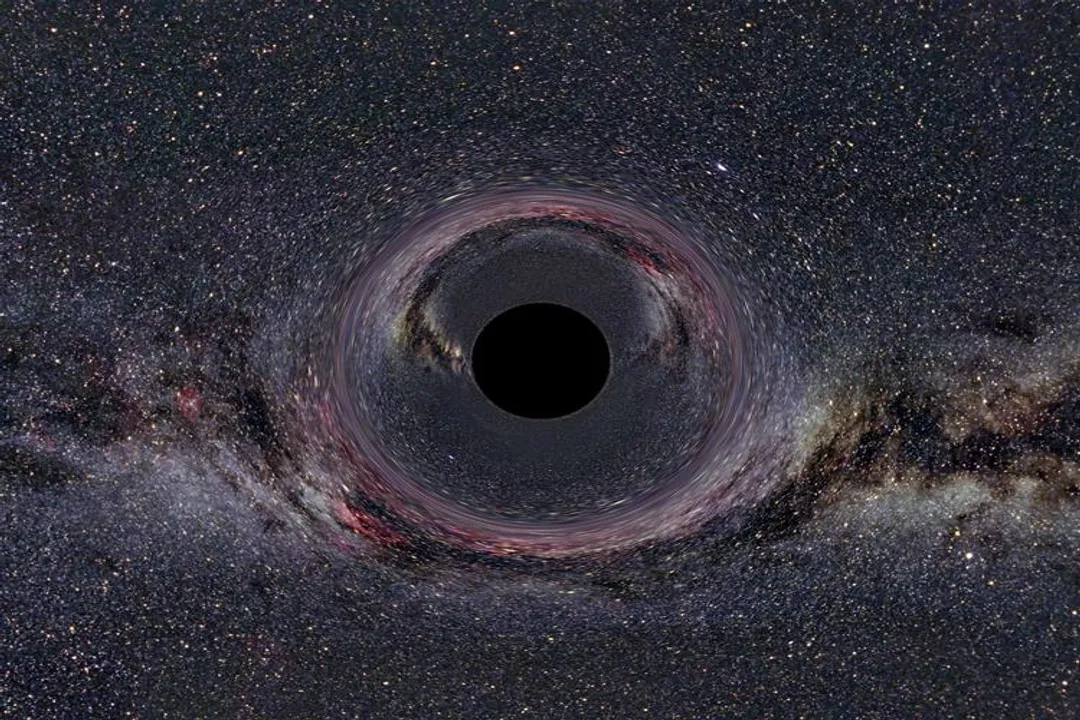
What if a small black hole did appear inside the Earth, perhaps through some wildly improbable quantum tunneling event or an undetected primordial object?. [6][9] This is where the immediate end would occur, though not in the dramatic, sweeping way we imagine when thinking of a cosmic maw. [6]
If a black hole with the mass of the Earth were somehow placed at the center of our planet, the Earth itself would begin to fall into it. [9] The planet wouldn't be instantly vaporized or spaghettified in the classic sense because the black hole’s mass is concentrated at a singularity, and we are already inside the gravitational influence. [9] Instead, the matter composing the Earth would simply collapse toward the center, drawn into the singularity, though this process would take time, perhaps hours, not seconds. [9]
If the black hole were much smaller—say, the mass of a large mountain—it would pass right through the Earth. Because its event horizon would be incredibly small (perhaps the size of an atomic nucleus), the planet would largely remain intact as the object sped through, creating an initial shockwave and some localized heating before emerging on the other side. [9] It would then swing back, oscillating through the Earth's core like a pendulum until friction or tidal forces slowed it enough for it to settle at the exact center. [9] Once centered, the black hole would begin to consume the planet from the inside out, pulling in material continuously until the Earth vanishes into the singularity. [9]
# Falling In
If an astronaut were unlucky enough to fall into a large black hole, the experience would be defined by tidal forces long before reaching the event horizon. [7] The immense difference in gravitational pull between the nearest part of the body and the furthest part causes a phenomenon often called spaghettification. [7]
Imagine falling feet-first. The gravity pulling on your feet would be vastly stronger than the gravity pulling on your head. [7] This difference stretches you vertically while simultaneously squeezing you horizontally. [7] For a stellar-mass black hole, this effect would occur well outside the event horizon, tearing you apart into a stream of atoms before you even crossed the point of no return. [7]
However, for a supermassive black hole, the tidal forces are weaker at the event horizon because the singularity is so much further away relative to the horizon’s size. [7] An observer falling into a supermassive black hole might actually cross the event horizon without noticing anything physically unusual at that exact moment. [7] What they would notice after crossing is that no matter which way they turn, the only direction available is inward toward the singularity. [7] The outside universe would appear increasingly distorted and blueshifted until it vanished from view, trapped behind the horizon. [7]
# Visualizing the Void
Since we cannot see black holes directly because they emit no light, how would one appear if it were, hypothetically, orbiting near Earth?. [8]
If a black hole of comparable mass to our Sun were placed where the Sun currently is, we would not see a 'hole' in space; we would see the absence of light where the Sun used to be. [8] The black hole itself would be invisible, appearing as a perfect circle of black against the background of stars. [8]
The immediate visual distortion would be caused by light from distant stars bending around the black hole due to its intense gravity, an effect predicted by Einstein's theory of general relativity. [8] This bending creates an Einstein ring or strong lensing effect, where stars behind the black hole appear smeared into a distorted ring around the central black silhouette. [8] The apparent size of this black disk would be determined by the black hole's mass and the distance to the observer, not the size of the singularity itself. [8] For a solar-mass black hole at the Sun's distance, the black silhouette would subtend an angle of about $5.2$ micro-arcseconds, far too small to see with the naked eye, but potentially detectable with advanced instruments. [8]
The light from the accretion disk, if the black hole were actively feeding, would be incredibly bright and distorted, often appearing magnified and warped around the edges of the event horizon. [8] This warped appearance is due to light rays taking multiple paths around the massive object before reaching our eyes. [8]
# Conclusion
The end of the world via a black hole remains firmly in the realm of theoretical possibility or science fiction when considering current timescales. [6] The universe is vast, and the probability of a rogue black hole wandering into the inner solar system to claim Earth is infinitesimally small. [3] Furthermore, in the ultimate, distant future of the universe, black holes are merely the last flickering embers before the long, cold night of Heat Death settles in, with even they eventually dissolving into pure energy. [1] While the physics governing these objects—from spaghettification to gravitational lensing—offers unparalleled insight into the extreme nature of spacetime, our immediate concerns are likely better focused on problems with considerably higher probabilities of occurring. [2][7]
#Videos
What If Earth Were Sucked Into a Black Hole? - YouTube
Related Questions
#Citations
Will everything “fall” into a black hole in the end? - Reddit
Could the Earth Be Destroyed by a Black Hole? | Museum of Science
Is there any probability that Earth will be destroyed by a black hole?
What If Earth Were Sucked Into a Black Hole? - YouTube
SCIplanet - Could A Black Hole Bring the End of the World?
Ask Ethan: Could a black hole eventually swallow Earth? - Medium
What would happen if you fell into a black hole? | BBC Earth
Ask Ethan: Could a black hole eventually swallow Earth? - Big Think
If there was a black hole on Earth, what would it look like?