Did a black hole spit a star back out?
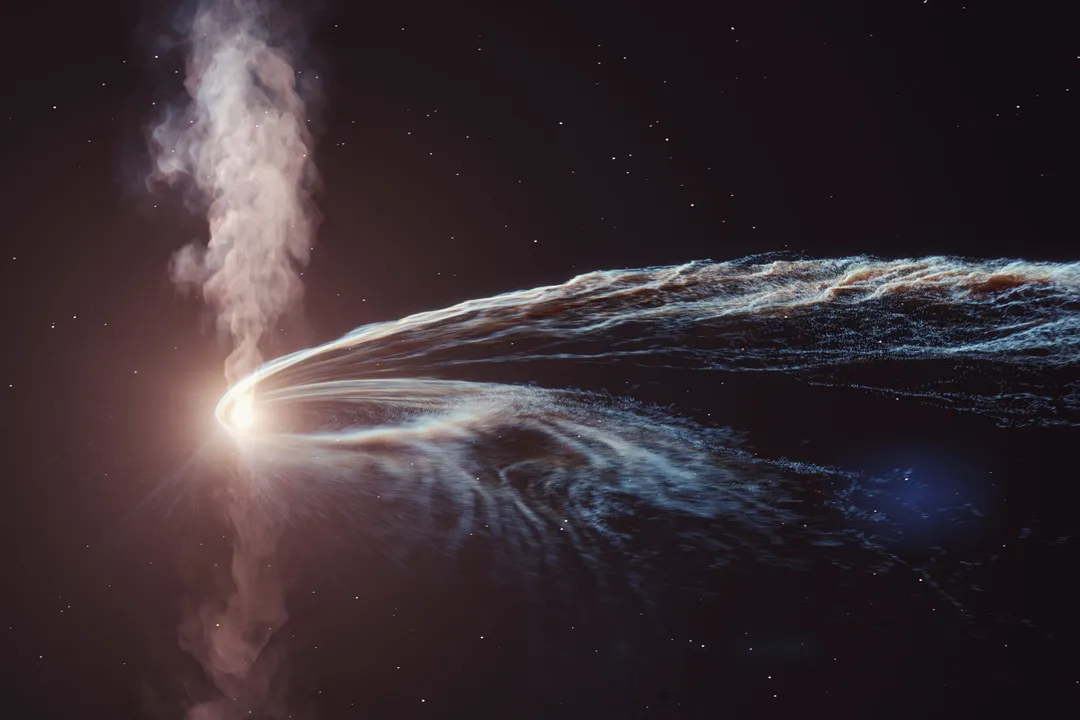
Astronomers have witnessed something truly unexpected in the cosmos: a black hole that seemingly regurgitated material from a star it consumed years earlier. This phenomenon challenges standard models of how matter behaves as it falls into one of the universe’s most extreme objects, suggesting that the process of stellar death by black hole is far more complex and delayed than previously assumed. For the first time, observations have captured what looks like a black hole "burping up" the remains of a star it had shredded multiple years in the past.
# Stellar Shredding
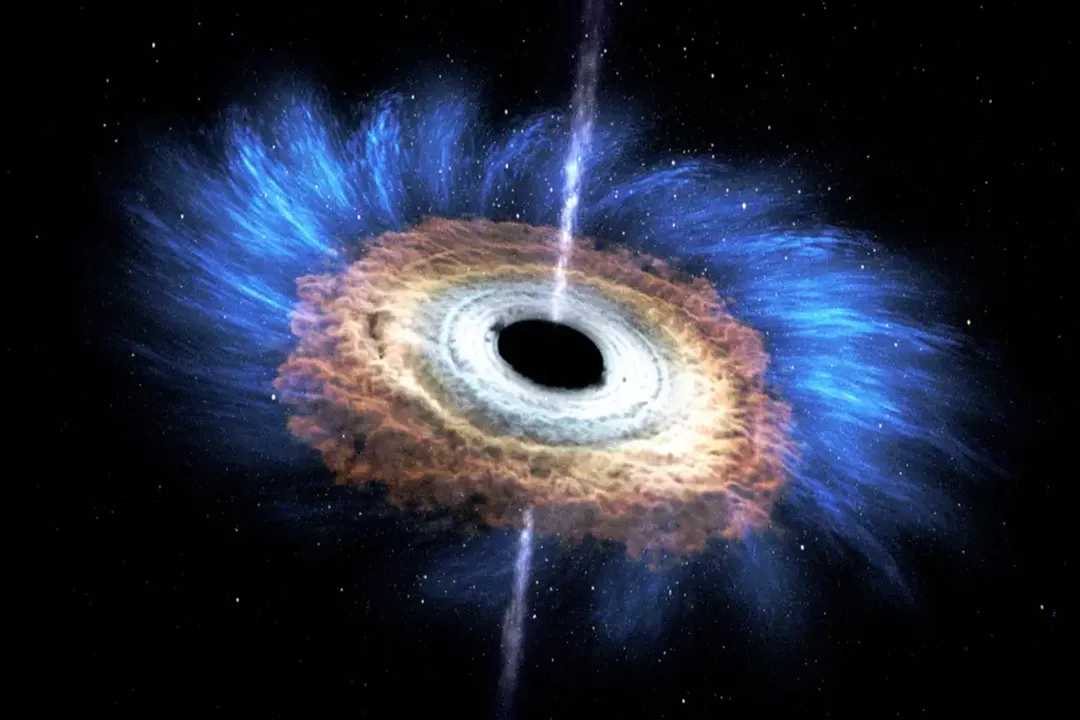
The process begins when a star wanders too close to a supermassive black hole, an event known as a Tidal Disruption Event (TDE). The black hole’s immense gravitational field subjects the star to extreme tidal forces—a difference in gravitational pull between the side of the star closest to the black hole and the side farthest away. These forces stretch the star into a long stream of gas, a process sometimes referred to poetically as "spaghettification".
Once the star is ripped apart, the resulting stellar debris doesn't usually fall directly into the black hole immediately. Instead, much of the material orbits the black hole, forming a superheated, swirling structure called an accretion disk. This accretion process—matter spiraling inward while radiating intensely—is what astronomers typically observe following a TDE, usually seeing a bright flare of light as the material begins to fall in. The initial flare marks the moment the star is torn apart and the gas begins to accumulate around the black hole.
# Delayed Ejection
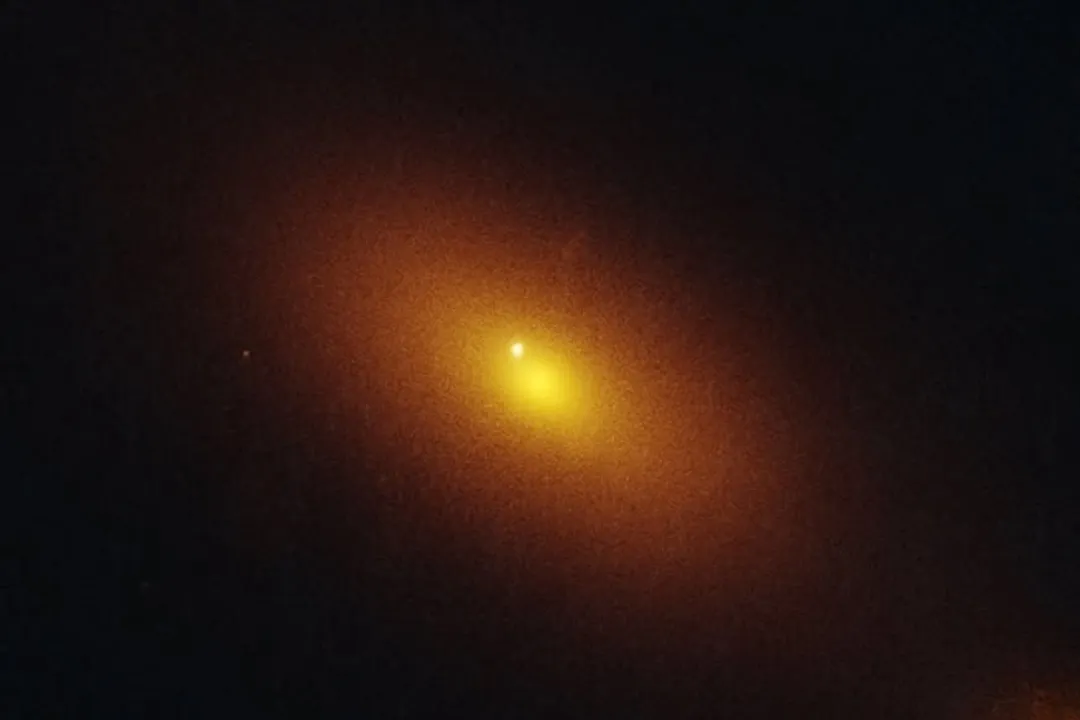
What makes this recent observation so remarkable is the time gap. In this case, astronomers detected a significant flare of light originating from a distant galactic nucleus, but this flare did not coincide with the initial TDE. Instead, the subsequent outburst appeared years after the initial stellar shredding event. One account pinpoints the initial disruption as having occurred approximately three years before the observed re-emission. The black hole effectively appeared to spew out matter that it had seemingly already consumed.
This event, observed in a galaxy situated about 600 million light-years away, provided a stark contrast to the expected behavior of TDE remnants. Normally, once the material falls into the accretion disk, the majority of the light signature is produced relatively quickly as that matter settles into its final, inescapable orbit. Finding a significant, energetic release of material so long after the initial ingestion means that a substantial portion of the star's gas managed to escape the black hole's grip, or at least its immediate vicinity, and was somehow propelled outward later.
# The Physics Puzzle
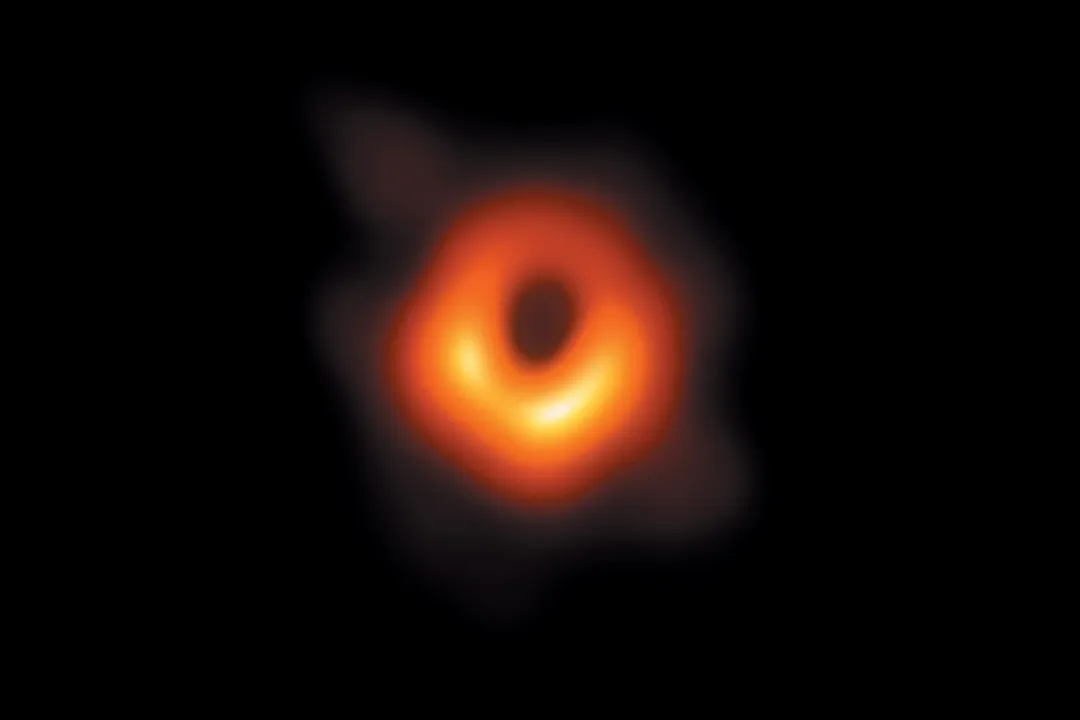
The core scientific puzzle centers on why this material was ejected years later. If the material had already crossed the point of no return and settled onto the disk, it should be destined for the singularity. The delayed "burp" implies that some physical mechanism managed to reverse the infall or redirect a significant portion of the ejected stellar gas.
One way to conceptualize this is by comparing the immediate infall to a fast-flowing river hitting a dam, which causes water to splash back up immediately. The TDE aftermath, however, seems more like a deep, subterranean reservoir being tapped years later, causing a delayed eruption from a location we thought was already settled. This suggests that the accretion process isn't a singular, rapid infall but involves complex, long-lived structures or processes within the disk itself that can generate powerful outflows.
When a star is shredded, the gas can be flung out with tremendous velocity, but the observable flare comes from the gas that fails to escape and starts orbiting. The fact that this material was illuminated and ejected so long after the initial event raises questions about the stability and structure of the accretion flow itself. Perhaps the initial material didn't form a stable disk immediately but was ejected in transient, messy clumps, some of which only began interacting with the black hole's immediate environment—or perhaps, in a highly energetic region of the newly formed disk—years later.
Another layer of complexity arises from the sheer scale of time involved. If the initial disruption happened three years prior, that duration, when considering the vast distances and speeds in space, speaks volumes about how long the stellar remnants lingered in the gravitational vicinity of the black hole before this secondary expulsion. For an event involving something as massive as a star being torn apart, a multi-year delay in the secondary effect is significant, implying that some of the gas remained in a complex, temporary orbit before being violently jettisoned or re-energized into a visible outflow.
# Interpreting the Light
The observation itself is a testament to the sensitivity of modern astronomical surveys. Detecting a single, relatively small flare from a system 600 million light-years distant requires powerful telescopes capable of scanning vast swathes of the sky. These telescopes monitor the luminosity of millions of distant galactic centers, waiting for the tell-tale sign of a TDE. When a system that was already identified as a TDE flared again years later, it immediately flagged itself as an anomaly.
While the media often frames this as the black hole "spitting a star back out," which is a vivid description, the reality involves light and plasma. The observed light is likely the result of high-energy particles being accelerated or shocked as the delayed gas is finally ejected or interacts with the black hole's magnetic field or corona. It is this resulting glow—the emission of X-rays or visible light—that provides the only evidence of the material’s fate.
It is important to distinguish this delayed material release from the initial flare. The initial TDE flare is a massive release of energy as the bulk of the stellar gas starts settling into the accretion disk. The later flare, which is the "burp," might represent a smaller fraction of the total material, perhaps gas trapped in a highly elliptical orbit that only recently plunged in or encountered a region of enhanced magnetic field lines capable of launching a jet or wind outward.
# New Insights on Black Hole Feeding
This observation forces a refinement of our understanding of black hole accretion. If these delayed ejections are common, it means that the "death" of a star around a black hole is not a one-and-done event concluded with the initial flare. Instead, the feeding process can have a long tail, with material cycling through the system over years, occasionally resulting in a visible outburst.
Consider the implications for mass measurement. When astronomers calculate how much mass a black hole consumed in a TDE, they often rely on the initial, brightest phase of the light curve. If a significant portion of the mass is ejected later, or if the energy output is spread over a much longer timescale than assumed, the original mass calculation for that specific stellar meal might be off. Future analysis of TDEs may need to account for these delayed, secondary ejections to accurately map the energy budget and the total amount of material successfully accreted by the black hole versus what was violently expelled.
This phenomenon is akin to finding evidence that a very large meal doesn't just cause immediate indigestion, but rather sets off a chain reaction that produces noticeable, energetic side effects months or even years later. It highlights that the immediate vicinity of a supermassive black hole is a chaotic environment where gravitational forces, magnetic fields, and high-energy plasma interact in ways that defy simple, immediate explanation. The ongoing monitoring of this system, and the search for similar delayed flares in other TDEs, will be essential to categorize whether this delayed "burp" is a rare, catastrophic failure of accretion or a standard feature of stellar consumption.
#Videos
Watch a Black hole 'burping out' a 'spaghettified' star it ... - YouTube
Related Questions
#Citations
Black hole is 'burping out' a 'spaghettified' star it devoured years ago
Black holes keep 'burping up' stars they destroyed years earlier, and ...
'We've Never Seen Anything Like This Before:' Black Hole Spews ...
Watch a Black hole 'burping out' a 'spaghettified' star it ... - YouTube
A black hole revealed itself from 600 million light-years away when it ...
Why Some Black Holes Keep 'Burping' Light after Eating a Star
Black hole burps up remains of shredded star it ate 3 years prior
Star gets eaten and spit out? - black holes - Physics Stack Exchange
Black Holes Burp up Stars Years After Destroying Them, Scientists ...