What is the meaning of biosignature?
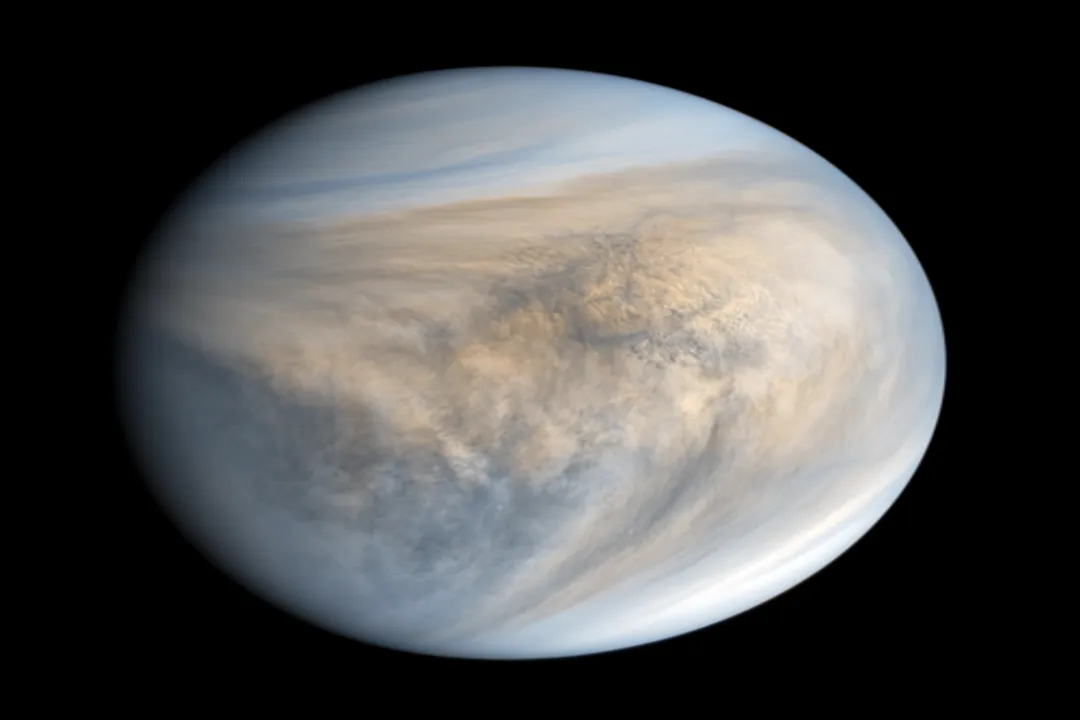
A biosignature represents any evidence, whether chemical, physical, or geological, that points toward the existence of past or present life. In its most basic sense, it is a detectable trace left behind by a living system. This concept is not exclusive to science fiction scenarios; it is a fundamental term used in fields ranging from biochemistry to the complex search for life on other worlds. The very word combines bio (life) with signature (a distinguishing characteristic or mark), signifying a pattern uniquely attributable to biology.
# Evidence Types
The markers that qualify as biosignatures are incredibly varied, reflecting the vast range of ways life interacts with its environment. These signs can manifest in the atmosphere, on the surface, or buried deep within rock formations. Scientists generally categorize them based on their nature, which helps researchers narrow down the immense possibilities when searching new environments.
One way to categorize these markers is by looking at their directness or complexity:
- Direct Biosignatures: These are often molecules intrinsically linked to life as we know it, such as complex organic molecules like amino acids, lipids, or nucleic acid components. Finding these suggests the presence of biological processes, though contamination remains a constant concern.
- Indirect Biosignatures: These are broader indicators of environmental modification caused by life. For instance, certain gases in an atmosphere that are maintained far from thermodynamic equilibrium (like large amounts of oxygen or methane existing together without active replenishment) are considered indirect signs. Similarly, specific mineral formations or isotopic ratios that only result from biological activity fall into this category.
It is helpful to see the differentiation through a quick comparison, although the lines between categories often blur in practice:
| Feature | Description | Primary Context |
|---|---|---|
| Biomolecule | Complex organic chemistry (e.g., specific lipids or amino acids). | Direct evidence of cellular building blocks. |
| Metabolic Gas | Atmospheric composition far from equilibrium (e.g., high O2/methane imbalance). | Indirect evidence of large-scale biological activity. |
| Morphology | Structures resembling cells, filaments, or fossilized microbial mats (stromatolites). | Physical evidence of past life forms. |
| Isotopic Ratio | Anomalous ratios of stable isotopes (like Carbon-13 to Carbon-12). | Chemical evidence indicating biological processing. |
When considering these markers, especially on Earth, they often point back to fundamental biological necessities: the need to process energy (metabolism) or the need to build and replicate structures (cellularity). A chemical signature that implies a highly specific metabolic pathway, for example, provides a stronger case than just finding a general organic molecule that could form abiotically (without life).
# Terrestrial Indicators
On our own planet, the concept of a biosignature underpins nearly all paleontology and much of geology. We use biosignatures to understand the history of life on Earth, tracing its origins and evolution across billions of years. Ancient rocks often hold fossilized evidence, like microfossils or stromatolites, which are layered structures formed by microbial communities. These ancient structures represent definitive physical biosignatures from early Earth history.
Furthermore, atmospheric composition today is a grand, living biosignature. The large concentration of free oxygen in Earth's atmosphere, for example, is a direct result of photosynthesis over geological timescales, proving life has dramatically altered its planetary surroundings. If we were to examine a rock core from Mars today, we would look for materials analogous to these ancient Earth records—chemical traces or fossilized remains indicating life once thrived in a different environment.
A valuable, often overlooked aspect of terrestrial biosignatures is the context of environmental bias. For instance, finding fossilized bacteria in a highly acidic, hydrothermal vent deep in the ocean today is exciting, but it's less surprising than finding evidence of microbial life embedded in a pristine, ancient Antarctic ice core, because the latter tells us about life thriving in a niche we might have deemed too hostile or transient. When we search elsewhere, we must remember that life often colonizes the most accessible niches first, leaving behind the most obvious markers in those specific locales.
# Space Search
The search for extraterrestrial intelligence (SETI) often focuses on technosignatures, but the search for life itself hinges on identifying biosignatures on other worlds, such as Mars, Europa, or Enceladus. This astrophysical application sharpens the definition, demanding a sign that is as unambiguously biological as possible.
NASA defines a potential biosignature as something that can be interpreted as evidence for past or present life. The critical challenge in astrobiology is distinguishing a true life-created signal from a false positive—a non-biological process that mimics a biological one (an abiotic process).
For example, the discovery of specific organic molecules on a meteorite like the Murchison meteorite proved that complex organic compounds can form naturally in space or through non-biological planetary chemistry. This discovery underscores why simply detecting carbon-based molecules is insufficient; one must detect a pattern or configuration unique to biology.
Consider the search for life on an icy moon. A potential biosignature might be the detection of unusual concentrations of certain sulfur compounds in the plume ejected from its subsurface ocean. If those compounds are found in a highly unusual, non-random distribution of specific molecular weights or isotopic ratios, it strongly suggests something is metabolizing or organizing these chemicals, rather than simple geochemistry churning them out.
# Interpretation Nuance
The primary difficulty in declaring a biosignature has been found is moving from detection to authentication. This involves establishing a hierarchy of confidence. A single piece of evidence is rarely enough to rewrite textbooks.
For instance, detecting a complex organic molecule (a potential direct biosignature) on a sample from Mars is monumental. However, scientists would immediately need to rule out contamination from the spacecraft or the sample collection tools. If contamination is ruled out, the next step is to determine if that molecule could be formed by high-energy radiation interacting with simple Martian soil minerals (an abiotic process). Only after proving that the molecule requires a biological process for its formation or concentration can the evidence gain high authority.
This leads to an important internal insight regarding scientific practice: the Evidence Convergence Principle. True biosignatures are rarely singular findings; they are typically the convergence of multiple, independent lines of evidence pointing to the same conclusion. A scientist might find a strange mineral structure (physical evidence), analyze its carbon content and find an unusual isotope ratio (chemical evidence), and later find trace amounts of a very specific polymer associated with that structure (molecular evidence). When three different indicators—physical, chemical, and molecular—all converge on the same geological location, the confidence level that life was present skyrockets, even if no actual cellular fossil was found. This layered approach is how expertise builds authority in this field.
The very meaning of "biosignature" thus evolves depending on the context:
- In basic biology: It might be a simple metabolic byproduct.
- In paleontology: It might be a recognizable fossil structure.
- In astrobiology: It is a statistically significant chemical or physical anomaly that cannot be explained by known abiotic processes.
The distinction between a candidate biosignature and a confirmed biosignature is vast, representing the difference between an interesting scientific anomaly and a paradigm-shifting discovery.
# Chemical Structure Clues
The chemical component of biosignatures often provides the strongest, though most easily confused, evidence. Life, especially life based on Earth's biochemistry, exhibits strong preferences regarding molecular structure. For example, life tends to favor specific "handedness" in its building blocks, a property known as chirality.
Think of amino acids, the components of proteins. They exist in two mirror-image forms, designated "left-handed" (L) and "right-handed" (D). Non-biological, random chemical reactions produce a 50/50 mix of both. Life, however, almost exclusively uses L-amino acids. If an extraterrestrial sample showed a significant bias toward L- or D-amino acids—say, 90% L- or 90% D-—that homochirality would be an incredibly potent chemical biosignature, as it implies a system capable of selection and replication.
Similarly, the arrangement of fatty acids in cell membranes or the specific sequencing of sugars in structural components are extremely complex to generate randomly. If we found a complex polymer in an ancient Martian sample with a regular, repeating sequence that defied simple thermodynamic explanations, that ordered complexity itself becomes the signature of an underlying system—the biological imperative to build, store information, and replicate.
# Future Perspective
As research tools advance, our capacity to detect fainter, more subtle biosignatures increases. Future missions aim not just to find organic material but to perform in situ analysis that can measure chirality, isotopic fractionation, and molecular complexity on the spot. The ultimate goal is to develop instruments so sensitive and specific that they can analyze a sample and statistically rule out every known abiotic pathway, leaving biology as the sole remaining explanation.
While the term might seem abstract, at its heart, the search for a biosignature is the scientific quest to answer the most fundamental question: Are we alone? Every chemical oddity, every strange rock structure, and every unexpected atmospheric gas becomes a potential clue in this grand investigation.
Related Questions
#Citations
BIOSIGNATURE Definition & Meaning - Merriam-Webster
Biosignature - Wikipedia
BIOSIGNATURE definition | Cambridge English Dictionary
[PDF] The Search for Biosignatures and Their Relationship to Complex ...
Biosignature | Research Starters - EBSCO
The Call for a New Definition of Biosignature | Astrobiology
Biosignature Identification and Interpretation - NCBI
What is a Potential Biosignature? - NASA Science
BIOSIGNATURE definition in American English - Collins Dictionary