Why can't we use water as fuel?
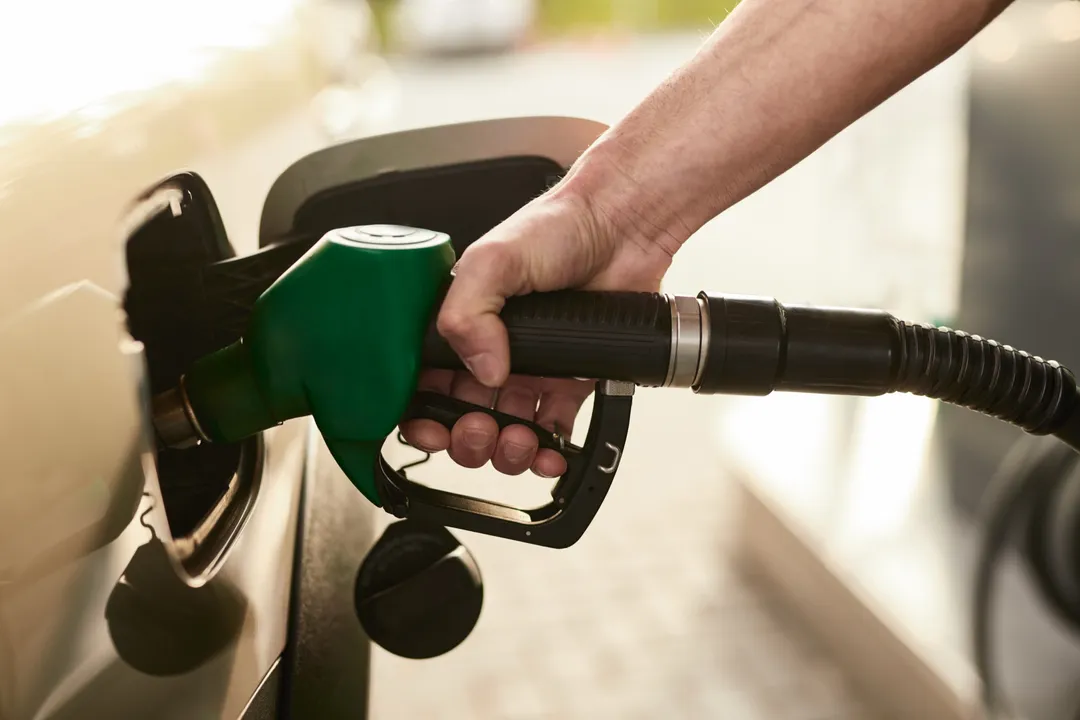
The idea of powering a vehicle using only a tank of tap water is compelling, often presented as the ultimate clean energy solution that would solve global resource dependency overnight. However, the fundamental barrier to using water as a direct fuel source is deeply rooted in chemistry and physics: water is an incredibly stable compound. It is not a fuel in the way that gasoline or natural gas are; rather, it is the ash, or the spent byproduct, of burning hydrogen.
# Stable Compound
A water molecule () consists of two hydrogen atoms tightly bound to one oxygen atom. These chemical bonds represent a low-energy state for the components involved. To extract any usable energy from water, these bonds must be broken to liberate the hydrogen and oxygen atoms—a process typically accomplished through electrolysis, which involves passing an electrical current through the liquid.
The stability of water is quantified by its enthalpy of formation, which is a negative value (). This negative value is the chemical signature indicating that energy must be put into the system to force the atoms apart and form water from elemental hydrogen and oxygen. Since energy is required to break those bonds, the water itself does not store readily accessible chemical energy that can be tapped on demand for propulsion.
# Thermodynamics Check
The scientific principles governing energy conservation render the concept of a net-positive energy system based solely on water impossible. This is where the laws of thermodynamics come into play.
The First Law of Thermodynamics, the law of energy conservation, dictates that energy cannot be created or destroyed. If you use electricity to split water into hydrogen and oxygen, the energy you expend during electrolysis is the exact amount of energy you can expect to recover when those elements are later recombined—assuming perfect, zero-loss efficiency.
However, no real-world process operates without losses, which is where the Second Law of Thermodynamics becomes decisive. This law states that in any energy conversion, some energy is inevitably lost, usually as waste heat, meaning the process is less than 100% efficient. When you use the recovered energy (from burning the hydrogen and oxygen) to power a car, that energy is converted into mechanical work. If you try to route all that recovered energy back to power the electrolysis unit to split the water again, the losses from both the combustion/engine step and the electrolysis step ensure that you can never recover enough energy to sustain the process. The useful energy output will always be necessarily less than the initial energy input.
Think of it this way: water is the "wound-down" spring. To get work out of it, you must first "wind it up" by supplying energy to separate the hydrogen and oxygen. The energy cost to wind it up is greater than the energy you get back when the spring unwinds.
# Energy Carrier
This leads to the critical distinction: water is not an energy source; it is an energy carrier. In systems where hydrogen is used to power a vehicle—such as a hydrogen fuel cell electric vehicle—the electricity is generated by combining stored hydrogen with atmospheric oxygen, producing water as the only emission. This is a clean process, but the energy did not come from the water; it came from wherever the hydrogen was produced.
If the hydrogen is created by splitting water using electricity generated by burning coal or natural gas, the process is simply moving the emissions from the tailpipe to the power plant—and adding inefficiencies along the way. The only way for hydrogen derived from water to be considered truly "clean" is if the electrolysis is powered by renewable sources like solar, wind, or nuclear energy; this is often termed "green hydrogen". In this scenario, the water acts as a medium to store energy captured from the sun or wind.
It is telling to contrast this with the primary source of energy for modern life: hydrocarbons like gasoline. Burning a gallon of gasoline produces about 8.6 pounds of water. While this water is introduced into the environment, the energy released came from the chemical bonds within the hydrocarbon structure itself—bonds that were formed over geological time by capturing solar energy. Water is the end product of this cycle; it does not initiate a new energy cycle using just itself.
# In-Car Splitting
A common theme in perpetual motion claims involving water is the suggestion that a small device, often called an electrolyzer or "HHO generator," can be installed in a standard car to split water on demand, feeding the resulting gas mixture ( and ) into the engine intake.
Proponents often argue that the energy required for this splitting can be supplied by the car's alternator, which is powered by the existing gasoline engine, thereby tricking the system into thinking the energy is "free" because the engine is already running. This line of reasoning ignores the basic energy relationship. The alternator's purpose is to recharge the car's battery and run auxiliary electrics; it takes mechanical energy from the engine to do this work. Adding a substantial electrical load—like continuous electrolysis—forces the alternator to draw more power from the engine, which in turn requires more gasoline to overcome that increased resistance. You are essentially burning more gasoline to make the electrolysis happen, and due to thermodynamic losses, you will always get less usable energy back from the split gases than you burned in extra gasoline. There is no mechanism where this on-board electrolysis could produce a net energy gain.

# Related Tech
It is important to differentiate the myths from legitimate applications that involve water in combustion engines or power generation:
- Steam Engines: Older steam-powered vehicles use water purely as a working fluid, not a fuel. Heat from a separate fuel source (like burning coal or wood) is used to convert the water into high-pressure steam, which then drives the pistons or turbine. The water itself is just recycled, inert carrier for the thermal energy generated elsewhere.
- Water Injection: This involves adding a fine mist of water to the incoming fuel-air mixture in a conventional gasoline engine. This water does not provide power; instead, it lowers the combustion temperature, which cools the chamber, allows for higher compression ratios, and prevents engine knocking (detonation). It's an engine performance modification, not a fuel source.
- Hydrogen-on-Demand: Some legitimate prototypes, like those using boron, react a chemical with water to produce hydrogen gas in situ. The water is a reactant, but the actual chemical energy comes from the consumable material (e.g., boron). However, even in these cases, the energy required to process and recycle the chemical byproduct (like boron trioxide back into elemental boron) often exceeds the energy gained from burning the resulting hydrogen.
# Myth History
The allure of water as fuel is not new. Claims of functioning water-fuelled cars have surfaced internationally for decades, frequently involving intricate devices like the "Garrett electrolytic carburetor" or, more recently, the much-publicized "Stanley Meyer's water fuel cell". These claims invariably involve schemes to extract energy via electrolysis.
In cases where these inventors have brought their devices to court or gained significant investment, the results have consistently involved rulings of fraud or the company dissolving after failing to deliver a marketable product. For example, Stanley Meyer was found guilty of "gross and egregious fraud" by an Ohio court in . Such historical outcomes underscore the non-negotiable scientific barriers present in every proposed system that claims to run on water alone.
When evaluating any energy claim, especially one that promises to bypass the foundational laws of chemistry and physics, a simple comparison between the input needed to separate the compound and the output generated serves as the most reliable litmus test. If the input energy is sourced from the material being split, the system is mathematically destined to lose energy at every step, rendering it useless as a primary power source. The challenge isn't finding a way to use water, but recognizing that the necessary energy input must always come from a pre-existing, higher-energy source, whether that is the sun hitting a solar panel or the ancient energy stored in fossil fuels.
Related Questions
#Citations
Can water really be broken down and used as fuel? If so, why aren't ...
Why can't cars run on water instead of gasoline?
Water-fuelled car - Wikipedia
The Folly of Water-Fuelled Vehicles | Office for Science and Society
Why is the creation of water from the combustion of hydrocarbons ...