Can we use methane as rocket fuel?
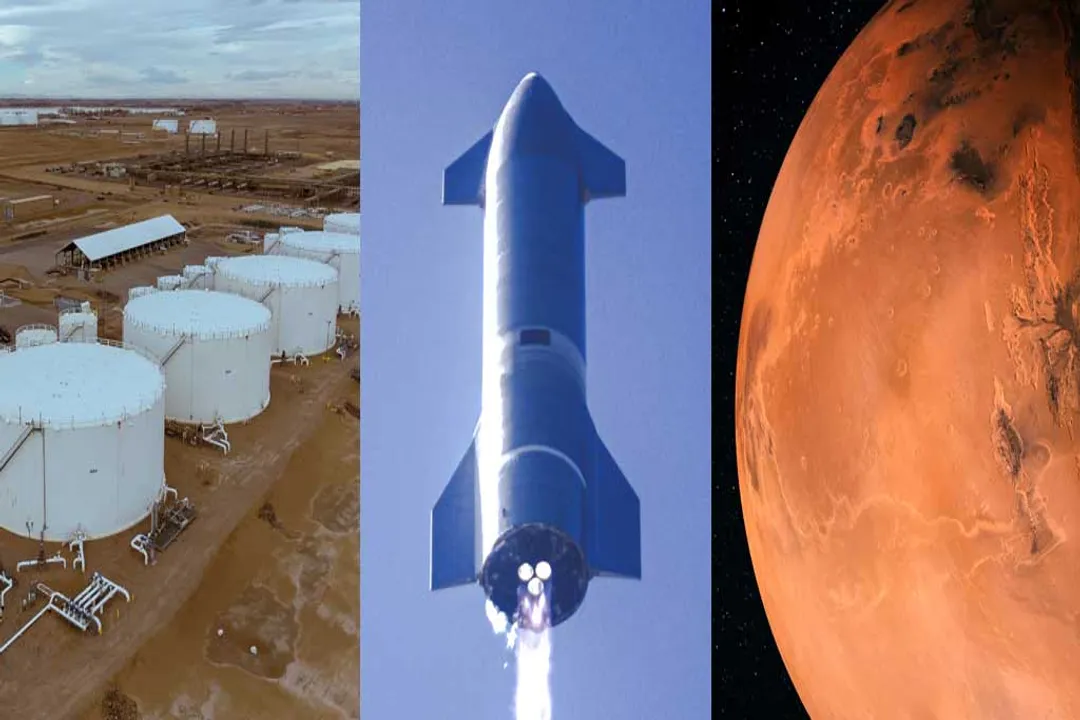
The idea of using methane as a primary rocket propellant has moved from the realm of academic curiosity to the forefront of modern launch vehicle design. While liquid hydrogen and oxygen (LOX/LH2) offer the highest performance metrics, and the traditional combination of LOX and refined kerosene () provides reliability and ease of handling, liquid methane () presents a compelling middle ground that addresses some of the most persistent engineering challenges facing the industry today. [2][5][7] This shift is not merely a technical tweak; it represents a philosophical pivot towards long-term sustainability and rapid reusability in spaceflight architecture. [10]
The selection of a rocket fuel involves balancing several competing factors: performance, density, storage temperature, cost, and cleanliness of combustion. [2][5] Methane, often paired with liquid oxygen to create a methalox system, delivers a specific impulse () that sits comfortably between its two main competitors. [2][10] While LOX/LH2 typically achieves the highest —a measure of how efficiently a propellant generates thrust—methane generally outperforms on the same metric. [2][10] For many heavy-lift applications where overall vehicle size and tank volume are constrained by the density of the fuel, the slightly lower of methane compared to hydrogen is an acceptable trade-off for superior density and simpler handling. [7]
# Propellant Tradeoffs

When looking purely at performance figures derived from chemical energy, liquid hydrogen is the clear champion for maximum thrust efficiency, achieving an in the neighborhood of 450 seconds in ideal conditions when using liquid oxygen. [2] Methane, conversely, typically achieves an around 370 seconds, while usually falls slightly below that, perhaps around 350 seconds. [2] This means that for a given mass of propellant, hydrogen engines can generate more total impulse over the burn time. [10]
However, performance alone rarely dictates engineering choices. The actual volume a propellant occupies, its density, significantly impacts the final size and mass of the vehicle's propellant tanks. [7] Liquid hydrogen, despite its high energy content per mass, has a very low density, requiring enormous, heavily insulated tanks—a major structural penalty for any launch vehicle. [7] Methane, being a much denser liquid at its storage temperature of about (), allows for much smaller tank structures compared to hydrogen for the same mission . [5][7] This density advantage means that while you might carry less mass of hydrogen for the same performance, the structure required to hold that hydrogen adds significant dry mass, often erasing the initial performance benefit, particularly for booster stages designed for rapid turnaround. [2][5]
# Handling Logistics
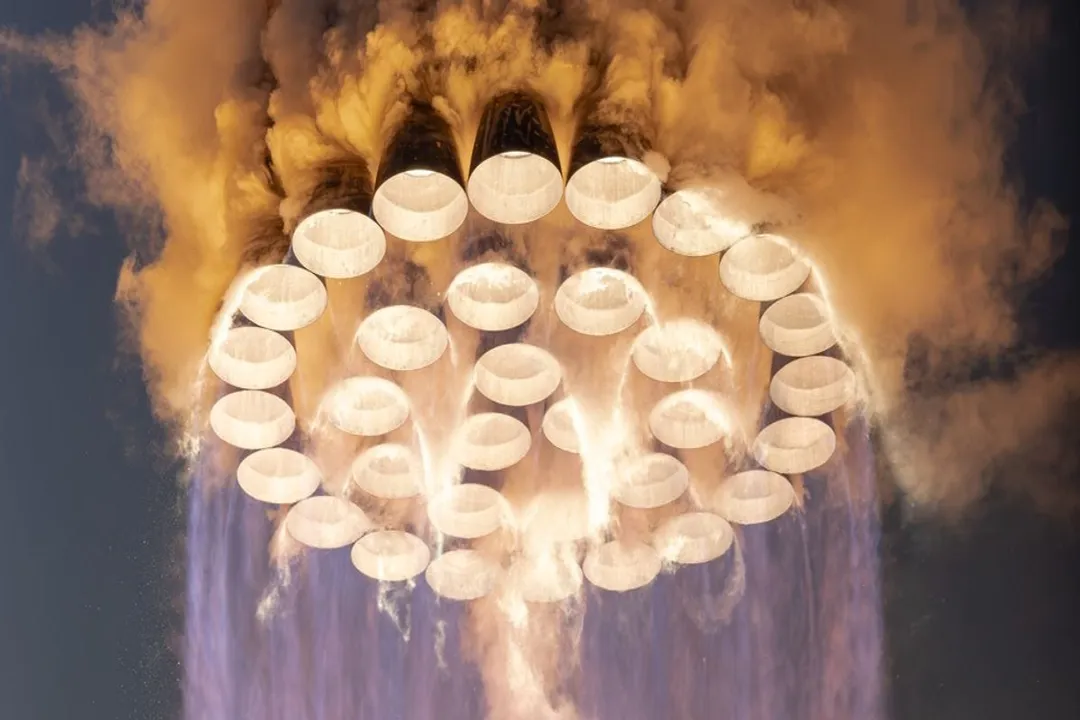
Both methane and hydrogen are cryogenic propellants, meaning they must be kept extremely cold to remain liquid, but their required temperatures are vastly different. [5] Liquid hydrogen must be stored at an incredibly cold (), necessitating complex, heavy insulation to prevent rapid boil-off when exposed to ambient temperatures or during long coast phases in space. [7] Methane's storage temperature of is significantly higher. [7] While still requiring significant cooling and insulation, the thermal management challenge is less severe than for hydrogen. [5] This easier cryo-handling translates directly into lower operational costs, faster turnaround times between flights, and less risk during tanking operations on the launch pad. [5] For an operational, frequently-flown system, minimizing ground support equipment and handling complexity offers a tangible economic edge over slightly higher . [4]
# Engine Durability
One of the most significant arguments favoring methane relates to the longevity and maintainability of the rocket engines themselves, which is a crucial factor when designing for reusability. [5] Traditional kerosene () combustion, especially when paired with high-pressure staged combustion cycles, leads to a notorious problem called coking. [4] Coking is the deposition of carbonaceous soot and residues inside the combustion chamber and, critically, within the complex fuel turbopumps and plumbing. [4][7] Cleaning these components after every flight is time-consuming, expensive, and wears down the engine hardware. [7]
Methane, by contrast, burns much cleaner because its chemical structure is simpler and it has a higher hydrogen-to-carbon ratio compared to kerosene. [4] This cleaner burn significantly reduces or eliminates the formation of performance-degrading soot and carbon deposits. [4][5] The result is an engine that can survive far more reuse cycles with minimal maintenance. [5] When SpaceX developed the Raptor engine, for instance, the choice of methane was heavily influenced by the requirement for a highly reusable, high-thrust first stage for Starship, where the cost of engine refurbishment would otherwise cripple the economic model. [8] The longevity derived from avoiding coking fundamentally shifts the lifetime operational cost calculation in favor of methalox systems. [4]
# Adoption Delays
If methane offers a better combination of density, cleaner burning, and manageable cryogenics than kerosene, and is nearly as efficient as hydrogen without the extreme thermal penalty, why did it take the aerospace industry so long to fully embrace it for mainline launch vehicles? [5][9]
A key reason lies in established infrastructure and legacy knowledge. [9] For decades, the aerospace industry had vast experience and supply chains built around —a well-understood, storable (though not truly storable, it's denser than ) liquid that did not require complex cryogenic handling. [4][9] Transitioning from a mature, proven system to a new one, especially one involving cryogenics like liquid methane, always incurs significant development risk and capital investment. [5] Early rocket designers often prioritized the absolute highest performance possible, making the target for upper stages, even with its handling nightmares, and accepted the maintenance burden of for boosters. [10]
Another factor contributing to the delay was the state of technology maturity for the engine cycles needed to make methane effective. [4] To get the best performance out of methane, complex engine cycles like full-flow staged combustion (as used in the Raptor) are preferred, as they manage the high pressures and heat transfer effectively. [4] Developing these advanced cycles takes significant time and engineering prowess, which was only recently made commercially viable by companies focusing intensely on rapid, iterative development. [5]
If we consider the total system efficiency, an interesting observation emerges: for missions where the engine has to be throttled or reused many times—such as Earth-to-orbit ferry services—the operational savings realized by methane's clean performance can quickly compensate for its slightly lower theoretical maximum compared to hydrogen. [4] For a vehicle like Starship, which is designed to launch and land frequently, the reliability and reduced maintenance schedule derived from avoiding soot deposition become the dominant economic driver, overriding the marginal benefit of . [8] It's a case of engineering optimization favoring long-term operational readiness over peak thermodynamic potential. [10]
# Deep Space Future
The most compelling, long-term argument for widespread methane adoption is its connection to deep space exploration, particularly Mars missions. [5][7] One of the fundamental hurdles for sending large payloads to Mars and ensuring a return trip is the massive amount of propellant required for the return journey from the Martian surface. [7] Launching all that return fuel from Earth is often prohibitively heavy. [5]
Methane, however, is considered a prime candidate for In-Situ Resource Utilization () on Mars. [5][7] The Martian atmosphere is mostly carbon dioxide (), and evidence suggests significant subsurface water ice deposits. [7] Using a process known as the Sabatier reaction, can be reacted with hydrogen (derived from splitting water ice via electrolysis) to produce methane () and water (). [7] This means that future missions could land a small "fuel factory," generate the methane propellant needed for the return trip using only local resources, and carry far less fuel mass from Earth. [5][7] This capability for methane makes the concept of sustained Martian presence far more achievable than relying solely on highly energetic but resource-intensive systems, which would require hydrogen to be sourced from Martian water and oxygen from , a more complex chemical pathway than the Sabatier route for methane production. [7]
The current generation of engines being developed by major players, such as the Raptor engine used by SpaceX and the BE-4 developed by Blue Origin, are explicitly designed around the methalox chemistry. [8][10] This commitment solidifies methane's position not as an experimental curiosity, but as the intended workhorse propellant for the next wave of heavy-lift, reusable launch vehicles designed for both near-Earth and deep-space operations. [10] While hydrogen may still hold the crown for vacuum-stage performance, methane is winning the battle for the high-cycle, high-thrust, frequently-flown stages that define the future of regular access to space. [4]
Related Questions
#Citations
'Propellant of the future' - The roads not traveled : r/rocketry - Reddit
Liquid rocket propellant - Wikipedia
Methane vs. Kerosene as Rocket Fuels - Stanford University
Why did it take so long for methane to be used as a rocket propellant?
If methane is supposedly a better rocket fuel than hydrogen ... - Quora
Practical uses of liquid methane in rocket engine applications
Using Liquid Methane As Rocket Fuel - Benefits And Drawbacks
Why use Methane? Why not Kerosene or Hydrogen? - Facebook
Liquid methane as rocket fuel : why so late to the party?
The Methane Revolution in Spaceflight: Why So Late?