Do you believe in aliens and why?

The universe is vast beyond easy comprehension, filled with an unimaginable quantity of stars and, consequently, planets. That simple statistical reality forms the bedrock of many people’s conviction that we are not alone. When contemplating the existence of extraterrestrial life, the conversation quickly shifts from if to where and when, often fueled by the sheer arithmetic of the cosmos. [2][6]
# Cosmic Scale
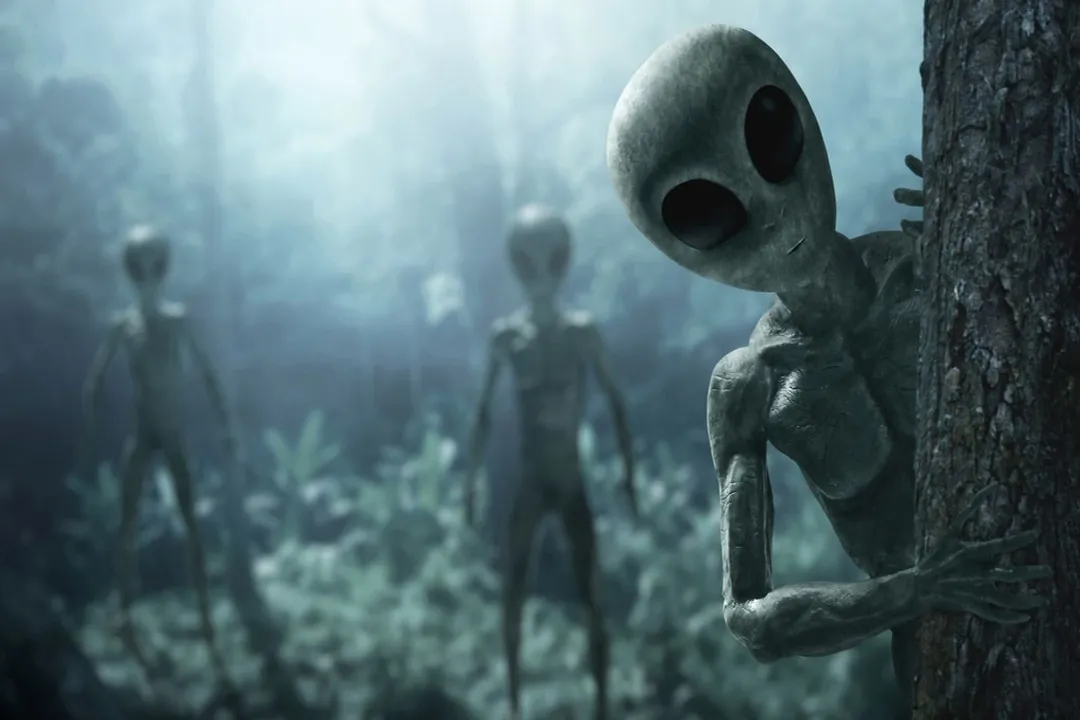
Consider the sheer number of potential abodes for life. There are estimated to be around 100 billion stars in our own Milky Way galaxy alone. [2] If each star hosts even a few planets, the total count climbs into the hundreds of billions just within our galactic neighborhood. [6] When you extrapolate that number across the estimated two trillion galaxies in the observable universe, the potential number of worlds becomes almost infinite. [2] This mathematical immensity makes the idea that life arose only once, on Earth, seem incredibly unlikely to many observers. [3][5] Some argue that given the immense number of opportunities, it would be stranger if life hadn't sprung up elsewhere. [10]
The argument isn't just about the quantity of planets; it is about the quality of those planets. Scientists categorize potentially habitable worlds based on their location within a star’s "Goldilocks zone"—the orbital region where temperatures allow liquid water to exist on the surface. [6] While a habitable zone world isn't a guarantee of life, the discovery of thousands of exoplanets, many within these zones, suggests that the building blocks for what we understand as life are present in abundance across the galaxy. [2][10]
# Scientific Foundations
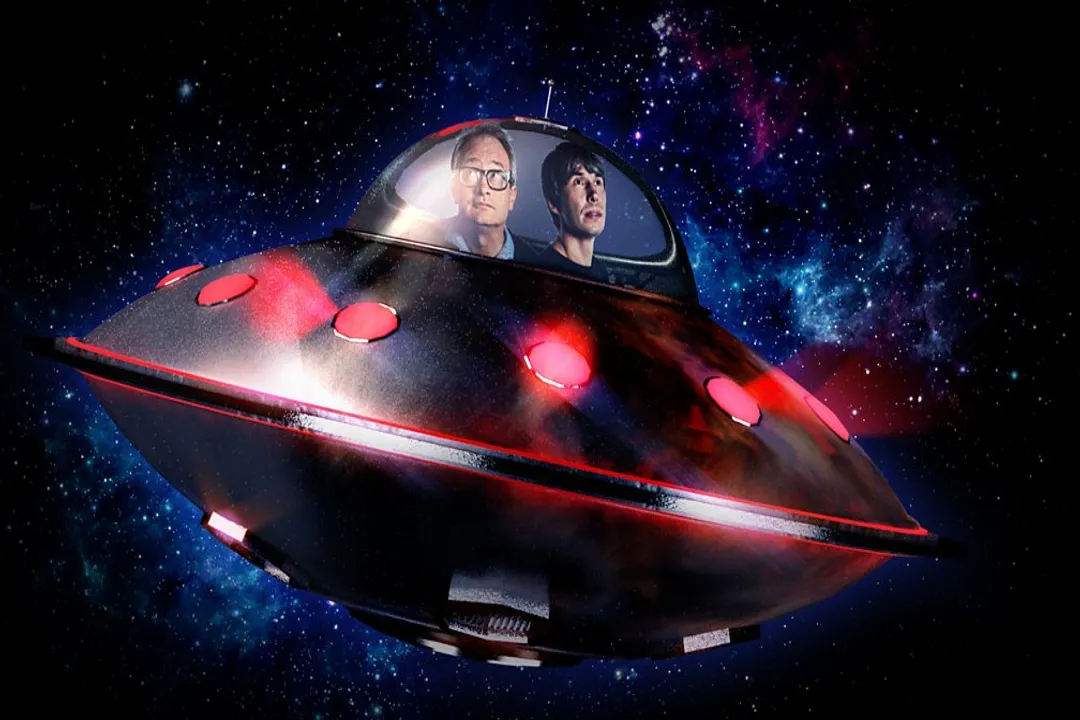
Belief in aliens is not purely philosophical; it is increasingly grounded in emerging scientific understanding about the prerequisites for life. One major scientific push involves searching for biosignatures—chemical traces of life—on other celestial bodies. [8] For instance, missions to Mars seek evidence of past or present microbial life, as the red planet once held liquid water. [8] This focus on environments that could have supported life underscores the scientific community’s active pursuit of the question. [8]
Furthermore, the ingredients for life seem surprisingly common. Organic molecules, the basic carbon-based building blocks, have been detected in meteorites, comets, and interstellar dust clouds. [10] If the fundamental chemistry necessary for abiogenesis—the process by which life arises from non-living matter—is widespread, it strengthens the case that life is not a unique terrestrial fluke but a probable cosmic outcome. [5][10] The scientific consensus, as expressed by groups like NASA, often leans toward the idea that the universe is likely teeming with microbial life, though confirming intelligent life remains a far greater challenge. [8]
The distinction between simple microbial life and complex, intelligent life is a crucial one when assessing probability. While the former might be common, the latter requires much more specific and prolonged environmental stability. [5]
# Probabilities and Paradoxes

The high probability suggested by the sheer number of stars often clashes with a striking piece of observational evidence: the apparent absence of contact, often framed by the Fermi Paradox. [6] If the galaxy is so old and vast, and life is probable, where is everybody?[5]
One way to reconcile the statistics with the silence is to consider the timescales involved. If we imagine a hypothetical galaxy where intelligent civilizations arise on one in every million stars, that still leaves thousands in the Milky Way alone. [3] However, intelligent life might only exist for a relatively brief window before self-destruction or extinction, creating a transient "window of opportunity" for detection. [5]
Consider this hypothetical comparison: If the universe's lifespan is represented by a 24-hour clock, Earth's complex animal life only appeared in the last hour, and modern humans have existed for mere seconds. [5] An advanced civilization that flourished a billion years ago in a distant galaxy might have risen and fallen long before the light from their existence reached us, or they may be flourishing now, separated by distances so vast that their signals have not yet arrived, or are too faint to interpret. [2][5] The silence, therefore, might not indicate absence, but rather the immense temporal and spatial separation inherent in a universe billions of years old and light-years wide. [5]
Another limiting factor discussed widely online is the nature of the intelligence itself. Perhaps advanced civilizations universally transition to forms of communication or existence that we cannot detect with our current radio telescope technology, or perhaps they simply stop broadcasting their presence once they achieve a certain level of maturity. [1] People often express a belief rooted in the idea that any sufficiently advanced civilization would logically move toward interstellar communication, but this remains an assumption about alien motivation and technological trajectory. [1][3]
# Why We Look Up
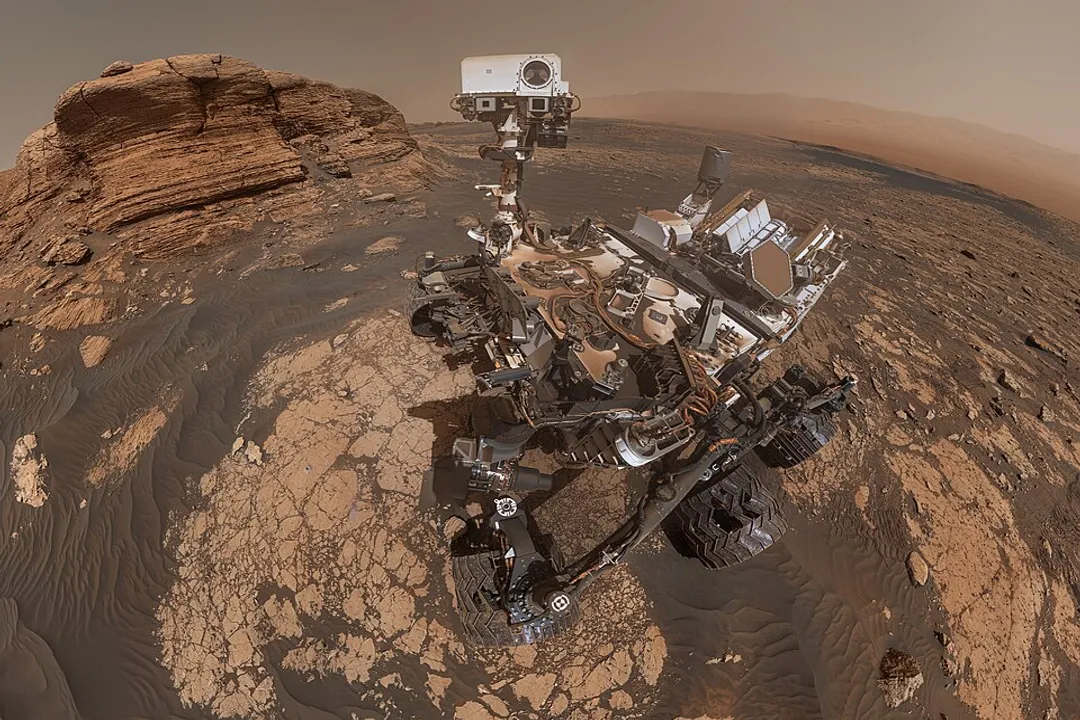
The desire to believe in extraterrestrial life seems deeply ingrained in the human psyche. As one analysis suggests, this wanting to believe is tied to our innate curiosity and our desire to situate humanity within a grander context. [9] If we are alone, humanity carries the immense burden of being the sole conscious expression of the cosmos we know. [3] Conversely, finding life, even simple bacteria on Mars, would radically redefine our significance, suggesting life is a natural, expected phenomenon rather than a miraculous exception. [9]
This search for context manifests in popular culture, where belief often precedes or bypasses evidence. [1] Discussions on forums reveal a spectrum: some state a firm belief based purely on statistics, while others require empirical, physical proof before accepting the premise. [1][3] This split highlights the tension between a priori mathematical probability and a posteriori observational proof. For many, the mere possibility is enough to fuel hope and ongoing search efforts. [4]
To structure our own search efforts practically, one might think of the process less as a single sweep and more as a multi-layered investigation, prioritizing based on feasibility. A simplified approach, mirroring current scientific efforts, might look like this:
| Search Level | Target | Primary Method | Probability Weight |
|---|---|---|---|
| 1 (Closest) | Mars, Ocean Moons (Europa, Enceladus) | In-situ drilling, sample return | Higher for microbial life |
| 2 (Nearby Stars) | Exoplanets in Habitable Zones | Atmospheric spectroscopy for biosignatures | Moderate for simple life |
| 3 (Galactic Scale) | SETI searches | Radio/optical signal detection | Lowest for current tech |
This layered approach acknowledges that while a civilization broadcasting across light-years is exciting, finding fossilized pond scum just a few million miles away would be just as revolutionary in confirming life is not unique to Earth. [8]

# Defining Life and Detection
A significant hurdle in answering the belief question is defining what we are actually looking for. If we insist on searching for life as we know it—carbon-based, water-dependent—we might be missing life based on silicon, or existing in solvents we don't recognize. [6] The search parameters are inherently biased by our own biology, creating a kind of cosmic myopia. [10]
If advanced aliens are out there, their very existence implies they have successfully navigated the challenges that might extinguish lesser civilizations—planetary catastrophe, resource depletion, or technological self-annihilation. [5] This implies a stability or wisdom we have not yet achieved, making their potential appearance less like a conquering force and more like encountering an elder civilization whose methods might be unrecognizable to us. [5] Furthermore, the vast distances mean that any signal we receive today is an echo of the past, perhaps decades or millennia old. [2] A civilization that sent a powerful, clear signal ten thousand years ago might be extinct today, leaving us with only historical proof, not current company. [5]
The idea that they might find us is also a consideration. Some proponents suggest that if advanced life exists, it would likely develop methods of interstellar travel or communication far superior to our own, making our current attempts akin to shouting into the ocean while they use sonar. [1]
Ultimately, the decision to "believe" often boils down to personal philosophy when faced with incomplete data. For many, the concept of an empty universe is too improbable to accept, while for others, the lack of confirmed evidence—no blinking lights, no unambiguous radio signal, no visiting spacecraft—means that holding a strong belief is scientifically unwarranted. [3] The NASA scientist quoted suggested that while they remain open-minded, their professional stance must prioritize verifiable evidence over statistical likelihood. [8] This duality—the intuitive certainty of probability versus the rigorous demand for proof—is what keeps the topic alive in public discourse and scientific inquiry. The debate continues, framed by the hopeful prospect of discovery and the sober reality of cosmic distances and time. [2]
# The Human Element
The enduring interest in alien life also speaks to our inherent desire for something more than what we observe daily. [9] The universe offers the potential for infinite novelty, an escape from terrestrial limitations. [4] Whether this hope translates into a genuine belief that little green men are currently orbiting Jupiter or simply an acknowledgement that the cosmos must be populated is a distinction many people blur in casual conversation. [1] The conversation often evolves beyond the purely scientific to address philosophical concerns about meaning and uniqueness. [9]
We are drawn to the unknown, and nothing is more unknown, or potentially more paradigm-shifting, than confirming we share our existence with another intelligence. [3] This search, whether successful or not, pushes our technology, broadens our scientific understanding of planetary conditions, and forces us to continuously reassess our place in the grand scheme of things. [6] The question of alien existence, therefore, remains a mirror reflecting our own hopes, fears, and capacity for wonder about the nature of reality itself. [9]
#Videos
Do I Believe in UFOs? - YouTube
Related Questions
#Citations
Do we believe that Aliens exist? : r/Animorphs - Reddit
7 Solid Reasons to Actually Believe in Aliens
Do you believe in 'aliens?' Why or why not? - Quora
Do you believe in aliens as a normal person? - Facebook
10 reasons why aliens probably exist (but won't be visiting us ... - BBC
Extraterrestrial life - Wikipedia
Do I Believe in UFOs? - YouTube
Do Aliens Exist? We Asked a NASA Scientist: Episode 5
Why we want to believe in aliens - BBC Science Focus Magazine
Six Reasons To Believe In Aliens That Match The Science