Has it been scientifically proven that aliens are real?
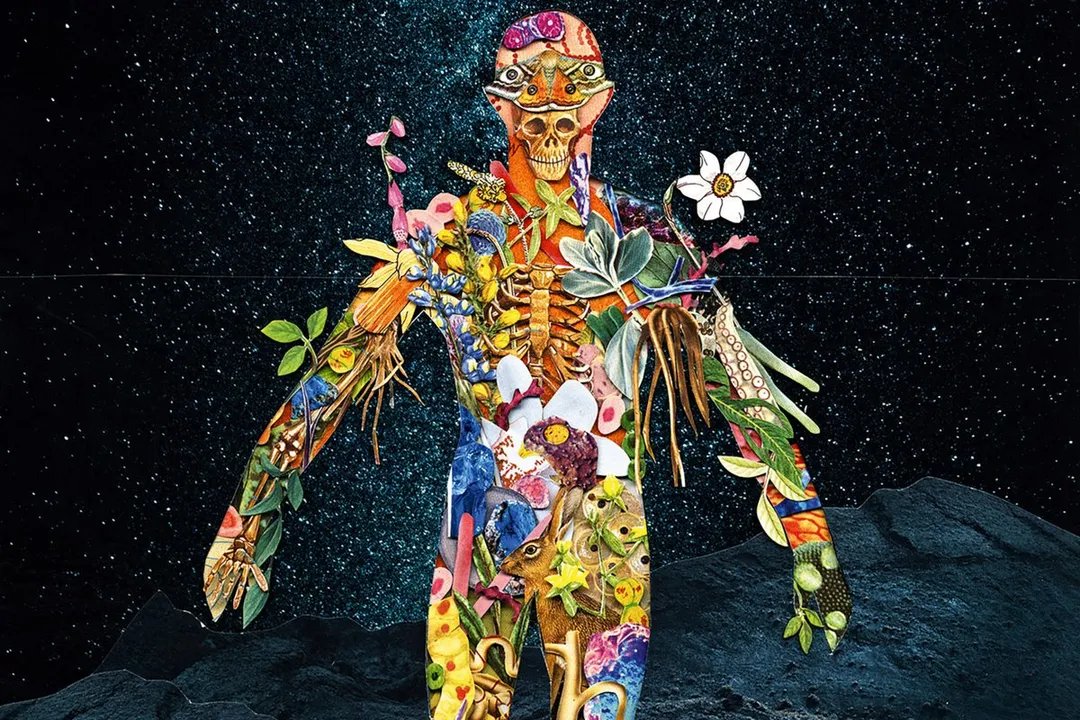
The status of extraterrestrial life remains one of humanity’s most compelling unknowns, yet if one looks purely at hard, verifiable scientific proof, the answer remains a definitive no. While scientists actively search for life beyond Earth, and some recent findings suggest promising chemical possibilities, definitive, uncontested evidence confirming alien organisms or civilizations have been found is currently absent. [1][3] The conversation, however, is shifting from if life exists elsewhere to how we might detect it, moving the goalposts from simple detection to complex confirmation.
# Strongest Signals
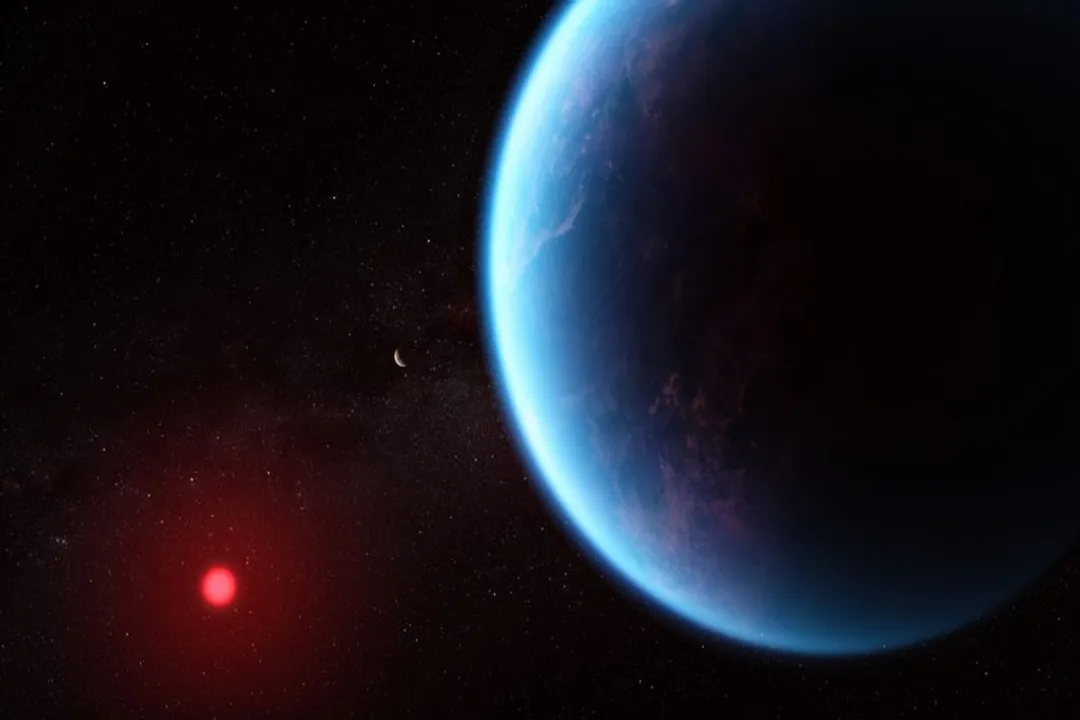
Recent astronomical work has certainly provided tantalizing clues, raising the scientific excitement level considerably. Some researchers have hailed findings related to exoplanets as the strongest evidence so far for life existing outside our solar system. [2] A primary focus has been the study of exoplanets, particularly those residing in the habitable zones of their stars, like the sub-Neptune planet K2-18b. [8]
Observations of K2-18b, which orbits a red dwarf star, revealed the presence of carbon-bearing molecules and a potential detection of dimethyl sulfide (DMS). [8] On Earth, DMS is overwhelmingly associated with biological processes, primarily emitted by phytoplankton in marine environments. [8] This chemical signature, if confirmed as biologically produced on K2-18b, would represent a significant biosignature—a strong hint, but not the full proof of alien life itself. [8] Scientists involved in this work treat the DMS detection cautiously, acknowledging that further observations are needed to rule out unknown geological or chemical pathways that could produce the compound without biology. [8] This illustrates the scientific process: an anomalous signal requires rigorous testing before it can be attributed to aliens.
Comparatively, the search for life often looks closer to home, such as on Mars, where missions continue to investigate whether microbial life once existed or perhaps persists beneath the surface. [1] NASA scientists, for example, emphasize that finding extant or extinct life on Mars would confirm that life is not unique to Earth, even if it doesn't confirm intelligent aliens elsewhere in the galaxy. [1]
# Government Interest
Beyond the telescopes, the historical and ongoing interest from government and defense agencies adds layers of complexity to the public discourse surrounding extraterrestrial life. Declassified documents from agencies like the National Security Agency (NSA) show records detailing communications intercepts potentially related to extraterrestrial activity. [5] These documents, often heavily redacted, do not serve as confirmation of alien existence but rather as evidence that the possibility has been taken seriously enough by intelligence agencies to warrant monitoring and analysis throughout history. [5]
This historical acknowledgment contrasts sharply with the recent public assertions made by some high-profile individuals. For instance, a Harvard physicist has publicly stated that there is proof that aliens have visited Earth. [7] Such claims often hinge on interpreting Unidentified Aerial Phenomena (UAPs)—formerly UFOs—as confirmed visits from non-human intelligence. [7] While government and military reports have increasingly acknowledged that UAPs represent real, physical objects that defy immediate explanation, this acknowledgement does not equate to scientific proof of extraterrestrial origin. [7] The leap from "unidentified" to "alien" requires a standard of evidence far exceeding current public reports.

# The Evidence Gap
The core issue preventing a scientific consensus on "proven" alien life is the gap between suggestive data and irrefutable evidence. When assessing extraordinary claims, the scientific community demands extraordinary evidence. For instance, while finding DMS on K2-18b is exciting, it is currently comparable to finding a perfectly formed, complex fossil on Mars—it strongly suggests biology occurred, but does not necessarily capture living aliens or define their intelligence. [8]
The public discussion, often fueled by anecdotal accounts or UAP sightings discussed on platforms like Reddit, sometimes mixes these categories of evidence. [6] Credible eyewitness accounts or intriguing sensor data related to UAPs are compelling for investigation but lack the repeatability, independent verification, and physical sample required for formal scientific proof of alien visitation. [6] It is fascinating to track public opinion on what constitutes the "most compelling and credible" evidence, but those pieces rarely meet the rigor required by fields like astrobiology or particle physics. [6]
Consider the necessary proof for a claim like "intelligent aliens have visited us." This would ideally require recovering physical artifacts exhibiting non-terrestrial engineering, or receiving and decoding an unambiguous, intentional message that cannot be explained by natural phenomena or terrestrial error. Current findings, even the most promising atmospheric biosignatures, fall short of this high bar, requiring an added layer of interpretation that scientists are trained to be skeptical of. [1][3] What distinguishes a genuine scientific breakthrough from a sensational claim often boils down to the failure of null hypotheses; for extraterrestrial confirmation, we have yet to decisively eliminate every known natural or terrestrial explanation for the observation.
# Spreading Life

While we debate the existence of intelligent civilizations visiting Earth or microbes on exoplanets, a separate, though related, hypothesis posits a way life might have already reached us, or vice versa: panspermia. [9] This theory suggests that life did not originate independently on Earth but was instead "seeded" from elsewhere in the cosmos, perhaps arriving via asteroids or comets. [9] This concept, which has historical roots, addresses the spread of life rather than the creation of alien life, but it underscores the chemical interconnectedness we might share with other celestial bodies. [9] If life did spread this way, it would imply that the fundamental building blocks—or even dormant microbes—are common throughout the galaxy, boosting the probability of life existing elsewhere, even if it hasn't evolved into a detectable civilization yet. [9]
# Defining Proof
If we look at what NASA and organizations like The Planetary Society state, the emphasis is on continuing the search based on the vast number of potential habitats. [1][3] The sheer scale of the universe suggests that life should be common, even if our current technology is insufficient to confirm it. The scientific goal is moving from statistical probability to concrete detection.
The challenge in achieving definitive proof lies in the scale of both distance and time. Even if a civilization broadcasts a powerful signal today, that signal could be millennia old, and our response might only be received by a civilization that no longer exists, or it may not even be directed toward us. This inherent temporal and spatial mismatch means that achieving two-way, verifiable communication—the gold standard for proof of intelligent alien life—may be orders of magnitude harder than detecting simple microbial activity on a nearby exoplanet.
For now, the scientific community operates in a state of high expectation tempered by procedural skepticism. The data from K2-18b, the historical government files on UAPs, and the mathematical odds all suggest that the universe is likely teeming with biology. [2][5][8] However, until a sample is returned, a signal is decoded with certainty, or a physical artifact is independently verified as non-terrestrial, the definitive scientific answer remains that alien life has not been scientifically proven real. The hunt continues, driven by those tantalizing hints that suggest we are very close to answering that fundamental question.
#Videos
My Search for Proof Aliens Exist | Avi Loeb | TED - YouTube
Related Questions
#Citations
Do Aliens Exist? We Asked a NASA Scientist: Episode 5
Scientists hail 'strongest evidence' so far for life beyond our solar ...
Are aliens real? | The Planetary Society
My Search for Proof Aliens Exist | Avi Loeb | TED - YouTube
[PDF] Communication with Extraterrestrial Intelligence
what is/are the most compelling and credible piece of evidence for ...
Aliens on earth? Yes, and there's proof of it, Harvard physicist says
Astronomers claim strong evidence of alien life, but experts urge ...
Scientists are now seriously asking if humans were seeded by ...