How does Goldilocks relate to real life?

The familiar tale of a little girl wandering into the woods and testing the belongings of a family of bears—porridge, chairs, and beds—before finding what is just right transcends its status as a simple children's story. This narrative, built on the search for an optimal middle ground, has spawned a widely recognized concept known as the Goldilocks principle. [1] In real life, this principle describes a condition that is neither too hot nor too cold, too big nor too small; it is the sweet spot of moderation that allows for success, stability, or even existence. [1]
# Defining Balance
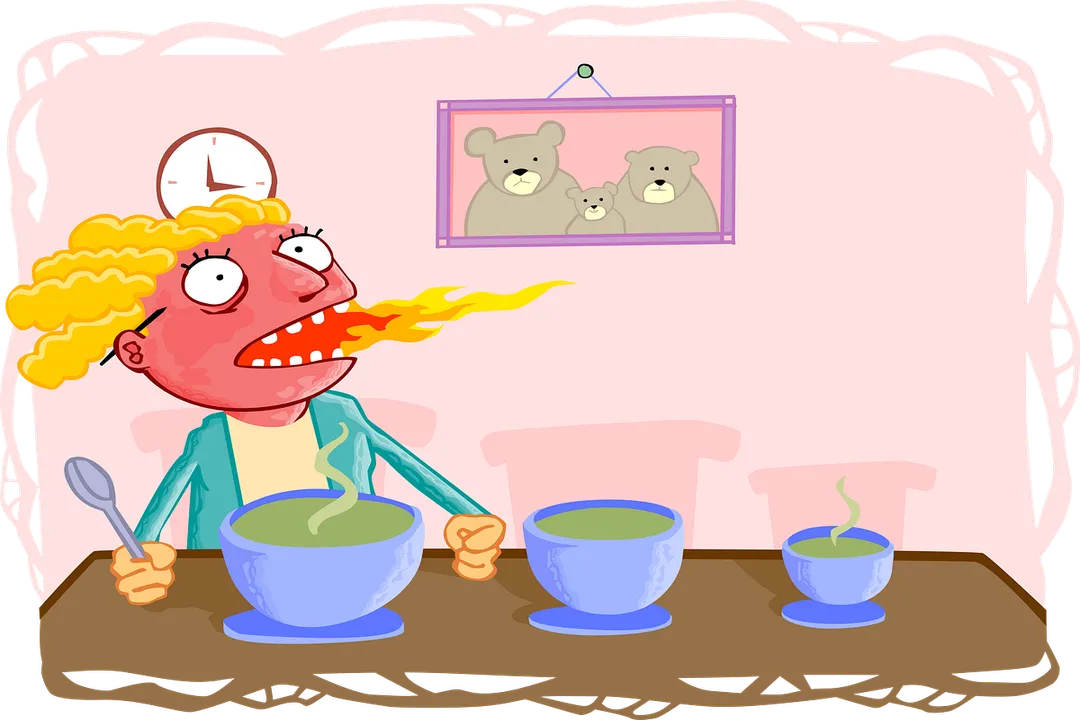
The Goldilocks principle, also referred to as the Goldilocks condition or zone, is fundamentally about achieving equilibrium within a defined set of parameters. [1] It is a recognition that extremes are often detrimental. For instance, a porridge that is too hot scalds, and one that is too cold is unpalatable, but one prepared at the correct temperature is perfect for consumption. [7] This mirrors scenarios across numerous disciplines where an intermediary state proves optimal. [1]
In more scientific contexts, this concept is particularly evident. Consider the search for extraterrestrial life, which heavily relies on the concept of a stellar habitable zone—often called the Goldilocks zone—around a star. [1] A planet orbiting too close will experience runaway greenhouse effects, boiling off its water; one orbiting too far away will freeze solid. [1] Only within that precise orbital range is the temperature likely to permit liquid water, a prerequisite for life as we know it. [1]
This scientific application naturally leads to deeper philosophical quandaries. Some thinkers grapple with the Goldilocks Enigma, which questions why the conditions required for intelligent life on Earth seem so precisely calibrated, or "fine-tuned," when contrasted with the sheer scale of the universe where such perfect conditions might be rare or unique. [2] The very improbability of our current state, being in the right zone, becomes a topic of deep reflection on existence itself. [2]
# Practical Optimization

While cosmology deals with planetary existence, we encounter Goldilocks conditions daily in far less existential, yet equally important, situations. Think about project management or personal skill development. If a task is too simple—the porridge is already cold—there is no challenge, leading to stagnation and boredom. [7] If the task is too complex—the porridge is scalding hot—the effort required leads to frustration, burnout, or outright failure. [5] The "just right" scenario involves the Zone of Proximal Development or a task that pushes one’s current ability just enough to ensure growth without guaranteeing collapse. [1]
In optimizing a local business strategy, for example, one might see the Goldilocks effect in inventory management. Stocking too much product risks high storage costs and obsolescence (too big); stocking too little results in lost sales opportunities (too little). [1] The ideal stock level is the quantity that meets predicted demand without excessive carrying costs, achieving that difficult balance. [1] We often intuitively seek this middle path in our daily decisions, from the right amount of seasoning in a meal to finding the appropriate level of commitment in a new social group. [7] Finding that perfect fit—the right temperature, the right chair hardness, the right bed softness—is about successfully navigating thresholds that block either stagnation or over-engagement. [1][7]

# Narrative Intrusion
When examining the story itself, the tension arises not from the moderation of the items, but from the act of intrusion. Goldilocks is an outsider, an unauthorized sampler in a private dwelling. [6] Literary deconstruction points to the tension created by this initial act of trespass, followed by the testing of boundaries—tasting, testing weight, and testing comfort—before resolution is reached. [7] The resolution is inherently disruptive: the owners return, find the evidence of the crime, and the intruder flees. [7]
This highlights an important ethical dimension often glossed over in simpler readings: the violation of property and privacy. [6] The bears are victims whose property has been misused, their boundaries ignored. [6] Goldilocks does not ask permission to test the items; she assumes access, leading to the conclusion that even when seeking the "right" outcome, the method used to find it matters greatly. [6]
# Privilege Critique
The modern retelling and critical analysis of "Goldilocks and the Three Bears" often shift focus entirely away from the search for moderation and zero in on the character’s privilege and immunity to consequence. Several contemporary readings frame Goldilocks as an entitled figure whose behavior, if exhibited by others, might lead to severe repercussions. [5][9] She is, by this interpretation, the original case of someone operating with unearned societal benefit—sometimes characterized with the modern pejorative term "Karen". [5]
The central critique suggests that Goldilocks enters an occupied home, consumes private food, breaks furniture, and rests in private beds without facing genuine justice for the intrusion, ultimately escaping simply because she is small, white, and likely perceived as less threatening. [9] This interpretation speaks to real-world dynamics where certain individuals can violate norms or boundaries and receive lenient treatment or benefit from the ensuing disruption, a concept sometimes termed Goldilocks Syndrome when discussing racial dynamics. [4] In contrast, the bears, representing the established homeowners, are inconvenienced and frightened by the violation. [8] The story, viewed through this lens, ceases to be a simple lesson in moderation and becomes a commentary on who is allowed to test boundaries and who bears the cost of that testing. [9][4]
When comparing the literary analysis and the ethical one, we see a distinction: Literary analysis focuses on how the narrative tension is built (intrusion, sampling, flight), [7] while the critical analysis focuses on why this specific character was allowed to build that tension without facing consequences akin to a more severe penalty. [5][9] The ease with which she moves through the house underscores a type of systemic acceptance of her presence until the direct confrontation occurs. [8]

# Applying the Narrative Lens
To truly relate this story to real life, we must understand that we are often seeking Goldilocks conditions, but we must also be wary of being the Goldilocks character in someone else's situation. A way to approach decision-making using both the principle and the narrative caution involves a dual assessment.
First, identify the extremes. When launching a new product line, what represents the "too hot" scenario (over-investment, market saturation) and the "too cold" scenario (under-specifying features, missing the market window)? Establishing clear, measurable boundaries for failure or excess helps define the acceptable zone. [1]
Second, evaluate the entry point—this is where we integrate the narrative critique. Before assuming access or testing another's established system, one must determine the ethical pathway.
| Action Domain | Goldilocks Principle Goal (The "Just Right") | Narrative Caution (The Trespass Avoidance) |
|---|---|---|
| Investment | Medium risk, medium return growth rate. [1] | Avoid high-risk acquisition of competitor resources without permission or due process. [6] |
| Feedback | Specific, actionable critique delivered at the right time. [7] | Avoid unsolicited, aggressive, or unwarranted assessment of another's completed work. [5] |
| Resource Use | Optimal resource allocation matching immediate need. [1] | Ensure resources borrowed or accessed are accounted for and restitution is made immediately. [6] |
It is a subtle but important distinction: applying the principle requires finding the moderate setting; avoiding the narrative pitfall requires respecting the boundaries of others while seeking that setting. [7][6] In professional settings, this means not just aiming for the optimal budget or timeline, but ensuring that the process of arriving at that budget or timeline respects the established rules of engagement and ownership belonging to colleagues or partners. [9] Simply achieving the "just right" outcome through a method that disrespects others’ property or established order—the essence of the narrative transgression—is often unsustainable or ethically compromised in the long run. [4][6] The story, therefore, functions as a cautionary dual lesson: seek the moderate path, but do so with respect for private space and established rights.
#Videos
The Dark Origins Of Goldilocks & The 3 Bears (THE TRUE STORY)
Related Questions
#Citations
Goldilocks principle - Wikipedia
The Goldilocks Enigma: A Philosophical Exploration of Fairy Tales ...
The Dark Origins Of Goldilocks & The 3 Bears (THE TRUE STORY)
Goldilocks Syndrome, by Minna Salami | World Literature Today
Was Goldilocks Really the Original Karen? | by Jeremy Helligar
Is 'Goldilocks and the three bears' a racist story? - Quora
Goldilocks was Criming While White - Awesomely Luvvie
Goldilocks and the Three Bears - Teaching Children Philosophy
Tension: Breaking Down Goldilocks and the Three Bears