How do we relate to the Goldilocks story in terms of our survival on Earth?
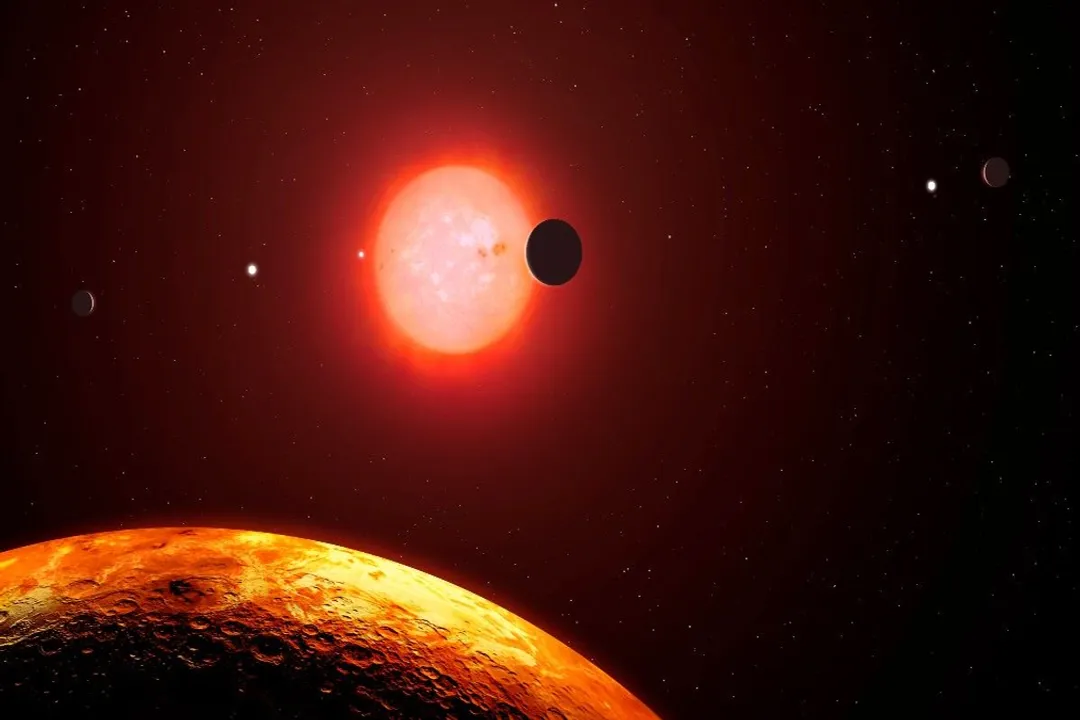
The enduring narrative of Goldilocks, the character who seeks the bowl of porridge, chair, and bed that are just right, transcends its origins in children’s literature to become a surprisingly accurate descriptor for the conditions required for our sustained existence on Earth. It frames survival not as a matter of achieving the best possible scenario, but rather of inhabiting a narrow, delicate middle ground between catastrophic extremes: too much heat, too little water, too fast a reaction, or too slow a rotation. [2][7] Our planet’s continued viability is a massive, complex demonstration of this principle in action, operating across scales from the astronomical to the molecular.
# Defining Moderation
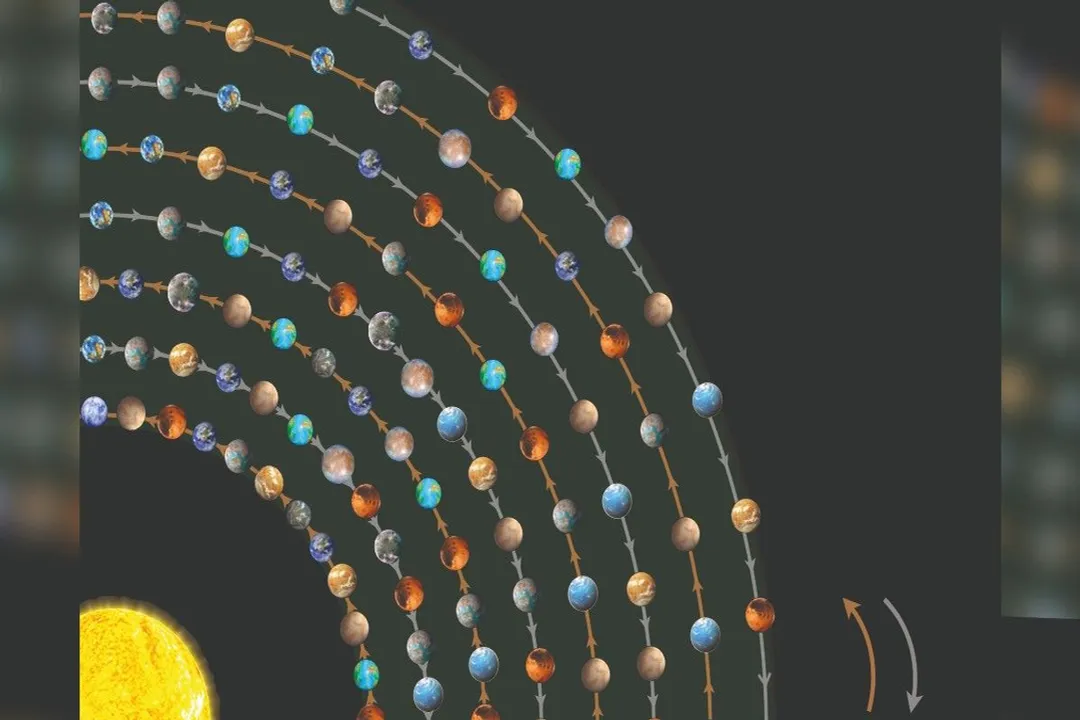
The Goldilocks Principle, fundamentally, describes a range of conditions where existence or functionality is optimal, contrasting sharply with environments that are too sparse or too abundant. [2] In science and engineering, this concept is frequently invoked because systems often fail when pushed to either boundary. For instance, a chemical reaction might require a specific temperature, or an electronic component might overheat or freeze out of service if conditions drift too far from specifications. [2] Applying this to Earth’s habitation, we must consider the entire spectrum of factors that keep our world within this viable, temperate zone. It is an affirmation that equilibrium, rather than excess, is the critical component for long-term stability. [7]
# Cosmic Distance

Perhaps the most widely recognized application of the Goldilocks concept to Earth is its orbital location relative to the Sun, often termed the Habitable Zone (HZ) or the Goldilocks Zone. [3][9] This specific celestial neighborhood dictates the amount of stellar energy our planet receives. [3] For life as we currently understand it, the presence of liquid water on the surface is non-negotiable, and the HZ is precisely defined as the region where temperatures permit water to exist in that state. [3][9]
Earth sits snugly within this zone, but the closeness of the boundaries is startling when we examine our planetary neighbors. Venus, being too close to the Sun, experienced a runaway greenhouse effect that boiled away its surface water, resulting in scorching temperatures—the porridge was too hot. [3] Conversely, Mars, positioned too far out, failed to retain sufficient warmth, causing its water to freeze and escape into space, leaving a frigid desert—the porridge was too cold. [3]
| Planetary Body | Relative Position | Condition Analogy | Primary Survival Issue |
|---|---|---|---|
| Venus | Inner Edge (Too Close) | Too Hot | Runaway Greenhouse Effect [3] |
| Earth | Middle of Zone | Just Right | Liquid Water Stability [3][9] |
| Mars | Outer Edge (Too Far) | Too Cold | Global Freezing/Water Loss [3] |
This alignment is so critical that astronomers dedicate immense resources to finding exoplanets also situated in their stars' HZs. [3][9] What this comparison illuminates is that simply having a rocky planet is insufficient; the precise solar flux is the first, enormous filter determining habitability. [3] Our solar system’s architecture, where Earth occupies that specific orbital path, suggests a condition of astronomical "luck" or, viewed through a different lens, the outcome of necessary initial conditions. [8]
# Planetary Settings
Being in the Habitable Zone only solves the problem of incoming energy. Survival requires an internal mechanism to moderate that energy and protect the surface, which brings us to the next set of Goldilocks parameters regarding Earth’s own physical characteristics.
The atmosphere itself must be "just right" in composition and density. If the atmosphere were too thin, like Mars, atmospheric pressure would be too low, causing liquid water to instantly boil away or freeze, and the surface would be exposed to harmful radiation. [1] If the atmosphere were too dense, like Venus, the resulting pressure and heat retention would render the surface uninhabitable, regardless of the orbital distance. [1] Furthermore, the presence of key trace elements, such as carbon dioxide, presents a balancing act. Too little and the planet freezes over permanently due to insufficient insulating capacity; too much and we risk rapid, uninhabitable warming scenarios. [1] This tight atmospheric envelope is a consequence of complex geological processes that regulate gas exchange between the interior and the surface over eons. [1]
Another essential component is the Earth's magnetic field. Generated by the churning liquid iron outer core, this field acts as a shield, deflecting the solar wind—a stream of charged particles emitted by the Sun. Without this magnetosphere, the solar wind would gradually strip away our atmosphere, a fate believed to have befallen Mars. The liquid core's temperature, rotation speed, and composition must therefore be maintained within a narrow kinetic range to sustain this protective barrier. [1] If the core cooled too quickly, the field would collapse; if the core cooled too slowly, perhaps exhibiting instability, the resulting magnetic behavior could still pose threats. It is a dynamic equilibrium that requires the right level of internal geothermal activity.
# Ecological Moderation
Moving from the planetary engine to the surface ecology, the Goldilocks Principle continues to apply to how life manages resources and reacts to climate fluctuations. The NOAA discussion of the "Goldilocks Effect" in climate suggests that extreme, rapid shifts are the primary threat to established ecosystems. [1] Life thrives on predictable cycles and moderate variability—the seasons, the diurnal cycle, and gradual climatic trends. [1]
When these moderating forces fail, biological survival is immediately threatened. Consider temperature swings: while Earth’s average temperature is "just right," short-term survival depends on staying within relatively tight biological tolerances. A sustained cold snap or a heatwave that pushes temperatures beyond the species' ability to regulate—whether through hibernation, migration, or simple physiological limits—results in mass die-offs. [2]
This concept is particularly salient today regarding resource management. Our ability to sustain billions of people relies on agricultural systems that demand "just right" amounts of water and nutrients. Too little irrigation leads to crop failure; too much leads to soil degradation, runoff, and eutrophication of waterways—creating aquatic dead zones where oxygen levels are too low. [7] In this context, human survival depends on recognizing that optimization in one area (e.g., maximizing short-term crop yield) often pushes another critical balance (e.g., soil health or local water purity) into the "too much" or "too little" category. [7]
For example, think about oceanic . The ocean absorbs a significant portion of atmospheric carbon dioxide, a necessary process to buffer against extreme atmospheric warming. However, this absorption lowers the water’s pH, leading to acidification. While the ocean acts as a buffer, pushing the too low threatens calcifying organisms—corals, shellfish, and plankton—which form the base of many marine food webs. [2] The process that saves us from immediate atmospheric catastrophe (absorbing ) creates a secondary, creeping problem in the water, highlighting that the "Goldilocks condition" is not a single, static point, but a constantly managed, dynamic range that responds to our own actions. If we think locally, the concept provides a valuable lens for local environmental planning. When assessing a new development or land-use change, one should ask: Does this action move the local water table, soil nutrient balance, or temperature regime toward an extreme, or does it maintain the existing, historically successful moderation?

# Habitability Thresholds
The cumulative nature of these requirements presents an interesting perspective on our survival. It is not simply one successful orbit, one stable core, or one favorable atmospheric mix; it is the concurrence of all these optimal settings simultaneously. If Earth were placed where Jupiter is, it would be too cold. [3] If its core solidified tomorrow, the magnetic shield would vanish, and the atmosphere would slowly be eroded, leading to a slow, inevitable cooling and drying, irrespective of the Sun's output.
The story teaches us that there is a zone of tolerance, but the scientific reality shows that for Earth, that zone is exceptionally narrow when considering all necessary factors working in tandem. The Goldilocks Principle, when applied scientifically, moves from a simple narrative device to a strict set of interdependent thresholds. [2] Our planet exists within the intersection of multiple such zones: the stellar HZ, the optimal core activity range, the atmospheric compositional range, and the narrow band of acceptable climatic variability. [1] Survival, therefore, is less about luck and more about the improbable, yet sustained, maintenance of these simultaneous optimal states, many of which we now have the capacity to influence or disrupt.
Related Questions
#Citations
[PDF] INTERPRETING THE GOLDILOCKS EFFECT (1)
Goldilocks principle - Wikipedia
The Habitable Zone - NASA Science
'The Goldilocks Effect': Phrase Meaning & History✔️
How is the story of Goldilocks related to the characteristics of Planet ...
A cautionary tale: The Goldilocks' Effect in measuring ecological ...
Just right: the Goldilocks Principle and Sustainability - Econation
God's Perfect Design: The Goldilocks Earth and Universe Explained
The Goldilocks zone: The place in a solar system that's just right