Why do most experts believe in aliens?
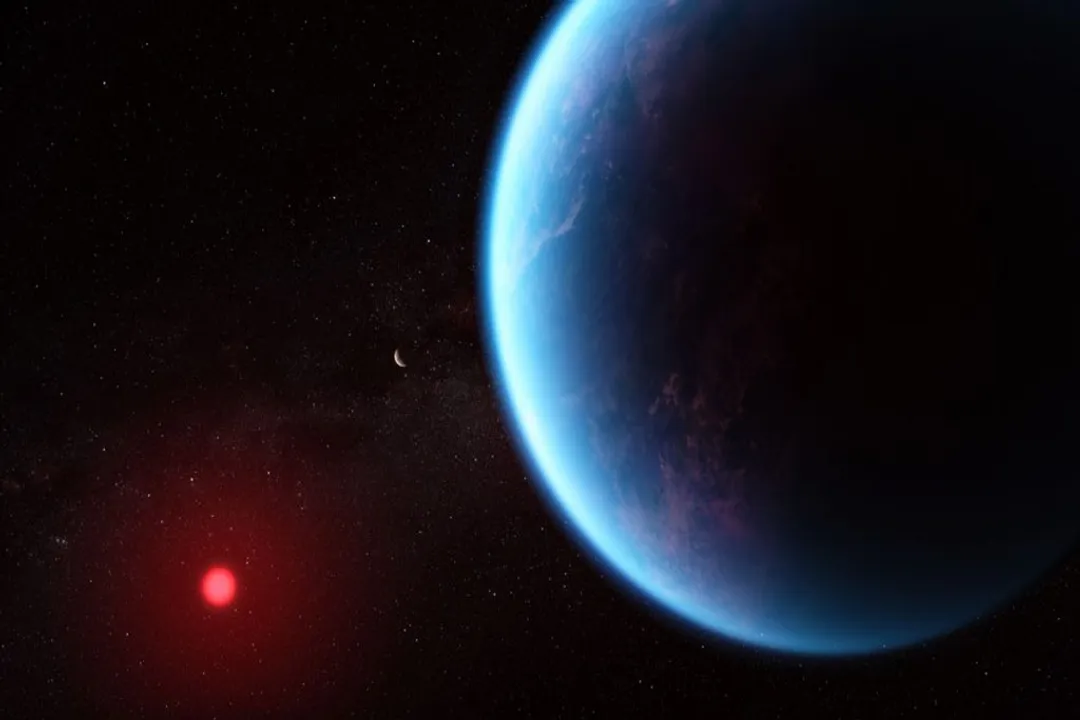
The assumption that extraterrestrial life exists is not merely a fringe notion confined to science fiction; it is a position increasingly held, or at least seriously entertained, by a significant portion of the scientific community, particularly those working in astrophysics and planetary science. When scientists discuss the probability of aliens, the conversation usually pivots from if life exists elsewhere to when we might find it, or how different that life might be from our terrestrial experience. The sheer scale of the cosmos, combined with recent astronomical discoveries, shifts the philosophical question into the realm of statistical probability for many experts.
# Cosmic Scale
The foundation for expert belief often rests on the immense numbers involved in astronomical observation. Consider the Milky Way galaxy alone; it contains estimated star counts in the hundreds of billions. When you multiply that by the estimated two trillion galaxies in the observable universe, the potential number of star systems becomes almost incomprehensible. Even if the probability of life arising on any given planet is vanishingly small, when multiplied by a near-infinite number of trials, the outcome suggests life must have arisen elsewhere. This statistical argument is a cornerstone for many who maintain a high level of belief in extraterrestrial life.
This numerical perspective contrasts slightly with the Fermi Paradox—the contradiction between the high probability estimates and the lack of observable evidence. However, experts often find ways to reconcile this, suggesting limitations in our search methods or the vastness of space and time act as the primary filter, rather than a true cosmic barrenness.
# Exoplanet Evidence
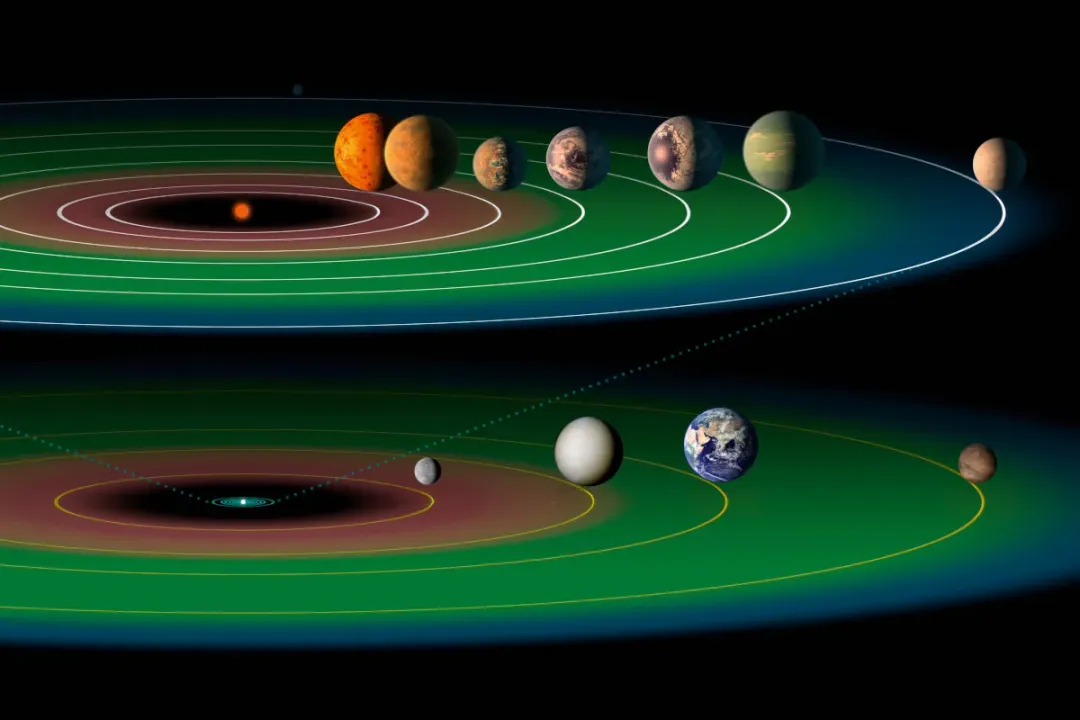
The discovery of exoplanets has provided empirical grounding for the statistical argument. Where a few decades ago, we could only speculate about planets orbiting other stars, we now know they are common, often outnumbering the stars themselves. The existence of numerous rocky planets residing within the "habitable zone"—the region around a star where temperatures could allow liquid water to exist on a planet's surface—strengthens the case for habitability elsewhere.
Take, for example, the study of planets like K2-18b, which orbits a red dwarf star and shows evidence of containing water vapor in its atmosphere. While water doesn't equal life, finding the basic building blocks or conditions for life as we understand it on other worlds shifts the focus away from if other planets can support life to how widespread life actually is. These findings move the discussion from pure theory to observable candidates for life, whether microbial or complex.

# Surveying Scientists
Surveys conducted among scientific professionals offer tangible data points regarding this collective belief. Studies examining the opinions of astronomers and related researchers often reveal a high degree of optimism regarding the existence of extraterrestrial life. One analysis tracking the opinions of researchers across various disciplines showed that a significant majority placed their bets on life existing beyond Earth, often with high confidence levels.
It is important to note that this consensus tends to break down when discussing intelligent life versus any life. Most scientists seem to agree that microbial or simple life is highly probable, given the ubiquity of organic chemistry throughout the galaxy. However, the probability assigned to finding advanced civilizations capable of communication or travel drops significantly when factoring in evolutionary bottlenecks and self-destruction scenarios. This difference between believing in simple life and believing in alien neighbors who build radio telescopes is crucial for understanding expert consensus.
When comparing the rationale, some experts focus on the chemical universality—the fact that the elements necessary for life (carbon, hydrogen, oxygen, nitrogen) were forged in stars and are present everywhere. Others lean more heavily on the sheer number of potential habitats, emphasizing that even if the origin of life is a rare event, the sheer number of planets suggests it has happened many times.
# Simple Versus Intelligent
To better categorize expert viewpoints, we can look at two distinct categories of belief:
| Life Type | Expert Confidence Level (General Trend) | Primary Rationale |
|---|---|---|
| Microbial/Simple Life | High to Very High | Ubiquity of organic chemistry and habitable exoplanets |
| Intelligent/Complex Life | Moderate to Variable | Requires overcoming evolutionary hurdles and temporal coincidence |
A useful heuristic that emerges from these discussions is to consider the difficulty of abiogenesis versus the difficulty of evolution. If abiogenesis (life starting from non-life) is rare, then simple life is rare. If abiogenesis is common, but the jump to multi-cellularity or intelligence is rare—the "Great Filter" argument—then simple life is common, but intelligent life is scarce. Many experts lean towards the latter scenario, suggesting the universe is likely populated by simple organisms.
# Other Origins
Belief in life elsewhere isn't solely based on the spontaneous generation of life on separate planets. Some scientific perspectives consider mechanisms where life could spread, which alters the required probability of origin on Earth. The concept of Panspermia suggests that life's building blocks, or even hardy microorganisms, might be distributed throughout the cosmos via meteoroids, comets, or planetary debris ejected by impacts.
If life can 'seed' itself across star systems, then the question of why experts believe in aliens becomes somewhat different: they believe life is likely already here or has easily colonized nearby star systems because the initial barrier—the origin event—only needed to happen once in a relatively close vicinity for life to become widespread across the galaxy. This contrasts with the standard model where every planet must independently cross the abiogenesis threshold. Such theories, while speculative, provide alternative pathways that bolster the overall confidence in life's prevalence.

# A Statistical Hurdle Analysis
It is worth examining the constraints that even optimistic scientists place on their probability estimates. A common original insight derived from examining the Drake Equation's variables is that the time factor—the lifespan of a technological civilization—is perhaps the most destructive variable for finding intelligent neighbors today. We might assume a high number of civilizations, , exist, but if their average active broadcast lifetime () is only a few thousand years before they collapse or advance beyond radio communication, the chances of our search window () overlapping with theirs——become extremely small. An expert believing in aliens might therefore be deeply convinced that simple life exists across many planets, but simultaneously calculate that the odds of receiving a signal right now are near zero due to these temporal mismatches. This nuance separates general belief in existence from belief in imminent contact.
# Signature Detection
Another area where expert reasoning diverges from public perception involves what we expect to find. Many scientists are experts in biosignatures, the chemical indicators of life (like certain atmospheric gases). Finding biosignatures would confirm life exists, even if it is only microbial slime on a distant moon. This confirmation would drastically alter the scientific landscape and support the high-probability estimates.
However, a second original consideration involves technosignatures. These are markers of technology, like artificial radio signals or atmospheric pollution indicative of industry. Experts who believe in intelligent life are often looking for technosignatures, while those content with merely proving life exists are focused on biosignatures. The difficulty in detecting technosignatures, particularly over interstellar distances, often leads to the more cautious, middle-ground stance held by many senior researchers, even those who acknowledge the high statistical likelihood of life. It is easier to argue for the presence of simple life on an ocean world than to argue for the survival of a species capable of interstellar communication long enough for us to hear them.
# Expert Authority
The credibility assigned to the belief in aliens is significantly bolstered by the involvement of figures associated with major space agencies. When a NASA scientist addresses the topic, their perspective is grounded not just in speculation but in the practical realities of astrobiology missions and instrumentation development. Such experts often emphasize that the sheer volume of potentially life-bearing worlds being discovered—worlds that fit within the habitable zone parameters calculated by missions—compels them toward the assumption that life is common. They see the universe as highly conducive to biology, even if the path from simple chemistry to complex beings is fraught with difficulty.
The reasoning often circles back to self-perception. Why should the highly specific, somewhat chaotic chain of events that led to intelligence on Earth be unique? If the laws of physics and chemistry are universal, then life, which is a chemical process, should also be a universal consequence under the right conditions. To argue against alien life requires arguing that Earth is special in a way that contradicts the Copernican principle, which suggests our location is not privileged. Most modern astrophysics operates under the assumption that we are not special, which mathematically forces the conclusion that life exists elsewhere.
Ultimately, the expert belief in extraterrestrial life is a convergence of massive numbers, confirmed planetary abundance, chemical universality, and a philosophical commitment to the idea that the processes seen here are not unique to our small, wet corner of the cosmos. It is a belief built on probability, tempered by the sobering reality of observational silence.
#Videos
NASA Scientist Answers Alien Questions | Tech Support | WIRED
Related Questions
#Citations
Do most astrophysicists believe in alien life? : r/astrophysics - Reddit
Do aliens exist? We studied what scientists really think - Durham ...
Astronomers claim strong evidence of alien life, but experts urge ...
NASA Scientist Answers Alien Questions | Tech Support | WIRED
Most people believe in intelligent alien life existence - Facebook
What are the reasons for people believing in the existence of aliens ...
Stephen Hawking's Warning on Contacting Aliens - NIH
Do Aliens Exist? We Asked a NASA Scientist: Episode 5
Scientists are now seriously asking if humans were seeded by ...